

Driver’s Desk
Finding the Best Car Security Systems in 2026
The best car security systems do more than just make noise. They integrate real-time GPS tracking, instant smartphone alerts, and features like engine immobilizers to create a comprehensive protective shield for your vehicle.
While your car's factory alarm might deter an amateur thief, a modern solution like CarLock offers a multi-layered defense. It actively notifies you the moment a potential threat is detected—from a slight vibration to an unauthorized engine start—effectively turning your smartphone into a 24/7 watchdog for your vehicle.
Why Modern Car Security Is a Critical Investment
There’s a unique, gut-wrenching feeling that comes with walking up to an empty parking spot where you know you left your car. It’s a complete nightmare, and with today’s thieves using increasingly sophisticated technology, it's a fear grounded in a harsh reality.
The basic alarms that come standard in most cars just don't cut it anymore. Determined criminals can often bypass them in seconds, frequently without making a sound.
Losing your car isn't just about losing a mode of transportation. It’s about the significant financial impact from insurance deductibles, the endless paperwork and police reports, and the complete disruption to your life. Getting to work, picking up the kids, running errands—everything suddenly becomes a logistical challenge.
The Rising Tide of Vehicle Theft
Vehicle theft isn't just random bad luck; it’s a booming, organized business. According to the FBI's 2022 crime statistics, over one million vehicles were stolen in the U.S., resulting in an estimated $8.9 billion in losses. This represents a staggering 25.1% increase in thefts compared to 2019 data. This surge in criminal activity is a primary driver for the global car security system market, which was valued at $9.1 billion in 2022 and is projected to reach $19.53 billion by 2032.
That growth is a direct response to the surge in theft, forcing car owners to look for security that actually works. Relying on your car's built-in system is like trying to protect a vault with a simple padlock. It might stop someone who’s just curious, but it won't even slow down a professional.
Investing in an advanced security system is no longer a luxury—it’s a necessary layer of protection for one of your most valuable assets. It’s about shifting from a passive defense to an active, real-time monitoring strategy.
Protecting Your Assets Proactively
This idea of proactive defense isn’t new. In the commercial world, for instance, businesses rely on detailed cargo theft prevention strategies because waiting for a problem is too costly. The exact same logic applies to your car. A multi-layered security approach is now the standard for keeping your vehicle safe.
This means looking beyond a simple car alarm and embracing systems that give you real power:
-
Real-Time Alerts: Get a notification on your phone the instant your car is bumped, moved, or the engine is started without your permission.
-
GPS Tracking: Pinpoint your vehicle's exact location at all times. This is absolutely essential for helping police recover it if the worst happens.
-
Engine Immobilization: Stop thieves in their tracks by remotely preventing them from starting the engine.
Today's car thieves are using sophisticated tools to defeat factory security. It only makes sense to counter them with equally modern solutions.
Modern Threats vs Modern Security Solutions
Here's a quick look at how modern security features stack up against common theft tactics:
| Modern Threat | Effective Security Countermeasure |
|---|---|
| Key Fob Cloning & Relay Attacks | Real-Time Engine Start Alerts. Even if they get in, you'll know the moment the engine fires up. |
| Silent Towing | GPS Movement Alerts. The system detects unauthorized movement and notifies you immediately. |
| OBD Port Hacking | OBD Device Disconnect Alert. If a thief tries to unplug your security device, you get an alert. |
| Forced Entry (Smash and Grab) | Vibration Sensor Alerts. The system detects unusual vibrations and sends an instant warning to your phone. |
These features work together to create a web of protection that old-school alarms simply can't match.
Putting your money into one of the best car security systems is about more than just buying a piece of tech. It’s an investment in your peace of mind, ensuring your vehicle—and your daily life—remain secure.
Breaking Down the Types of Car Security Systems
Trying to understand car security can feel like learning a whole new language. With so many options out there, it’s easy to get tangled up in technical jargon. The real secret is that the best car security systems aren't just one thing; they layer different technologies to build a robust defense, rather than putting all your faith in a single feature.
Let's walk through the most common types, starting with the familiar basics and building up to the smarter solutions that are changing the game.
The Foundation: Alarms and Immobilizers
For decades, the default line of defense has been alarms and immobilizers. We all know the classic car alarm—its job is simple: make a ton of noise. It uses sensors to pick up on impacts or break-ins, triggering a piercing siren meant to scare off thieves and grab attention.
An immobilizer, on the other hand, is a silent guardian. This technology has been mandatory in new cars in many regions, including the UK and EU, since 1998. It works by preventing the engine from starting unless a correctly coded transponder key is present. No key, no ignition. It's a straightforward but effective deterrent against traditional hot-wiring.
But let's be realistic, these foundational tools have their limits. A seasoned criminal can silence a screaming alarm in seconds. And with gadgets like key fob cloners and relay attack devices readily available online, even factory-installed immobilizers can be outsmarted. Data from the National Insurance Crime Bureau (NICB) confirms that a significant portion of thefts occur close to home, underscoring that a loud noise and a basic immobilizer aren't always enough to stop a determined thief. You can check out how modern car alarms have evolved to fight back in our detailed guide.
The Digital Search Party: GPS Trackers
This is where technology completely flips the script. Think of a GPS tracker as your car's own personal, digital search party. It gives you the real-time location of your vehicle, streamed directly to your smartphone.
Unlike a blaring alarm that's only useful if someone is nearby to hear it, a GPS tracker puts you in control, no matter where you are. If the worst happens and your car is stolen, you're not left hoping someone calls the police. You can provide law enforcement with its exact coordinates, massively boosting the odds of recovery. In fact, some law enforcement agencies have reported recovery rates exceeding 90% for vehicles equipped with active GPS tracking systems.
A GPS tracker transforms car security from a passive, hope-based system into an active, information-driven one. It’s the difference between knowing your car was stolen and knowing exactly where it is right now.
Many advanced trackers also integrate features like geofencing. This lets you draw virtual perimeters on a map and get an alert the moment your car crosses one. It’s perfect for keeping tabs on a new teen driver or making sure the mechanic isn't taking your prized possession on a joyride.
The Virtual Kill Switch: Remote Immobilization
Taking the old-school immobilizer concept into the modern era, remote immobilization is like having a virtual kill switch for your car. If your vehicle is stolen, you can remotely disable the engine, stopping a thief from restarting it once they've turned it off.
This is an incredibly powerful tool for law enforcement during a recovery. It allows them to bring a stolen vehicle to a safe stop without a dangerous high-speed chase, which protects your property, the public, and the officers involved. This feature is usually part of a complete security package that bundles tracking and alerts into one solution.
Comprehensive Smart Systems
Today, the absolute best car security systems are the ones that merge all these technologies into a single, seamless package. They don't just give you one layer of defense; they give you several that all work in harmony.
These smart systems usually bring together:
-
Vibration and Shock Sensors: They work like a traditional alarm sensor, but instead of just setting off a siren, they send a quiet, instant alert straight to your phone.
-
Real-Time GPS Tracking: The heart of the system, giving you constant, up-to-the-minute location data.
-
Engine Start Alerts: You get a notification the second your engine starts without you. This catches thieves red-handed, even if they've managed to clone your key.
-
Smartphone Integration: A simple app on your phone puts all the power in your hands, letting you do everything from arming the system to checking your car’s battery health.
This layered approach is what creates a truly powerful shield. A thief might pick the lock, but the vibration sensor will have already tipped you off. They might get the engine started with a cloned key, but the engine alert blows their cover. And even if they manage to drive away, the GPS tracker means they have nowhere to hide. Once you understand how these pieces fit together, you can pick a system that delivers real peace of mind.
What to Look for in a Modern Car Security System
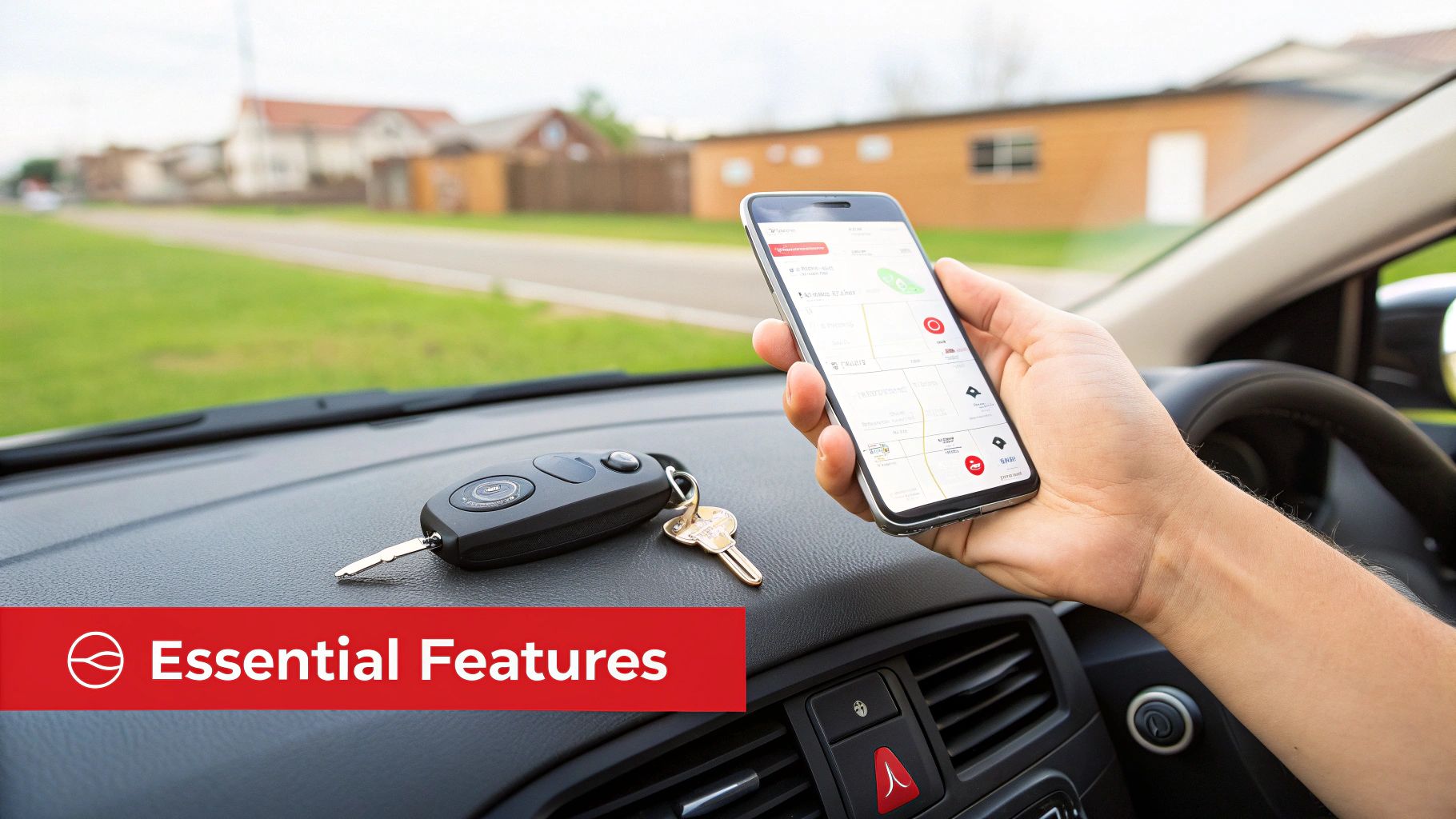
It’s one thing to know about the different kinds of security systems, but it’s another thing entirely to understand the features that actually make them work. That's where you find the power to make a smart choice for your vehicle. A basic car alarm makes noise, sure. But the best car security systems today offer a whole suite of smart features that work together to create a rock-solid defense.
Think of it like this: a simple doorbell just chimes. A modern video doorbell, on the other hand, gives you live video, motion alerts, and two-way talk. When it comes to something as valuable as your car, you want the complete package that keeps you connected and in control.
These features aren’t just nice-to-haves; they're the core building blocks of any worthwhile vehicle protection system. Each one plays a specific role, from instantly detecting a threat to helping you get your car back fast.
Real-Time GPS Tracking
Without a doubt, the single most critical feature for getting a stolen car back is real-time GPS tracking. Once a thief drives your car away, a blaring alarm is completely useless. A GPS tracker, however, is your ace in the hole, broadcasting your car's precise location straight to your smartphone.
We're not talking about delayed data from yesterday. This is a live, moving dot on a map, showing you exactly where your car is, right now. This feature alone drastically increases the odds of recovery. For example, LoJack, a pioneer in stolen vehicle recovery, has historically reported recovery rates as high as 98% for vehicles equipped with their tracking technology. Handing over real-time coordinates to the police lets them act fast to get your car back safely.
Beyond theft, GPS tracking has everyday perks, too. It’s perfect for finding your car in a packed parking garage or just keeping an eye on a new teen driver to make sure they're being safe.
Geofencing and Smart Notifications
Taking GPS a step further, geofencing lets you create a virtual fence around your car. Using a simple app, you can draw a digital boundary around your home, office, or the auto shop. It couldn't be easier.
If your vehicle crosses that line—either entering or exiting—you get an instant notification on your phone. This is incredibly practical. Left your car with a valet? A geofence alert will tell you immediately if it’s being taken for an unauthorized joyride.
But smart notifications go way beyond just location:
-
Vibration Alerts: The system can feel an impact, like a window being smashed or a tow truck hooking up, and alert you before the thief even gets inside.
-
Engine Start Alerts: You’ll get a notification the second the engine turns on. This is a crucial defense against today’s sophisticated key-cloning attacks.
-
Device Tampering Alerts: If a thief tries to unplug the security device itself, it will send one last alert using its own backup battery.
Remote Engine Cut-Off
This is one of the most powerful tools in your security arsenal: the remote engine cut-off, or immobilizer. This feature gives you the ability to remotely stop your car's engine from being started.
If your car is stolen, you can work with law enforcement to safely disable it. The moment the thief shuts off the engine, they won't be able to turn it back on. This brings any pursuit to a quick end without a dangerous high-speed chase. It’s a virtual kill switch that puts you back in control.
This feature completely flips the script on car theft. It shifts power from the criminal back to you and the police, making recovery far safer and more likely.
Seamless Smartphone Integration
The final piece of the puzzle is seamless smartphone integration. All of these amazing features don't mean much if they're a pain to use. The best systems rely on an intuitive mobile app that puts every monitoring and control function right at your fingertips.
From one central app, you can:
-
See your car's live location on a map.
-
Set up and change your geofences.
-
Look back at trip histories and driving habits.
-
Receive and manage all your security alerts.
This constant connection makes security an active part of your life, not some passive system you set and forget. To see how all these pieces come together in a real-world device, you can check out the full range of features that a modern GPS tracker offers. At the end of the day, a system’s real value is its ability to give you the right information, right when you need it most.
The Evolution to Smart and Connected Car Security
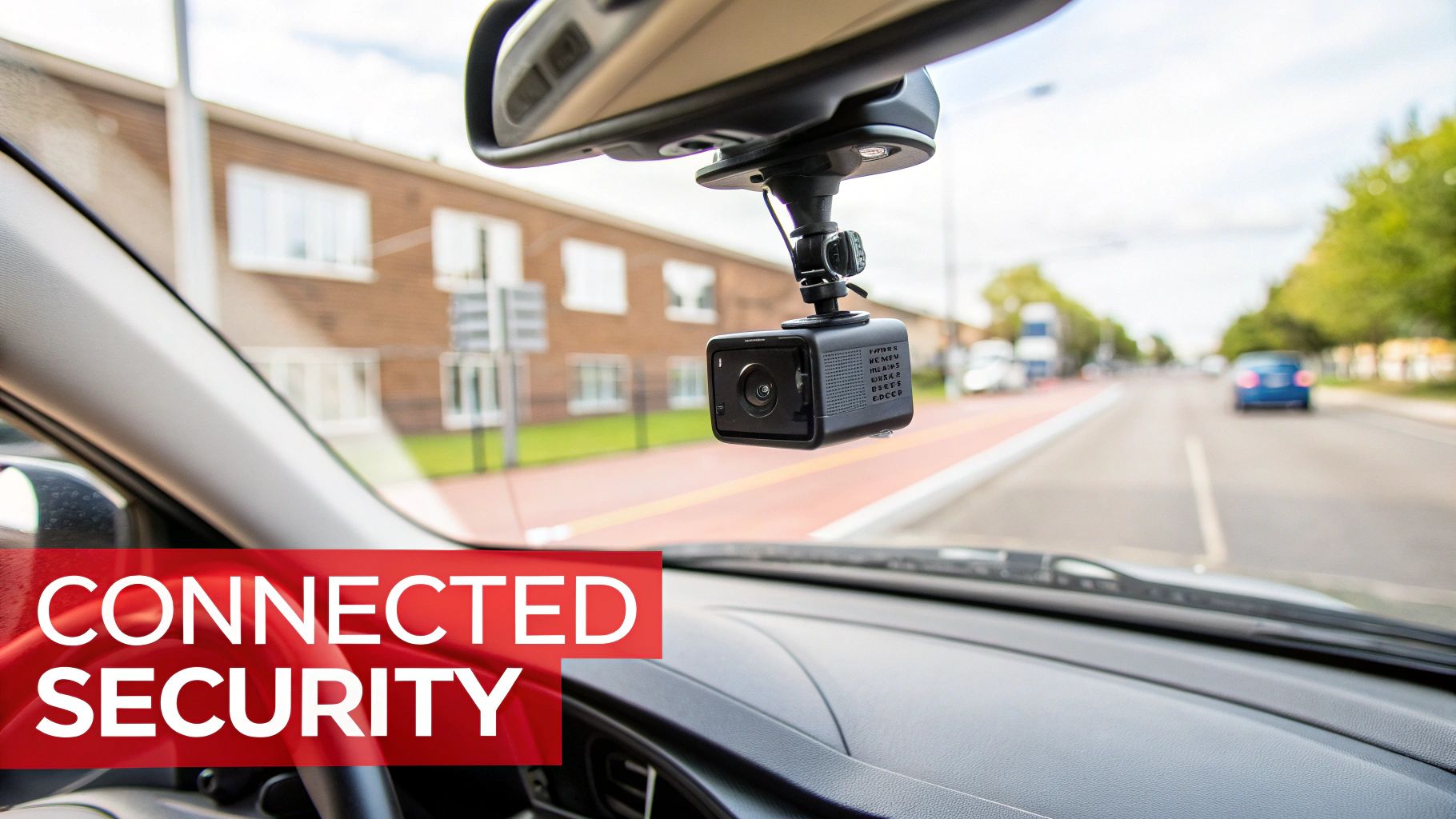
Let’s be honest, car security has come a long way from the days of blaring sirens that most people just ignore. We’re in a new era now, one defined by intelligent, proactive shields. The best car security systems today don't just react to a threat—they tell you about it the second it happens.
This isn't just a minor upgrade. It’s about turning your car from a silent, isolated object into a connected hub that’s always in touch with you. Think of it less like an alarm and more like a digital guardian, putting total control right in the palm of your hand.
From Reactive Alarms to Proactive Alerts
The real game-changer between old and new security is information. A traditional alarm just screams into the void, hoping a passerby cares enough to do something. A modern system like CarLock, on the other hand, speaks directly to you, giving you instant, actionable intel the moment something’s not right.
That shift is massive. Instead of coming back to a broken window hours later, you get a notification for the slightest vibration. You know the second your engine starts without you, which is a powerful defense against today’s key-cloning theft. The system feeds you a constant stream of data, empowering you to act fast.
This isn’t just a niche trend; it’s the future. The connected car security market is set to explode, with some analysts projecting it will hit $19.11 billion by 2032—a huge leap from an estimated $5.74 billion in 2025. This growth is all about demand for smarter, more responsive protection. You can see for yourself why the car security system market is rapidly expanding.
The Rise of the Intelligent Vehicle Network
This evolution goes beyond your own car. Emerging tech like V2X (Vehicle-to-Everything) is setting the stage for a future where cars talk to each other and to city infrastructure to prevent theft and accidents. While we're not quite there yet, the core principle is already at work in the best systems available today.
A connected security system builds a personal safety net around your vehicle. It uses the cellular network to ensure that no matter where you are, you are always connected to your car's status and location.
CarLock, for instance, harnesses this connected power to create a seamless experience. Through a simple app, your car’s security data is always at your fingertips, giving you a level of oversight that was pure science fiction with older tech. You can learn more about how CarLock’s cloud features create this always-on connection and keep you in the loop.
This constant link is what makes modern security a complete reimagining of what vehicle protection can—and should—be.
Comparing Traditional vs Smart Security Systems
When you put the two approaches side-by-side, the difference is night and day. One is a relic from a different time, while the other is built for the challenges we face right now.
| Feature | Traditional Alarm System | Smart Connected System (e.g., CarLock) |
|---|---|---|
| Primary Function | Make loud noise to deter thieves. | Provide real-time data and remote control. |
| Alert Method | Local siren only. | Instant notifications sent to your smartphone. |
| Location Tracking | None. | Live, real-time GPS tracking on a map. |
| Theft Response | Passive; relies on others to act. | Active; allows owner to track and aid recovery. |
| Control | Key fob with limited range. | Full control via a global smartphone app. |
| Power Source | Relies solely on the car battery. | Has an internal backup battery for tamper alerts. |
Ultimately, the choice is clear. While a traditional alarm might make a thief think twice, a smart system gives you the power to actually do something about it.
How to Choose the Right Security System for Your Car
With so many security options on the market today, picking the right one can feel overwhelming. The secret is to cut through all the tech-speak and focus on what you actually need in your day-to-day life. Choosing one of the best car security systems isn't about finding some magical, one-size-fits-all gadget; it's about finding the one that perfectly fits your routine.
To get there, you need a simple way to think about it. This means being honest about your personal risk, your budget, and how you use your car. Just by answering a few basic questions, you can quickly cut through the noise and find a system that gives you real peace of mind.
First, Take a Look at Your Own Situation
Before you even glance at a single product, just stop and think about your circumstances. The right system for someone who parks in a locked, private garage is a world away from what’s needed for a car left on a busy city street every night.
Start by asking yourself these crucial questions:
-
Where do I park my car most of the time? A secure garage massively lowers your risk compared to parking on the street or in an open public lot. However, don't get too comfortable at home—NICB data has shown that over half of all vehicle thefts occur at or near the owner's residence.
-
Is my car a popular target? Some models are stolen way more often than others because their parts are in high demand. The NICB's "Hot Wheels" report annually lists the most stolen vehicles, which commonly include models like the Honda Accord, Honda Civic, and full-size Ford and Chevy pickups.
-
What's my budget? Figure out what you're willing to spend, not just on the device itself but on any monthly fees that might come with it. Think of it as an investment in protecting one of your biggest assets.
Answering these questions gives you a personalized risk profile. Use this profile as your guide to find a system that offers the right amount of protection without you having to pay for a bunch of features you'll never use.
Key Factors to Weigh Up
Once you have a clear picture of your personal risk, it’s time to start comparing systems. This is where you match features to your needs and make sure the solution is actually practical for you and your car.
It’s so important to look beyond the initial price tag and consider the long-term value and how easy the system is to live with. Here are the big things to consider:
-
Vehicle Compatibility: This is non-negotiable. Before you do anything else, make sure the system will work with your car. Most modern plug-and-play devices use the OBD-II port, which has been standard in cars manufactured for the U.S. market since 1996. Always, always double-check compatibility before you buy.
-
Installation: How hands-on do you want to get? Do you prefer a simple device you can plug in yourself in seconds, or are you okay with a more complex hardwired setup? Plug-and-play trackers like CarLock are incredibly simple, while traditional alarms often need a professional to install them, adding to the total cost.
-
Cost Structure: Look at the total cost. Some systems hit you with a higher price upfront but have no monthly fees. Others, like CarLock, have a low initial cost but require a small subscription for critical features like real-time tracking and alerts. That subscription usually covers the cellular data the device needs to talk to your phone, so it's a vital part of the service.
-
Potential Insurance Discounts: This is a great perk many people overlook. A lot of insurance companies offer discounts for cars that have anti-theft devices, especially ones with active GPS tracking. Give your insurance agent a call and see if installing a system could lower your premium—it could help the device pay for itself over time.
Choosing a security system is all about finding the right balance between your daily habits, your car's risk profile, and your budget. By thinking through these factors, you can confidently pick a system that's truly made for you.
Working through this checklist gives you a clear path to making a smart decision. To see how other car owners tackled this choice, you can get some great insights by reading real-world CarLock user reviews and experiences.
Answering Your Top Car Security Questions
Even after you've weighed all the features, pulling the trigger on the best car security system can bring up a few last-minute questions. It's totally normal. To help you cross the finish line with confidence, we’ve put together some straightforward answers to the most common things we hear from car owners.
This quick decision tree infographic can help you visualize the most important factors, charting a clear path from where you park to how much you want to spend.
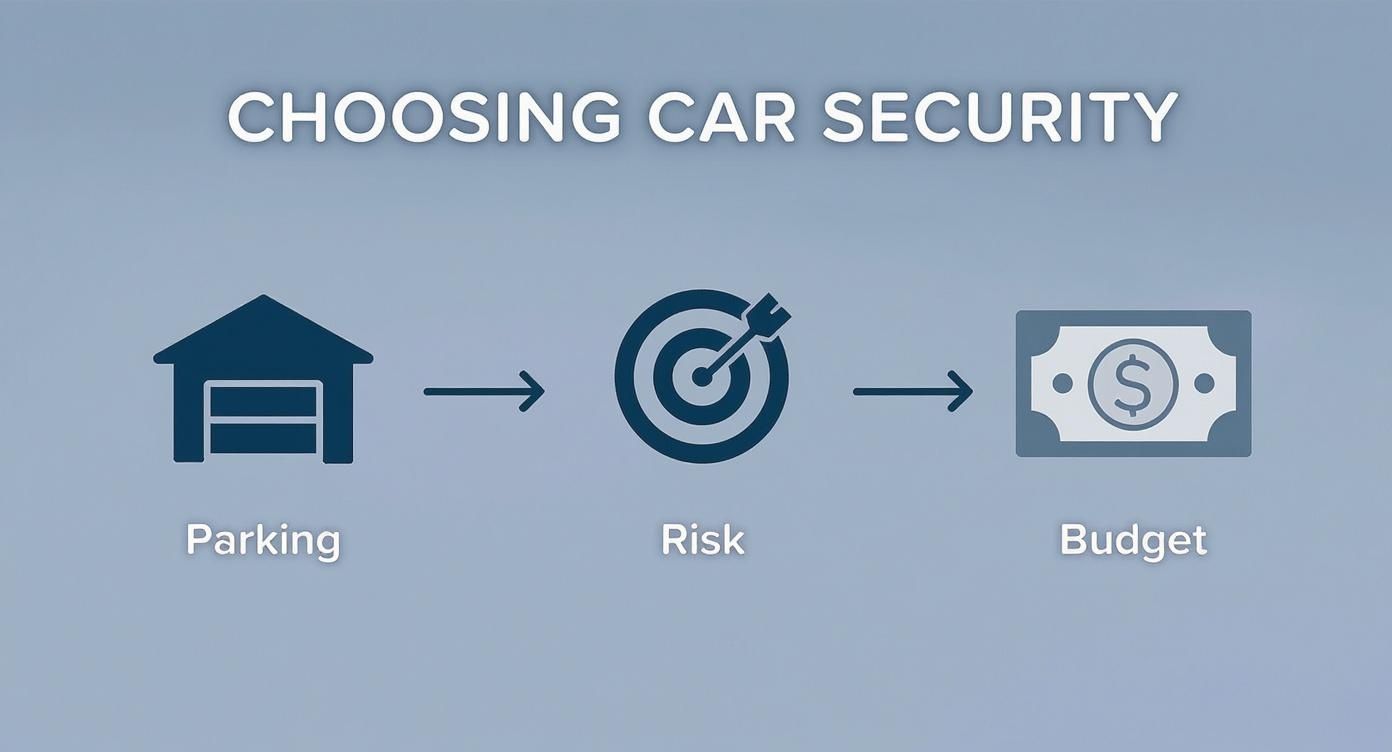
As you can see, your daily routine and risk level are the biggest clues to which type of system makes the most sense—and is the most cost-effective—for you and your car.
Will an Aftermarket Security System Void My Car's Warranty?
This is a big one for a lot of people, but the short answer is almost always no. In the United States, the Magnuson-Moss Warranty Act of 1975 protects consumers. It prevents manufacturers from voiding your vehicle's warranty just because you installed an aftermarket part, including a security system.
Now, there's a small catch: if a faulty aftermarket part or a shoddy installation directly causes damage to your car, that specific repair might not be covered. This is precisely why plug-and-play devices that connect to your car's OBD-II port are such a smart move. They require no modification to the vehicle's wiring, virtually eliminating any installation risk and keeping your warranty perfectly safe.
Are Subscription-Based Car Security Systems Worth It?
Absolutely, and here's why: that subscription is what fuels the most powerful features you want, like real-time GPS tracking and instant alerts sent straight to your phone. The small monthly fee is simply covering the cellular data connection the device needs to talk to the cloud and, in turn, talk to you.
Think of it less like a software subscription and more like a live, 24/7 monitoring service dedicated to your car. For a minimal monthly cost, you get constant vigilance and the power to know your car's exact location in a heartbeat—something that's priceless if you ever need to recover it. You can dive deeper into frequently asked questions about GPS trackers to get all the details.
How Difficult Is It to Install a Modern Car Security System?
The difficulty really varies, but the best modern systems are designed to be incredibly simple. While old-school alarms often meant a trip to a professional for complicated hardwiring, many of today's top-tier solutions are truly "plug-and-play."
Take OBD-II trackers, for instance. You just plug the device directly into your car's diagnostic port—a process that literally takes seconds. There are no tools or technical skills required. It’s a game-changer that makes advanced security accessible to every single car owner, without the extra cost or headache of a professional install.