

Driver’s Desk
What Are Anti-Theft Devices for Cars? An Expert Guide to Vehicle Security
At its core, an anti-theft device is any tool or system designed to deter theft, prevent unauthorized operation, and aid in vehicle recovery. These solutions range from simple mechanical locks that have been trusted for decades to sophisticated electronic systems that leverage real-time data and GPS technology to protect your asset. With vehicle theft on the rise, understanding these devices is more critical than ever.
Understanding Your Car's First Line of Defense
It’s an unfortunate reality, but protecting your vehicle has never been more critical. The most effective approach to vehicle security isn't a single device, but a layered defense strategy. Each layer of protection you add makes your vehicle a more difficult—and therefore less appealing—target for opportunistic and professional thieves alike.
This strategy involves combining different types of security. For instance, a highly visible steering wheel lock (a physical deterrent) can work in tandem with a silent, factory-installed engine immobilizer that prevents hot-wiring. The objective is to create enough obstacles and risk for a potential thief that they abandon the attempt and move on.
As consumers become more security-conscious, the market for these devices is expanding rapidly. The global vehicle security system market is projected to reach USD 15.6 billion by 2034, with a compound annual growth rate (CAGR) of 6.3% from 2025. This growth underscores a clear trend: robust anti-theft systems are no longer a luxury but a necessity for modern vehicle owners.
Quick Overview of Common Devices
To provide a clear picture of the available options, let's categorize the most common anti-theft systems. Each serves a distinct role within a comprehensive security plan. You can explore this topic further in our complete guide to choosing the right https://www.carlock.co/gps-car-tracker/car-security-system.
Overview of Common Car Anti Theft Devices
This table offers a concise summary of the primary anti-theft device categories, their functions, and their general effectiveness. This framework will help you understand the landscape of available security solutions.
| Device Type | Primary Function | Effectiveness Level |
|---|---|---|
| Car Alarms | Creates loud noise to attract attention and deter thieves. | Moderate |
| Engine Immobilizers | Prevents the engine from starting without the correct key. | High |
| GPS Trackers | Pinpoints the vehicle's location for swift recovery. | Very High |
| Steering Wheel Lock | Physically prevents the steering wheel from turning. | High (Visual) |
| VIN Etching | Deters professional thieves by marking valuable parts. | Moderate |
It is also important to remember that vehicle security extends beyond the car itself to its environment. Simple habits and tools, such as programming your car's HomeLink garage opener, add a crucial layer of protection when your vehicle is parked at home.
How Electronic Security Systems Outsmart Thieves
While a robust mechanical lock sends a clear visual warning, the most powerful defenses in modern vehicles are often invisible. Electronic security systems operate silently, leveraging sophisticated technology to neutralize threats—sometimes before a thief can even touch the vehicle.
The most basic layer is the factory-installed alarm system present in nearly all modern vehicles. This system functions as a digital perimeter guard, utilizing a network of sensors to monitor for forced entry (door and trunk sensors), impacts (shock sensors), and changes in orientation (tilt sensors that detect towing).
If any of these sensors are triggered, the system initiates an audible and visual response: a high-decibel siren and flashing lights. This dual-action alert is designed to startle the thief into abandoning the attempt while drawing maximum attention from bystanders.
The Unseen Power of Engine Immobilizers
Beyond the audible alarm lies a far more effective countermeasure: the engine immobilizer. This technology is not designed to create a disturbance; its sole purpose is to render the vehicle inoperable without proper authentication. The system relies on a secure digital handshake between the car key and the engine's control unit (ECU).
Embedded within the key fob is a transponder chip that broadcasts a unique, encrypted code. When the key is inserted or the "start" button is pressed, the vehicle's computer requests this code. If the key's transmitted code matches the one stored in the ECU's memory, the authentication is successful, and the engine is allowed to start.
However, if an incorrect or missing code is detected, the immobilizer prevents the activation of critical systems, such as the fuel pump and ignition coil. This technology effectively makes traditional hot-wiring impossible. The engine simply will not start.
Due to their high efficacy in preventing unauthorized engine starts, engine immobilizers have become a foundational component of modern vehicle security. Driven by rising theft rates and regulatory mandates, the global vehicle anti-theft system market has seen widespread adoption of this technology.
In fact, the engine immobilizer segment currently holds the largest share of the market and is projected to maintain this dominance. This highlights the critical role of secure digital authentication in combating vehicle theft. You can review detailed market analysis on vehicle anti-theft systems at Maximize Market Research.
Real-Time Recovery with GPS Trackers
Even the most advanced factory systems can be circumvented by a skilled and determined professional. This is where the third layer of electronic defense becomes invaluable: real-time GPS trackers. While alarms and immobilizers focus on theft prevention, a GPS tracker is the ultimate tool for vehicle recovery.
These devices function as a personal homing beacon for your vehicle. Utilizing the Global Positioning System, a tracker can determine its precise location with remarkable accuracy. This data is then transmitted via a cellular network to a secure server and displayed on a map in your smartphone app.
Modern GPS systems offer far more than just location data. They provide a suite of real-time alerts that give you a complete, up-to-the-second status of your vehicle.
- Vibration Detected: Receive an alert if the system detects vibrations consistent with a break-in attempt, power tool usage, or the vehicle being jacked up.
- Engine Started: Be notified the moment the ignition is activated, with or without your key.
- Vehicle Moved: Get an instant notification if your vehicle is being towed or driven away without authorization.
This continuous stream of data transforms your security posture from reactive to proactive. Instead of discovering a theft hours after it occurred, you are alerted at the moment of intrusion. This provides a critical head start for law enforcement, dramatically increasing the probability of a safe and swift recovery. When you understand how real-time car tracking works, you can appreciate the advanced features that make this technology so effective.
The Power of Physical and Visual Deterrents
While modern electronic systems are highly effective at outsmarting thieves, sometimes the best defense is one that is immediately obvious. Physical and visual deterrents operate on a simple but powerful principle: they create a visible, time-consuming obstacle that makes your vehicle a less attractive target.
For a thief, time is the enemy. Any device that signals a difficult, noisy, and prolonged effort is a significant deterrent. When scanning a parking lot or street, a thief will almost invariably bypass a vehicle with a visible security device in favor of an easier target.
Steering Wheel and Pedal Locks
The most iconic physical deterrent is the steering wheel lock. These devices, often brightly colored for maximum visibility, clamp across the steering wheel, making it physically impossible to turn. Their primary strength is their overt nature; they send a clear message: "This vehicle is protected, move on."
Brake and pedal locks function similarly by disabling essential vehicle controls. These devices are affixed to the brake or clutch pedal, preventing them from being depressed. Even if a thief bypasses the ignition system, they cannot operate the vehicle. While less visible from outside the car, they present an equally formidable mechanical barrier. Both tools force a thief to expend valuable time and create significant noise to defeat them.
The Subtle Strength of VIN Etching
Not all visual deterrents are large and obtrusive. VIN etching is a more subtle but highly effective strategy, particularly against professional thieves who steal vehicles for parts. The process involves permanently engraving the vehicle's unique 17-digit Vehicle Identification Number (VIN) onto all major windows and potentially other high-value components.
A vehicle with an etched VIN is a significant liability for professional car thieves. To profit from the stolen vehicle or its parts, they must replace every piece of etched glass—a costly and time-consuming process that severely diminishes their potential profit margin.
This one-time, low-cost modification makes your vehicle a far less desirable target for "chop shops" that dismantle stolen vehicles. It is a permanent deterrent that provides passive protection 24/7.
Ultimately, the strongest defense is a layered one. Combining robust physical locks with the real-time alerts of a sophisticated electronic system creates a truly formidable security setup. A steering wheel lock might stop a thief from driving away, but a modern car alarm like CarLock will notify you the instant they attempt a break-in. This blend of visible strength and smart technology provides comprehensive protection.
Choosing the Right Anti Theft Device for You
With a wide array of security technologies on the market, selecting the optimal solution can seem complex. However, the decision process simplifies when you focus on your specific needs, daily routines, and risk profile. There is no single "best" device; the ideal solution is one that integrates seamlessly into your life and addresses your primary security concerns.
Consider the differing needs of various vehicle owners. A daily commuter parking in a high-density urban area faces different risks than a suburban family monitoring a new teenage driver. The urban commuter might prioritize a multi-layered defense combining a physical lock with a real-time GPS tracker. The parents, however, may find more value in a telematics system that provides speed alerts and location history.
A cost-benefit analysis is a practical starting point. A simple steering wheel lock offers a low-cost, high-visibility deterrent against opportunistic thieves. Conversely, a modern GPS tracker may involve a subscription fee but provides the unparalleled ability to recover your vehicle post-theft.
Matching Your Needs to the Right System
To identify the ideal security configuration, ask yourself what you truly need to protect. Are you looking for a simple, one-time purchase, or is the reassurance of 24/7 real-time monitoring worth a recurring cost?
The flowchart below provides a logical framework for thinking through your priorities—whether a visible deterrent or a covert electronic system is the most appropriate first step.
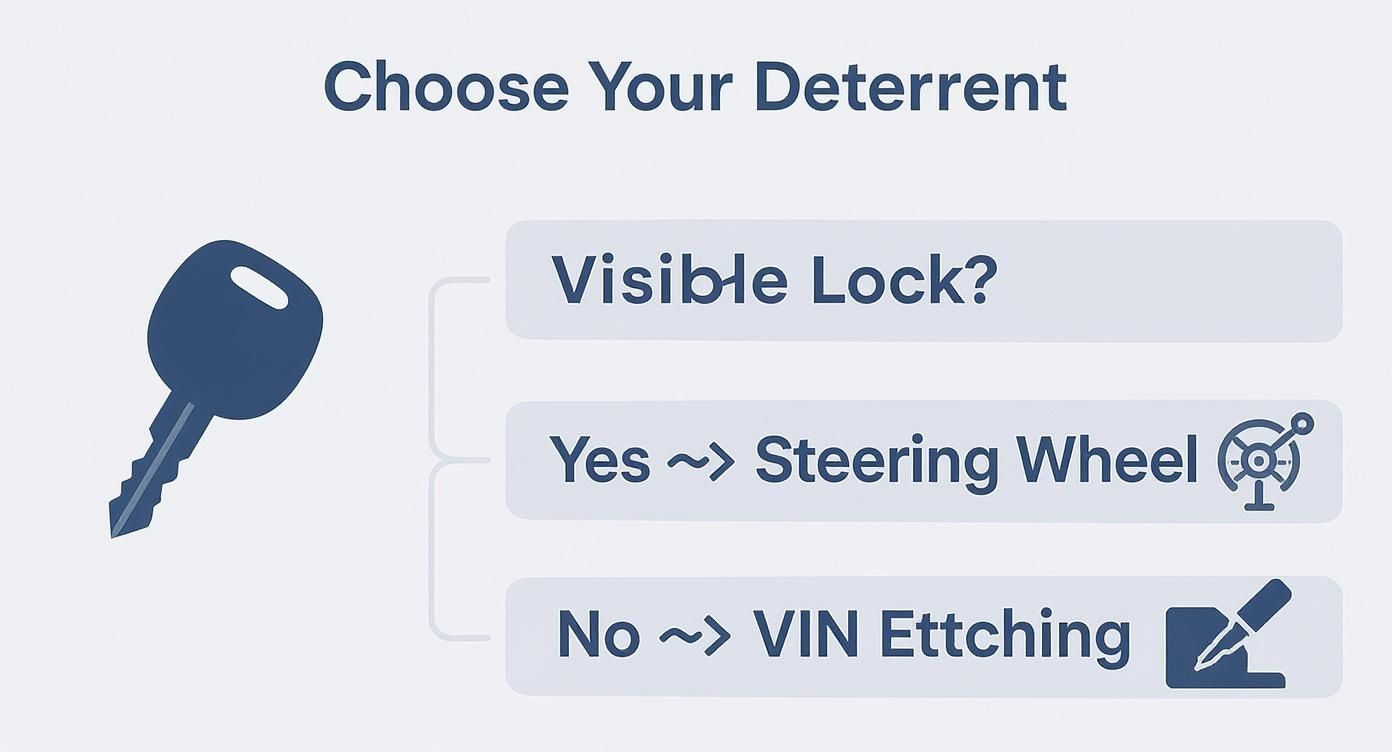
This decision tree illustrates that your primary objective—whether deterring a casual thief or making your vehicle unprofitable for professionals—should guide your choice of security tools.
Let's examine a few real-world scenarios:
-
The Urban Dweller: Street parking in a major city elevates your vehicle's risk profile. A layered defense is essential. Combining a physical lock with a real-time GPS tracker that provides instant vibration and movement alerts creates both a visual deterrent and an immediate notification system.
-
The Parent of a New Driver: In this case, security concerns often extend beyond theft to include safety and responsible driving. A telematics system like CarLock excels here, offering trip histories, harsh driving alerts, and real-time location tracking. A dedicated car locator feature provides a complete overview of what these systems can offer.
-
The Classic Car Owner: Protecting a high-value or sentimental vehicle requires robust security measures. Since classic cars often lack modern electronic defenses like immobilizers, pairing a high-quality physical lock with a discreetly installed GPS tracker offers a powerful combination of prevention and recovery.
To aid in your decision, the following table compares the major types of anti-theft devices across key metrics.
Comparison of Car Anti Theft Device Features
| Device Type | Primary Goal | Typical Cost | Installation | Best For |
|---|---|---|---|---|
| Physical Locks | Deterrence | $30 – $150 | DIY, seconds | Visible prevention in high-traffic areas |
| Car Alarms | Deterrence | $50 – $500 | Professional | Making noise to scare off amateurs |
| Immobilizers | Prevention | $100 – $600 | Professional | Stopping hot-wiring and key cloning |
| GPS Trackers | Recovery | $50 – $200 + Subscription | DIY or Pro | Locating a vehicle after it's been stolen |
| VIN Etching | Recovery | $20 – $200 | DIY or Pro | Making car parts less valuable to thieves |
| Telematics | Recovery & Monitoring | $50 – $200 + Subscription | DIY (OBD) | Parents, fleet managers, detailed monitoring |
This comparison highlights the inherent trade-offs. A simple lock is cost-effective and easy to use, but a GPS tracker provides the highest probability of vehicle recovery.
Key Factors to Compare
Ultimately, your choice requires balancing several factors. As you evaluate your options, consider how each device addresses these core criteria:
Protection Type: Does it function as a deterrent (scares thieves away), an immobilizer (prevents the car from starting), or a recovery tool (helps locate the vehicle post-theft)?
Cost: What is the upfront capital expenditure, and are there ongoing subscription fees to consider?
Installation: Is it a simple DIY device, or does it require professional installation and integration with your vehicle's electrical system?
By carefully considering your daily usage patterns, parking environment, and desired level of security, you can confidently select the anti-theft configuration that best protects you and your vehicle.
Installation and Maintenance Best Practices
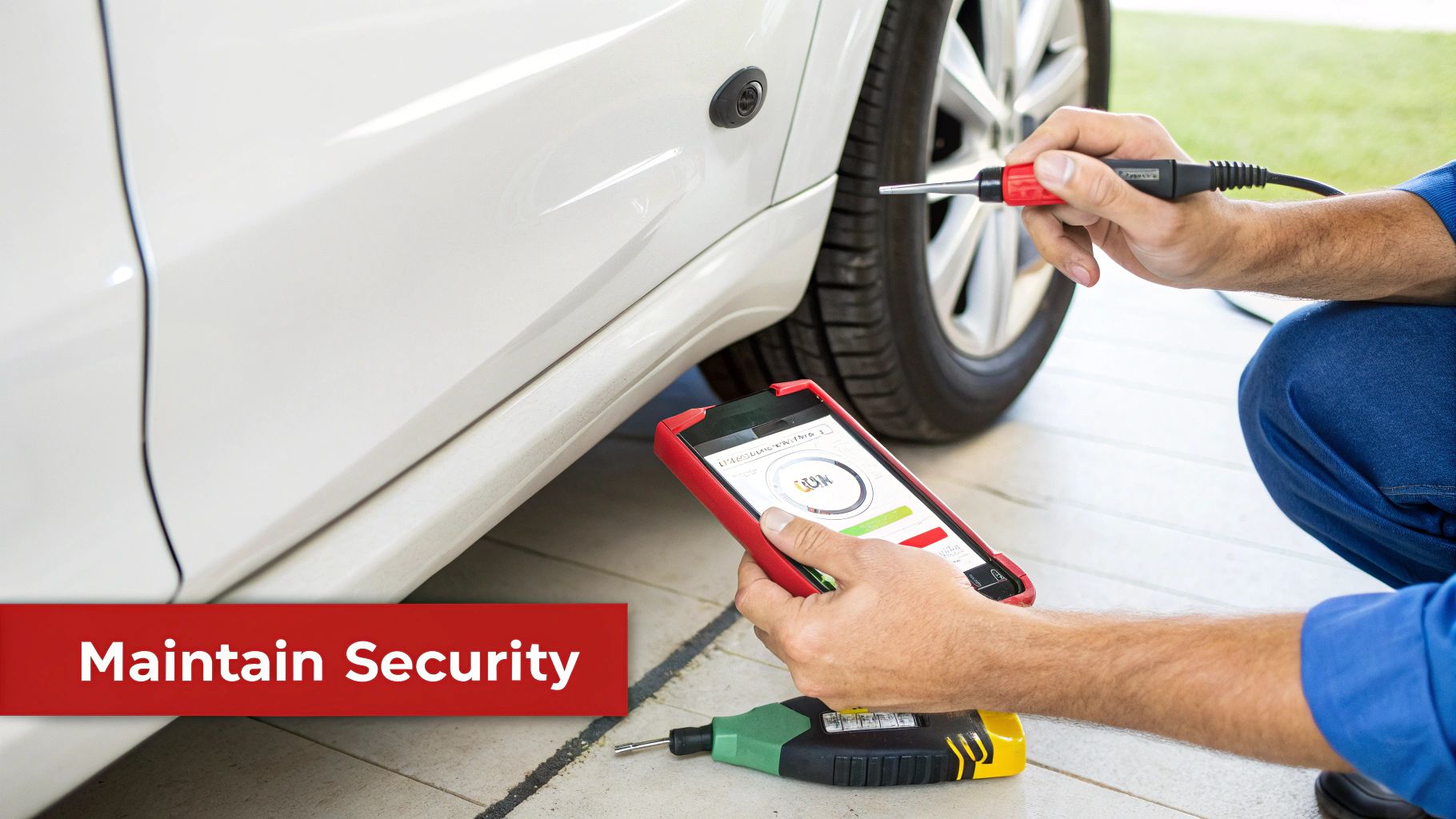
An anti-theft device is only as effective as its installation and maintenance. A state-of-the-art system can be rendered useless by improper setup or neglect. Investing time in correct installation and routine checks is crucial for ensuring your security system performs when it is needed most.
For simple physical devices like steering wheel locks, installation is a straightforward, manual process. However, for electronic systems that integrate with your vehicle's wiring—such as advanced alarms, immobilizers, or hardwired trackers—the complexity increases significantly. An improper installation can lead to false alarms, system failure, or even damage to your vehicle's electronics. For these systems, professional installation is strongly recommended.
If you are undertaking a DIY electronic installation, referencing technical guides for similar projects, like home security system installation, can be beneficial. The principles of ensuring secure connections and thorough testing are universally applicable.
Making Sure Your System Is Always Ready
Once installed, your security system requires periodic maintenance. Consider it a routine health check for your vehicle's defenses. A few minutes dedicated to maintenance can prevent the catastrophic failure of your system during an actual theft attempt.
A security system that is not regularly tested is an unverified assumption. You cannot have confidence in its ability to protect your vehicle unless you periodically confirm its functionality. This simple habit can make all the difference.
Establishing a routine maintenance checklist is the most effective way to stay on top of this. Set a recurring reminder on your calendar to perform these basic checks and keep your security layers fully operational.
Your Simple Maintenance Checklist
This checklist provides a framework for maintaining various types of anti-theft devices, ensuring each component of your security strategy remains in optimal condition.
-
Test Your Alarms: Once a month, intentionally trigger your alarm. Verify that the siren is loud, the lights flash correctly, and—if using a connected system like CarLock—that the alert is delivered promptly to your smartphone.
-
Check Tracker Batteries: For battery-powered GPS trackers, regularly check the power level via the companion app. Set a calendar alert to recharge or replace the batteries well before they reach a critically low level to avoid gaps in coverage.
-
Inspect Physical Locks: Periodically examine your steering wheel or pedal lock. Ensure the locking mechanism operates smoothly. A small amount of lubricant can prevent jamming and maintain functionality.
-
Update Your Insurance: This is a crucial step. After installing a new security device, contact your insurance provider. Many companies offer significant discounts for vehicles equipped with approved anti-theft systems, potentially leading to substantial savings on your premium.
-
Review Privacy Settings: For GPS tracking devices, if multiple people drive the vehicle, it is best practice to be transparent about its use. Understanding and respecting privacy considerations is key to maintaining trust and complying with local regulations.
Got Questions About Car Anti-Theft Devices? We've Got Answers.
Even with a solid understanding of the available options, specific questions often arise. Here, we address some of the most common inquiries to help you make a fully informed decision about protecting your vehicle.
Can Thieves Really Bypass Modern Anti-Theft Devices?
This is a critical question. While factory-installed immobilizers are effective against common theft methods, determined professional thieves may use sophisticated tools—such as signal relay amplifiers for keyless entry systems or code-grabbing devices—to circumvent them. This reality underscores the risk of relying on a single layer of security.
The best practice is to adopt a layered approach, analogous to securing a home. You wouldn't rely solely on a locked door; you would also secure windows and perhaps activate an alarm system. For your vehicle, this means supplementing the factory immobilizer with a visible deterrent like a steering wheel lock and a covert real-time GPS tracker. This multi-layered defense makes your vehicle a significantly more difficult and less appealing target.
Will Adding an Aftermarket Device Void My Car's Warranty?
This is a common and valid concern. In many jurisdictions, such as the United States under the Magnuson-Moss Warranty Act, manufacturers cannot void an entire vehicle warranty simply because an aftermarket part has been installed.
However, there is a key caveat: if the aftermarket device itself, or its improper installation, directly causes damage to a component of your vehicle, the manufacturer may legally deny a warranty claim for that specific repair. To mitigate this risk, always select high-quality devices from reputable brands and, for any system that interfaces with your vehicle's wiring, strongly consider professional installation.
Are Subscription-Based GPS Trackers Really Worth the Money?
For most vehicle owners, the modest monthly fee for a high-quality GPS tracking service represents a significant value proposition. This subscription typically covers the cellular data required for real-time location transmission, cloud storage for trip and event data, and access to the platform's full suite of features.
While a device with a one-time purchase price may seem more economical upfront, it often lacks the critical features needed for effective recovery, such as instant alerts, live tracking, and historical route data. According to the National Insurance Crime Bureau (NICB), over one million vehicles were stolen in the U.S. in 2022, a 7% increase over the previous year. These statistics highlight the growing need for a robust recovery system.
When you weigh the financial and personal value of your vehicle against the statistical risk of theft, the ability to receive instant alerts and track your car's precise location often makes a subscription-based service a logical investment. The high recovery rates associated with these systems can be invaluable.
For a more in-depth exploration, you can review our comprehensive list of frequently asked questions about GPS car trackers to learn more about their functionality and benefits.
Ready to secure your vehicle with the most advanced real-time monitoring available? Choose CarLock and get instant alerts on your phone the moment any suspicious activity is detected. Visit https://www.carlock.co to protect your car today.