

Driver’s Desk
Installing Car Alarm System Cost: A Complete Price Guide for 2026
Thinking about installing a car alarm? One of the first questions on your mind is probably, "How much is this going to set me back?" The straight answer is that the total cost to get a car alarm system installed typically runs anywhere from $150 to over $800. That ballpark figure covers everything—the alarm hardware itself and the professional labor to get it wired up and working.
Your Quick Guide To Car Alarm Installation Costs
Before you can nail down a price, you need to understand what you're buying. The cost of a car alarm isn't a single flat fee; it's a spectrum. At one end, you have basic systems that just make a lot of noise. At the other, you have sophisticated smart systems with GPS tracking that communicate directly with your smartphone. Naturally, the price changes with the level of protection.
To give you a clearer picture right away, this table breaks down the typical costs. It separates what you can expect to pay for the actual alarm unit from the fees a professional shop will charge for the installation.
Estimated Car Alarm Installation Costs By System Type
This table provides a quick summary of the typical cost ranges for different types of car alarm systems, including hardware and professional installation fees.
| System Type | Hardware Cost Range | Professional Installation Cost Range | Total Estimated Cost |
|---|---|---|---|
| Basic One-Way Alarm | $50 – $150 | $100 – $200 | $150 – $350 |
| Mid-Tier Two-Way Alarm | $100 – $300 | $150 – $250 | $250 – $550 |
| Advanced Smart GPS System | $50 – $200+ | $150 – $300 | $200 – $500+ |
As you can see, the price climbs as you add more features. A basic one-way alarm is a classic deterrent—it blares a siren when triggered, hopefully scaring off a thief and alerting people nearby. A two-way system takes it a step further by sending an alert back to your key fob, letting you know the alarm has been tripped.
The real game-changer is the advanced smart system. These don't just make noise or beep a remote. They send real-time alerts straight to your smartphone, track your car's exact location using GPS, and pack a whole suite of modern monitoring features.
The global vehicle security market was valued at a massive $12.3 billion in 2023 and is projected to reach $22.8 billion by 2033, according to Allied Market Research. This growth reflects the increasing demand for smarter security. Even a simple one-way alarm with shock sensors, which might only cost $150 to $350 installed, provides a solid first line of defense. When you consider that the National Insurance Crime Bureau (NICB) reported that the average loss from a car theft can easily top $10,000, that initial investment seems small.
This quick overview should give you a good starting point. Now, we can dig deeper into what really drives these costs, so you can pick the right security for your car and your budget. You can learn more about modern car alarm solutions and how they offer a huge leap in protection over older systems.
Breaking Down The Numbers: A Detailed Cost Analysis
So, what's the real cost to get a car alarm installed? To figure that out, you have to look past the final sticker price. It's like looking at a restaurant bill—the total is one thing, but the itemized list tells you exactly where your money went. Every car alarm system has two main parts to its cost: the hardware (the actual gear) and the labor (the expert who puts it all together).
Let's pull back the curtain on both to see what you’re really getting for your money.
What You Get For Your Money: A Look at Hardware Costs
The price of the alarm itself comes down to what it can do. The more features and smarter tech, the higher the cost. It all starts with the basics.
Basic One-Way Systems ($50 – $150): Think of this as the classic car alarm. It's a siren designed to make a racket, scaring off a would-be thief and hopefully alerting anyone nearby. You get the main control unit, a loud siren, a shock sensor for impacts, and a simple remote. It’s a solid first step, but its protection is limited to how far the sound travels.
Mid-Tier Two-Way Systems ($100 – $300): This is where your security starts talking back to you. These systems have everything the basic ones do, but they add a game-changing feature: a two-way remote. If your alarm goes off, it doesn't just shriek into the void—it sends an alert right to the pager-like remote in your pocket, sometimes from up to a mile away. Now you know something's wrong, even if you can't hear the siren.
Advanced Smart GPS Systems ($50 – $200+): Welcome to the modern era of vehicle security. These systems ditch the old-school pager and connect directly to your smartphone via a cellular network. The hardware is more sophisticated, including a GPS module for real-time location tracking and an accelerometer to detect the slightest disturbance. It’s a huge leap from just making noise to actively monitoring and tracking your car.
This is where you see the value really stack up. A solid two-way system with features like remote start might run you $400-$800 after installation, with the hardware itself being $100-$300 of that. But for not much more, around $200-$500+ total, you can get a smart GPS alarm like CarLock that puts alerts and real-time tracking right on your phone.
That's a big deal. The NICB has reported that the national vehicle theft recovery rate is often below 60%, and even recovered vehicles frequently have significant damage. But with a GPS tracker? Law enforcement recovery rates can shoot up to over 90%. You can learn more about the real costs of installing car alarms and see how today's systems offer a much bigger bang for your buck.
Decoding Professional Labor Charges
While the price of the alarm unit is pretty straightforward, labor is where things can get a little fuzzy. That installation fee isn't just a random number; it's a reflection of the installer's skill, the time it takes, and the risk of messing with your car's complex electrical system.
Think of it like hiring a surgeon versus a general practitioner. Both are medical professionals, but one has the specialized training for complex procedures. The same principle applies to alarm installation.
Key Takeaway: You can expect to pay anywhere from $100 to $300 or more for professional installation. This isn't just for the installer's time—it covers their training, specialized tools, the shop's insurance, and a warranty on their work.
Here’s what drives that cost up or down:
Your Car's Complexity: There’s a world of difference between installing an alarm in a simple 1995 Honda Civic and a 2024 BMW with a CAN bus network. Modern cars are rolling computers, packed with integrated networks and sensitive electronics. Tapping into those systems requires specialized tools and knowledge, which means more labor hours and a higher bill.
The Installer’s Experience: You get what you pay for. A certified technician, such as one with MECP (Mobile Electronics Certified Professional) certification, will charge more than a rookie, but they’re also far less likely to cause electrical nightmares or void your vehicle's warranty.
Where You Live: Location, location, location. Labor rates in a major metropolitan area with high rent and operating costs are naturally going to be higher than in a small town. A recent survey from IbisWorld shows average auto mechanic labor rates can vary by over 30% depending on the state.
In the end, the total cost to install a car alarm system is a balancing act between the tech you want and the complexity of your vehicle. By understanding what goes into both the hardware and the labor, you can make a much smarter choice that fits your budget and gives you the peace of mind you're looking for.
Professional Installation Versus DIY: Which Is Right For You?
Choosing a car alarm is just the first step. The real question is, how do you get it into your car? This is a classic fork in the road: do you pay a professional to handle it, or do you roll up your sleeves and go the do-it-yourself (DIY) route? The path you take affects more than just your bank account—it determines your system's reliability and your ultimate peace of mind.
Think of it like this: would you perform minor surgery on yourself after watching a few videos, or would you go to a qualified doctor? Both might address the issue, but one comes with guaranteed safety and expertise, while the other is a significant gamble.
The Case for Professional Installation
When you hire a professional installer, you're buying confidence. You’re not just paying for a few hours of their time; you're paying for years of experience, a toolbox full of specialized equipment, and a deep understanding of today's complex vehicle electronics.
A certified technician knows exactly how to weave an alarm system into your car's existing CAN bus network without tripping a sensor, causing an electrical short, or voiding your vehicle's warranty. This is critical, especially when you consider that the National Insurance Crime Bureau reports that over 1 million vehicles were stolen in 2022, a 7% increase from the previous year. A perfectly installed system is your first line of defense.
Here’s what you get when you go with a pro:
- Warranty Protection: A professional job almost always comes with a warranty. If the installation causes a problem, they're on the hook to fix it. This protects your alarm and your car's sensitive electrical components.
- Guaranteed Performance: Experts know how to fine-tune sensors to avoid those annoying false alarms while ensuring the system actually triggers when there's a real threat.
- Time Savings: An installation that could consume your entire weekend (and your patience) is often just a few hours of work for a seasoned professional.
The Appeal and Pitfalls of DIY Installation
Let’s be honest, the biggest draw for a DIY install is saving money. When you cut out labor fees, which can easily run from $150 to over $300, the savings are significant. If you're handy with tools and feel comfortable reading a wiring diagram, it can even be a satisfying project.
But the risks are very real. One wrong connection can lead to a world of hurt: a constantly drained battery, phantom electrical gremlins, or even frying your car’s main computer (ECU), a repair that can cost thousands. The cost to fix that kind of damage would dwarf what you saved on installation. Worse yet, if a dealership traces an electrical problem back to your handiwork, they can deny any related warranty claims.
Key Consideration: Going the DIY route saves money upfront but transfers all the risk to you. A botched install doesn't just leave your car vulnerable; it can create a whole new set of expensive problems.
This handy decision tree can help you map out which path makes the most sense for you.
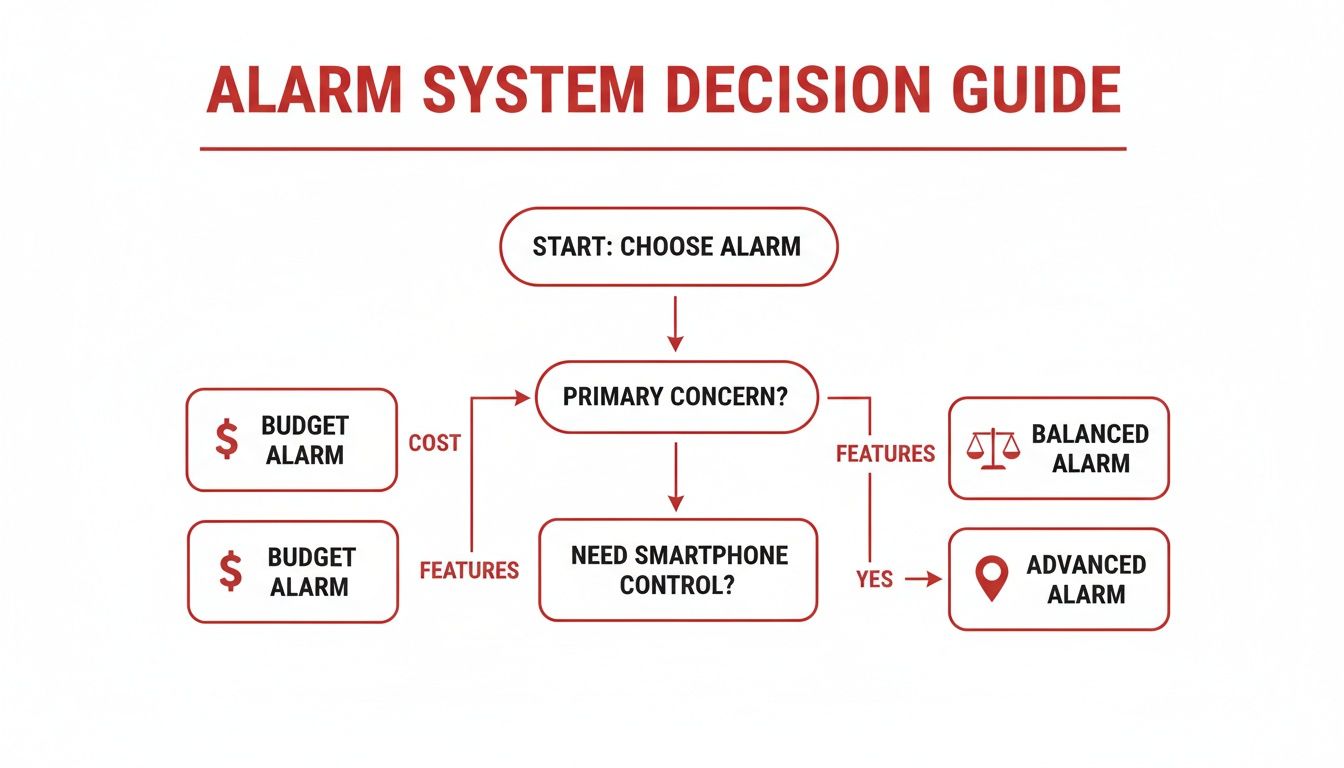
As the chart shows, your priorities—whether that’s a rock-bottom budget, a mix of solid features, or top-tier GPS tracking—point toward different solutions.
To make this choice clearer, let's break down the pros and cons side-by-side.
Professional vs. DIY Car Alarm Installation
| Factor | Professional Installation | DIY Installation |
|---|---|---|
| Upfront Cost | Higher (typically $150 – $300+ in labor) | Lower (only the cost of the alarm and any tools) |
| Expertise | High. Performed by a trained, often certified, technician. | Varies. Depends entirely on your own skills and research. |
| Time Investment | Low. Usually completed in a few hours. | High. Can take a full day or weekend. |
| Warranty | Yes, both the install and the product are typically covered. | No. You are responsible for any issues that arise. |
| Risk of Damage | Very low. The installer is liable for any mistakes. | High. One wrong wire can cause expensive electrical damage. |
| Peace of Mind | High. You can trust the system is working correctly. | Low. You might always wonder if you did it right. |
Ultimately, the right choice comes down to your personal comfort level with vehicle electronics and how much you're willing to risk to save a few hundred dollars.
A Modern Hybrid Solution
But what if you didn't have to choose between high costs and high risk? A new generation of smart security systems has created a third option that delivers the best of both worlds. These devices do away with complicated wiring in favor of a simple, plug-and-play setup.
CarLock is a perfect example. It's a powerful GPS tracking and alert system that you can install yourself in less than a minute. It plugs right into your car’s OBD-II (On-Board Diagnostics) port, which has been a standard feature on every vehicle manufactured in the U.S. since 1996. This design completely sidesteps the risk of electrical damage and the need for a professional installer.
This approach gives you the cost savings of a DIY project with the reliability of a professionally engineered security device. You can learn more about the smart features and simple setup of GPS devices that are changing the game. By opting for a system designed for easy installation, you can secure your car with confidence—no wire cutters required.
What Else Drives Up the Final Price Tag?
Getting a quote for a car alarm installation can feel a bit like getting a quote for a home renovation—the initial number is really just the beginning. Several factors can creep in and push that final price higher than you expected. If you know what they are ahead of time, you can budget smartly and avoid any nasty surprises when you get the final bill.
Think of it this way: the car itself is the biggest variable. A brand-new luxury SUV with a complex computer network is a completely different beast than a 20-year-old pickup with straightforward wiring. The more advanced your car's electronics, the more skill and time it takes for an installer to integrate a new alarm system correctly.
This is where labor costs, the most unpredictable part of the equation, can really start to climb.
Your Car's Age and Tech Level
Modern cars are rolling computers. Everything from the door locks to the ignition is controlled by an Engine Control Unit (ECU) and communicates via a network like the CAN bus. Tapping into that network isn't a simple splice-and-go job anymore. It demands specialized knowledge and often, special tools.
To get an aftermarket alarm to play nice with your car's factory system, an installer might need to add interface modules or bypass kits. These parts add to the hardware cost, sure, but they also add to the installation time—sometimes by a few hours. For instance, putting a remote start in a car with a push-button ignition is worlds more complex than adding one to a car that uses a traditional key.
The bottom line is this: the newer and more loaded your car is, the more you should expect to pay for a professional installation. You're not just paying for someone's time; you're paying for their expertise to work on a delicate electrical system without causing thousands of dollars in damage.
Location, Location, Installation
It’s not just what you drive, but where you get the work done. Labor rates can swing wildly from one place to another.
A high-end audio and security shop in a major city has higher rent and overhead, so their hourly rate will naturally be higher than a small-town mechanic's. According to data from the Bureau of Labor Statistics, average hourly wages for automotive technicians can vary significantly by metropolitan area. That geographical difference alone can easily add $50 to $150 or more to the final bill for the exact same installation.
- Big Cities: You'll likely pay more per hour, but you often get access to more certified technicians with experience on a wider range of vehicles.
- Smaller Towns: Labor is usually cheaper, but your options for a highly qualified installer might be limited.
The Temptation of Add-Ons
The base alarm is just the starting point. Most people end up wanting a few extra features for better security and convenience, and each one tacks on its own cost for parts and labor.
Here are a few of the most popular upgrades and what you can expect them to add to the total:
- Remote Start: A must-have for many, letting you heat up or cool down your car before you even step outside. This will typically add $100 – $300 to the total cost, with fancier cars landing on the higher end of that range.
- Starter-Kill Switch (Immobilizer): This is a powerful anti-theft tool that prevents a thief from starting the engine unless the alarm is disarmed. It’s a great security boost, usually adding $50 – $100 to the job.
- Tilt and Glass-Break Sensors: These add extra layers of defense. A tilt sensor goes off if someone tries to tow your car or steal the wheels, while a glass-break sensor listens for the specific sound of shattering glass. Each one can add another $30 – $75.
These extras are great, but they can quickly inflate your budget. A basic aftermarket alarm might run $160-$500 installed, but a smart GPS system like CarLock can end up in the $200-$500+ range, which breaks down to $50-$200 for the device and another $150-$300 for professional labor. The car's complexity is the wild card here; research shows that steep installation costs can scare off up to 30% of potential buyers. This is exactly where systems designed for easy DIY installation really shine, as they cut that variable labor cost right out of the picture. To see how these monitoring systems work behind the scenes, you can explore the details of CarLock's cloud features.
Why a Modern GPS System Is a Smarter Investment
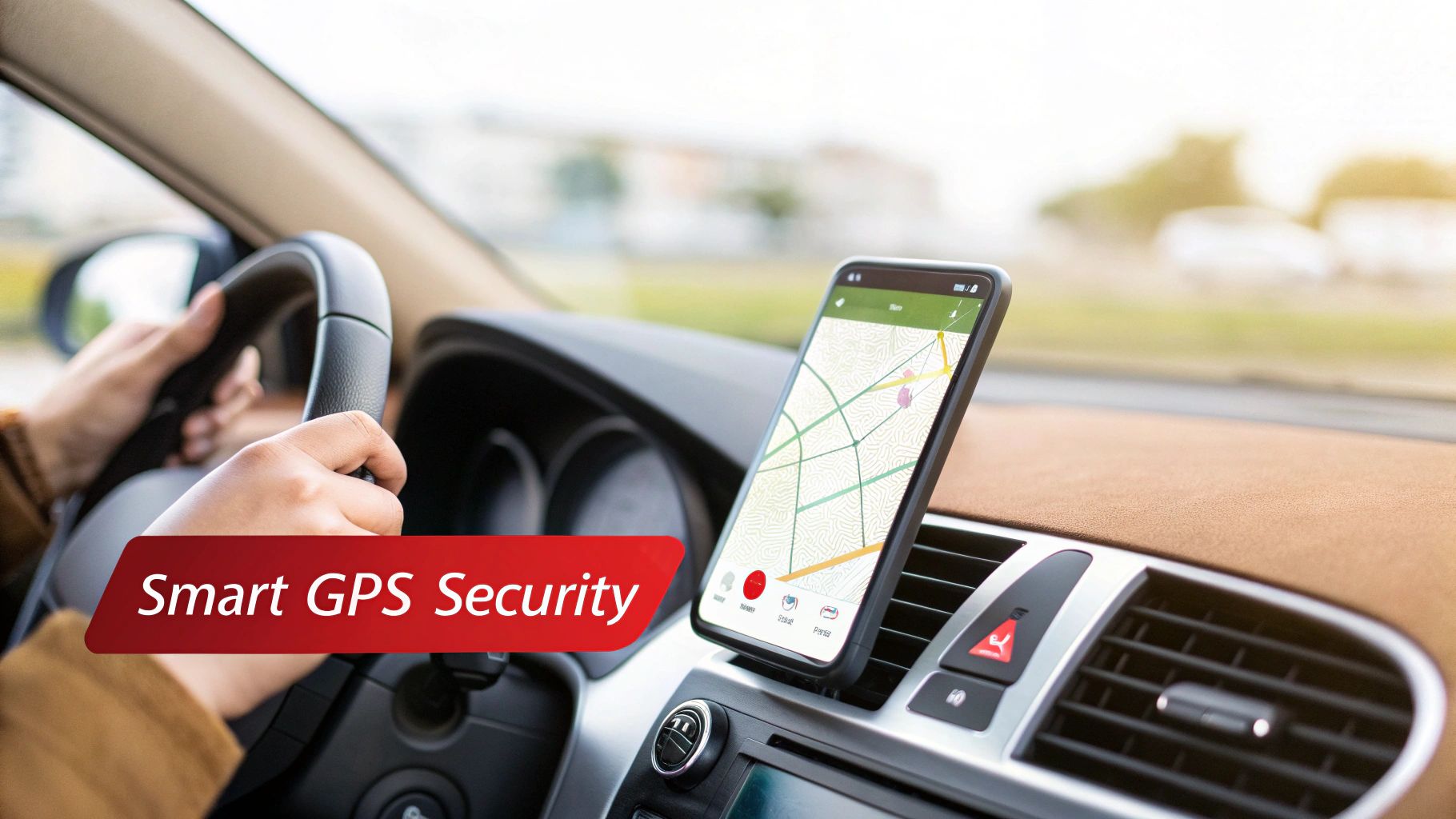
Think about the last time you heard a car alarm go off. Did you rush to the window or just roll your eyes? This phenomenon, known as "alarm fatigue," is a documented psychological response where people become desensitized to frequent, and often false, alarms.
This reality makes you question the real value behind the installing car alarm system cost. If a loud noise is the only defense you're paying for, is it actually protecting your vehicle?
Traditional alarms are purely reactive. They’re designed to make a scene and hope that the noise either scares a thief away or gets a Good Samaritan to intervene. But in today's world, that’s a risky bet. Car theft techniques are getting smarter, utilizing tools like signal amplifiers for keyless entry systems, and people are more reluctant than ever to get involved.
From Passive Noise to Active Defense
This is exactly where GPS-based smart systems flip the script. Instead of just making a racket for the whole neighborhood to ignore, they turn your vehicle's security into an active, intelligent system that communicates directly with you.
Think of a standard car alarm like a smoke detector that only beeps inside an empty house. Sure, it’s making noise, but if no one's there to hear it, it's not doing much good. A smart GPS system is like a modern smoke detector that instantly sends an alert to your phone and calls the fire department. It gives you an immediate, actionable warning when every second counts.
By shifting from public, audible alerts to private, direct-to-owner notifications, smart GPS systems give you the power to react instantly. This proactive approach is the single biggest leap forward in vehicle security technology.
The Power of Real-Time Smartphone Alerts
The real magic of a system like CarLock is its ability to send highly specific, real-time alerts straight to your smartphone. These aren't just generic "alarm triggered" messages. You get actionable intelligence about precisely what's happening to your car, as it's happening.
- Vibration Detected: Get an instant push notification if the device senses vibrations from a potential break-in, a tow truck, or even just someone bumping into your car.
- Engine Started: You’ll know the second your engine starts without you in the car—a critical red flag that a theft is in progress.
- Geofencing Alerts: Create a virtual "safe zone" around your home or office. If your car moves outside this boundary, you get an immediate alert.
- Device Disconnected: Thieves are smart enough to look for security devices, but you'll be notified the moment they try to unplug it.
This transforms your phone into a 24/7 command center for your car's safety. It takes the guesswork and helplessness out of the equation, giving you the concrete information you need to alert the authorities right away.
To get a closer look at how all these features work together, you can explore CarLock's advanced car security capabilities. When you break it down, a smart GPS system is a much more intelligent investment, putting your money toward a solution that delivers tangible results and true peace of mind.
The Real Payback: How an Alarm Saves You Money in the Long Run
When you're looking at the cost to install a car alarm, it's easy to focus on the upfront price tag. But that's only half the story. A good security system isn't just an expense; it’s a smart investment that can genuinely save you a ton of cash over time.
Think of it less as a cost and more as a financial shield. The real value isn't just in the loud noise it makes—it's in the cold, hard cash it keeps in your pocket.
Score a Better Deal on Your Car Insurance
Here’s a benefit you can see almost immediately: lower insurance premiums. Insurance companies are all about managing risk, and a car with a quality anti-theft system, especially one with GPS tracking, is a much lower risk for them to cover.
They pass that lower risk on to you in the form of a discount.
- How much can you save? Most drivers see premium reductions anywhere from 10% to 25% for installing an approved security device.
- Do the math: A 15% discount on a $1,500 annual policy knocks $225 off your bill each year. A solid alarm system can easily pay for itself in a year or two from these savings alone.
Suddenly, that installation cost starts looking a lot more like an investment that actively cuts your other car-related bills.
You shouldn't think of a modern GPS system like CarLock as just another gadget for your car. See it for what it is: a powerful, low-cost insurance policy against a major financial hit that also happens to reduce your actual insurance premiums.
Dodging the Massive Cost of a Stolen Car
Insurance discounts are great, but the biggest financial win is preventing a theft from ever happening in the first place. If your car gets stolen, the financial headache is way bigger than just the value of the vehicle.
Let’s break down the real-world costs you'd be stuck with:
- Your Insurance Deductible: This is the first cash hit you'll take, and it's often between $500 and $2,000.
- Getting Around: While you wait for the insurance claim to be processed (which can take weeks), you still need to get to work. Rental car fees can pile up fast, easily costing hundreds of dollars.
- Losing Your Stuff: What was in your car? A laptop, tools for work, your gym bag? That’s all gone, and your auto policy might not cover any of it.
- Paying More Later: After you file a major claim for theft, you can bet your insurance rates are going to spike and stay high for years.
When you stack up the one-time cost of a good alarm system against these crushing potential expenses, the choice is pretty clear. It's not just about protecting your car; it's about protecting your wallet and giving yourself some much-needed peace of mind.
Frequently Asked Questions
When you start digging into car security, a lot of questions pop up. It's totally normal. From how long an installation takes to whether it'll mess with your car's warranty, getting solid answers is the first step toward making a smart choice. Let's tackle some of the most common things people ask about getting a new alarm system.
How Long Does It Take To Install A Car Alarm?
This really depends on what you're installing and what you're driving. There's a huge difference between a simple tracker and a full-blown security system.
Something like a modern plug-in GPS tracker, like CarLock, is designed for anyone to install. You can literally have it up and running in under a minute. On the other hand, a standard one-way alarm system will probably take a professional installer about 1-2 hours to wire up correctly.
If you're going all-out with an advanced system that has remote start and a bunch of different sensors, expect a much longer install time. On a newer car with complex electronics, a job like that could easily take 3-5 hours, sometimes even longer.
Will An Aftermarket Alarm Void My Car Warranty?
This is a big one, and thankfully, the answer is usually no—as long as the job is done right.
Here in the United States, the Magnuson-Moss Warranty Act has your back. This federal law states a car manufacturer can't void your warranty just because you added an aftermarket part. The catch? If a botched installation causes damage, say to your car’s electrical system, then they can deny a claim for that specific damage. This is precisely why having a pro handle the installation for any wired system is such a good idea.
Key Takeaway: Using a certified technician for the install is your best insurance policy. It protects your vehicle from electrical problems and keeps your manufacturer's warranty safe and sound.
Are There Recurring Monthly Fees For Car Alarms?
It all comes down to the kind of system you choose.
Your classic one-way or two-way alarms are a one-and-done deal. You buy the hardware, get it installed, and that’s it—no monthly bills.
However, the new wave of smart GPS systems like CarLock is different. They use a cellular connection to send you live alerts and track your car's location on your phone. To keep that connection active, there’s a small subscription fee, either monthly or yearly. That fee is what powers the system's most important features, including real-time tracking, cloud data storage, and push notifications. If you're curious, you can find more details by checking out our answers to other common GPS tracker questions.
Can A Car Alarm System Drain My Battery?
A well-made, modern alarm is designed to sip power, not guzzle it. They're engineered to draw a tiny amount of electricity when your car is off, typically a few milliamps.
With a healthy battery, you'll never even notice it. The trouble comes in when you have an older, weaker battery that's already on its last legs, or if the alarm was installed poorly. In those cases, even a small parasitic draw could eventually drain the battery. That's why advanced systems like CarLock come with built-in battery monitoring and low-power modes—they’ll actually warn you before your battery gets too low.
Ready to move beyond a simple siren and get real, active protection? CarLock is a powerful GPS tracking system that’s a breeze to install and sends instant alerts right to your phone. It’s modern security that delivers genuine peace of mind. Learn more and secure your car today at https://www.carlock.co.