

Driver’s Desk
Heavy Equipment GPS Tracking: A Guide to Security and ROI
When we talk about heavy equipment GPS tracking, we're referring to a system that uses satellites to give you real-time location, speed, and time data for your high-value assets—think excavators, dozers, and loaders. But it's so much more than just a dot on a map. Think of it as a complete security and management system, one that delivers the kind of insights you can actually use to protect your machinery and run a tighter ship, especially on remote job sites.
Why Heavy Equipment GPS Tracking Is a Necessity
Picture your most valuable assets—excavators, bulldozers, and loaders—each wrapped in a digital fortress, protected 24/7 no matter where they are. That's not science fiction; it's what modern heavy equipment GPS tracking delivers. This technology is like having a digital guardian on duty, tackling some of the toughest challenges in construction and other industrial fields.
Trying to manage a fleet without this kind of oversight is like trying to navigate with a blindfold on. You're left guessing where your assets are, how they're being used, and what threats they might be facing. This lack of visibility is a recipe for serious financial hits from theft, unauthorized use, and just plain inefficiency. A report from the National Equipment Register (NER) highlights that equipment theft costs the construction industry between $300 million and $1 billion annually in the U.S. alone, with recovery rates often below 25%.
Moving Beyond Simple Location Dots
It’s easy to think of GPS as just a way to find a machine’s location. But today's systems have evolved into a full-blown ecosystem for security and management. They're designed to solve the real-world problems that keep managers up at night.
Let's be honest, remote job sites are a magnet for thieves. Industry reports show that equipment theft bleeds companies of over $400 million a year in the U.S. alone. A good GPS tracking system is your first and best line of defense.
A robust tracking system isn't just a tool for recovery after something's been stolen. It’s a proactive security measure that makes criminals think twice and gives you the instant alerts needed to stop a theft in its tracks.
The Power of Actionable Intelligence
This digital guardian doesn't just watch; it talks to you. It sends an alert when a machine's engine fires up after hours. It lets you know if a piece of equipment leaves the work zone you've designated. It can even tell you if it's being used improperly. This is how raw data becomes intelligence you can act on. If you're curious about how this applies more broadly, you can learn more about comprehensive vehicle security systems.
This kind of proactive monitoring helps shut down common problems before they escalate:
- Theft from remote or unsecured job sites: Instant geofence alerts notify you the second an asset moves when it shouldn't.
- Unauthorized after-hours use: Get an alert for any engine start outside of work hours, stopping misuse that causes unnecessary wear and tear or wastes fuel.
- Costly operational blind spots: By tracking engine hours and idle time, you can get a handle on fuel consumption, schedule maintenance with precision, and make sure every machine is earning its keep.
At the end of the day, heavy equipment GPS tracking provides the oversight you need to protect your investments. It ensures every high-value asset isn’t just being watched, but actively managed for maximum security, efficiency, and profitability. It turns your operational data into a true competitive edge.
The Technology Powering Your Digital Guardian
To really get a handle on heavy equipment GPS tracking, you have to look under the hood. This isn't just about a single gadget; it's a whole system of interconnected parts working together. Think of it as a digital guardian, watching over assets that can be worth tens, or even hundreds, of thousands of dollars. Each piece of the puzzle plays a specific role, turning raw location pings into real security and operational smarts.
At the very core, you have the GPS unit itself. This little box is constantly talking to a network of at least four satellites orbiting the Earth. Through a process called trilateration, it pinpoints its exact location. It's a non-stop digital conversation that gives you real-time coordinates, so you always know where your excavator or dozer is, whether it's sitting on a busy job site or tucked away in a remote storage yard.
But knowing the location is just the start. The best systems also pack in other smart sensors, like accelerometers. These are incredibly sensitive to movement and vibration. If an accelerometer picks up a jiggle at 2 AM, it triggers an alert. That's your first line of defense, letting you know about potential tampering or an unauthorized move long before the machine ever leaves your property.
Creating an Invisible Perimeter with Geofencing
One of the most powerful security tools in the entire system is geofencing. Imagine drawing an invisible fence on a digital map right around your job site or equipment yard. That’s exactly what a geofence is—a virtual boundary that you define.
If a piece of equipment crosses that line when it shouldn't, the system shoots an immediate alert straight to your phone. It’s a game-changer for a few key reasons:
- Stop Theft in its Tracks: You get an instant notification the second an asset leaves the site after hours.
- Prevent Unauthorized Use: Make sure equipment isn't being "borrowed" for side jobs, which just adds wear, tear, and liability.
- Sharpen Site Logistics: Know precisely when equipment arrives at or leaves a project, which helps tighten up scheduling and billing.
This virtual fence turns a passive dot on a map into a proactive security system. Instead of showing up in the morning to find a machine gone, you’re alerted the moment it happens, which dramatically boosts your chances of getting it back.
Tapping into the Machine’s Brain
Modern trackers don't just sit on the outside; they can plug right into the Engine Control Unit (ECU). The ECU is basically the machine's onboard computer, managing everything from fuel injection to engine performance. This direct connection is like having a hotline to the equipment's brain, unlocking a ton of valuable operational data.
By talking to the ECU, the system can report on things like:
- Engine Hours: Forget calendar-based maintenance. Track actual runtime to service equipment when it truly needs it.
- Fuel Levels: Keep an eye on consumption to spot potential fuel theft or flag machines that are idling for way too long.
- Power Take-Off (PTO) Use: See exactly when attachments like a crane lift or a hydraulic arm are being used. This gives you the full picture of how the asset is working.
The table below breaks down these core features, showing how each piece contributes to a smarter, more secure fleet.
Core Features of Modern Equipment Tracking Systems
This table outlines the essential features and sensors in a typical tracking solution, explaining what each component does and the direct benefit it provides for your business.
| Feature or Sensor | What It Does | Primary Business Benefit |
|---|---|---|
| GPS Module | Pinpoints the exact real-time location using satellite signals. | Instantly locate any asset, improving security and dispatching. |
| Accelerometer | Detects motion, vibration, and tilting. | Provides immediate alerts for tampering or unauthorized movement after hours. |
| Geofencing | Creates virtual boundaries on a map. | Triggers alerts when equipment enters or leaves a defined area, preventing theft. |
| ECU Integration | Connects to the machine's onboard computer. | Captures engine hours, fuel levels, and fault codes for proactive maintenance. |
| PTO Monitoring | Tracks the usage of auxiliary equipment (e.g., lifts, pumps). | Provides accurate data for billing, job costing, and verifying work. |
| Battery Backup | Provides power if the main power source is cut. | Ensures the tracker keeps reporting its location even if thieves disconnect the battery. |
Each of these components adds another layer of control and visibility, turning a simple tracking device into an essential management tool.
This infographic shows how these technologies come together, with the digital guardian overseeing everything from security to smart management.
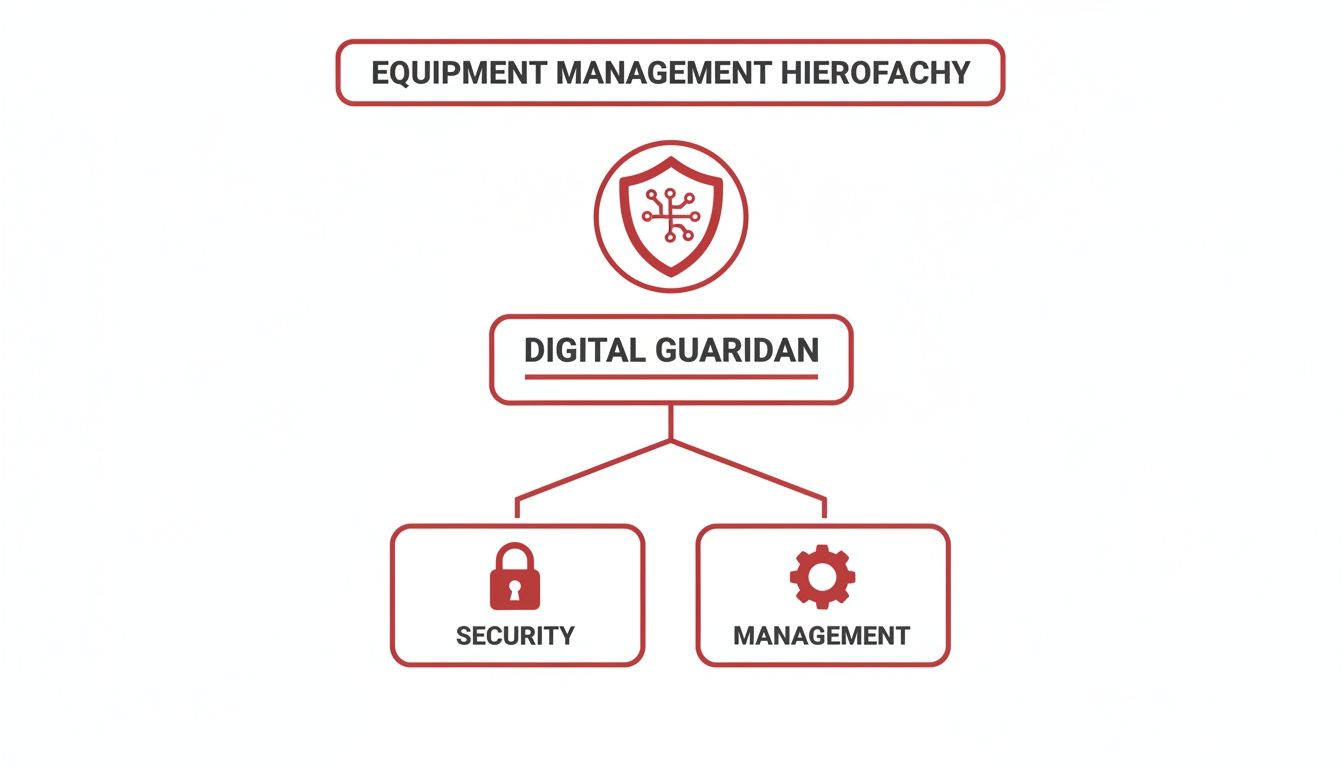
As the diagram shows, a complete system isn't just about preventing theft—it's about creating a more intelligent and efficient operation. You can explore the full range of features that power a modern GPS device to see how this all comes together.
This blend of tough hardware and smart software is why these systems are being adopted so quickly. Fleet managers in construction, agriculture, and logistics are leaning on this technology more than ever. In fact, the transportation sector alone is expected to make up 47% of the market share by 2026. This trend underscores just how vital this technology has become, especially with durable hardware built to survive the harsh realities of a job site.
So, What's the Real Payoff of GPS Tracking?
Let's get straight to it. Putting GPS trackers on your heavy equipment isn't just about knowing where your backhoe is. It’s about turning that location dot on a map into real, tangible business results. Think of it less as a security gadget and more as a powerful business intelligence tool.
The value here really comes down to four key areas that impact your bottom line: keeping your assets safe, running a tighter operation, staying ahead of maintenance, and promoting a safer worksite.
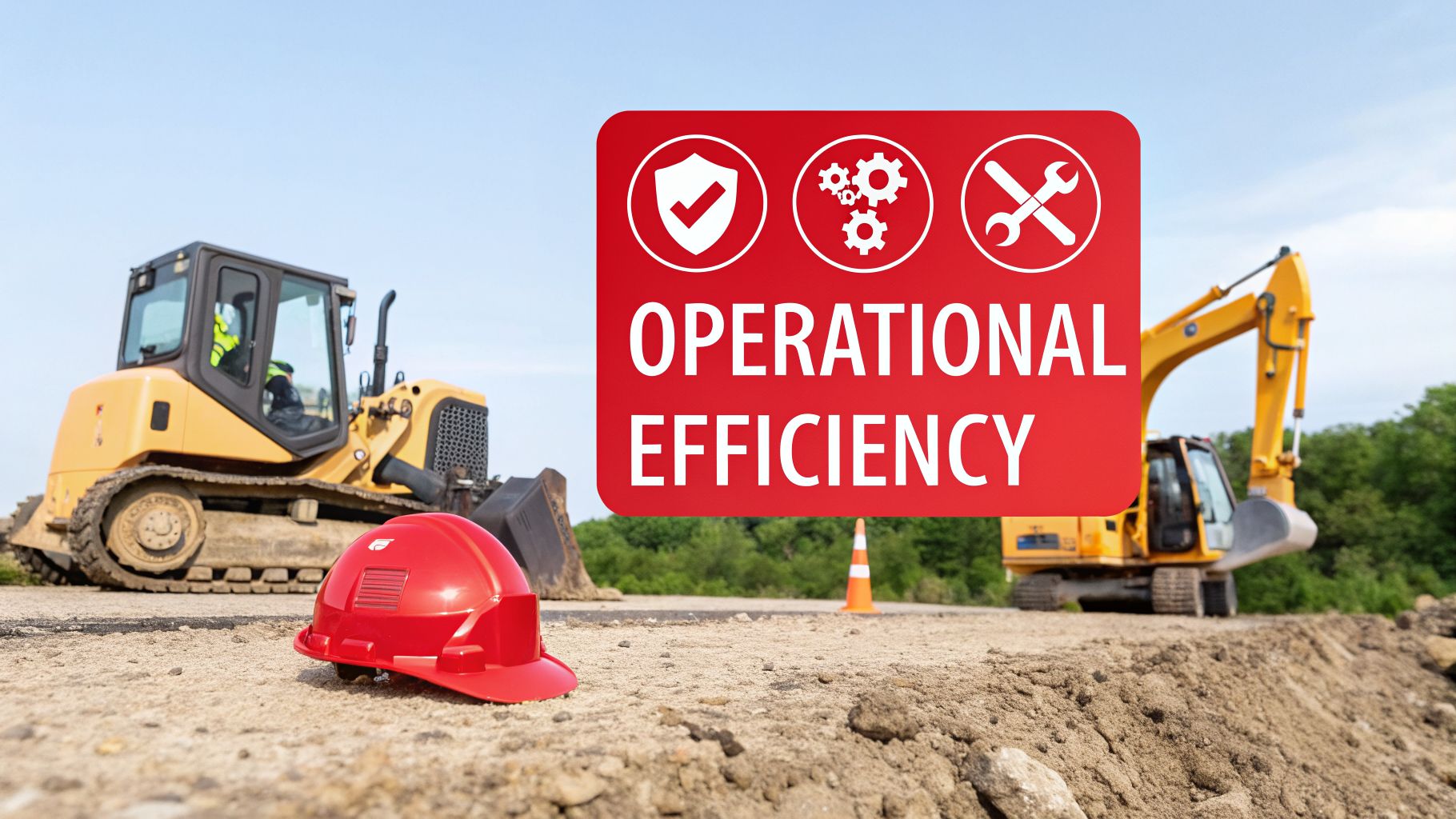
By focusing on these four pillars, you can transform your fleet from a major expense into a smarter, more profitable part of your company. Let’s dig into how this actually works in the real world.
Fortifying Asset Security
The most obvious win with GPS tracking is a massive security upgrade. Your high-dollar equipment often sits on remote, half-finished job sites overnight, making it a prime target for thieves. Real-time tracking and instant alerts are your first line of defense.
Picture this: it's 3 AM and one of your excavators starts moving. A simple alarm system might miss it completely. But a GPS tracker with a geofence—a virtual boundary you set around the site—will instantly ping your phone. You can alert the police immediately and give them the machine's exact, live location.
The difference this makes in getting your gear back is staggering. According to insurance industry data, only about 20% of stolen heavy equipment without tracking is ever seen again. But for assets protected with a GPS system? That recovery rate skyrockets to 65%.
This isn't just about recovery; it's a powerful deterrent. Thieves want easy targets. A simple sticker indicating the machine is GPS-tracked can be enough to convince them to move on and find a less-protected piece of equipment.
Boosting Operational Efficiency
Once you get past the security benefits, you'll find a goldmine of data on how your equipment is actually being used—or, more importantly, how it's not being used. One of the biggest silent profit killers in this business is idle time. That's when an engine is running, burning fuel and racking up hours, but the machine is doing zero productive work. A heavy-duty truck can burn nearly a gallon of diesel per hour while idling.
A good tracking system shows you the ratio of idle time to active work for every single asset. Armed with that information, you can spot underutilized machines and shift them to other sites where they’re desperately needed.
This is a huge opportunity for savings. Across the globe, commercial fleets can idle for up to 30% of their total runtime. By spotting and cutting down on that waste, companies often slash their fuel costs by 10% to 15%. It's all about getting the most out of what you already own, improving job allocation, and maybe even avoiding that next expensive rental.
Enabling Proactive Maintenance
Most maintenance schedules are stuck in the past, based on calendar dates instead of actual use. This one-size-fits-all approach is deeply flawed. Some machines get serviced way too early (a waste of money), while others are run into the ground, putting them at risk of a major breakdown.
GPS tracking flips the script by enabling condition-based maintenance. By plugging directly into a machine's Engine Control Unit (ECU), the tracker logs precise engine hours. Now, instead of guessing when to change the oil, you can set up automated alerts based on actual runtime.
This data-driven approach gives you a few serious advantages:
- Prevent Costly Downtime: You catch problems before they turn into catastrophic failures that derail your entire project schedule.
- Extend Asset Lifespan: Proper, timely maintenance keeps your equipment running smoothly for much longer, protecting your investment.
- Improve Resale Value: A detailed service history backed by hard data from engine hours can seriously boost what your machinery is worth when it's time to sell.
You can get a better sense of the kind of information these systems pull by checking out our guide on monitoring your vehicle's health data.
Fostering a Culture of Safety
Finally, heavy equipment GPS tracking is a game-changer for building a safer work environment. The system can keep an eye on operator habits like harsh braking, sudden acceleration, or speeding—all red flags for unsafe operation. The Occupational Safety and Health Administration (OSHA) reports thousands of injuries annually related to heavy equipment operation, many of which are preventable.
When you see these patterns, you can step in with targeted coaching for the operators who need it most. This does more than just help prevent accidents and injuries on the site. It has a real financial upside. Insurance carriers love to see companies taking proactive safety measures, which can often lead to lower premiums.
In fact, the financial logic for this tech is becoming impossible to ignore. The GPS tracker market is on track to become a $17 billion industry by 2033, and construction equipment is a huge piece of that pie. That growth is being driven by real ROI, including insurance premium cuts of 15-25% for fleets that can prove they have solid safety and security protocols in place. You can read more about these GPS tracking market trends from Persistence Market Research.
How to Choose and Implement the Right Tracking Solution
Picking the right heavy equipment GPS tracking system can feel overwhelming, and for good reason. It’s a major decision. The market is flooded with options, but frankly, not all of them are cut out for the harsh reality of a construction site. The secret to getting it right is asking the tough questions long before you ever see a contract.
Think of this process less like buying a gadget and more like finding a business partner. You need a solution that can take a beating, that your crew will actually use, and that delivers information you can act on to improve your bottom line. It’s all about matching the tech to the real-world needs of your operation.
Evaluating Hardware Durability
Your first filter should always be the hardware itself. A GPS unit designed for a delivery van simply won't last on a bulldozer. It’s a completely different world. Heavy equipment deals with non-stop vibration, extreme heat and cold, dust, mud, and the occasional hard knock. You need a device built specifically for that environment.
Start by looking for a high IP (Ingress Protection) rating. Something like IP67 or higher is what you're after. This rating tells you exactly how sealed the device is against dust and water. An IP67-rated tracker is totally dust-tight and can survive being submerged in a meter of water, meaning it will keep working through rainstorms, mud puddles, and power washes.
Beyond that, ask pointed questions about its tolerance for vibration and shock. The guts of the device need to be ruggedized, otherwise the constant shaking of a running machine will eventually cause it to fail. A flimsy tracker is just money down the drain.
Assessing Software Usability
The toughest hardware in the world means nothing if the software is a nightmare to use. A clunky, confusing dashboard will be ignored, no matter how much data it’s collecting. The goal is to find a platform that turns all that complex data into simple, clear answers.
The best software doesn't just show you data; it gives you answers. At a glance, you should be able to see which machines are sitting idle, which are coming up for service, and if any have wandered off the job site.
As you look at different software platforms, keep these things in mind:
- A Solid Mobile App: Your team is out in the field, not tied to a desk. A powerful and easy-to-use mobile app isn't a "nice-to-have"—it's a must-have for checking on assets and getting alerts on the go.
- Customizable Alerts: Can you easily set up your own rules? Think geofence alerts for when a machine leaves a site, notifications for after-hours movement, or maintenance reminders based on actual engine hours.
- Clear Reporting: Does the system create straightforward reports on things like utilization, idle time, and engine run-time? These reports are the foundation for making smarter business decisions.
Hardwired vs. Battery-Powered Devices
This isn't a one-size-fits-all decision. Whether you need a hardwired or battery-powered tracker depends entirely on the piece of equipment you're tracking.
Hardwired Trackers:
These are the workhorses for your heavy iron—excavators, loaders, dozers, you name it. They wire directly into the machine's electrical system, giving them a constant source of power. This means you get uninterrupted tracking and the ability to accurately monitor crucial data like engine hours and ignition status.
Battery-Powered Trackers:
These are the perfect solution for your non-powered assets. Think trailers, shipping containers, or even expensive attachments like hydraulic hammers. With batteries that can last for months or even years, they give you a lifeline to equipment that doesn't have its own power source. They’re also incredibly fast to deploy.
Installation and Discretion
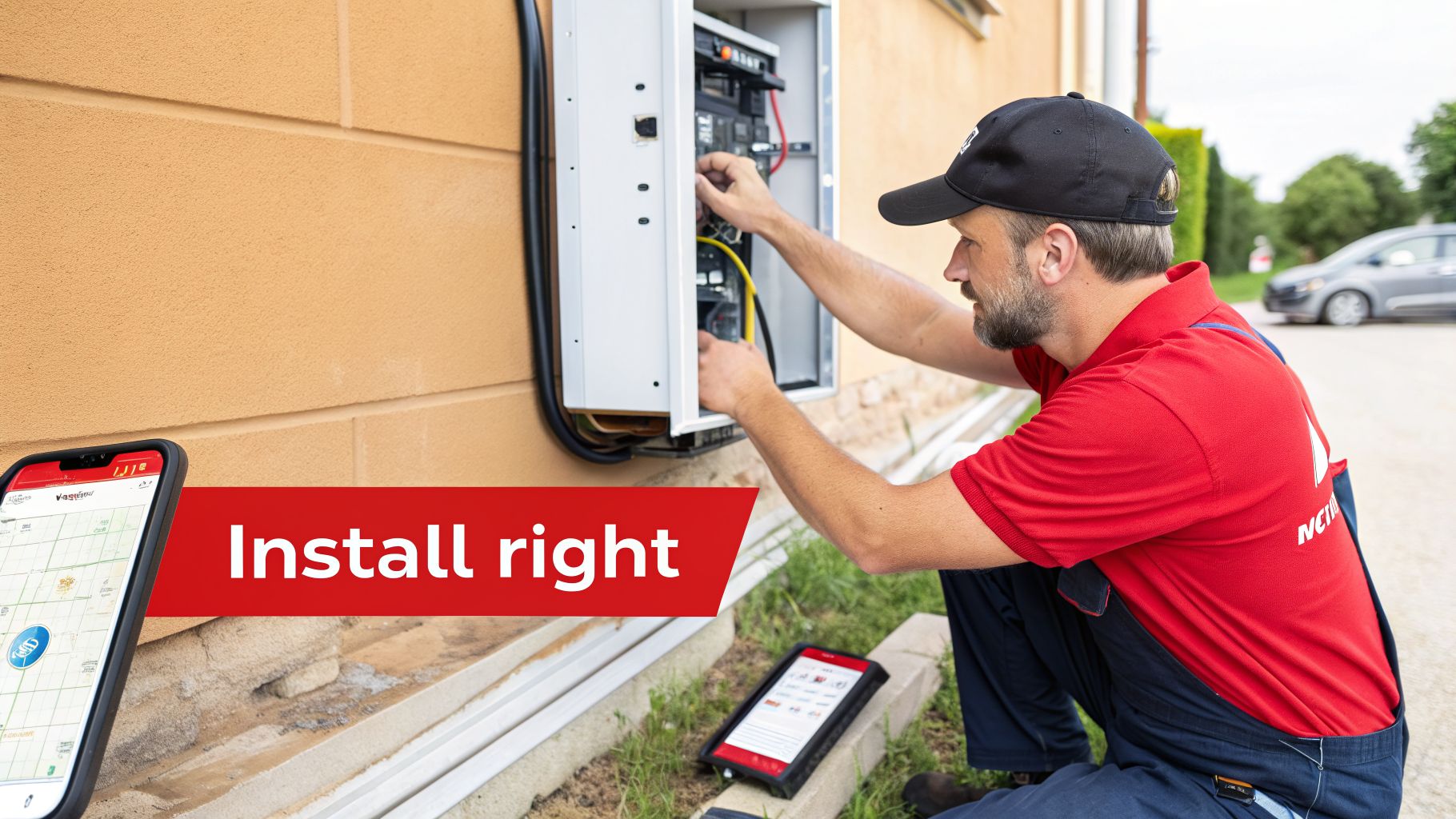
Finally, don't overlook the importance of proper installation. This is critical for both the tracker's reliability and its security. A badly installed device can lose its signal, get damaged, or—worst of all—be easily spotted and ripped out by a thief.
Professional installation is almost always worth it. An experienced technician knows the best places to hide a tracker on different machines, making it invisible to prying eyes. This makes the device tamper-proof and ensures that if a theft does occur, it will keep sending its location. When you're looking at different systems, consider providers who offer comprehensive GPS equipment services as part of the package. A stealthy, solid installation is what makes the whole system work when you need it most.
Turning Telemetry Data into Smarter Decisions
Raw data coming off a GPS unit is just noise. The real power behind heavy equipment GPS tracking is its ability to turn that firehose of information into real-world business intelligence. This is where telemetry comes in—it’s the digital voice of your equipment, constantly telling you about its health, status, and what it’s doing.
Think of it like each machine is sending you a constant report card. We're not just talking about location pings. This is a rich stream of data covering everything from engine hours and fuel consumption to diagnostic fault codes. The right software acts as a translator, turning this digital language into clear insights you can actually use to make confident decisions.
From Data Points to Strategic Insights
The magic of a good tracking platform is how it organizes all that telemetry into reports you can understand at a glance. These reports are what give you a serious competitive edge, helping you shift from constantly putting out fires to proactively managing your fleet. You start to see hidden problems and uncover opportunities you never knew existed.
The entire global heavy equipment telematics market—which is built on this very idea—is set to explode, growing from USD 1.33 billion in 2025 to an estimated USD 3.21 billion by 2032. That kind of growth happens for one reason: the return on investment is undeniable.
Consider this: heavy equipment theft costs the U.S. industry over $400 million every year, and without tracking, recovery rates are abysmal—less than 30%. With GPS trackers, companies have been able to recover up to 70% of their stolen assets, often within just a few hours. The data speaks for itself.
Telemetry is the bridge between what your equipment is doing and what your business needs to know. It transforms raw numbers into a clear story about asset performance, health, and security.
This detailed data is also the foundation for more advanced maintenance strategies. It allows you to move beyond a simple calendar schedule and get a real understanding of predictive maintenance vs preventive maintenance, servicing equipment based on its actual condition.
Leveraging Key Reports for a Better Business
While platforms offer dozens of reports, a few key ones provide the biggest and fastest impact on your bottom line. Focusing on these is the quickest way to see a return.
- Utilization Reports: This is your secret weapon against idle assets. A utilization report clearly shows which machines are sitting around gathering dust versus which ones are being run into the ground. With that knowledge, you can move equipment to jobs where it's actually needed, cutting down on unnecessary rentals and getting more out of the fleet you already own.
- Maintenance Alerts: Forget the greasy stickers on the windshield or messy spreadsheets. Automated alerts track service intervals based on actual engine hours or mileage. This means maintenance happens exactly when it should, which prevents catastrophic failures, reduces downtime, and makes your machines last longer.
- Proof of Service Reports: These are a lifesaver for billing and client relationships. They generate an indisputable, timestamped record of when a machine arrived on-site, how long it worked, and when it left. This eliminates billing disputes and ensures you get paid for every single minute your equipment is on the job.
When you actively use this intelligence, you can bid jobs more accurately, justify new purchases with hard data, and give clients undeniable proof of your work. The information is always there, and you can learn more about accessing data through a cloud platform to see just how easy it is to have it all at your fingertips.
Answering Your Top Questions About Heavy Equipment GPS Tracking
Even when you see the clear value in tracking your big iron, it’s natural to have a few practical questions. As an equipment owner or fleet manager, you want to know exactly what you're getting into before you invest. Let's tackle the questions we hear most often.
How Hard Is It to Install Trackers on Heavy Machinery?
This isn't like plugging a little device into your truck's OBD-II port. For heavy equipment, you're looking at a much more serious, hardwired installation. Think about the environments these machines work in—mud, rain, constant vibration. You need a setup that can take a beating.
These trackers are wired directly into the machine’s power and ignition. While a skilled mechanic on your team might be able to handle it, we almost always recommend professional installation. A pro knows how to place the unit so it's hidden from potential thieves, properly sealed from the elements, and wired correctly to pull accurate data like engine hours. Just as important, they'll make sure the antenna has a clear line of sight to the sky, so you get a rock-solid GPS signal you can count on.
Do GPS Trackers Work in Remote Areas with No Cell Service?
Yes, absolutely. This is a huge deal for anyone in mining, forestry, or rural construction, and it’s a problem the best systems have already solved. The magic behind it is a feature called "store and forward" technology.
It’s a pretty simple concept when you break it down:
- In Coverage: When your machine is working within cell range, it sends all its data—location, engine diagnostics, sensor readings—back to you in real-time.
- Out of Coverage: The moment it travels into a dead zone, the tracker doesn't just give up. It starts saving all that data to its built-in memory. It keeps recording every location ping and every bit of engine activity.
- Back in Range: As soon as the equipment re-enters an area with a cell signal, it automatically connects and uploads its entire backlog of stored data.
This means you never have a blind spot. You get a complete, gap-free history of where your asset has been and what it’s been doing, no matter how far off the grid it went.
What’s the Real Cost and ROI for Heavy Equipment GPS Tracking?
Your investment usually breaks down into two parts: the one-time cost for the hardware and a monthly fee for the data plan.
- Hardware Cost: You can expect to pay anywhere from $50 to over $300 for each device. The price depends on how rugged it is and what kinds of sensors it has.
- Monthly Subscription: The data plan that keeps the device connected typically runs between $15 and $40 per machine, per month.
But the real story is the return on that investment (ROI). It comes from a few different places, and it adds up fast. For starters, preventing the theft of just one $50,000 piece of equipment could pay for your entire fleet's tracking system for years to come.
Beyond theft, the operational savings are where you see a continuous, powerful ROI. Think about it: cutting fleet-wide fuel burn by 15% just by reducing idle time, getting 20% more work out of your existing assets, or catching a major engine problem before it happens. These things can easily save you thousands of dollars per machine every single year.
Suddenly, the system isn't a cost anymore—it's a tool that makes you money. If you have more detailed questions, you can find more answers in our list of frequently asked GPS tracker questions.
Are There Privacy Concerns with Tracking Equipment and Operators?
That's a fair question, and it's an important one to get right. When you roll out a tracking system, being transparent with your team is non-negotiable. Tracking company property is a standard business practice, but the moment you start monitoring operator behavior, you need to communicate clearly.
The best approach is to create a formal, written policy. It should spell out exactly what you're tracking (location, hours of use, engine status) and, more importantly, why you're tracking it. Frame the conversation around the real goals: improving safety, protecting the equipment, and making the entire operation run smoother. This isn't about watching over someone's shoulder; it's about protecting the assets and the people who run them.
It's also a smart move to have your legal counsel review your policy to make sure it lines up with local and national labor laws. This protects everyone involved and ensures the system is used responsibly.
For advanced security that keeps you connected to your most valuable assets, trust CARLOCK. Our real-time GPS tracking and alert system provides the peace of mind you need. Learn more at https://www.carlock.co.