


Driver’s Desk
Car Dealership GPS Tracking: Boost Sales & Security
The strongest signal that car dealership gps tracking has moved from optional tool to operating necessity is market growth. The global GPS tracking device market is projected to grow from $4.03 billion in 2026 to $9.59 billion by 2034, a projected CAGR of 11.5%, according to Fortune Business Insights on the GPS tracking device market. For dealership owners, that isn’t just industry trivia. It means tracking technology is becoming more capable, more common, and harder to ignore if you manage valuable inventory across a lot, service area, transport route, or finance portfolio.
Most owners first think about theft. That’s valid, but it’s too narrow. A dealership loses money in quieter ways too. Staff spend time hunting for vehicles. Test drives create liability when nobody knows where a unit went. Loaners drift out of policy. Financed vehicles become harder to recover when communication breaks down. GPS tracking addresses all of those problems because it turns each vehicle into a visible asset instead of a question mark.
The best way to think about it is simple. A tracked vehicle is no longer just parked inventory. It becomes an asset with a live status, a movement history, and a chain of accountability.
Why GPS Tracking Is Now Essential for Car Dealerships
Vehicle theft gets attention, but many dealerships feel the cost of poor visibility long before a car is reported missing. A salesperson loses 15 minutes looking for a unit that was moved to detail. A service advisor promises a customer pickup time without knowing the loaner is still off-site. A manager discovers after closing that a demo was taken outside policy. Those small failures add up because a dealership runs on fast handoffs, and handoffs break when nobody can confirm where a vehicle is.
That is why car dealership gps tracking now belongs alongside key control, camera coverage, and DMS permissions. It gives managers a live record of where vehicles are, where they have been, and whether their movement matches policy. In practical terms, it replaces lot guesswork with a verifiable chain of custody.
The legal side is just as important, and it is often missed during purchase decisions.
Tracking a dealership-owned vehicle is one issue. Tracking a loaner, demo, financed vehicle, or customer-facing program without clear disclosure is a different risk entirely. If a store installs devices but fails to set written policies, consent language, access controls, and retention rules, the problem is no longer just operational inefficiency. It can become a privacy complaint, a regulatory dispute, or evidence that weakens the dealership’s position in court. A tracking system only helps if its use is documented and limited to legitimate business purposes.
A good way to view it is this. GPS data works like security camera footage for a moving asset. It can protect the dealership when a vehicle is overdue, used outside agreed terms, or involved in a dispute about possession. But the same record can create exposure if the store collected it carelessly or shared it too broadly.
Security is only the first layer
A dealership lot holds inventory that moves constantly between sales, service, detail, transport, and off-site storage. Without tracking, staff often rely on memory, paper notes, or key tags to piece together vehicle status. That method fails under pressure because memory is not an audit trail.
Practical rule: If your team cannot confirm a vehicle’s location and movement history from a system record, you are depending on recollection instead of control.
GPS tracking shortens the time between a problem and a decision. Managers can verify whether a car was transferred, road-tested, parked in overflow, or moved after hours without sending employees across the property. That saves labor, but it also reduces preventable mistakes that affect customers, lender relationships, and internal accountability.
The daily return often appears in policy enforcement
Many owners approve tracking to address theft recovery. The faster payoff usually comes from enforcing routine rules. Loaners stay within approved areas. Demo units can be checked against store policy. Financed vehicles tied to recovery processes are easier to document. Transport activity becomes easier to verify when a customer claims a promised vehicle never arrived.
That is where a platform such as CarLock vehicle tracking solutions can support both control and documentation. The technology helps a dealership see movement in real time, but the larger benefit is that it creates a record managers can review, restrict, and use consistently across departments.
Three business outcomes usually justify the investment:
- Lower search time: Staff spend less time locating inventory, loaners, and recently moved vehicles.
- Stronger accountability: Vehicle movement is tied to timestamps, routes, and exceptions instead of assumptions.
- Lower compliance risk: Dealerships can pair tracking with disclosures, user permissions, and written policies that reduce privacy and liability exposure.
Dealerships that install GPS without rules get data. Dealerships that install GPS with disclosure, access limits, and documented processes get control, stronger risk management, and a clearer operating model.
How Car Dealership GPS Tracking Systems Work
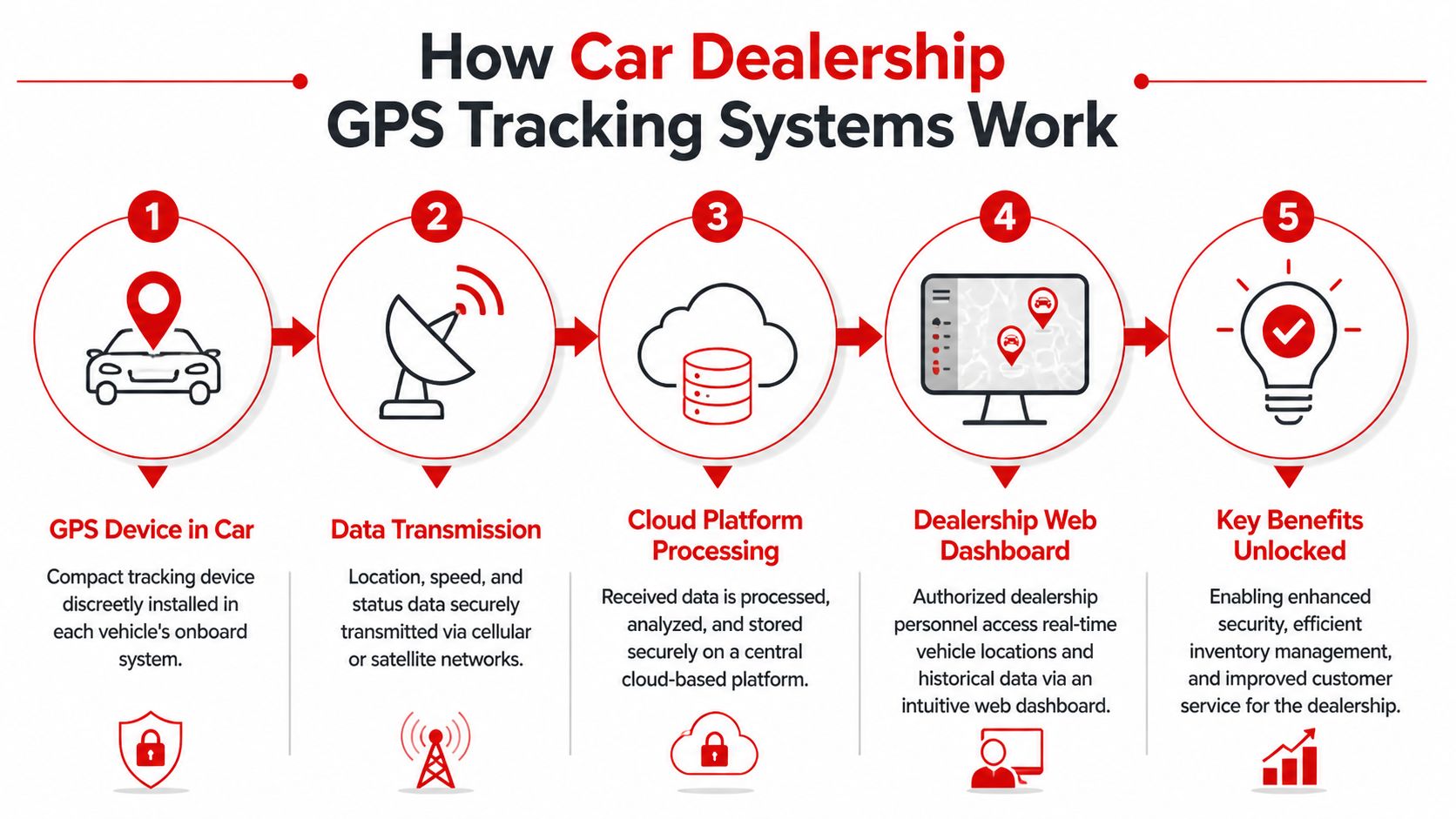
A dealership GPS system works like a digital watchman assigned to every vehicle. It doesn’t sleep, it doesn’t forget where the car was moved, and it reports back to a central dashboard that managers can effectively use.
That sounds technical, but the system is built from three simple parts: a device in the car, satellites overhead, and software on the dealership side.
The hardware inside the vehicle
The first part is the tracking unit itself. Depending on the setup, it may connect through the OBD-II port, be hardwired, or be installed as a more discreet device. Its job is to collect movement and location data from the vehicle and prepare that information for transmission.
Some units are obvious and easy to service. Others are chosen because they’re less visible and harder to tamper with. A dealership usually picks the installation method based on the vehicle’s role. Inventory units, loaners, transport vehicles, and financed vehicles don’t all need the same setup.
The satellites and the location fix
The second part is the satellite network. Modern systems use multi-satellite trilateration across GNSS constellations. In plain language, the tracker listens to signals from multiple satellites and calculates where the car is by measuring signal timing.
According to Taoglas on how GPS trackers for cars work, modern dealership tracking devices maintain a lock with at least four satellites to calculate coordinates, and in recovery mode some systems can refresh location data as often as every 30 seconds. That refresh rate matters during theft recovery because a slowly updating tracker is like a security guard who only checks in occasionally.
A useful analogy is a three-legged stool. One satellite isn’t enough. Two still leave ambiguity. With at least four, the system can reliably calculate position in three dimensions.
The software dashboard that staff actually use
The third part is the dashboard. The dashboard enables the dealership to see vehicles on a map, check status, review history, and set alerts. If the hardware is the eyes and the satellites are the reference points, the dashboard is the control room.
Managers typically use the platform for tasks like these:
- Finding a unit fast: Search by stock number, VIN, or assigned label.
- Reviewing route history: Confirm where a vehicle went during a test drive or transfer.
- Creating alerts: Get notified if a car leaves a lot, moves after hours, or crosses a boundary.
- Checking trends: Look at mileage, usage patterns, and event history.
A dealership-ready device also needs dependable connectivity after the location fix is calculated. That’s where a solution with GPS tracker device features for real-time visibility becomes relevant. The value isn’t just that the tracker knows where the car is. The value is that your team can see and act on that information quickly.
Active tracking versus passive logging
This aspect often confuses many buyers. Some devices mainly store data for later download. That’s passive logging. It can be useful for history, but it doesn’t help much when a unit is moving right now and someone needs to know where it is.
Active tracking sends data back on an ongoing basis. For dealership use, active tracking is usually the more practical choice because the highest-value moments involve live decisions. A customer is waiting. A car left a geofenced area. A demo vehicle hasn’t returned. A financed unit needs attention.
For daily operations, a real-time system is less about technology for its own sake and more about cutting delay between event and response.
Key Use Cases for GPS Tracking in Daily Dealership Operations
The easiest way to judge car dealership gps tracking is to stop thinking about the software screen and start thinking about the moments that create friction on a dealership lot.
A salesperson promises a customer a specific SUV in silver. The porter can’t find it. A service advisor assumes a loaner is back, but it’s still across town. A test drive runs long and nobody knows whether the vehicle is stuck in traffic or somewhere it shouldn’t be. Tracking solves those problems because it replaces assumptions with records.
Inventory control on a busy lot
Large lots often fail in small ways. A vehicle gets moved for detailing, then parked in overflow. Someone takes it to fuel it and leaves it near service. Another employee assumes it’s sold because the key isn’t where it should be. None of that is dramatic, but it burns time.
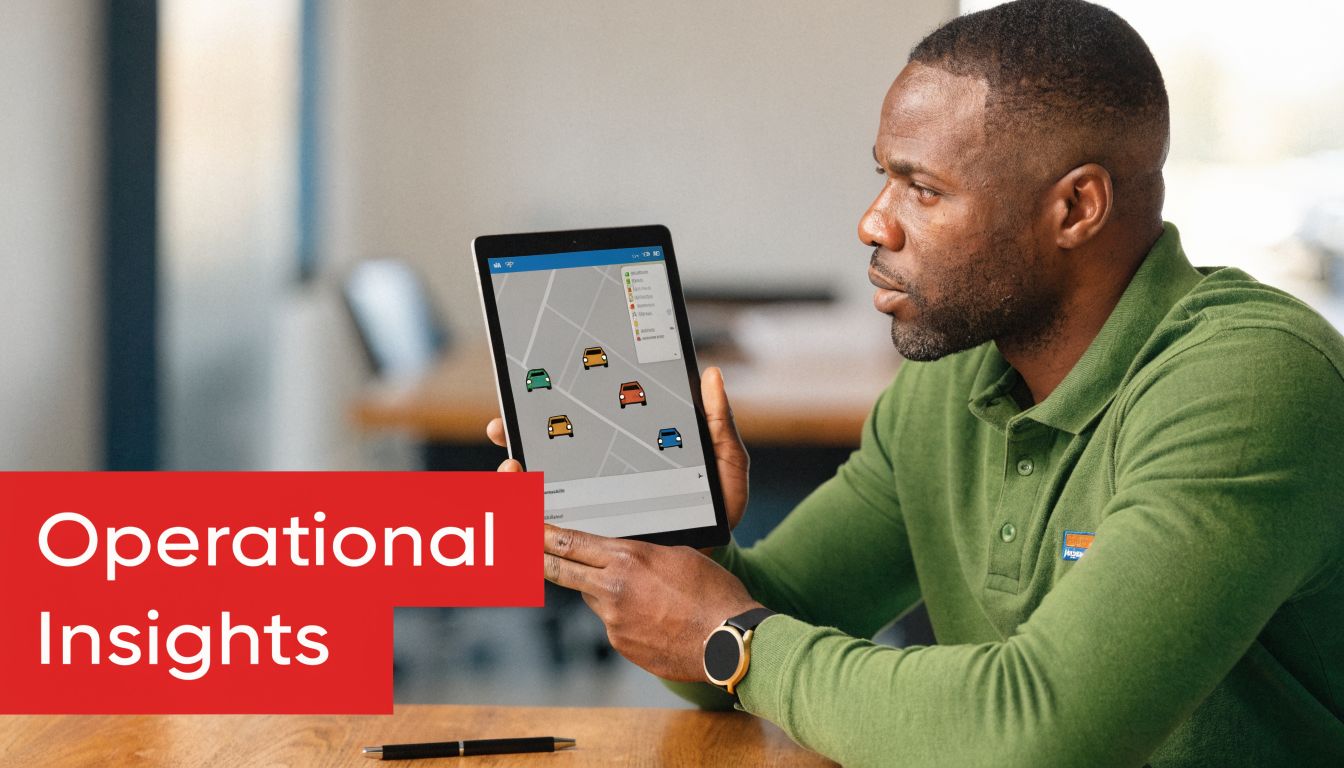
Tracking gives the desk a live reference point. Instead of calling three people on radios, staff can pull up the unit and see where it sits.
That produces practical gains such as:
- Faster handoffs: Sales and service stop searching the same lot in parallel.
- Less confusion: Managers know whether a car was moved, not just that it’s missing from the expected row.
- Cleaner accountability: Historical movement shows when a vehicle left and where it went.
For dealerships that want to verify where a unit has been over the course of a day, vehicle route history tools make that review far more useful than relying on memory.
Test drives and unauthorized detours
Test drives are necessary, but they create a gray zone. A customer has temporary control of inventory. The dealership needs to respect that experience without losing sight of risk.
Tracking helps in subtle ways. If a route goes far outside the expected area, staff can respond with a simple check-in. If the vehicle returns with signs of misuse, route and event history help the dealership understand what happened. If a unit doesn’t come back on time, managers start with data rather than panic.
A good system also reduces internal friction. Staff don’t have to decide whether they “feel” something is wrong. They can look at actual movement.
Later in the workflow, visual explanation helps teams adopt the process.
Loaner fleets and service department discipline
Loaners often operate like a mini fleet inside the dealership. They rotate among customers, accumulate mileage quickly, and are easy to lose track of because they’re always in motion.
GPS tracking makes loaner management more disciplined. Staff can verify whether a vehicle is due back, whether it’s still in use, and whether it’s being driven in ways that create extra wear. The service lane benefits too because dispatchers can prepare for returns instead of reacting after the fact.
The more often a vehicle changes hands, the more valuable tracking becomes. Loaners, demos, and shuttle units rarely fail because nobody cares. They fail because nobody can see them clearly.
Buy Here Pay Here and payment accountability
BHPH operations use tracking differently from a traditional franchise lot. Here, the issue isn’t just where the vehicle is. It’s whether the customer relationship stays current and accountable after delivery.
According to the Ohio Independent Automobile Dealers Association on GPS tracking and customer accountability, GPS tracking in BHPH settings has been shown to significantly reduce payment delinquency rates, and awareness that a vehicle is being tracked can act as a “gentle nudge” toward payment responsibility. That matters because collection friction affects cash flow long before it becomes a repossession issue.
The keyword there is awareness. Transparent use changes behavior. Hidden use creates mistrust.
After-hours movement and theft response
Dealerships already use lights, cameras, and perimeter controls. GPS tracking adds a different layer because it follows the vehicle itself. If a car moves outside defined conditions, the system can alert staff and preserve a timeline of events.
This doesn’t replace physical security. It makes physical security smarter. Cameras may show a gate. GPS shows where the vehicle went next.
Essential Features to Look For in a Dealership GPS Solution
A dealership GPS platform shouldn’t be judged by whether it can drop a pin on a map. Almost any basic tracker can do that. The key question is whether the system helps your team prevent loss, respond quickly, and manage vehicles as working assets.
That’s why feature selection matters more than the marketing label on the box.
Real-time visibility has to be real
Some products advertise tracking but behave more like delayed reporting tools. For a dealership, that’s a problem. A delayed update can turn a preventable incident into a recovery exercise.
A strong system should support live location visibility, event alerts, and a clear dashboard that non-technical staff can use without training fatigue. If a sales manager can’t locate a unit in seconds, the tool isn’t helping operations. If a service manager can’t review movement without exporting a mess of raw data, the tool isn’t helping accountability.
The mobile experience matters too. Managers aren’t always at a desk, especially in stores with multiple lots or off-site inventory. A reliable GPS tracking app feature set makes the platform useful when decisions happen on the move.
OBD-II integration changes the economics
The most valuable dealership systems don’t stop at location. They tap into the vehicle through the OBD-II port or related onboard connections and pull telematics data that can help with maintenance, driver behavior review, and inventory readiness.
According to Wikipedia’s overview of vehicle tracking systems, advanced GPS systems can integrate with the OBD-II port to provide data such as engine fault codes, fuel levels, and harsh braking events, while also supporting functions such as starter disable in some setups. For a dealership, that means one platform can support both security and operational oversight.
That combination matters in everyday situations:
- A loaner returns with a new fault code.
- A demo unit shows harsh driving during a test drive.
- A vehicle on a remote lot needs a battery or service check before showing.
- A financed asset requires stronger protection controls.
Build your shortlist around use-case fit
A lot operator, a BHPH store, and a dealer group with inter-store transfers may all buy “GPS tracking,” but they shouldn’t buy the same system for the same reason.
Here’s a simple comparison to keep the decision practical.
| Tracker Type | Installation | Key Feature | Best For |
|---|---|---|---|
| OBD-II tracker | Plug-in to OBD-II port | Fast deployment and telematics access | Loaners, demos, quick-roll inventory |
| Hardwired tracker | Installed into vehicle electrical system | More permanent setup and stronger tamper resistance | Financed vehicles, high-risk units, long-term monitoring |
| Battery-powered covert tracker | Standalone installation | Flexible placement without hardwiring | In-transit vehicles, temporary monitoring, discreet recovery support |
Non-negotiables that owners often miss
Some features sound secondary until something goes wrong. Then they become the whole reason the system succeeds or fails.
Look for these capabilities:
- Geofencing: You need location rules around lots, overflow storage, service areas, and approved drive zones.
- Store-and-forward behavior: If a vehicle temporarily loses connectivity, the device should preserve data and send it once service returns.
- Tamper awareness: A tracker should not go silent without explanation.
- Clear permissions: Not every employee should see everything or control every function.
- Historical reporting: Recovery is important, but prevention improves when managers can review patterns.
Buy the system for the decision it helps you make, not for the map it displays.
If the platform can’t help your dealership answer “Where is it?”, “Who moved it?”, “Was it driven properly?”, and “Does it need attention?”, keep looking.
Navigating Legal Requirements and Implementation Best Practices
The legal side of car dealership gps tracking gets less attention than the hardware. That’s a mistake. A dealership can install a technically capable system and still create avoidable risk if disclosure, consent, internal access, and recordkeeping are handled poorly.
This isn’t only about customer trust. It’s about compliance discipline.
Disclosure is the starting point, not a footnote
The most important legal point is straightforward. Tracking must be disclosed properly. The problem is that disclosure often gets buried inside paperwork or handled inconsistently across teams.
The concern is larger than many owners assume. GPX’s discussion of dealership trackers and consumer privacy notes that approximately 70% of U.S. dealerships use trackers, while clarity around enforcement, state-by-state consent rules, and consumer recourse remains poor. That combination creates risk for any store that relies on assumptions like “our finance paperwork probably covers it.”
If a customer later discovers an undisclosed tracker, the dealership may face more than an unhappy conversation. It may face a documentation problem, a policy problem, and a credibility problem all at once.
Implementation should look like a compliance project
A GPS rollout should be managed with the same seriousness as any other process that touches customer rights and sensitive operational data. For many small and midsize businesses, a practical reference point is an SMB compliance guide from Nutmeg Technologies, which helps frame how policies, access controls, and documentation reduce avoidable exposure.
For dealerships, best practice usually includes the following:
- Standardize disclosure language: Don’t let each salesperson or finance manager explain tracking in their own words.
- Require documented acknowledgment: If consent applies, make it explicit and easy to verify later.
- Define who can access tracking data: Sales, collections, service, and management may need different permission levels.
- Set retention rules: Keep the data you need for legitimate business purposes and handle it securely.
- Create a removal or deactivation workflow: Once the legal basis for tracking ends, the process shouldn’t be improvised.
Staff training matters more than most software demos
Dealership owners often focus on installation and skip behavior. But many tracking failures come from internal inconsistency, not bad hardware.
A solid policy should answer basic questions clearly:
- When is tracking active?
- Who may review location history?
- How are customer questions answered?
- What happens when a vehicle is sold outright or financing terms change?
- Who signs off on disablement, removal, or continued monitoring?
Those answers should be written, not verbal.
Compliance habit: If you can’t show the customer disclosure process on paper and in practice, you don’t have a reliable process yet.
Privacy can be a competitive advantage
Transparency is often treated as a burden. In reality, it can improve deal quality. Customers are more likely to accept legitimate security or finance-related tracking when the dealership explains what the device does, what it doesn’t do, and when the arrangement ends.
That’s especially important in a market where consumers are already sensitive to hidden monitoring. A clear legal and privacy policy can separate a professional dealership from one that appears evasive.
For stores that want to review privacy-related considerations and public-facing legal topics before rollout, CarLock legal information offers a useful reference point. The larger lesson is simple. The best implementation isn’t just technically sound. It’s documented, explainable, and easy for staff to execute consistently.
Calculating the ROI of a Car Dealership GPS System
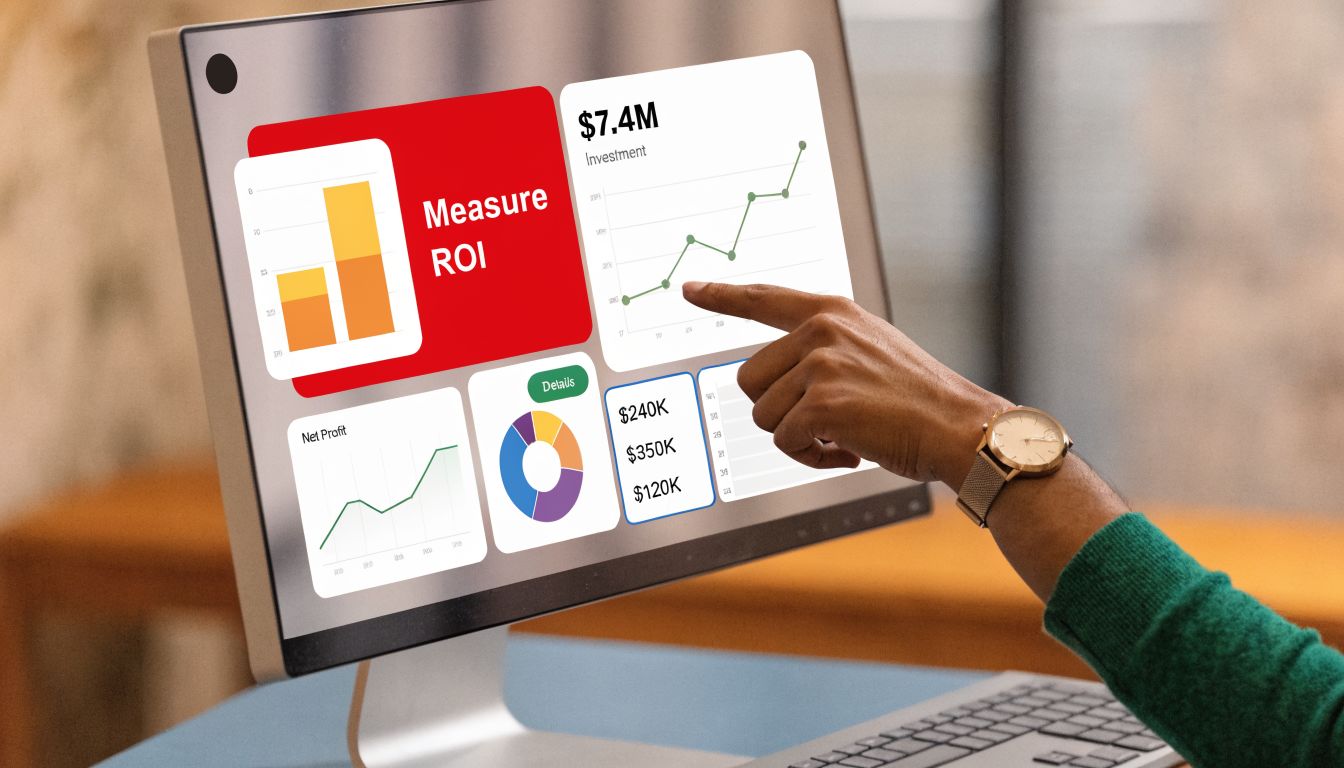
The ROI of GPS tracking is rarely captured by one line item. Owners who look only for a direct “the system costs X and saves Y” equation often miss the broader effect. A dealership GPS platform changes loss prevention, staff time, asset control, and finance discipline at the same time.
That means the better question isn’t “Does tracking pay for itself in one way?” It’s “How many recurring problems does one system reduce?”
Start with the cost side
Every ROI review begins with investment. For GPS tracking, that usually includes hardware, installation, software access, support, and internal setup time. Some dealerships also need policy updates, staff training, and process changes around disclosure and data handling.
Don’t treat those implementation tasks as waste. They’re part of the value equation because they determine whether the system is put into practice.
Then count returns in categories, not guesses
A practical ROI review works best when the dealership separates return into buckets and examines each one objectively.
| ROI Category | What to Measure | Why It Matters |
|---|---|---|
| Loss prevention | Theft incidents, unauthorized movement, recovery workflow | Prevents high-cost asset losses and disruption |
| Labor efficiency | Time spent searching for cars, checking test drives, locating loaners | Reduces non-selling, non-service labor |
| Asset readiness | Vehicle availability, maintenance visibility, movement history | Helps keep units sale-ready and service-ready |
| Finance protection | Payment accountability and recovery support in BHPH settings | Supports cash flow and portfolio control |
| Risk reduction | Documentation, disclosure consistency, usage oversight | Lowers legal and operational friction |
This category approach is similar to how teams think about performance in other areas of the business. If you want a simple framework for structuring return calculations, Jackson Digital’s explanation of ROI logic is useful because it breaks ROI into understandable inputs and outputs rather than vague optimism.
A simple dealership worksheet
You don’t need a complex financial model to get directional clarity. Ask your managers to estimate current friction in plain operational terms.
Try this worksheet:
- Search time: How often do staff look for missing or misplaced vehicles?
- Test drive oversight: How often does a manager need to chase status on an overdue drive?
- Loaner control: How often does service need to confirm where a unit is and when it’s returning?
- Inventory movement: How often are cars moved without a clean record of who moved them?
- Finance risk: In BHPH operations, how much effort goes into late-stage account follow-up and asset recovery support?
- Compliance effort: How much would better documentation reduce disputes over disclosure and tracking terms?
The point isn’t to force a fake precision. The point is to identify repeated costs that currently hide inside payroll, delays, disputes, and write-downs.
If the same avoidable problem shows up every week, it belongs in your ROI model even if it never appears as a separate line on the general ledger.
The strongest returns are often indirect
Owners sometimes expect GPS to justify itself only through theft recovery. That’s too narrow. In many dealerships, the most reliable return comes from smoother operations. Staff spend less time hunting units. Service and sales coordinate faster. Managers get cleaner event records. Finance teams have better support in high-risk portfolios.
Those gains don’t always look dramatic in isolation. Combined, they often make the system easier to justify than any single headline use case.
Taking the Next Step to Secure Your Dealership
A dealership doesn’t need more scattered tools. It needs clear visibility into vehicles that move between sales, service, customer use, finance oversight, and storage. That’s why car dealership gps tracking works best when it’s treated as an operating system for asset control, not as a standalone anti-theft gadget.
The business case is broad. Tracking helps protect inventory, reduce wasted staff time, support BHPH accountability, improve oversight of loaners and test drives, and create a documented framework for responsible use. The legal side matters just as much as the technical side. A dealership that deploys trackers without clear disclosure and disciplined internal policy is creating a risk it doesn’t need.
The next step is practical. Review where visibility breaks down today. Look at how often staff search for vehicles, how test drives are monitored, how loaners are controlled, and how customer-facing disclosure is handled. Then compare those weak points against the capabilities you need, especially real-time alerts, route history, telematics access, and documented privacy practices.
A good GPS program should help both sides of the transaction. It should help the dealership manage and protect assets responsibly, and it should support a more transparent experience for the driver or buyer who wants to know what technology is installed, how it works, and when they control it.
That last point is where many dealerships can improve. Tracking isn’t just about seeing the car. It’s about building a process that stands up operationally, financially, and legally.
If you want a solution built around real-time vehicle security and direct smartphone alerts, CARLOCK is worth a look. It’s designed to notify you about vibration, engine start, and vehicle movement through an easy-to-use mobile app, which makes it a strong fit for owners, managers handling loaners or high-value vehicles, and buyers who want a consumer-controlled tracking and alarm system after purchase.