

Driver’s Desk
Alarm Car System: The 2026 Guide to Vehicle Security
A siren still has a place in vehicle security. It can startle someone checking door handles or breaking a window. But many thefts no longer depend on noise, panic, or time pressure, which means a loud alarm by itself often works like a smoke detector in an empty house. It sounds, but no one is there to act.
That gap is what confuses many car owners. They shop for an alarm car system expecting prevention, while modern theft often becomes a speed-and-recovery problem the moment a thief gets access, clones a signal, or tows the vehicle away. In those cases, the better question is not whether the system can make noise. It is whether it can warn you directly, show what happened, and help you find the car after the theft has already started.
This guide explains that shift step by step. You will see how traditional alarms work, where they still help, where they fall short, and why a smart GPS tracker is sometimes not an extra feature but the only tool that solves the core problem.
The Reality of Modern Vehicle Theft
Many vehicle thefts now happen so quickly and so unobtrusively that a bystander may never realize a crime is in progress.
That is the first mental shift to make. An alarm car system was originally built for a thief who had to force entry, make noise, and spend time at the vehicle. Modern theft often looks different. A relay attack, key signal cloning, unauthorized key programming, or a tow can bypass the moment an old-style siren was meant to interrupt.
A traditional alarm still helps in the right situation. If someone smashes a window, checks door handles, or tries to enter the cabin by force, noise can create pressure and draw attention. The problem is that many owners still judge protection by one question: "How loud is it?" A better question is, "Who gets useful information fast enough to act?"
That distinction matters most when the car is out of earshot. A vehicle parked at an apartment lot, office garage, airport, or train station is often alone for hours. In that setting, a siren works like a flashlight left on in an empty room. It signals trouble, but it does not automatically reach the person who needs to respond.
Why the old mental model falls short
The old model treats theft as a single event at the moment of break-in. Modern theft is often a chain of events. Access is gained unobserved. The vehicle is started or loaded. It begins moving. By the time anyone notices, prevention has turned into recovery.
That is why "car alarm" has become a blurry term for buyers. It might describe a simple audible system, a factory anti-theft setup with immobilizer functions, or a connected device that sends alerts and location data to your phone. Those tools do different jobs, and lumping them together hides the core question: do you need deterrence, delay, recovery, or all three?
A basic alarm is still a reasonable layer for low-risk situations. It is less reassuring if your vehicle is parked far from where you live, left overnight on the street, or attractive to thieves because of its value, parts, or keyless entry system.
If you want a clearer baseline before comparing technologies, this overview of car alarm system options helps define what each category is designed to do.
The practical takeaway is simple. Older alarms were built to make theft harder to start. Many current theft methods force owners to solve a different problem: finding out immediately that something is wrong, and knowing where the vehicle is after it starts moving. That is the point where a smart GPS tracker stops being an extra feature and starts becoming part of the core protection plan.
How a Traditional Alarm Car System Works
A traditional alarm car system operates similarly to a simple home tripwire. Something detects a disturbance, a control unit decides it matters, and the car responds by making noise and flashing lights.
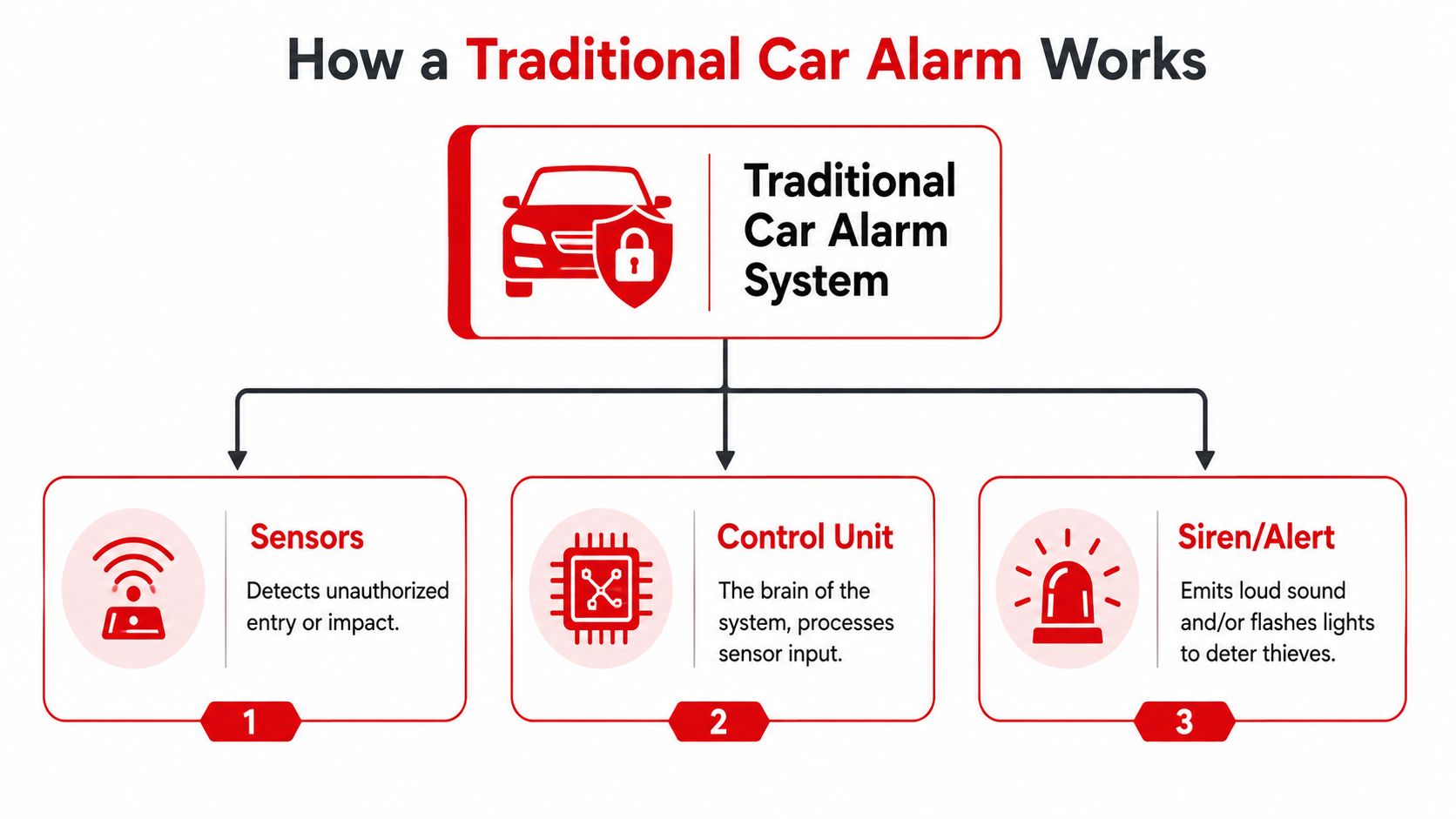
The three core parts
Sensors are the eyes and ears. They watch for events like a door opening, impact on the body, or in some systems movement inside the cabin.
The control unit is the brain. It takes the sensor signal and decides whether to trigger the alarm.
The siren or horn output is the voice. That's the part you hear. It may also flash the vehicle lights to draw attention.
If you're looking at a basic overview of car alarm system options, that three-part structure is the foundation almost every driver should know.
What the system does well
Traditional alarms can still help with opportunistic crime. If someone tries a door handle, leans into the cabin, or strikes the vehicle hard enough to trigger a sensor, the sudden noise can interrupt the attempt.
That's the key word: interrupt.
The system is designed to create friction at the moment of entry. It's not designed to guide recovery after the vehicle leaves.
A siren can warn people nearby. It can't tell you where the car went.
Where the classic design breaks down
Many owners are surprised to learn that a major weakness of traditional alarms is alarm fatigue. According to The Zebra's review of car alarm effectiveness, over 99% of alarm activations can be false alarms, and 80% of car thieves can disable a typical alarm in under a minute.
Those two facts matter together. If the public hears constant accidental alarms, people stop reacting. If a thief can shut the system down quickly, the alarm has only a narrow window to do its job.
A basic audible alarm also tends to stop after a short period rather than sounding forever. So even when it triggers correctly, it may not create enough disruption to stop a determined theft.
What a traditional system does not do
A classic alarm usually doesn't answer the questions owners care about most after the first minute:
- Where is the car now
- Was it towed or driven away
- Did someone disconnect power
- Did the theft happen while I was out of earshot
That's why many drivers feel disappointed after installing a siren-only solution. The hardware may be working exactly as designed. The design itself is just limited.
Comparing the Three Main Types of Car Security
Car security has evolved in stages. First came audible alarms. Then factory anti-theft systems made it harder to start the engine without the right key or signal. The newest category adds telemetry, meaning the vehicle can communicate outward through mobile networks and location services.
That progression matters because each system protects against a different part of the theft chain.
Three jobs, three tools
An audible alarm tries to deter. It creates attention.
An immobilizer tries to block use. It makes starting the vehicle harder without authorized credentials.
A GPS/cellular tracker tries to inform and recover. It alerts the owner and helps locate the vehicle after unauthorized movement begins. As explained in Wikipedia's overview of car alarms and telemetry-based systems, these systems use cellular networks and GPS to send alerts and enable vehicle tracking, which audible-only systems do not provide.
If you're comparing systems with a recovery mindset, it helps to review tools built around vehicle tracking, not just sirens and remotes.
Car Security System Comparison
| Feature | Audible Alarm | Immobilizer | GPS/Cellular Tracker (e.g., CarLock) |
|---|---|---|---|
| Main purpose | Deter by noise | Prevent engine start | Alert owner and support recovery |
| Works when you're out of earshot | No | Partly, but without owner notification | Yes |
| Helps after the vehicle is moved | No | Usually no | Yes |
| Useful against towing | Limited unless paired with tilt sensing | No | Yes, if movement alerts are supported |
| Typical owner feedback | Sound and flashing lights | Usually invisible until theft attempt | App-based alerts and location data |
| Best use case | Opportunistic tampering | Electronic start prevention | Theft response, monitoring, recovery |
Why this comparison confuses buyers
Many owners assume all three are versions of the same thing. They aren't.
An audible alarm is reactive and local. An immobilizer is preventive but often silent to the owner. A tracker is informational and ongoing. In real life, the strongest setups layer these tools instead of treating them as substitutes.
For readers exploring broader security planning at home or at work, this guide to professional wireless alarm installation advice is useful because it explains a principle that also applies to vehicles: installation quality and sensor placement matter as much as the equipment list.
A simple way to choose between them
Use this quick filter:
- If you only want a visible and audible deterrent, an alarm may be enough for low-risk parking situations.
- If you're worried about drive-away theft, an immobilizer adds a meaningful barrier.
- If your concern is knowing the moment the car moves and where it goes, you need telemetry, not just noise.
That last point is where many modern buying decisions land. Owners aren't replacing one siren with another. They're moving from passive deterrence to active awareness.
Key Features to Evaluate in a Modern System
When you compare a modern alarm car system, don't start with the remote, the app screenshots, or the marketing terms. Start with the threat. Are you trying to stop door entry, detect glass breakage, catch towing, or know the vehicle's location after it moves?
Sensor coverage matters more than siren volume
A strong system uses layers. According to Ford's explanation of vehicle alarm types, a perimeter alarm monitors entry points like doors and the trunk, while interior volumetric sensors detect motion after a window is broken. That layered approach is much harder to bypass than relying on a single trigger.
When you're evaluating products, ask these questions:
- Perimeter protection: Does it watch doors, hood, and trunk, or only one access point?
- Interior sensing: Can it detect cabin movement after someone slips in through broken glass?
- Tilt or towing detection: Will it react if the vehicle is lifted or moved without the engine starting?
- Tamper awareness: Can it tell you if power is cut or the device is unplugged?
If you want a concrete example of a feature set built around movement, engine, and tamper events, review these GPS car tracker device features.
Alerts should reach you, not just the parking lot
A common mistake is focusing on whether the system is loud enough. Loudness only helps if the right person hears it.
A more useful question is how the system reports. Some setups only trigger a horn. Others send a fob alert. The strongest connected systems push a smartphone notification, which gives the owner a direct warning no matter where they are, assuming the device has connectivity.
Buyer check: If your car spends hours in office lots, airport parking, or apartment garages, local noise isn't enough by itself.
This product video gives a good feel for how modern connected vehicle security is presented to drivers in everyday use.
Power and backup planning
Many buyers overlook this until after installation. If a thief disconnects the main battery, what still works?
A well-designed system may include a battery-backup siren or other tamper protections. Even if you're shopping at the factory-system level, it's worth asking what remains active after a power interruption and what alerts, if any, still reach the owner.
A practical checklist before you buy
Use this short screen before you choose any system:
- Ask what event triggers the first alert. Door open, impact, cabin motion, tilt, engine start, or unauthorized movement all mean different things.
- Ask who gets notified. Nearby strangers, your key fob, your phone, or a monitoring service.
- Ask what happens after theft begins. This separates deterrence tools from recovery tools.
- Ask how the system handles tampering. A silent failure is the worst failure.
Many alarm buyers compare features as if they were convenience upgrades. They're not. They're answers to specific theft methods.
Installation and Maintenance Considerations
A security system is only as reliable as the way it's installed and maintained. Even good hardware can become frustrating if a sensor is poorly placed, a connection is loose, or the system drains the battery because something wasn't configured correctly.
DIY versus professional fitting
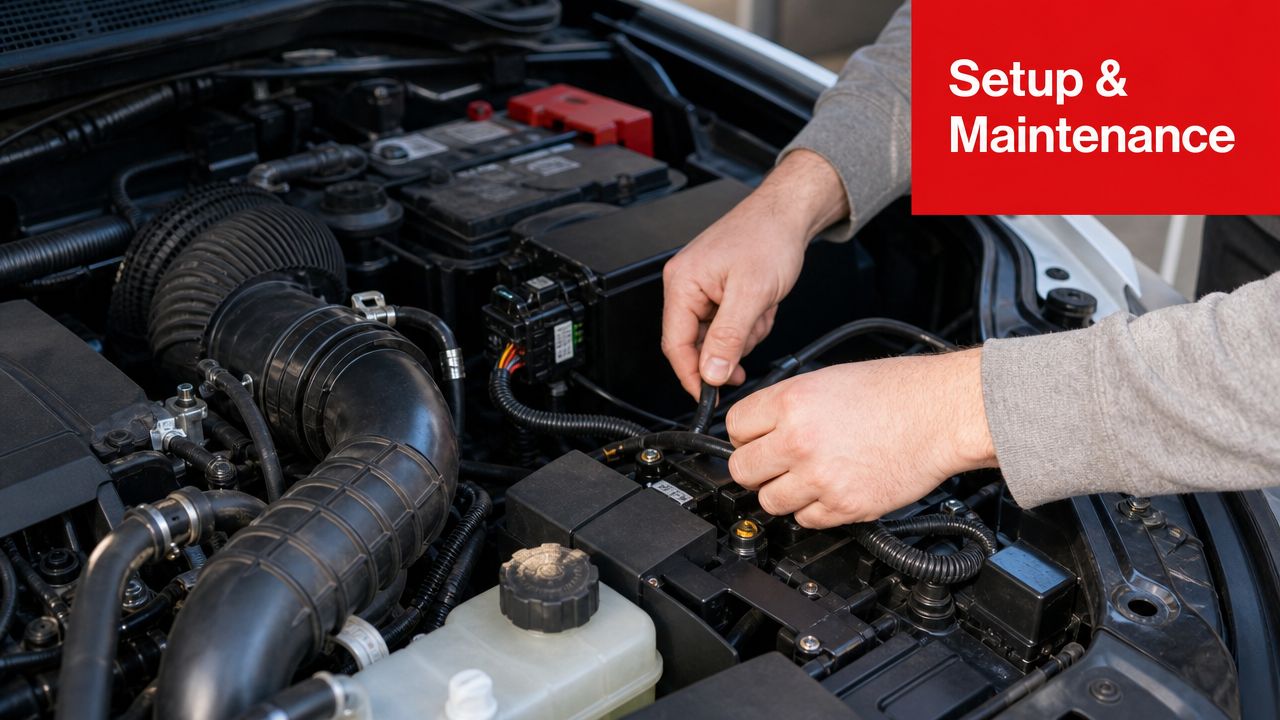
DIY installation can work for simpler plug-in tracking devices and for owners comfortable with vehicle electronics. The upside is control and convenience.
Professional installation makes more sense when the system ties into power, entry points, sirens, or hidden components. In those cases, the installer's routing, mounting, and testing often determine whether the system behaves consistently or becomes a source of false triggers and missed events.
Poor installation doesn't just reduce security. It can also create the illusion that the product itself is bad.
What to ask before installation
Before anyone touches the vehicle, get clear answers on:
- Wiring method: Is the setup plug-in, hardwired, or a mix of both?
- Visibility: Is the device hidden enough to resist quick tampering but still serviceable later?
- Vehicle compatibility: Does the installer understand your make, model, and trim?
- Warranty impact: If the system is aftermarket, ask how it interacts with existing vehicle coverage.
If you're considering a connected locator or recovery tool, it helps to understand how a dedicated car locator system fits into your broader anti-theft setup.
A simple maintenance routine
Owners often install a system and then forget it for months. That's risky. Security devices need occasional checks, especially app-based and connected systems.
Use a simple routine:
- Test alerts: Trigger a safe test event and confirm the app, fob, or siren responds as expected.
- Check power behavior: Watch for unusual battery drain or warning messages.
- Review app settings: Make sure phone notifications are still enabled after software updates.
- Inspect hardware: Look for loose mounts, damaged wiring, or signs of tampering.
Maintenance doesn't need to be complicated. It just needs to be deliberate.
When a GPS Tracker Is the Only Real Solution
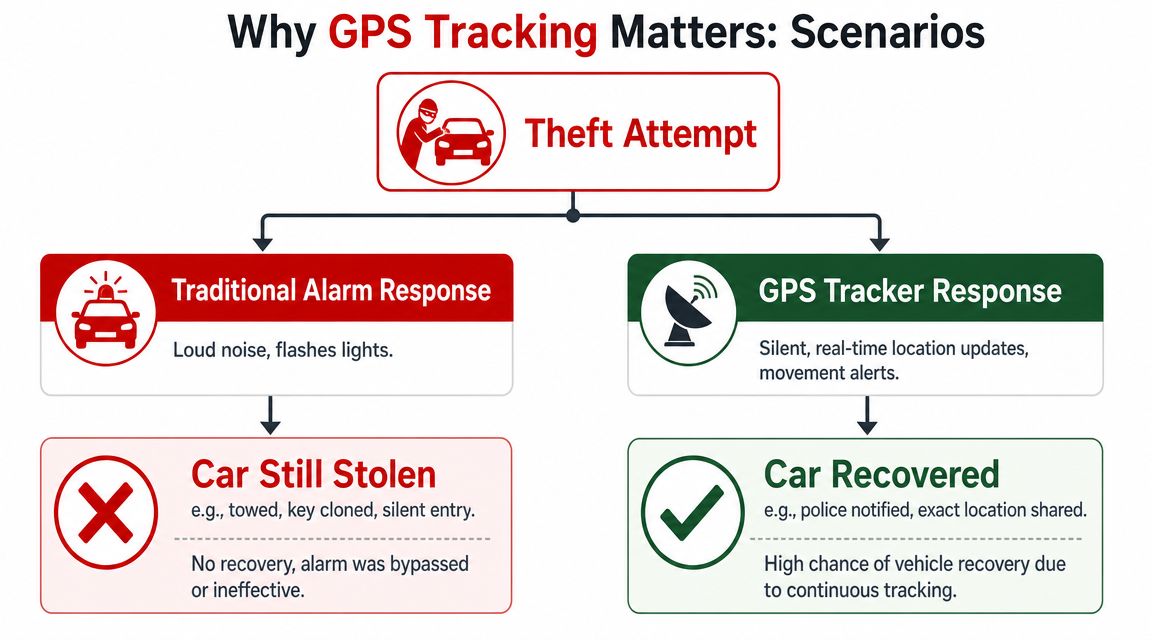
Some theft scenarios expose the limit of a traditional alarm immediately. The siren may work. It just doesn't solve the underlying problem.
The towing problem
Your vehicle is parked in a large garage. No one breaks a window. No one slams a door. The car is lifted and moved.
Some advanced factory systems include inclination and interior movement sensing, but Chevrolet's theft-deterrent guidance points to the larger issue: if the vehicle is being moved while you're far away or out of earshot, a true GPS/cellular system is the only way to get an alert that reaches you directly.
That difference is everything in a towing scenario. A siren in a concrete garage may go unnoticed. A movement alert on your phone gives you a chance to act.
Silent theft and fast bypass
Some thefts don't create the dramatic moment people expect. The vehicle can be accessed stealthily, moved quickly, and parked somewhere else before the owner realizes anything is wrong.
In that situation, the useful questions are no longer "Did the alarm sound?" They become:
- When did the car move
- Where did it go
- Did the engine start
- Was the device tampered with
A tracker answers those questions. A siren usually doesn't.
When connected monitoring becomes necessary
There are several situations where telemetry stops being optional and starts becoming the practical answer:
- Apartment or street parking: You won't hear a local alarm from several floors up or across town.
- Travel and airport parking: The car may sit unattended for long stretches.
- High-value vehicles: Recovery information matters as much as deterrence.
- Shared vehicles: Owners want alerts for movement, engine starts, and unusual use patterns.
For commercial vehicles and work trucks, the value of location data isn't limited to theft response. It also affects route visibility and asset use. This article on how fleets maximize ROI with truck GPS gives a practical business-side view of why continuous tracking matters.
One example of a modern recovery-oriented setup
A connected system such as CarLock's car security system focuses on events a traditional alarm often misses or can't communicate well to the owner, including unauthorized movement, engine start, vibration, towing-style activity, and device disconnection alerts delivered to a smartphone.
That's a different philosophy from classic alarms. Instead of only trying to scare off the thief, it keeps the owner informed in real time.
If your biggest fear is waking up and finding an empty parking space, recovery capability matters more than siren volume.
Choosing the Right Protection for Your Peace of Mind
The right alarm car system depends on the problem you're trying to solve.
If your main concern is casual tampering in a driveway, a conventional alarm may still help. If you're worried about drive-away theft, an immobilizer adds another barrier. If you need to know that your vehicle has moved, where it is, or whether someone tampered with it while you were far away, you need a connected tracking system with real alerts.
The biggest mistake drivers make is treating all car security products as if they're interchangeable. They aren't. One makes noise. Another blocks engine use. Another helps you respond after the theft has already started.
Choose based on your parking habits, your vehicle's value, and how much visibility you want after something goes wrong. Modern theft methods don't always announce themselves. Your protection shouldn't depend on being close enough to hear a siren.
Car security has changed, and your protection should match that reality. If you want a system that goes beyond noise and gives you smartphone alerts, GPS location tracking, engine start warnings, towing and vibration detection, and tamper notifications, take a look at CARLOCK.