

Driver’s Desk
How Do GPS Trackers Work? A Technical Guide to Modern Vehicle Security
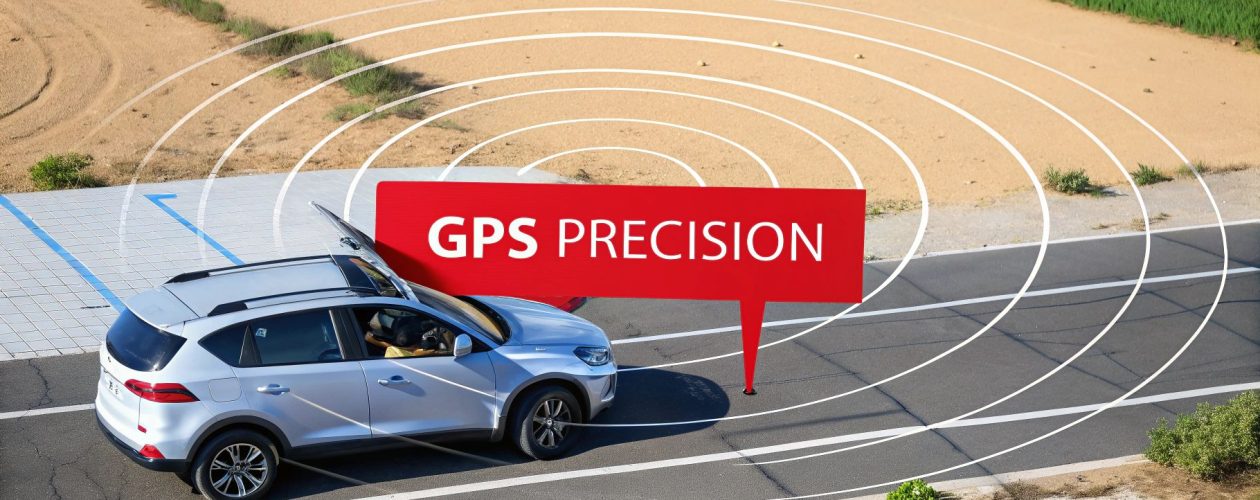
Have you ever wondered about the technology that allows a compact device in your car to report its precise location from anywhere in the world? While the concept may seem complex, the principles behind how GPS trackers work are grounded in established physics and engineering. Understanding this technology reveals its immense value as a cornerstone of modern vehicle security.
At its most fundamental level, a GPS tracker performs two primary functions. First, it acts as a sophisticated receiver, constantly listening for signals from the Global Positioning System (GPS)—a network of at least 24 operational satellites orbiting the Earth.
These satellites, a constellation maintained by the U.S. Space Force, circle the globe approximately twice a day, continuously broadcasting precise timing signals. The tracker's primary function is to receive these signals from multiple satellites simultaneously. This "Listen and Report" process is the engine behind all real-time GPS tracking.
As the diagram illustrates, the tracker first receives satellite data, processes it to determine its coordinates, and then transmits that information to provide a real-time view of your vehicle’s location.
To provide a clear technical breakdown, let's analyze the two essential jobs every GPS tracker performs.
The Two Core Functions of a GPS Tracker
| Function | Technical Process | Analogy |
|---|---|---|
| GPS Signal Reception | The device's internal GPS module listens for unique radio signals from multiple GPS satellites orbiting the Earth. | It's like a ship's navigator using the stars to find its position on the ocean. |
| Data Transmission | The tracker uses an integrated cellular modem to send its calculated location data to a server via a cellular network. | It's like making a phone call to tell someone exactly where you are. |
Simply put, one system calculates the where, and the other system communicates where.
So, How Is The Location Actually Calculated?
The core calculation relies on a mathematical process called trilateration.
Imagine you’re standing in a large, open field. Three friends are at different, known coordinates, and they all shout your name at the exact same moment. By measuring the time it takes for each shout to reach you, you could calculate your distance from each friend and thereby pinpoint your exact location. A GPS tracker performs this same calculation, but with radio waves traveling at the speed of light.
It precisely measures the time delay between when a satellite transmitted a signal and when the tracker's receiver detected it. By performing this calculation with signals from at least four different satellites, the tracker can accurately determine its:
- Latitude
- Longitude
- Altitude
- And the precise time
This process yields a highly accurate location fix, often with a precision of just a few meters.
From Space To Your Screen
Once the tracker knows its position, it must transmit that information to you.
This is where the second part of the system activates. The tracker uses a built-in cellular modem and SIM card—functionally identical to those in a smartphone—to connect to a mobile network (e.g., 4G LTE, 5G). It then sends its location data over that network to a secure server.
This dual-system architecture is what enables real-time tracking. The GPS component finds the location, while the cellular component communicates it, bridging the gap from space to your screen.
Finally, you access this information through a mobile application on your phone, such as the CarLock app. Your vehicle's location appears as a pin on a map, updated in near real-time. This foundational concept—receiving satellite data and transmitting it via a cellular network—is the engine that powers all of CarLock’s advanced security features, from theft alerts to trip monitoring.
A Symphony in Space: The Global Positioning System
To fully understand how a GPS tracker works, one must first consider the incredible infrastructure orbiting high above us: the Global Positioning System (GPS). This is not a single satellite but a meticulously managed constellation of at least 24 operational satellites maintained by the U.S. Space Force, enveloping the entire planet in a web of radio signals.

Each of these satellites constantly broadcasts a signal containing its precise orbital location and the current time, as determined by an onboard atomic clock. A GPS tracker in your vehicle is essentially a highly sensitive radio receiver, designed to listen for these faint signals from space. Its primary task is to acquire and process these broadcasts from several satellites simultaneously.
The economic and societal impact of this technology is immense. The global GPS market was valued at USD 119.47 billion in 2023 and is projected to grow to USD 402.43 billion by 2032, demonstrating its deep integration into global infrastructure. In the Asia Pacific region alone, the market was valued at USD 34.28 billion in 2021. If you're interested in the data, you can discover more about the market's expansive growth from recent industry analysis.
Pinpointing a Location with Trilateration
So, how does the tracker use these signals to calculate its position? The process is called trilateration. While the term sounds complex, the underlying principle is straightforward.
Imagine being lost in a large park. Three friends are at different, known coordinates. If they all shout your name at the same instant, you would hear each voice at a slightly different time depending on your distance from them. By timing these delays, you could calculate your distance from each friend and find your exact location where those distances intersect.
A GPS tracker executes this same principle using radio waves, which travel at the constant speed of light.
- Signal Sent: A satellite transmits a signal containing its current orbital position and a hyper-precise timestamp from its atomic clock.
- Signal Received: The GPS tracker's module acquires this signal.
- Time Calculated: The tracker's processor measures the time differential—a tiny fraction of a second—between when the signal was sent and when it was received.
- Distance Measured: Because radio waves travel at a constant velocity (the speed of light), the tracker converts this time delay into a precise distance.
By calculating its distance from a single satellite, the tracker knows its position lies somewhere on the surface of a massive, imaginary sphere with the satellite at its center. This is the first step.
With a signal from a second satellite, the tracker can narrow its position to the intersection of two spheres—which forms a circle. A third signal reduces that position to just two possible points.
The Magic Number: Four Satellites
To achieve a truly accurate and reliable position fix, a GPS tracker must lock onto signals from a minimum of four satellites simultaneously. While three satellites are sufficient to determine latitude and longitude (a 2D position), the fourth signal is a game-changer for two critical reasons.
First, it allows the tracker to calculate its altitude, providing a full 3D position. For a vehicle, this is what can help differentiate between being on a highway versus the overpass running directly above it.
Second, and most crucially, the fourth satellite's signal is used to synchronize the tracker's less precise internal clock with the highly accurate atomic clocks aboard the GPS satellites. Even a minuscule timing error—a millionth of a second—can introduce a location calculation error of hundreds of meters. This constant time correction is what guarantees the pinpoint accuracy required for a reliable security tool.
From Space to Your Screen: How Data Gets to Your Phone
Knowing your car’s precise coordinates is only half the process. That satellite-derived data is useless if it remains isolated within the tracker. The second critical piece of the puzzle is data transmission—the method by which that location information travels from your vehicle directly to your mobile device.

Think of it this way: the GPS receiver hears its location from space, but it needs a voice to communicate that information. That voice is provided by a built-in cellular modem, which functions like a small cell phone inside the tracking unit. It connects to 4G and 5G networks to transmit its data packets across the country, or even globally.
The Cellular Connection
For this communication to occur, every real-time GPS tracker requires two essential components. The absence of either one renders the device silent.
- A Cellular Modem: This hardware component communicates with nearby cell towers, serving as the engine for all data transmission.
- A SIM Card: A Subscriber Identity Module (SIM) card provides the tracker with a unique identity on the cellular network. This allows it to send and receive data, typically managed through a small monthly subscription plan.
This constant connectivity is what makes modern security devices so effective. The ability to instantly transmit alerts is the foundation of real-time vehicle protection.
This cellular link is what transforms a simple location-finding device into an active security shield. It’s the difference between knowing where your car was and knowing where it is right now, enabling immediate action in the event of a theft.
Active vs. Passive Tracking
GPS trackers can be categorized based on how they transmit data: passive and active. Understanding this distinction is critical when selecting a device for vehicle security.
A passive tracker, often called a GPS logger, functions as a digital notepad. It records location coordinates at predetermined intervals and stores them on an internal memory card. To access this data, you must physically retrieve the device and connect it to a computer to download the trip history.
While useful for post-event route analysis, passive loggers offer zero real-time security. They cannot provide an alert if someone is tampering with your vehicle or driving it away in that moment.
An active tracker, in contrast, is a live communication device. It transmits its location data as events occur, allowing you to monitor your vehicle’s movements on a map in real-time. This live data stream is the technological basis for modern car security systems like CarLock.
Real-Time Tracking: The Gold Standard for Security
When it comes to vehicle protection, there is no substitute for active, real-time tracking. This instantaneous flow of information is what enables features like immediate alerts.
If a tracker detects a suspicious vibration or an unauthorized engine start, it doesn't just log the event. It immediately utilizes the cellular network to send an alert directly to your phone.
This process involves the tracker sending data to secure cloud servers, which then push a notification to your mobile app. This seamless journey—from your vehicle, to the cloud, and back to your screen—is what provides genuine peace of mind. It transforms raw location data into actionable intelligence that helps you protect your assets, 24/7.
To see how CarLock integrates these technologies, review its powerful cloud features that process and deliver these instant alerts.
The Brains of the Operation: Power, Sensors, and Extra Features
While satellites and cell towers form the communication backbone of a GPS tracker, the true intelligence resides within the device itself. A modern tracker is far more than a simple location beacon; it’s a sophisticated security system packed with intelligent components. This internal hardware is what elevates a passive tracking gadget into a proactive guardian for your vehicle.
This intelligence relies on two key elements: a reliable power source for constant vigilance and a suite of sensors to detect threats before the vehicle is compromised.
Keeping the Lights On: Power Sources
A GPS tracker's effectiveness is entirely dependent on its power supply. While battery-powered trackers exist, they require frequent recharging and risk failure at a critical moment. For robust vehicle security, a continuous, reliable power source is non-negotiable.
This is why premier car security trackers connect directly to the vehicle's electrical system. The most common and efficient method is via the On-Board Diagnostics (OBD-II) port. This port, standardized on virtually every vehicle manufactured since 1996, provides a consistent power source without requiring complex wiring or professional installation.
By drawing a minuscule amount of power from the car's battery, an OBD-II tracker ensures it is always operational. When the vehicle is off, it enters an ultra-low power "sleep mode" to prevent battery drain, waking instantly when its sensors detect activity.
The Sensory Nervous System
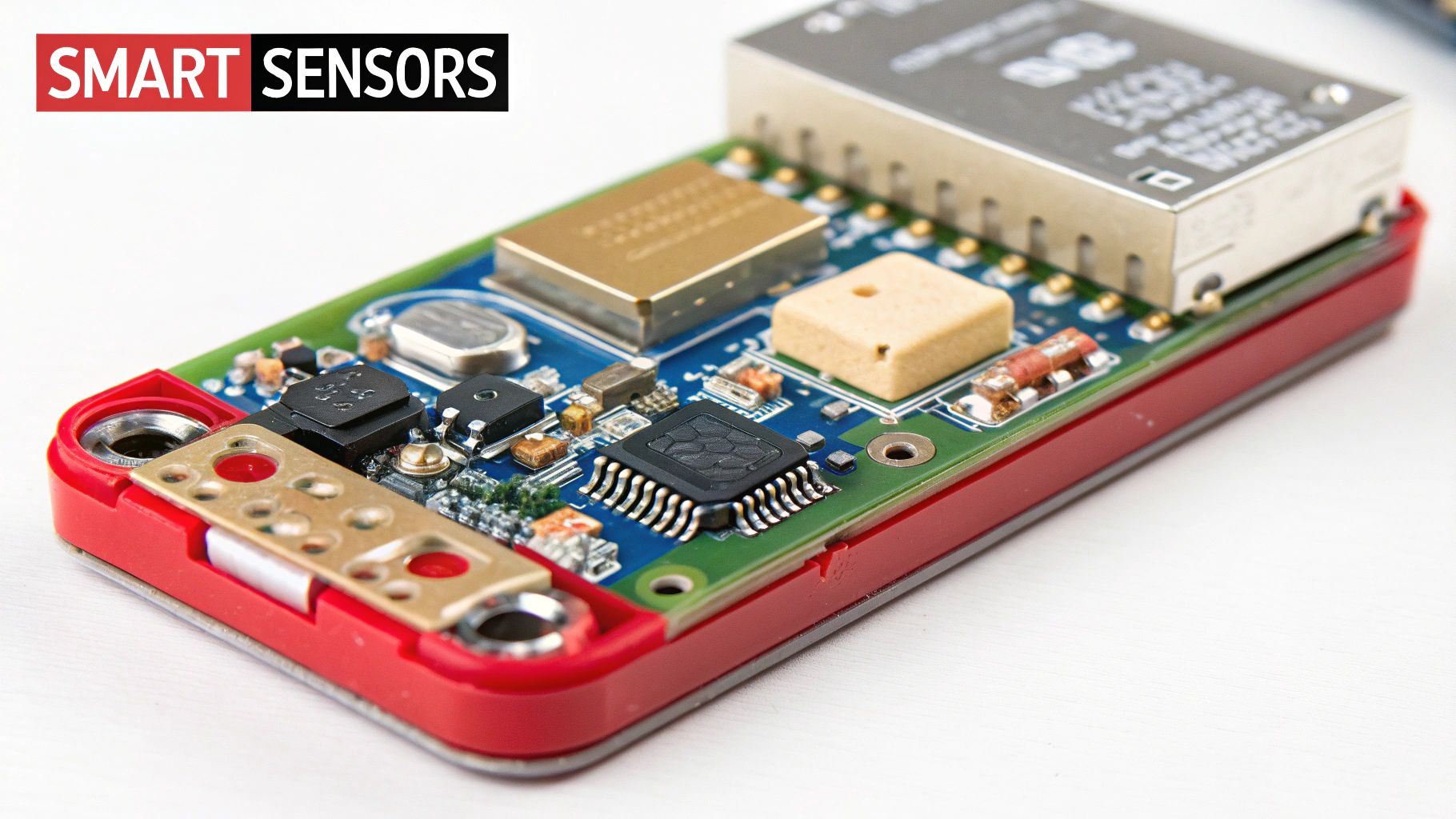
The technological leap from simple tracking to active security is driven by the sensors integrated within the device. These micro-electro-mechanical systems (MEMS) function as your vehicle's nervous system—they can detect motion, vibration, and other disturbances from afar.
The most critical of these is the accelerometer. This sensor is highly sensitive to changes in velocity and is designed to measure forces such as acceleration, hard braking, sharp turns, and—most importantly for security—vibrations.
Here is a breakdown of how a tracker's internal components translate into real-world security alerts:
| GPS Tracker Components and Their Security Functions |
| :— | :— | :— | :— |
| Component | Primary Role | Example Security Feature | Why It Matters |
| Accelerometer | Detects motion and vibration | Vibration Detected Alert | Catches thieves attempting to break a window, jack up the vehicle, or tow it away before they can escape. |
| GPS Module | Pinpoints location via satellite | Unauthorized Movement Alert | If the vehicle is towed or driven away, you receive an immediate alert with its live location. |
| Cellular Modem | Transmits data to your phone | Real-Time Notifications | Ensures that the moment a threat is detected, the alert is sent directly to you, regardless of your location. |
| Power Management | Connects to the OBD-II port | Disconnected Alert | If a thief discovers and unplugs the tracker, you are instantly notified that your security has been compromised. |
| Engine Monitor | Senses voltage changes in the electrical system | Engine Started Alert | This is a critical alert, indicating a thief has successfully started your vehicle's engine and is about to drive off. |
These sensors work in concert to build a comprehensive picture of a potential theft. A thief breaking a window might trigger a vibration alert. Moments later, starting the ignition will trigger the engine alert. This provides a clear, escalating view of the threat as it unfolds.
This combination of constant power and a smart sensory system is what elevates a GPS tracker from a mapping tool into a vigilant, 24/7 guard for your vehicle. You can explore the full suite of alerts and protective measures that make up a complete car security device to see how this technology all comes together.
Real-World Uses for Vehicle Security
Having examined the underlying technology, let's now transition from how a GPS tracker works to why it is a game-changer for vehicle security. The true value lies not in the satellites or sensors themselves, but in the practical peace of mind they deliver. This is where the technology translates into tangible protection for you, your family, and your assets.
At its core, an effective security system should deter thieves and aid in asset recovery if a theft occurs. This is where real-time GPS tracking excels. Unlike traditional car alarms that are often ignored, a modern tracker provides a discreet, immediate alert directly to your phone when a sensor detects an unauthorized engine start.
This single notification is transformative. You are not discovering the theft hours later in an empty parking space; you are notified the second it happens. This allows you to contact law enforcement immediately and provide them with a live, moving target on a map. This proactive approach dramatically increases the probability of vehicle recovery, often within minutes of the theft.
Protecting New Drivers and Family Members
Beyond theft prevention, GPS trackers are an invaluable tool for parents of newly licensed teen drivers. This transitional period can be stressful, but the right technology can help ensure their safety without being intrusive.
Features such as trip logging and driving behavior monitoring provide a clear, objective analysis of their habits. The same accelerometer that detects vibrations from a break-in also registers harsh driving events.
- Harsh Braking: Get notified of sudden stops, a common indicator of tailgating or distracted driving.
- Rapid Acceleration: Monitor aggressive driving behaviors, such as flooring the accelerator from a stop.
- Sharp Cornering: Identify if they are taking turns at excessive speeds, a significant risk factor for accidents.
These alerts are not for surveillance but for creating teachable moments. They enable calm, constructive conversations based on objective data, helping you coach them into becoming safer, more responsible drivers. This is a primary driver behind the growth of personal tracking applications.
The Broader Impact on Security and Management
Of course, the application of GPS technology extends far beyond personal vehicles. It is the backbone of modern fleet management, enabling businesses to track assets, optimize routes, and reduce operating costs. The standalone tracker segment has become the dominant force in the GPS market, with the United States alone accounting for nearly 28% of global revenue. This expansion is driven by everything from large corporate fleets to individual consumer use.
Ultimately, a GPS tracker serves as both a silent co-pilot and a vigilant guard. It offers a layer of proactive security that traditional car alarms cannot match, providing a direct window into your vehicle's safety and status, 24/7.
Whether you're protecting a personal vehicle from theft, monitoring a new driver, or managing a commercial fleet, the principles are the same. A quality tracker leverages satellite positioning, intelligent sensors, and cellular data to deliver critical information when it matters most. It transforms your car from an isolated object into a connected, monitored asset. To see how these features build on each other, our guide on comprehensive car security offers a deeper dive into creating a complete protection system.
Understanding Accuracy, Limitations, and Privacy
While GPS technology is remarkably reliable, it is not infallible. A comprehensive understanding of how these trackers work requires acknowledging the real-world factors that can affect their accuracy. Recognizing these limitations allows for more effective use of the technology and an appreciation for the backup systems that enhance vehicle safety.
Think of GPS signals as a quiet conversation in a noisy environment. Certain conditions can disrupt the faint radio waves traveling from space. The most common cause of interference is physical obstruction.
Common Factors Affecting GPS Accuracy
One of the most well-known challenges is the "urban canyon" effect. In dense downtown areas surrounded by skyscrapers, tall buildings can block or reflect satellite signals before they reach the tracker. This multipath interference can lead to a temporary reduction in location precision until the vehicle returns to an open area.
Other common signal obstructions include:
- Underground Garages: Concrete and earth are highly effective at blocking radio signals. This is why a tracker typically loses its GPS fix upon entering an underground structure.
- Tunnels and Covered Bridges: Similar to garages, these structures temporarily sever the tracker’s line of sight to the sky.
- Dense Foliage: A thick canopy of trees can sometimes attenuate incoming GPS signals, though it rarely blocks them completely.
In these scenarios, a well-designed tracker does not simply cease functioning. It will often switch to cellular triangulation (LBS or Location-Based Services), using the relative signal strength of nearby cell towers to estimate its position. While not as precise as GPS, it serves as an effective backup until a clear satellite view is re-established.
Your Privacy and Data Security
The discussion of how a GPS tracker works inevitably raises important questions about privacy. It is essential to recognize that placing a tracker in a vehicle is a powerful monitoring tool, and with that power comes a responsibility to use it legally and ethically.
When it is your own vehicle, that data is yours to use for your security. However, it is critical to understand that tracking a vehicle you do not own without the owner’s explicit consent can have serious legal consequences. Transparency and consent must always be the guiding principles.
Equally important is the protection of your location data from unauthorized access. A reputable company will implement robust security measures, utilizing strong encryption for all communications between the tracker, the company's servers, and your phone.
Think of encryption as a digital armored transport, ensuring your private location history remains confidential. It prevents malicious actors from intercepting and reading your sensitive information. At CarLock, we take this responsibility seriously. You can read the full details of our comprehensive privacy policy to see exactly how we protect your data.
Got Questions About How GPS Trackers Work? We Have Answers
As GPS trackers become increasingly common, practical questions about their real-world application arise. Understanding these details is key to appreciating the value a tracker can provide for your peace of mind.
A common initial inquiry concerns ongoing costs. The answer is yes, most real-time GPS trackers require a subscription. This fee is analogous to a small-scale mobile phone plan for your vehicle's security system. It covers the cellular data usage for the integrated SIM card, which is essential for transmitting live location updates and critical alerts.
Data Usage and Battery Drain
"Will it consume a large amount of data?" This is another frequent question. The good news is that these devices are engineered for extreme efficiency. They transmit small, highly compressed packets of location data, typically amounting to only a few megabytes per month. This is a tiny fraction of the data used by a smartphone, which is why subscription costs remain low.
The issue of battery drain is equally important. A tracker designed for the vehicle's OBD-II port is built for ultra-low power consumption. When your car is parked, it enters a "sleep mode," drawing a minimal current—often less than the vehicle's own onboard computer systems. This intelligent power management ensures it will not drain a healthy car battery, even over extended periods of non-use.
The global GPS tracking device market was valued at approximately USD 3.74 billion in 2023 and is projected to reach USD 10.88 billion by 2033. This growth is not confined to a niche market; it reflects widespread adoption and trust from both individual consumers and businesses who depend on this technology for security and logistics. You can explore more data on this expanding market at Straits Research.
Ultimately, modern GPS trackers are designed from the ground up for efficiency and reliability, making them a practical and powerful security upgrade for any vehicle owner. If you have more specific questions, you can find a comprehensive list of answers in our frequently asked questions about GPS car trackers.
Secure your vehicle and gain total peace of mind with CarLock. Our advanced real-time GPS tracker provides instant alerts for vibrations, unauthorized engine starts, and vehicle movement, sending them directly to your smartphone. Protect what's yours by visiting https://www.carlock.co today.