

Driver’s Desk
Car with GPS Tracker: The Ultimate 2026 Security Guide
More than 170 million U.S. adults own at least one GPS or location-tracking device other than their smartphone, and vehicle trackers are one of the main categories in that group, according to SafeHome's GPS industry outlook. That number changes how a car with GPS tracker technology is perceived. This isn't niche hardware for commercial fleets anymore. It's a mainstream security tool for everyday drivers, parents, and small business owners.
A lot of buyers still lump all tracking devices together. That's where confusion starts. A professional vehicle security tracker is not the same thing as a Bluetooth tag tossed into a glove box, and it's also not the same thing as a dealer-installed tracker tied to financing terms you didn't fully understand.
If you own a vehicle, the question isn't whether tracking exists. It's who controls it, how it works, what kind of alerts it gives you, and whether it helps recover the car when something goes wrong.
What Is a Car GPS Tracker and How Does It Work
Vehicle theft is still common enough that many owners want more than a siren and a hope-filled police report. A car GPS tracker answers a different question than an alarm does. Instead of only making noise at the scene, it helps you see where the vehicle is, whether it moved, and when that movement started.
At a basic level, a car GPS tracker is a small device that identifies the vehicle's location and sends that information to an app or web dashboard. The process is similar to location sharing on a phone, but the hardware is dedicated to the car and designed to keep reporting while the vehicle is parked, started, driven, or tampered with.
That difference is important because a true vehicle security tracker does more than drop a pin on a map. Professional systems can pair location data with events such as engine start, unusual movement, towing, battery disconnection, or entry into a defined area. A Bluetooth tag cannot do that job in the same way, and a dealer-installed tracker may serve the dealer or lender's interests more than yours if you were never given clear control over alerts, permissions, or removal.
The three parts that make it work
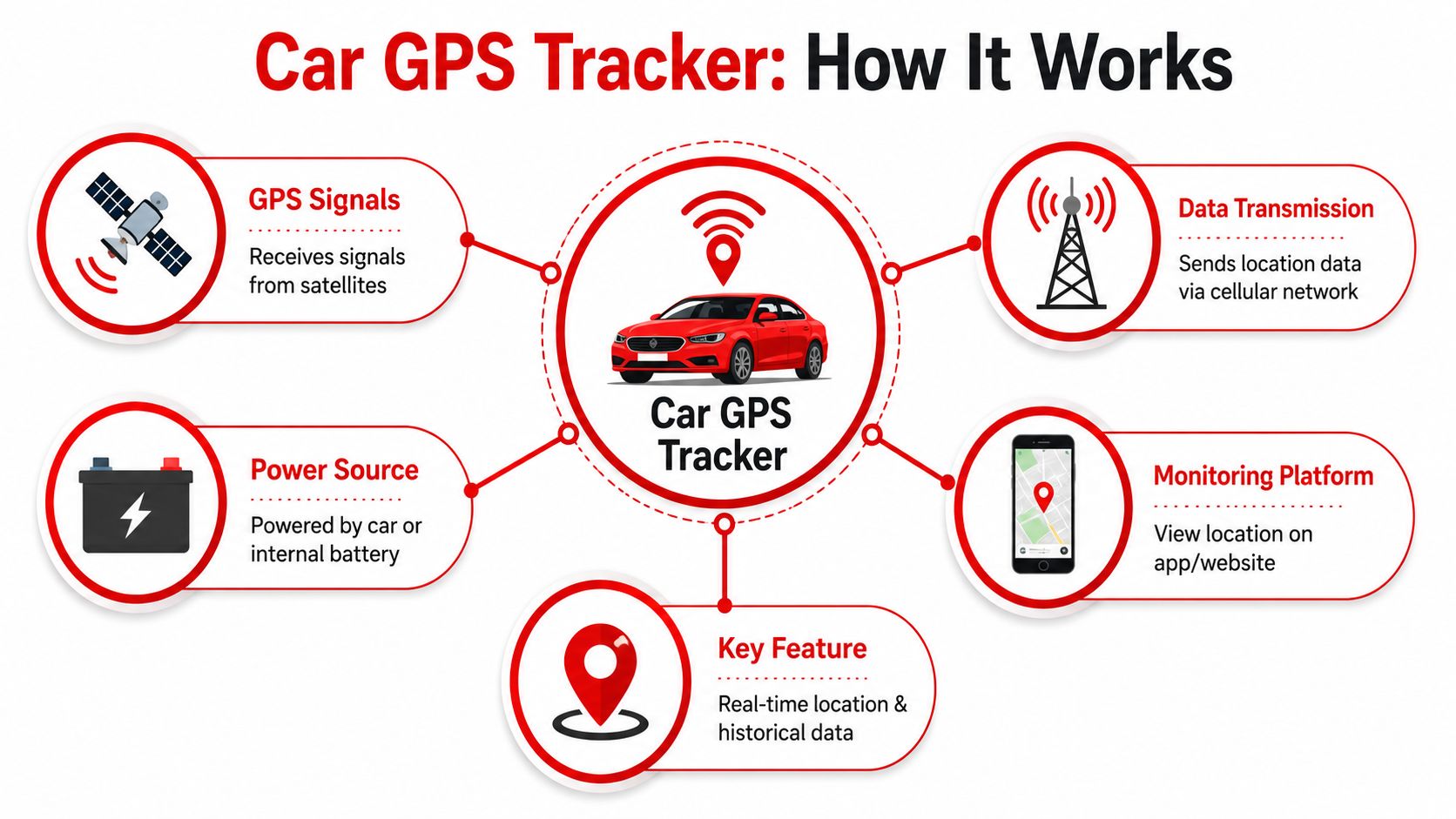
Most car GPS trackers rely on three basic pieces working together.
- A satellite receiver figures out the vehicle's position by reading signals from navigation satellites.
- A communication module sends that position through a cellular network, and in some cases another long-range network, so you can check the car remotely.
- An app or dashboard turns raw coordinates into useful information, such as a live map, trip history, geofence alert, or theft warning.
You can picture it as a chain. First, the device figures out where the car is. Next, it reports that location out to the network. Then the software translates those signals into something a worried owner can understand in seconds.
Modern trackers often use more than one satellite system, which helps the device hold position better in places where signals bounce around, such as parking garages, downtown streets, or wooded neighborhoods.
What “accuracy” really means
Owners often expect GPS to behave like a movie tracking screen, with an exact dot on an exact parking space. Real systems are good, but they still depend on signal conditions. Open sky usually gives the clearest reading. Tall buildings, metal structures, underground parking, and heavy tree cover can reduce precision.
For day-to-day security, the more useful question is not whether the tracker can identify the exact inch of pavement. The useful question is whether it can show that the car left your driveway at 2:14 a.m., stopped three streets away, or crossed a geofence you set around your neighborhood.
That is why alert quality matters as much as map quality.
What a concerned owner should look for
If you are comparing options, focus on whether the tracker can reliably get a position, send it consistently, and alert you fast enough to act. A car locator with live vehicle visibility should help you answer practical questions quickly: Is the car where I left it? Did someone start it? Was it moved without permission? Is the tracker itself still connected?
That is also where professional-grade security separates itself from simpler tracking gadgets. A dedicated vehicle tracker is built around the car's behavior and risk patterns. An item finder is built around helping someone locate misplaced personal property nearby. They may both involve location, but they solve very different problems.
Dealer-installed trackers add another layer of confusion. Some are legitimate, but many buyers first learn about them during financing paperwork or after the device is already in the vehicle. Before relying on one for security, check who owns the account, who can see the data, whether you receive your own alerts, and whether the device stays active only while a loan is in force. A tracker you do not fully control can create a false sense of security at exactly the wrong time.
The Main Types of Car GPS Trackers Explained
Not every car GPS tracker is built the same way. The differences aren't just technical. They change how easy the device is to install, how well it stays hidden, whether it can warn you about tampering, and how dependable it is over time.
For most drivers, the market breaks into three practical categories: OBD-II plug-in trackers, hardwired trackers, and battery-powered trackers.
A quick side-by-side view
| Type | How it connects | Main strength | Main drawback | Best fit |
|---|---|---|---|---|
| OBD-II plug-in | Plugs into the car's diagnostic port | Fast setup and easy removal | Visible if someone knows where to look | Everyday drivers, parents, small business owners |
| Hardwired | Installed into the vehicle's electrical system | Hidden placement and constant power | More complex installation | Theft-focused security |
| Battery-powered | Runs on its own battery | Flexible placement | Limited runtime and weaker long-term security role | Temporary tracking or asset monitoring |
OBD-II plug-in trackers
These are the easiest to live with. You plug the device into the OBD-II port, usually under the dashboard, and it starts drawing power from the vehicle. There's no cutting into wires, and setup is often simple enough for a first-time user.
Many OBD-II devices also pair vehicle security with driving information. That can help if you want alerts tied to starts, trips, or driving behavior. If you want to see the kind of functions this category often includes, this overview of GPS car tracker device features shows the type of monitoring many owners look for.
Hardwired trackers
A hardwired tracker is usually the more security-focused choice. It connects directly to the car's power system and can be installed in a concealed location. That makes it harder to spot and harder to remove quickly.
If your top concern is theft, stealth matters. A tracker can't help much if a thief sees it immediately and disconnects it before it reports movement.
Hidden installation changes the security equation. The less obvious the device is, the better chance it has to keep reporting when the vehicle is moved without permission.
Hardwired units are often chosen for expensive vehicles, fleet vehicles, and situations where the owner wants a more permanent setup. The trade-off is installation effort. Some owners handle it themselves, but many prefer professional installation.
Battery-powered trackers
Battery-powered units sound appealing because they don't depend on the car for power. You can place them in different spots and move them from one asset to another. That flexibility is useful in some situations.
For theft protection, though, they come with compromises:
- Battery limits: If the battery dies, tracking stops.
- Maintenance burden: You have to remember to recharge or replace power.
- Fewer tamper signals: Some units won't tell you right away if they've been found or moved.
- Weaker fit for constant monitoring: They're often better for occasional location logging than nonstop vehicle security.
Which type makes sense
If you want the least hassle, OBD-II often wins.
If you want the most covert setup, hardwired usually makes more sense.
If you want flexible placement for short-term use, battery-powered can work.
The mistake many buyers make is choosing based on price alone. Start with the problem you're trying to solve. A parent watching a new driver, a commuter parking in a theft-prone area, and a business owner managing two vans might all need tracking, but not the same kind.
Why Bluetooth Item Finders Are Not True Vehicle Security
Vehicle thieves often move fast, and the gap between a tracker that reports on its own and a tag that waits to be noticed can decide whether you have a live trail or a dead end.
A Bluetooth item finder has a clear purpose. It helps you recover everyday items like keys, bags, or luggage. A car security tracker serves a different job. It is built to watch the vehicle, report movement, and alert you when something changes that should not.
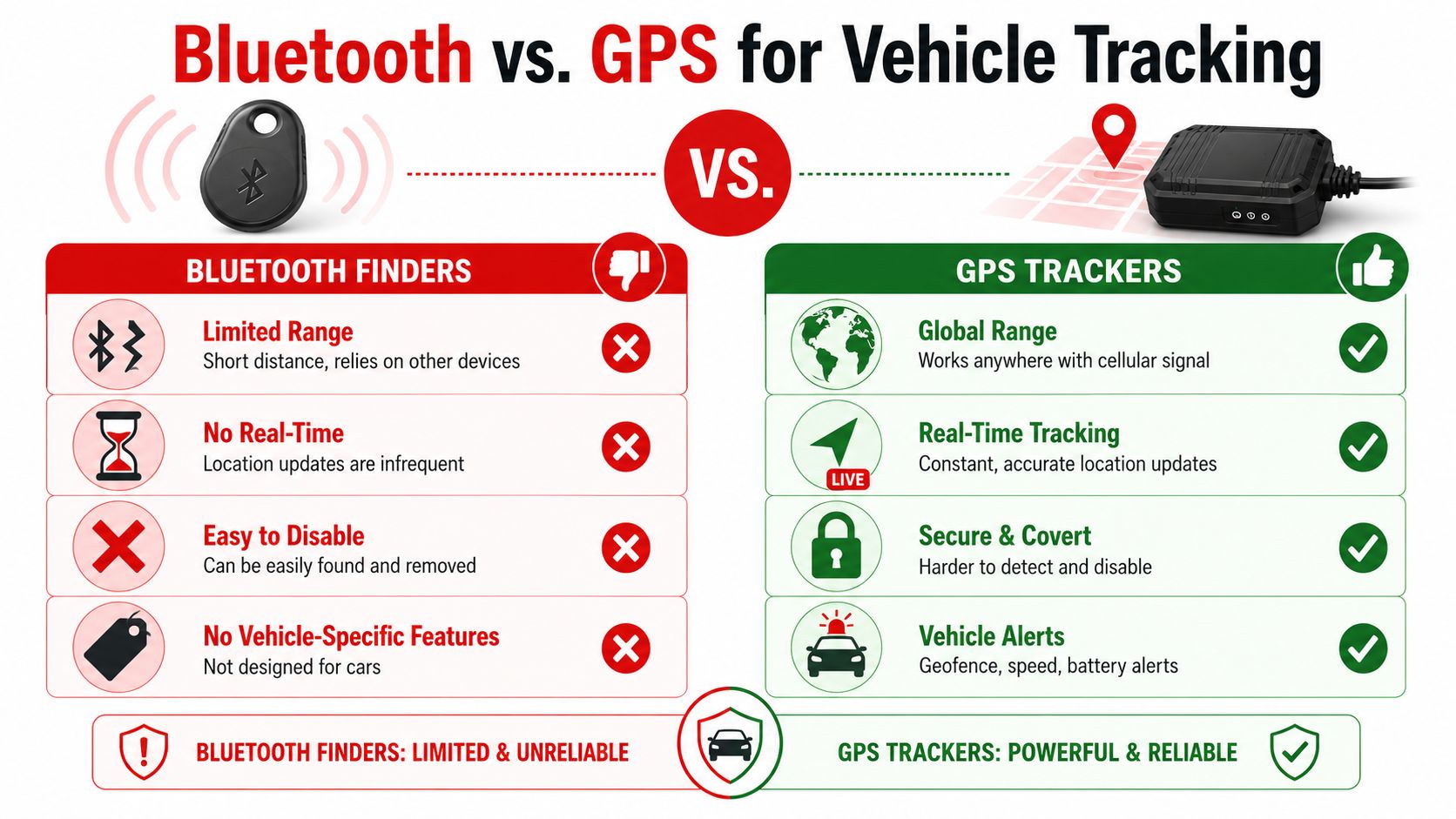
The confusion starts because both tools can show a dot on a map. But they create that dot in completely different ways. A GPS car tracker gets location data from satellites and sends updates through its own cellular connection. A Bluetooth finder depends on nearby phones in the same ecosystem to detect it and pass along its position. That difference matters most during the exact moment a car is being taken, towed, or hidden.
Why the gap matters in a real theft
A Bluetooth tag works like a note that says, "Tell the owner if someone nearby sees me." A professional vehicle tracker works more like a car alarm that can also text you its location. One waits to be discovered. The other is designed to keep reporting.
That distinction becomes obvious when a vehicle is moved to a low-traffic area, parked inside a structure, or taken by someone who knows how to search for obvious tags. A dedicated system such as CarLock is built around vehicle events, not lost-item recovery. It can alert you to ignition activity, towing, unusual vibration, or movement, then pair those alerts with location history such as vehicle route history tracking for your car.
Four reasons Bluetooth finders fall short for car protection
- They do not monitor the car as a vehicle. A Bluetooth finder may help with location after another device detects it, but it usually does not tell you the car was started, bumped, towed, or tampered with.
- They depend on someone else being nearby. If the car is moved to a rural road, storage unit, metal building, or underground garage, reporting can become delayed or inconsistent.
- They are easier for thieves to spot and remove. Small tags are convenient to hide, but they are also convenient to throw away once found.
- They can create the wrong expectation. A tag for misplaced belongings can look reassuring in an app, even though it was never built to support active theft response.
Dealer-installed trackers add another layer of confusion. Some are sold as a security upgrade at the finance desk, but many are installed mainly for inventory management or repossession support before the car is sold. That does not automatically make them useless. It does mean owners should ask hard questions about who controls the account, who can access the data, what alerts are included, and whether the device keeps working if you decline a subscription or refinance the vehicle.
That last point gets overlooked in many buying guides. A tracker only helps the owner if the owner controls it.
False confidence is the real risk
The biggest problem with using a Bluetooth finder as vehicle protection is not that it exists. The problem is relying on it as if it were a real security system. If your goal is recovering a stolen vehicle, you want a device designed for car-specific alerts, independent reporting, and a clear ownership setup.
That same mindset applies to paperwork and liability after a theft or unauthorized use. Insurance rules still shape what happens next, and a guide for independent agents on TN auto shows how state requirements affect coverage conversations.
A car with GPS tracker protection belongs in a separate category from an item finder. One helps locate misplaced belongings. The other helps you respond while a vehicle event is still unfolding.
Real-World Uses for Your Car With a GPS Tracker
Vehicle theft is often a race against time. The sooner an owner knows something is wrong, the more useful that information becomes.
A car GPS tracker earns its keep in ordinary moments that turn serious fast. Your phone alerts you that the car moved at 2 a.m. A new driver brakes hard three times on one trip. A work van arrives late, and a customer wants to know whether the delay happened on the road or at the previous stop. In each case, the tracker works like a timeline recorder for the car, not just a dot on a map.
Theft recovery when minutes matter
A parked vehicle can be started without permission, towed, or loaded up quickly. If the owner gets an alert while that is happening, the situation changes from uncertainty to action. Instead of telling police only that the car is missing, the owner can report that it was moved recently and may still be in transit.
That timing advantage is one of the biggest differences between a true vehicle tracker and a simple item finder. A professional-grade system is built to watch for vehicle events, send alerts, and keep reporting location as the incident develops. An item finder is built to help locate misplaced property nearby. Those are two very different jobs.
Dealer-installed trackers add another real-world wrinkle. Some owners assume the dealer device automatically serves their security needs, then find out later that the alerts are limited, the account is not fully under their control, or the tracker was set up for dealer inventory purposes before the sale. In a theft situation, ownership and access matter just as much as hardware.
A useful tracker does more than show a last known location. It helps the owner respond while the event is still active.
A parent coaching a new driver
Family use is often less dramatic and just as valuable. A parent with a newly licensed teen may want to know whether the car was driven late at night, whether there were sudden braking events, or whether the route home was much longer than expected.
The goal does not have to be constant surveillance. For many families, the tracker works more like a driving journal. Specific details lead to better conversations. “I saw hard braking near the highway exit” gives a teen something concrete to explain and improve. Vague criticism usually does not.
Insurance questions often come up at the same time. If you are comparing driving habits, coverage choices, and state requirements, this guide for independent agents on TN auto insurance requirements adds useful context.
A two-van business keeping cleaner records
Small business owners run into a different problem. They are not trying to monitor a large fleet. They are trying to answer basic questions without guessing.
Where did the van go first? When did it arrive? Did it take the planned route? Historical trip records help with billing disputes, customer updates, and internal accountability. A clear route history view for vehicle trips gives the owner a map-based record instead of relying on handwritten notes or a driver's memory at the end of a long day.
That can also reveal patterns over time. Repeated detours, long idle periods, or unexplained stops are easier to spot when the trips are logged consistently.
Why these use cases hold up
The common thread is clarity under pressure. A car with GPS tracker protection helps an owner verify what happened, respond sooner, and talk from evidence instead of assumption.
That is also why buyers should be careful about lumping every tracking product into the same category. A professional vehicle security system, an AirTag-style finder, and a dealer-installed device may all involve location data, but they do not offer the same control, alerts, or security value. For a concerned owner, that difference is the whole point.
Understanding GPS Tracker Installation Costs and Subscriptions
Sticker price is only part of the cost. With a car GPS tracker, you are usually paying for two things: the device in the vehicle and the service that keeps it reporting to your phone.
That distinction matters because many owners compare products that do very different jobs. A professional vehicle security tracker is built to send alerts, store trip history, and stay connected through a cellular network. A Bluetooth item finder does not have those ongoing network costs because it is not doing the same work. Dealer-installed trackers add another layer of confusion, since the hardware may already be in the car but the long-term fees, access rules, or contract terms are not always explained clearly at signing.
What you may pay upfront
The upfront cost changes based on how the tracker is installed and who controls it.
- OBD-II plug-in trackers usually cost less to install because they plug into the diagnostic port.
- Hardwired trackers often cost more because someone has to connect them to the car's electrical system.
- Battery-powered trackers may be easy to place, but they trade installation labor for ongoing charging and battery checks.
Installation is a lot like adding a home security camera. A plug-in model is quicker to get running. A hardwired model can be cleaner and harder to remove, but the setup usually takes more time and labor.
Dealer-installed units deserve extra caution here. Some are presented as a convenience feature or theft-recovery add-on, but the buyer may not get full control of the account, clear pricing, or the option to remove the device without affecting the sale. That makes the full cost harder to judge.
Why subscriptions are common
A live vehicle tracker needs more than a GPS chip. GPS only tells the device where it is. To send that location to your phone, the tracker also needs a cellular connection and an online account that stores alerts, trips, and settings.
A phone is a useful comparison. Buying the handset once does not give it service forever. The monthly plan is what lets it communicate.
That recurring fee often supports:
- Cellular data transmission for location updates and security alerts
- Cloud storage and account access for maps, trip history, and notifications
- App maintenance so the system keeps working as phone software changes
- Customer support if you need help with setup, billing, or troubleshooting
If you want to see what that online account layer typically includes, this cloud platform for GPS tracking features shows the kind of remote access many owners expect.
Why one monthly plan costs more than another
Update speed is one reason. A tracker that checks in more often uses more data and power than one that reports less frequently. Some plans also include extra alert types, longer event history, or wider coverage areas.
Product categories matter again. A low-cost item finder can look cheaper because it skips the cellular service, cloud account, and security alerts that make a true car tracker useful during a theft or unauthorized-use event. On the other side, a dealer-installed tracker may carry monthly charges without giving the owner the same visibility or control a consumer-managed security system provides.
Cheap can mean limited.
What to ask before you buy
A few direct questions can prevent expensive surprises later:
- What is the full hardware price?
- Is professional installation required, and is it billed separately?
- What does the monthly fee include?
- Who controls the account and app access?
- Can I cancel the service without penalties or losing access to my own data?
- If the tracker came from a dealer, can it be removed or transferred?
A clear answer on ownership matters as much as price. With a professional-grade system, the goal is straightforward: you know what you are paying for, you control the account, and the service supports real vehicle security instead of vague tracking access with unclear terms.
GPS Data Privacy and Security What Every Owner Must Know
Putting a tracker in a car is a security decision, but it's also a privacy decision. The device records movement, and that means the provider's data practices matter almost as much as the hardware.
A legitimate tracking company should make it easy to understand what data is collected, how it's stored, who can access it, and what happens if you close the account. If those answers are vague, that's a warning sign.
What responsible data handling looks like
Most owners aren't asking for technical jargon. They want straight answers:
- Who sees my trip data
- Whether the account is protected
- Whether the company explains its policy in plain language
- Whether I stay in control of the device and the information
A published vehicle tracking privacy policy should answer those questions clearly. If it doesn't, keep shopping.
The hidden tracker problem most guides ignore
There's another privacy issue that gets far less attention. Some dealers, especially those offering “all credit” financing, often install GPS trackers with subscription services to help locate cars for repossession and to gather personal data such as visit times, locations, and driving patterns. Reports also indicate that many buyers don't realize those trackers may be mandatory under the financing agreement, based on this discussion of dealer-installed GPS tracker practices.
That changes the whole conversation. A tracker you choose for your own protection is very different from a tracker imposed by a seller or lender.
If the device primarily serves the dealer's interests, not yours, call it what it is. It's surveillance tied to financing.
Questions to ask if you're buying from a dealer
If you're signing paperwork for a vehicle purchase, especially with nontraditional financing, ask direct questions before you drive away:
- Is a tracking device installed in this car
- Is it required under the financing agreement
- Who can access the data
- Can it be removed after payoff
- What happens if it's disconnected
Those questions can save you from unpleasant surprises later. Some buyers assume every tracker in a car is there for anti-theft protection. That isn't always true.
Choose control, not opacity
The safest setup is one you understand and control. You should know why the tracker is there, what it reports, and who benefits from it. If the purpose is your security, the system should be transparent about data use and user access. If the purpose is to gain an advantage in repossession, the signs are usually there if you ask early enough.
For a concerned owner, privacy and protection should work together. You shouldn't have to trade one for the other.
How to Choose the Right GPS Tracker for Your Needs
Analysts at Grand View Research describe a fast-growing GPS tracker market. More choices can help buyers, but they also make weak products harder to spot.
The simplest way to choose well is to start with the risk you want to solve.
A car tracker is a security tool, not a gadget purchase. That distinction matters because many owners compare products that belong in completely different categories. A professional vehicle tracker is built to report a car's location and activity in real time. A Bluetooth tag is built to help locate lost personal items nearby. A dealer-installed tracker may serve the seller or lender as much as the owner. If you mix those use cases together, the comparison gets confusing fast.
A practical checklist
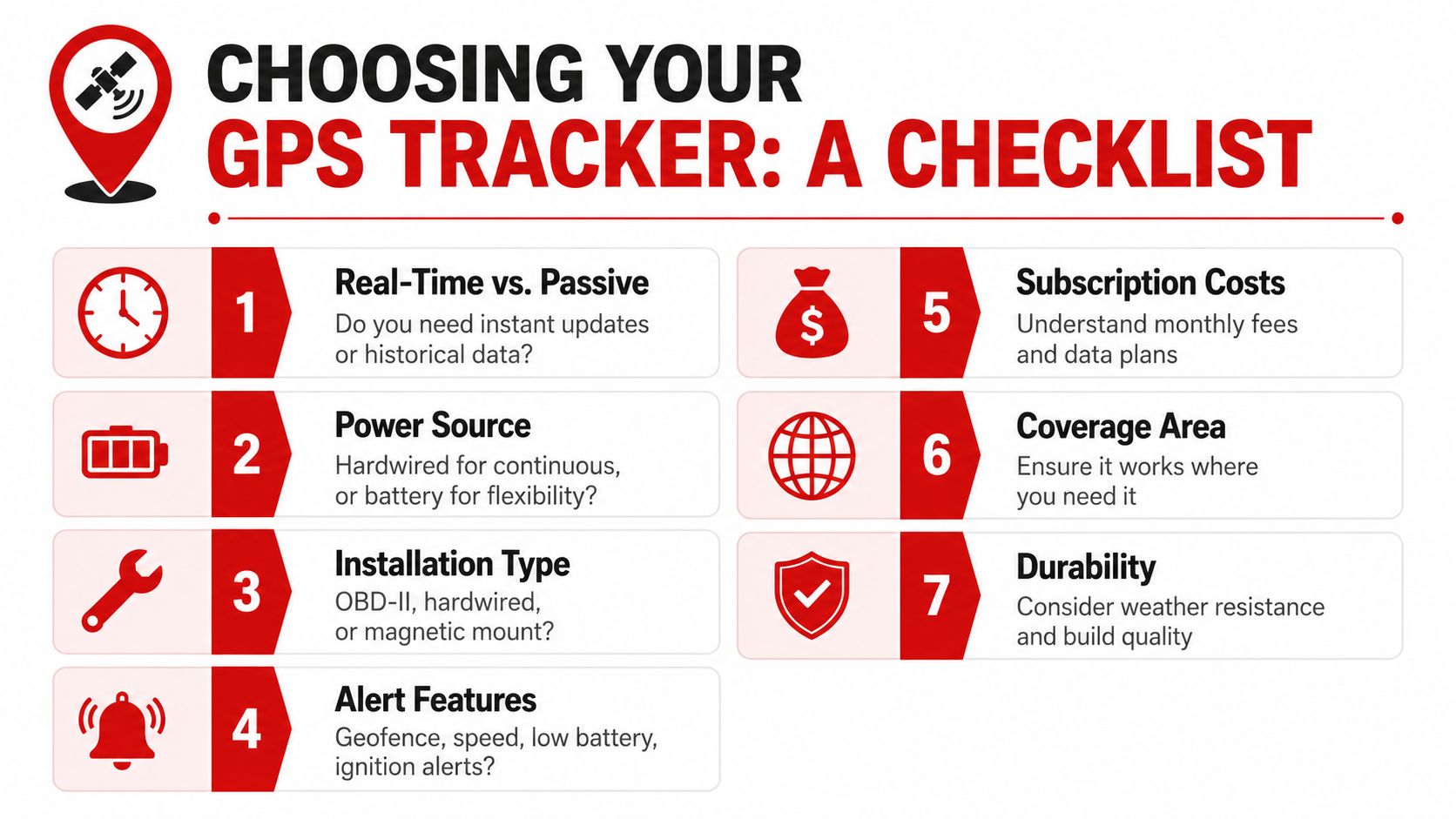
Ask these questions before you buy:
- What problem am I solving: theft recovery, family driving oversight, business vehicle visibility, or a mix of all three?
- Do I need live alerts: A parked-car theft is time-sensitive. Delayed trip logs help with recordkeeping, but they do not serve the same purpose.
- How should it install: OBD-II devices are quick to set up. Hardwired units are usually better hidden and harder to remove.
- Will it warn me about tampering: A tracker that goes silent when unplugged leaves a blind spot at the worst moment.
- Who controls the data: You should know who can see the vehicle, where the data is stored, and whether access can be shared or revoked.
- Does the monthly fee match the protection level: Paying for cellular reporting and alerts makes sense if you want active monitoring. It makes less sense if you only want occasional location history.
- Will I use the app: Clear alerts and readable trip history matter more than a long feature list you never open.
Match the tool to the owner
For many buyers, aftermarket trackers are the most practical place to start because they are widely available and usually easier to compare than built-in dealer add-ons.
For a practical example of how one modern option maps to this checklist, CarLock uses an OBD-II device with alerts for unauthorized movement, engine starts, vibration, low battery, and device disconnection, along with trip history and driving behavior monitoring. That setup fits owners who want active vehicle awareness and quick installation.
The bigger lesson is what those features represent. They reflect true vehicle monitoring, not the lighter-duty location help you get from an item finder clipped to keys or tucked into a bag.
The simplest way to narrow it down
Choose the tracker that addresses your highest-risk scenario first.
If theft is your top concern, look for real-time movement alerts, tamper warnings, and dependable app notifications. If a new teen driver is using the car, prioritize trip review and driving-event visibility. If you manage a few work vehicles, focus on route history and reporting consistency.
One more filter helps. Ask who benefits from the tracker. If the answer is clearly you, and the product gives you direct access, clear alerts, and understandable privacy controls, you are probably looking at a security tool. If the answer is unclear, or access depends on a dealer, lender, or hidden installation you did not request, pause and ask more questions.
The right car with GPS tracker setup is the one you will trust and understand under stress. That usually means choosing a real GPS security device over a Bluetooth item finder, and choosing owner-controlled monitoring over opaque dealer-installed tracking.