


Driver’s Desk
Vehicle Tracker: Your 2026 Guide to Anti-Theft Security
You walk out to where you parked last night and the space is empty. No shattered glass. No dramatic scene. Just absence. That's how modern vehicle theft often feels. Quiet, fast, and over before a traditional alarm has done anything useful.
A lot of car owners still assume a siren, a steering lock, or a Bluetooth tag is enough. It usually isn't. Real vehicle security today depends on something more practical than noise. It depends on getting the right information, fast enough to act on it.
Why Your Car Alarm Is Not Enough Anymore
A car alarm still has value. It can scare off an opportunist or draw a glance from a neighbor. But after numerous false alarms, individuals often tune them out. By the time anyone realizes a theft is real, the car is often already moving.
That gap matters. A siren tells you something happened nearby. A proper vehicle tracker tells you what happened, where the car is, and whether someone is trying to disable the device. That's a completely different level of protection.
One reason this shift is accelerating is scale. The vehicle tracking market analysis from Global Market Insights says the global vehicle tracking device market reached USD 35.5 billion in 2024 and is projected to reach USD 98.4 billion by 2034, with a CAGR of 10.6% from 2025 to 2034. That isn't a fringe gadget category. It's a mainstream security and fleet technology market.
A loud alarm is a deterrent. A connected tracker is evidence, visibility, and response.
Think about two common situations. In the first, your car alarm goes off at 2 a.m. You wake up, look outside, and see nothing. In the second, your phone shows the engine started, the car moved, and the location is updating. Only one of those situations gives you something useful to act on.
That's why many drivers now pair or replace older alarm thinking with active monitoring. If you want a baseline comparison, CarLock's overview of a modern car alarm approach shows how security has moved from simple sirens toward real-time alerts.
What changed in the real world
Older security relied on making theft harder. Modern security focuses on making theft visible.
That difference sounds small until you need it. A thief doesn't care if your car can make noise. A thief cares whether the owner gets notified immediately and whether the vehicle can still be tracked after it's moved.
How Real Vehicle Trackers Pinpoint Location
A real vehicle tracker works like a traveler taking bearings from the sky, then sending that answer back through the mobile network. The important part isn't just that it knows where the car is. It's that the location can reach you in time to matter.
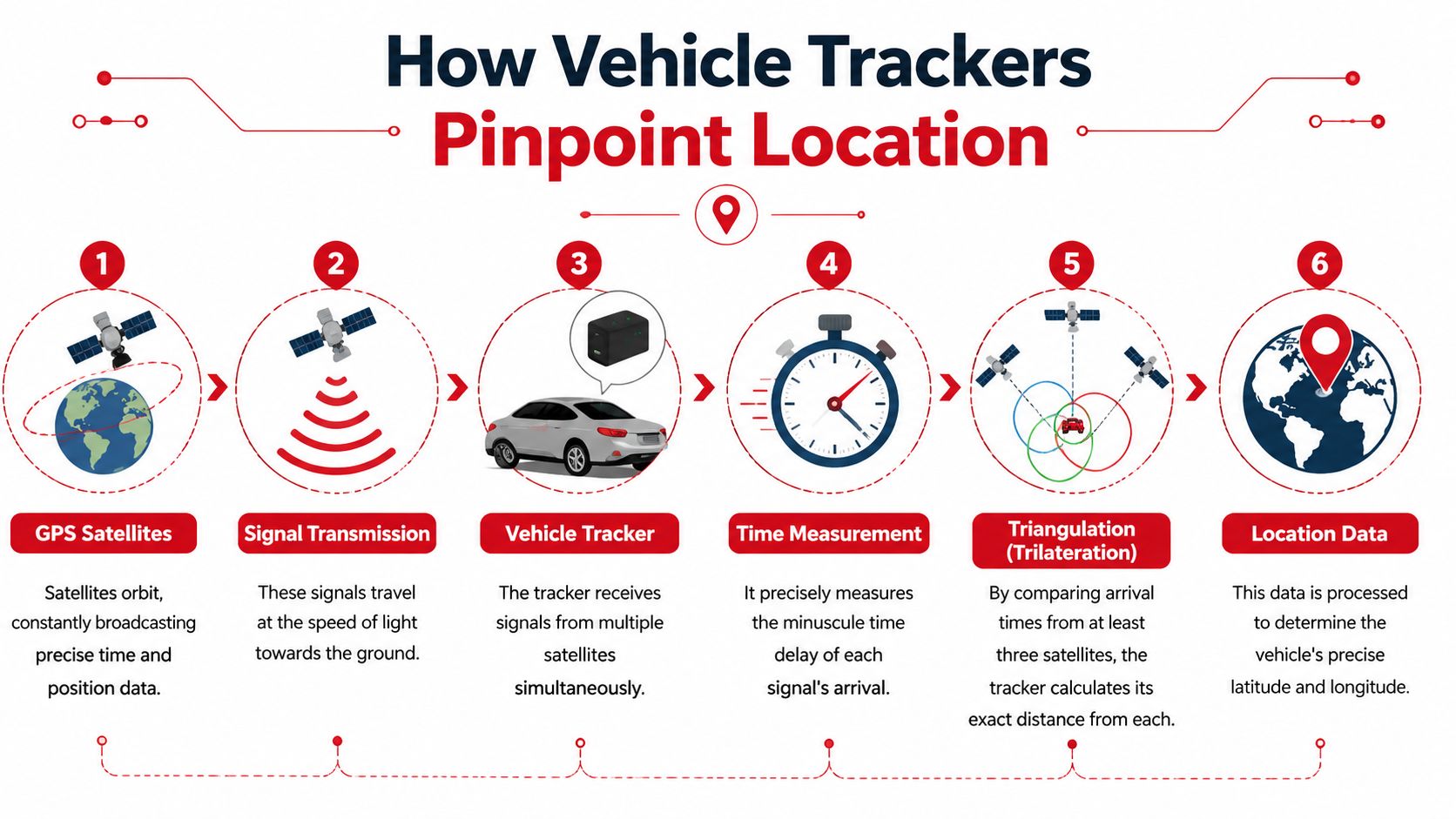
The signal path that matters
Here's the simplest way to picture it:
Satellites broadcast timing and position data.
The tracker listens for those signals.The tracker calculates where the car is.
It does this by comparing signal timing from multiple satellites.The tracker sends that location over a cellular network.
This is the step many buyers overlook.Your phone receives the update through the app or platform.
Now the location isn't trapped inside the device. It's actionable.
That middle handoff is what separates a security device from an item finder. A Bluetooth tag doesn't independently report where your car is. It depends on nearby phones to notice it. That can work for lost keys in a busy area. It's a weak foundation for theft recovery.
GPS tracker versus Bluetooth finder
A Bluetooth finder is like writing your address on a note and hoping a passerby delivers it. A GPS tracker with cellular is like having a device that can call you directly.
That difference becomes obvious when a vehicle is moving, hidden, or parked where there aren't many nearby devices. Real-time systems also update more frequently. According to Car and Driver's roundup of GPS trackers, typical refresh rates range from 15 to 60 seconds, while premium subscription tiers can drop that to 5 to 10 seconds. Faster updates usually mean higher data use and more robust service plans.
Practical rule: If a device depends on strangers' phones to help locate your car, it's an item finder. If it uses satellites for position and cellular service to report back, it's in the vehicle security category.
Emergency and incident response teams use the same basic logic when they need Real-time personnel and unit location. The use case is different, but the lesson is the same. A moving asset is only manageable when location data updates independently and reliably.
If you're evaluating this for your own car, a dedicated car locator system shows what that full path looks like in practice.
Key Features Beyond Basic Location Tracking
A dot on a map is useful. It's not enough. Good security starts before the theft is complete, not after.
Alerts that tell you what's happening
The most important features answer questions a location pin can't answer on its own.
- Unauthorized movement alerts tell you the vehicle moved when it shouldn't have.
- Engine start alerts matter because many thefts begin with access, not immediate driving.
- Vibration or towing alerts can warn you before the vehicle is fully gone.
- Geofence notifications help when a teen driver, employee, or valet takes the car outside an expected area.
These aren't gimmicks. They reduce the delay between event and response. That delay is what thieves count on.
Why tamper protection matters more than noise
A serious thief may try to disable the tracker before driving far. That's why anti-tamper design matters so much. According to Geotab's vehicle tracking device overview, advanced vehicle trackers can include onboard supercapacitors or internal batteries that store critical data for up to five seconds after power is severed, so evidence remains available and a tamper alert can still be sent.
That's one of the clearest dividing lines between a basic tracker and a security-focused one. If power is cut and the device goes silent with no warning, the owner loses the most important moment in the whole event.
A feature set like this is what makes a platform useful in daily life, not just during a worst-case theft. A driver can see suspicious events, check trips, and review what happened without guessing. One example is GPS car tracker device features, which include the kinds of alerts car owners typically expect from active monitoring.
A visible timeline beats a single location ping
A one-time location check answers, “Where is the car right now?” A security system should also answer:
- How did it get there
- When did it move
- Was the engine started
- Did someone unplug the device first
That fuller story is what turns a tracker from convenience into evidence.
A short demo helps make the difference clearer:
Real-World Uses for Your Vehicle Tracker
The easiest way to understand a vehicle tracker is to look at the moments when people rely on one.
Stolen vehicle recovery
A car disappears from an apartment lot before dawn. The owner doesn't discover it until getting ready for work. With an alarm alone, there's not much to tell police beyond make, model, and plate number.
With tracking, the owner can provide live movement data. That's why vehicle tracking has become a primary tool for stolen vehicle recovery. The vehicle tracking system overview on Wikipedia notes that advanced systems give law enforcement real-time location data that is essential for rapid retrieval and significantly improves recovery success.
The practical takeaway is simple. Police can act faster when they know where the vehicle is moving, not just where it was parked last night.
Teen driver monitoring
A parent lends the family car to a newly licensed teenager. The worry usually isn't just where the car is. It's whether the car left school on time, whether it took an unexpected detour, and whether the driving looked calm or aggressive.
A good tracker helps turn vague anxiety into specific, reviewable information. Instead of texting every hour, a parent can review route history for past trips and discuss actual driving patterns. That often leads to better conversations because the feedback is concrete, not emotional.
If you're using a tracker for a teen driver, the goal isn't surveillance for its own sake. The goal is coaching, accountability, and faster awareness if something goes wrong.
Small business vehicle oversight
A small contractor with a few vans has a different problem. He doesn't need flashy fleet software. He needs to know whether vehicles are where they should be, whether a route makes sense, and whether a van moved after hours.
That's where a vehicle tracker earns its keep outside theft scenarios. It can help an owner spot misuse, verify trips, and respond quickly if a company vehicle goes missing. For a small operation, that visibility can mean the difference between a minor disruption and a week of missed work.
How to Choose the Right Vehicle Tracker
Most buyers get stuck on the wrong question. They ask, “What's the cheapest way to know where my car is?” The better question is, “What kind of problem am I trying to solve?”
If the answer is theft recovery, tamper alerts, towing alerts, or active monitoring, you're choosing a security tool. If the answer is finding a misplaced bag or keys, that's a different category entirely.
Start with installation type
The hardware format changes how secure and how convenient the system will be.
- OBD plug-in trackers are the easiest for most drivers. They install quickly and work well for everyday monitoring.
- Hardwired trackers usually make more sense when discretion and resistance to casual unplugging matter most.
- Battery-powered trackers can help in some temporary setups, but they need battery management and can be easier to remove or forget.
No single format is perfect. Convenience usually goes up as installation gets simpler. Resistance to tampering often improves when the device is more thoroughly integrated into the vehicle.
Subscription versus no-subscription
A lot of marketing often muddies the water.
A no-subscription device can sound attractive until you ask what service is delivering the alerts, cloud history, and cellular reporting. Real-time tracking depends on connectivity and back-end services. Without that, many devices become loggers or delayed-report tools rather than active security systems.
The hard line is this: if you want immediate notifications when a car moves, starts, or gets tampered with, the connected service is part of the product, not an optional extra.
GPS security trackers versus Bluetooth item finders
| Feature | GPS Tracker (e.g., CarLock) | Bluetooth Tracker (e.g., AirTag) |
|---|---|---|
| Primary purpose | Vehicle security and monitoring | Finding personal items |
| Location method | GPS satellites for position, cellular for reporting | Bluetooth proximity and nearby device detection |
| Works without nearby phones | Yes | No |
| Real-time movement alerts | Yes, depending on service and settings | Not designed for this |
| Tamper alerts | Often included on security-focused models | Generally absent |
| Route history | Common feature | Not the core use case |
| Use in theft recovery | Fit for purpose | Limited and situational |
| Best for | Cars, trucks, fleets, teen driving oversight | Keys, bags, wallets |
That's the comparison most guides skip. They lump everything under “tracker” and leave buyers to sort out the consequences later.
A simple buying checklist
When I help someone choose a vehicle tracker, I tell them to look for these signs of a real security product:
- Independent reporting: It should report through cellular service, not depend on nearby strangers' phones.
- Event alerts: It should tell you about engine starts, movement, towing, or tampering.
- Trip visibility: You should be able to review where the vehicle went, not just ping its current position.
- Practical installation: The device should match your comfort level and your theft risk.
- Clear app workflow: If alerts are confusing or buried, you won't use them when stress is high.
One option in this category is CarLock, which combines real-time GPS tracking, trip history, and vehicle event alerts through a connected mobile app. It belongs in the GPS security tracker category, not the Bluetooth item-finder category.
Installation Maintenance and Legal Considerations
A lot of drivers assume installation will be the hard part. Usually, it isn't.
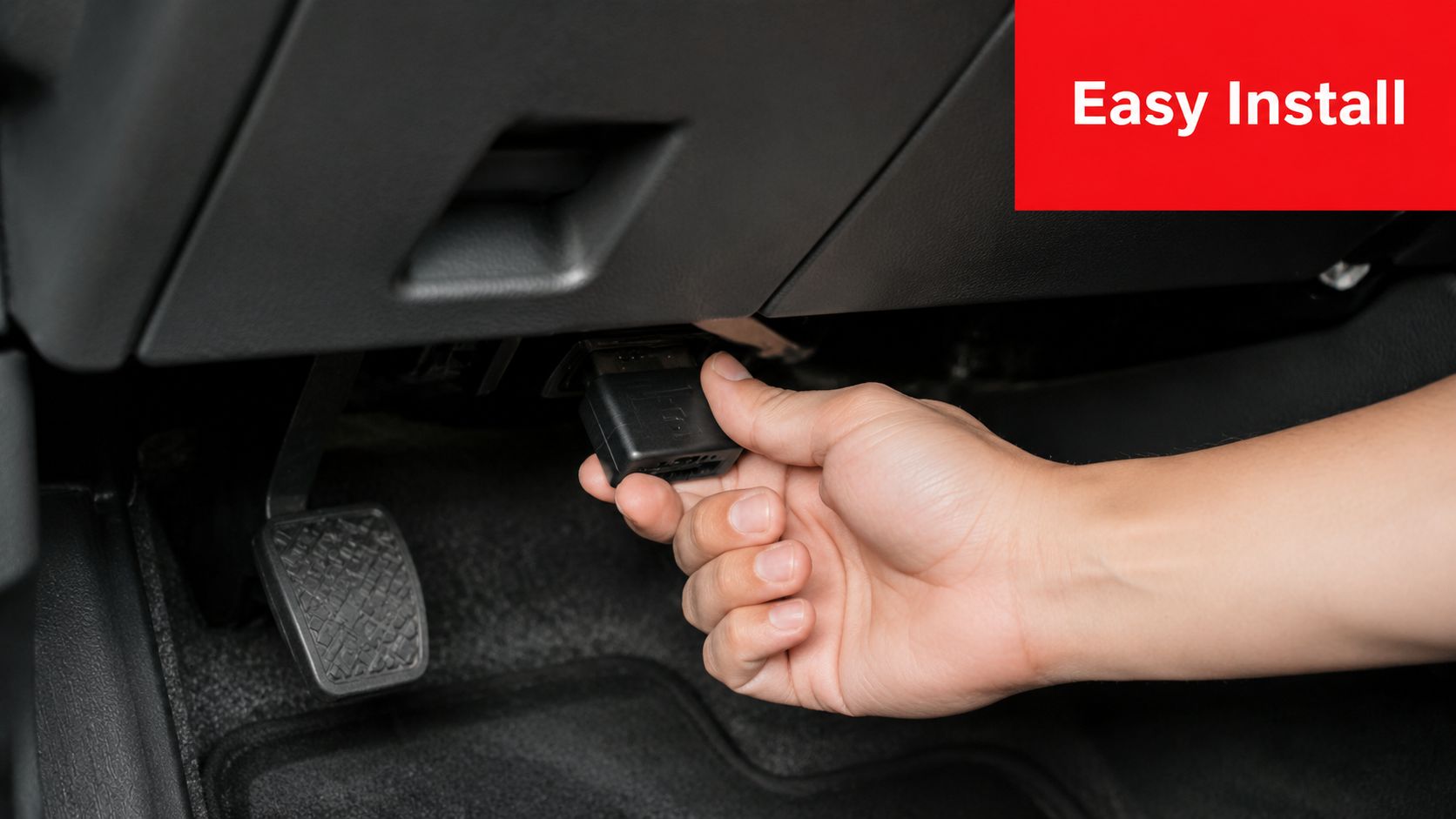
Installation is often straightforward
For an OBD-II device, the process is usually simple:
Find the port under the dashboard.
Most cars place it within easy reach of the driver's seat area.Plug in the tracker securely.
The device draws vehicle power and begins communicating.Pair it with the app.
That's where you handle alerts, trip review, and account settings.
Hardwired installations take more effort, but they can make sense when you want a cleaner, more concealed setup.
Maintenance is mostly about reliability
A good tracker shouldn't feel like another gadget you have to babysit. Most of the routine work is basic:
- Check the app occasionally to confirm alerts are configured the way you want.
- Watch for battery health notices if your system reports low vehicle voltage.
- Keep account details current so notifications reach the right phone.
That's it for most car owners.
The legal issue people shouldn't ignore
Tracking your own vehicle is generally a different matter from placing a tracker on someone else's vehicle without proper authority. Local law matters, employment law can matter, and family situations can get complicated quickly. If you want a plain-language starting point, CarLock's page on vehicle tracking legal considerations is a useful reference.
The bigger safety issue is hidden trackers used for stalking. That risk deserves more attention than it gets.
Recent 2024 to 2025 research on detecting hidden 4G LTE IoT trackers focused on their regular cellular uplink behavior and found that these devices can transmit “like clockwork” every minute while moving, a signature standard anti-AirTag methods may miss. That matters because many people only think to search for Bluetooth-style trackers.
If you suspect a hidden tracker, don't limit your search to AirTag-style alerts. A cellular tracker may operate independently and won't follow the same detection pattern.
What to do if you suspect an unwanted tracker
Start with practical checks:
- Look in obvious hiding spots: under seats, inside the glovebox, near the OBD port, in the trunk, and around wheel wells.
- Watch for unfamiliar wiring or magnets: hidden units are often tucked into places where a quick installer can reach.
- Take the concern seriously if movement seems monitored: repeated coincidences can be a warning sign, not paranoia.
If you believe your safety is at risk, involve law enforcement or a qualified technician rather than handling it casually.
Conclusion Moving Beyond Alarms to Active Security
The primary divide isn't between expensive and cheap. It's between noise and information.
An alarm makes a sound and hopes someone cares. A real vehicle tracker records movement, reports location, and flags suspicious events while they're happening. That's why it's a better fit for modern theft risks, teen driving oversight, and business vehicle monitoring.
The other divide is just as important. Bluetooth item finders and GPS security trackers are not interchangeable. One category helps recover misplaced belongings. The other is built to protect a moving vehicle in actual use.
If you still value alarms, that's reasonable. Physical deterrence still has a place. For readers comparing broader alarm strategies, this expert advice on Perth alarms offers a useful outside perspective on monitored systems and where alarms fit. But for a car owner who wants actionable security, an alarm alone is no longer the full answer.
The smarter model is active awareness. Know when the engine starts. Know when the car moves. Know if someone tries to unplug the device. Know where the vehicle is if the worst happens. That's the philosophy behind modern connected vehicle security, and it's the logical next step for anyone who wants more than a siren.
If you want a vehicle tracker built around real-time alerts, trip history, and active anti-theft monitoring, take a look at CARLOCK. It gives car owners a practical way to move beyond passive alarms and toward information they can use.