

Driver’s Desk
Choosing the Best Anti Theft Alarm in Cars
That gut-wrenching feeling when you stare at an empty parking spot where your car should be is something no one ever wants to experience. Today's modern anti theft alarm in cars is your best defense, an essential layer of protection that goes far beyond a screaming siren to offer real-time tracking and instant alerts right on your phone.
This guide will walk you through how car alarms have evolved from simple noisemakers into intelligent guardians for your vehicle, giving you the know-how to pick a system that delivers genuine peace of mind.
Why Modern Vehicle Security Is More Than Just a Loud Noise
We all know the classic car alarm—that blaring siren meant to startle a thief and get the attention of anyone nearby. For decades, it was the best we had. But in today's world of constant noise pollution, most people simply tune them out, a phenomenon known as "alarm fatigue."
Vehicle security has evolved, shifting from a reactive noisemaker to a proactive, intelligent system that communicates directly with you. This evolution isn’t just for show; it’s driven by necessity. As thieves get smarter, employing techniques like signal relay attacks and CAN bus injection, our security systems have to get even smarter. The goal isn't just to interrupt a theft in progress, but to stop it before it even starts and give you immediate, actionable information if someone tries.
The Growing Demand for Advanced Protection
This need for better security isn't just a feeling—the data confirms it. Soaring vehicle theft rates and smarter consumers have fueled a massive surge in the global market for vehicle anti-theft systems.
The market was valued at approximately USD 14.10 billion and is projected to nearly double to USD 26.30 billion by 2032, growing at a compound annual growth rate (CAGR) of 9.3%. While the traditional alarm segment still holds a 21.2% share, it’s clear the real opportunity—and demand—is for smarter, more connected solutions.
The core idea of vehicle protection has changed. It’s less about making a loud noise and more about creating a silent, digital connection between you and your car, ensuring you are always the first to know about any threat.
Beyond the Siren: A Proactive Approach
Truly modern systems don't rely on a single point of failure; they integrate multiple layers of defense. Before we dive into the tech, understanding broader theft protection strategies provides valuable context. For our cars, this means combining alarms with real-time data.
A truly effective anti theft alarm in cars today gives you:
- Instant Mobile Alerts: Get a notification on your phone the second a vibration is felt, the engine starts, or the car moves without you.
- Real-Time GPS Tracking: See your car's exact location at all times. If it's ever stolen, this is absolutely critical for recovery.
- Smart Automation: Features like geofencing can automatically alert you if your car leaves a designated "safe zone," like your driveway or office parking lot.
You can learn more about how today's devices offer comprehensive car security features. This proactive approach puts the control right back where it belongs—in your hands. It transforms your car from a vulnerable target into a connected, protected part of your life.
How Modern Car Security Systems Actually Work
To truly appreciate the power of a modern anti theft alarm in cars, you have to understand how the technology has matured. Vehicle security isn’t a single gadget; it's a layered system where each component has a specific job.
Think of it like securing your home. You have locks on the door, motion sensors inside, and perhaps a camera watching the perimeter—they all work together for comprehensive safety. Car security has evolved in a similar fashion, starting with the basics and adding smarter, more advanced layers of protection.
Traditional Alarms: The First Line of Defense
The classic car alarm is the original vehicle security device. Its job is simple: make a ton of noise. These systems use basic sensors to detect events like a door opening, glass breaking, or a sudden impact.
When a sensor is tripped, it signals the control unit to blast a high-decibel siren. The theory is to scare off the thief and attract the attention of bystanders. It’s a decent deterrent, but its greatest weakness is its reliance on someone nearby noticing and intervening.
The diagram below illustrates how a truly modern system builds on this basic concept, moving far beyond just a noisy siren.
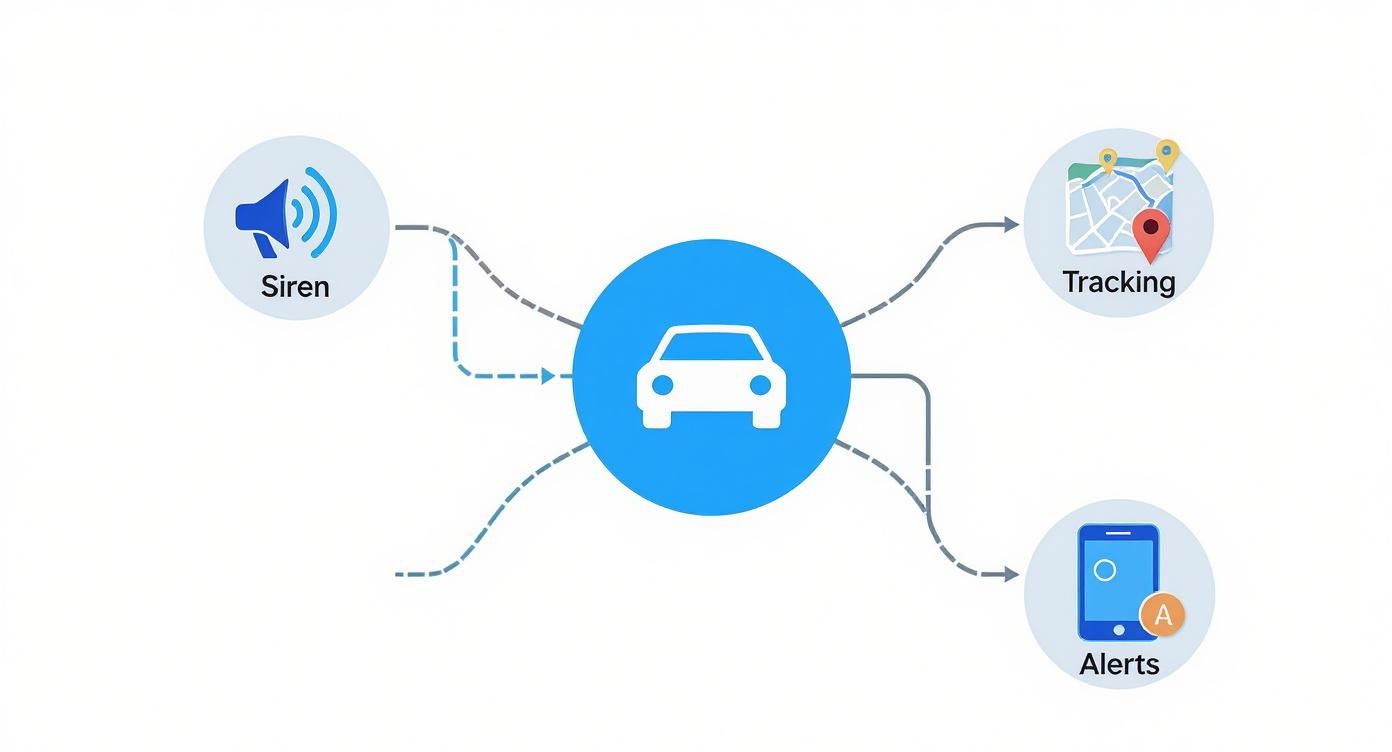
As you can see, a complete setup combines that audible siren with GPS for recovery and, most importantly, direct alerts to your phone so you know what's happening the moment it starts.
Immobilizers: Stopping the Engine Before It Starts
The next significant leap in car security was the vehicle immobilizer. This technology acts as a digital handshake between your key and your car's engine. Inside your key fob is a tiny transponder chip that transmits a unique, encrypted code to a receiver in the ignition system.
If the codes match, the engine control unit (ECU) allows the engine to start. If they don't—for instance, if someone tries to hotwire the car or use a counterfeit key—the immobilizer instructs the ECU to remain disabled. This simple but incredibly effective feature has become a standard defense against theft.
GPS Trackers: Knowing Exactly Where Your Car Is
An alarm makes noise and an immobilizer prevents the engine from starting. But what if a determined thief simply tows your car away? This is where GPS trackers become an indispensable tool.
A small GPS device, concealed within your vehicle, uses satellite signals to pinpoint its exact location in real-time. It then transmits that location data over a cellular network to a server, allowing you to see your car on a map directly from your phone. When it comes to the actual recovery of a stolen vehicle, a GPS tracker is the single most important component you can have.
Comparing Car Anti-Theft System Types
To make it easier to see how these systems stack up, here’s a quick comparison of their core functions and their respective strengths and weaknesses.
| System Type | Primary Function | Pros | Cons |
|---|---|---|---|
| Traditional Alarm | Creates a loud noise to deter thieves and attract attention. | Visible deterrent; can scare off amateur thieves. | Often ignored (false alarms); provides no recovery ability. |
| Immobilizer | Prevents the engine from starting without the correct key. | Highly effective at stopping hot-wiring and simple theft. | Doesn't stop towing; can be bypassed by skilled thieves. |
| GPS Tracker | Pinpoints the vehicle's location for recovery after a theft. | Drastically increases chances of getting the car back. | Passive—only helps after the car is already gone. |
| Smart System | Integrates all functions and sends real-time alerts to your phone. | Proactive notifications; combines deterrence, prevention, and recovery. | Requires a subscription for full functionality. |
Each layer offers a different kind of protection, but as you can see, they work best when combined. That's where modern smart systems come in.
Smart Systems: The Complete, Connected Solution
The apex of car security is the smart system. This is where everything we've discussed—alarms, immobilizers, and GPS—is integrated into one seamless, proactive package.
Systems like CarLock are a prime example. They combine the best of all worlds:
- Vibration and Impact Sensors: Just like a traditional alarm, they detect a potential break-in.
- Engine Start Detection: They know the instant someone tries to start the car without permission.
- Real-Time GPS Tracking: They're always monitoring your car's location, giving you a live feed.
But here’s the game-changing difference: a smart system doesn't just make noise on the street. It sends instant notifications straight to your smartphone the moment anything suspicious happens. This changes everything. You're no longer just a victim hoping someone else calls the police; you're the first to know, armed with the information you need to take action immediately. By checking out all of CarLock's GPS tracker features, you can see how all these pieces come together to create a unified, powerful shield for your vehicle.
Key Features to Look for in a Car Alarm System
Not every anti theft alarm in cars is created equal. While a basic car alarm might be enough to spook an amateur thief, a truly robust system provides real-time, actionable intelligence the second something is wrong. When you start comparing options, you'll see it's the specific features that separate a simple noisemaker from a powerful security partner.
Think about it like setting up security for your home. You wouldn't just install a loud siren and call it a day; you'd want sensors on the doors, motion detectors, and perhaps a video feed sent straight to your phone. The same logic applies to protecting your car. Let's break down the must-have features that define a modern, high-quality car alarm.
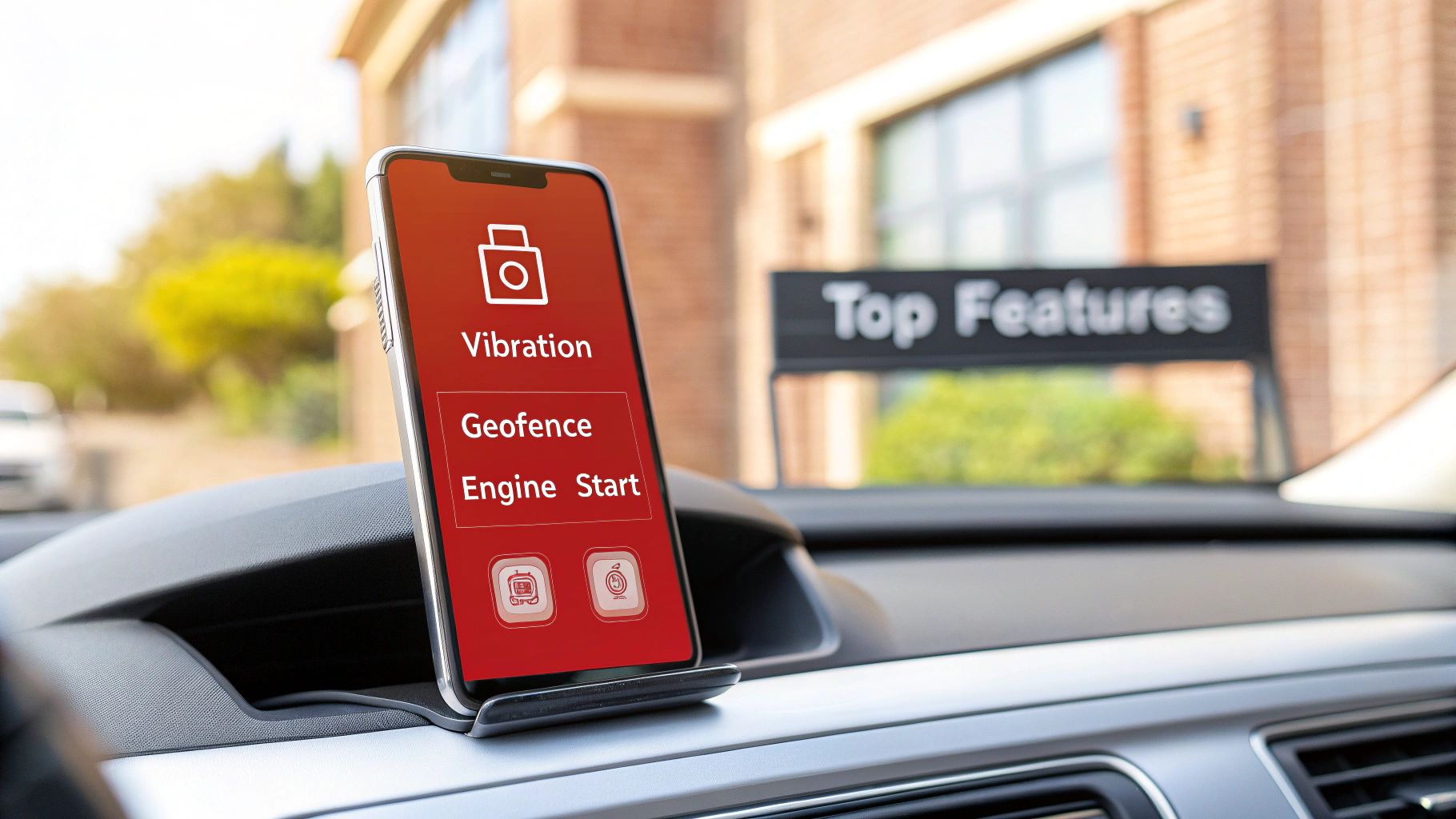
Vibration and Tilt Detection
This is your first line of defense, often triggered long before a thief even opens a door. Vibration detection uses highly sensitive accelerometers to sense any unusual jostling, bumps, or impacts.
For example, if someone tries to pry open your door, smashes a window, or even just bumps into your car in a parking lot, the sensor picks it up instantly. Tilt sensors work similarly, detecting if the vehicle is being lifted—a clear indicator that someone is attempting to tow it or steal the wheels. A great system doesn't just blare a siren; it sends an immediate alert to your phone, letting you know something’s up before serious damage is done.
Engine Start Alerts
If vibration detection is the early warning, an engine start alert is the final alarm bell. This is the definitive sign that a full-blown theft is in progress. This feature taps into your car's electronics and knows the exact moment the ignition turns over.
If your car is started and you're not in it, a smart alarm system notifies you on the spot. This is a non-negotiable feature. It confirms a thief has bypassed physical barriers and is about to drive off. That alert gives you a critical window to contact law enforcement and stop them in their tracks.
An engine start alert is your digital tripwire. It transforms your car from a passive object into an active part of its own defense, giving you the power to react the second a theft escalates.
Geofencing Capabilities
Geofencing is like drawing an invisible fence around a specific location on a map. You can set up these virtual perimeters around key places like your home, office, or your child's school.
Once a geofence is active, the system automatically notifies you the moment your vehicle enters or leaves that zone. The peace of mind this provides is huge, and it’s useful in numerous scenarios.
- For Parents: Get an alert when your teen driver arrives at school safely or if they leave a friend's house later than planned.
- For Security: Set a geofence around your driveway to get an instant notification if your car moves in the middle of the night.
- For Employers: Fleet managers can ensure company vehicles are staying within their designated service areas during business hours.
This proactive monitoring turns your alarm into a smart assistant that’s always keeping an eye on your car’s location for you.
Battery and Connectivity Monitoring
An advanced car alarm is only as good as its power source and connection. The best systems are engineered with this in mind, offering features that keep you informed about their own operational health.
A crucial feature here is a low-power consumption mode, which ensures the device doesn't drain your car's battery while it's parked for long periods. Even better, top-tier systems will monitor your car's actual battery voltage and warn you if it drops to a critically low level. This way, your security system never leaves you stranded with a dead battery.
On top of that, the system should notify you if the device is ever unplugged or loses its connection. This is a vital security alert, as it could be a sign a thief is trying to disable your tracker before making their move.
A User-Friendly Mobile App
Ultimately, all these powerful features are controlled through a mobile app—and its quality can make or break the entire experience. A truly great anti theft alarm in cars must be paired with an intuitive, reliable, and genuinely easy-to-use app.
The app is your command center. It's where you receive alerts, check your car's location in real-time, set up geofences, and review trip histories. A cluttered, buggy interface is frustrating, but a clean, responsive app makes managing your car's security feel completely effortless. You can see how a well-designed interface brings all these tools together by exploring the CarLock app features.
Understanding Installation and Ownership Costs
When you're evaluating an anti theft alarm in cars, the practical aspects—installation and cost—are just as important as the features. Many car owners worry about complicated setups or hidden fees, but modern systems have been designed for simplicity and transparency. Getting top-tier security is more accessible than ever.
Let's examine the two main installation types, their associated costs, and why you should view this purchase as a critical investment in your peace of mind, not just another expense.
Installation Simplicity: OBD2 vs. Hardwired Systems
Here's the good news: you don't need to be a mechanic to install a great car alarm. The biggest difference between systems is how the device connects to your car.
- OBD2 Plug-In Devices: This is by far the easiest and most popular route. The On-Board Diagnostics (OBD2) port has been a standard feature in virtually every car manufactured since 1996. Installing one is as simple as plugging the device directly into this port, which is typically located under the dashboard near the steering wheel. The entire process takes less than a minute, requires zero tools, and can be unplugged at any time.
- Hardwired Systems: These are more involved. They connect directly to your car's wiring, which almost always requires professional installation to avoid damaging sensitive electronics. While the installation is more complex, the primary advantage is that it can make the device much harder for a thief to locate and disable.
For most drivers, the plug-and-play convenience of an OBD2 system like CarLock strikes the perfect balance between powerful security and effortless setup.
Breaking Down the True Cost of Ownership
The price of a smart car security system extends beyond the initial hardware purchase. It's essential to look at the total cost of ownership, which includes the upfront device cost and any ongoing service fees.
The real value of a modern car alarm isn't just in the hardware you buy; it's in the continuous, live service that keeps you connected to your vehicle 24/7. This ongoing protection is what provides true peace of mind.
Think of it this way: the device in your car is the messenger, but the subscription is the intelligence network behind it. That small monthly fee covers the cellular data the device uses to communicate with the network, the cloud platform that processes all the alerts, and the constant updates to the mobile app. This is what makes real-time GPS tracking and instant notifications possible—the very features that make a smart system so powerful.
An Investment in Proactive Protection
It's critical to frame the cost as an investment, not an expense. A stolen car is a massive disruption and can be a financial disaster, involving insurance claims, deductibles, and the loss of personal property inside. The modest cost of a smart alarm is your proactive defense against that much larger potential loss.
Furthermore, consider the potential impact on your car insurance. It's worth understanding comprehensive auto insurance to see how you're protected from theft. Many insurance companies offer discounts for vehicles equipped with anti-theft devices, which can help offset the subscription cost over time.
Ultimately, the confidence you get from knowing you'll be the first to know if someone tampers with your car is invaluable. Don't just take our word for it—you can check out CarLock customer reviews to see what real users have to say about that value firsthand.
Finding the Right Alarm for Your Specific Needs
When you're trying to pick an anti theft alarm in cars, it’s easy to get overwhelmed. But the truth is, there’s no one-size-fits-all solution. The ideal system for a family with a new teen driver will differ significantly from what a fleet manager needs for their delivery vans.
Your lifestyle, your vehicle, and even where you park all factor into the equation. Instead of choosing a generic alarm, identify your primary concerns. Pinpointing your specific risks helps you select a system that actually solves your problems, turning a simple purchase into a smart security investment.
For Parents with New Drivers
Handing over the keys to a teenager is a monumental moment. It’s a mix of pride and a significant dose of anxiety that extends beyond theft. For parents, peace of mind comes from knowing their child is driving safely and responsibly. A smart alarm system isn't just about security; it's a co-pilot.
You’ll want a system that does more than just sound an alarm when a window breaks. Look for these game-changers:
- Geofencing: Set up virtual fences around home, school, or their part-time job. You'll get a quiet notification when they arrive or leave, confirming they are where they're supposed to be without constant texting and calling.
- Harsh Driving Alerts: Get instant notifications for events like harsh acceleration, hard braking, or aggressive cornering. This isn't about spying; it’s about having the data to start a real conversation about safe driving habits.
- Trip Logging: Review detailed trip histories. It's a transparent way to ensure they're sticking to familiar routes and not making unplanned detours late at night.
For Fleet Managers and Small Business Owners
Running a business with vehicles—whether you have two or twenty—is a logistical challenge. You’re not just protecting assets from thieves; you're managing efficiency, driver behavior, and your company's reputation. A basic car alarm is entirely inadequate.
Fleet managers need a system built for comprehensive oversight. Here’s what to prioritize:
- Centralized Dashboard: Forget juggling multiple apps. You need a single interface to view the live location and status of every vehicle in your fleet.
- Detailed Trip Histories: Get the full story on every trip—start and end times, mileage, and the exact routes taken. This data is invaluable for verifying hours, optimizing routes, and resolving customer disputes.
- Device Disconnection Alerts: This is crucial. If a driver unplugs the tracker, you need to know immediately. It could be a sign of unauthorized use or something more serious.
For High-Value and Classic Car Owners
When your car is more than just transportation—when it’s a classic, a custom build, or a high-end machine—your security needs are in a different league. These vehicles aren't just targets; they're often irreplaceable. Your number one priority is knowing the instant someone even thinks about touching your car.
For these prized possessions, focus on stealth and sensitivity:
- Discreet Installation: An easy-to-install OBD2 plug-in device is perfect. You can set it up in minutes without altering the original wiring, which is a critical consideration for classic car purists.
- Hyper-Sensitive Vibration Alerts: You want to be notified of the slightest bump or vibration. This is your early warning system for a break-in attempt or, even worse, a tow truck trying to haul it away.
- Instant Engine Start Notifications: This is paramount. The second someone tries to turn that engine over, your phone should alert you. That immediate notification gives you the critical seconds needed to react.
For owners of high-value vehicles, an anti-theft system isn’t just a deterrent; it’s a direct, silent line of communication between you and your car. The ability to receive instant, actionable intelligence is non-negotiable.
For Residents of High-Theft Urban Areas
Living in a city or a neighborhood with a high rate of vehicle crime completely changes the security landscape. Blaring car alarms are so frequent they become background noise. Relying on a loud siren to save your car is a losing proposition. Your defense must be personal and proactive.
This isn't just anecdotal; the numbers confirm it. The global car burglar alarm market reached $2.4 billion and is expected to climb to $4.1 billion by 2032, fueled by rising theft rates. You can see more about this growing demand for smarter security on dataintelo.com.
If you're in a high-risk area, you need alerts that come directly to you.
- Instant Mobile Notifications: This is your most powerful weapon. A notification sent straight to your phone when your car is bumped, moved, or started is infinitely more effective than a siren nobody pays attention to.
- Real-Time GPS Tracking: If the worst happens, being able to provide law enforcement with the live, moving location of your stolen car dramatically increases the chances of a quick recovery.
The Future of Car Security is Smart and Proactive
To effectively protect your car today, you need more than just a loud noise—you need intelligence. We’ve come a long way from the simple, wailing sirens of traditional alarms to the smart, connected systems that define modern vehicle protection. The best defense is no longer about making a scene; it's about receiving real-time information delivered directly to you.
The fundamental purpose of an anti theft alarm in cars has shifted. We've moved from reactive alerts that rely on strangers to proactive prevention that puts you squarely in control. Instead of hoping a neighbor calls the police, you become the first line of defense, armed with immediate, actionable data sent straight to your smartphone.
Embracing a New Standard of Security
Modern systems empower you with instant notifications for any suspicious activity. You'll know the second a vibration is detected, if the engine starts without you, or if your car moves from where you left it. This constant vigilance is all managed through a simple mobile app, turning your phone into a personal security command center.
This is the new baseline for vehicle security. It's time to move past outdated technology and adopt a system that is always on, always watching, and always connected directly to you. Your vehicle is a major investment, and it deserves protection that is as smart and proactive as the threats it faces.
The future of vehicle security isn't just about preventing theft; it's about providing a constant connection and peace of mind. A smart system ensures you are always aware and in control, completely changing how you protect your car.
Your Next Step Towards Complete Peace of Mind
This shift towards connected security offers a powerful, accessible way to guard your vehicle. The ability to check on your car from anywhere gives you a level of confidence that old alarms just can't match, whether you're parked at home, at the office, or in a busy downtown garage. By blending GPS tracking with instant alerts, these systems provide a complete protective shield.
You can see how these different layers of protection work together by exploring CarLock's cloud-based features, which act as the intelligent brain behind this proactive security approach. Making the switch to a smart system is the single best step you can take toward ensuring your vehicle is guarded by a vigilant, intelligent, and always-on partner.
Still Have Questions About Car Anti-Theft Alarms?
Diving into the world of vehicle security can feel a little overwhelming, and you probably have a few questions. That's perfectly normal. Getting straight, factual answers is the best way to pick the right anti-theft alarm in cars and feel confident in your choice. Let's tackle some of the most common inquiries from car owners.
How Do Aftermarket Alarms Compare to Factory Systems?
Many people assume the alarm that came with their car is sufficient, but factory-installed systems typically offer only a baseline level of security. They're built to a standard, which makes them predictable. An experienced thief knows what to expect and, more importantly, how to circumvent them without creating a disturbance.
This is where a quality aftermarket system truly excels. They introduce a different level of security, with features like real-time GPS tracking, geofencing, and instant alerts pushed directly to your phone. Most stock alarms lack these capabilities. This elevates your car’s defense from a simple noisemaker into a smart, active guardian to which you are always connected.
Will an Aftermarket Alarm Void My Car Warranty?
This is a significant concern, especially for owners of newer cars. The good news is the answer is almost always no. A modern, plug-and-play smart alarm that connects to the OBD2 port will not void your vehicle's warranty.
These devices are engineered to be completely non-invasive. They read data from the port without altering your car's factory wiring or complex electronics. Even if you choose a hardwired system, ensuring a certified professional performs the installation will keep your warranty perfectly intact.
In the U.S., the Magnuson-Moss Warranty Act protects consumers from this very issue. A dealer cannot deny warranty coverage unless they can prove an aftermarket part directly caused the failure of a covered component. A simple plug-in device is about as low-risk as it gets.
Do Smart Car Alarms Drain the Vehicle Battery?
Nobody wants to deal with a dead battery. It’s a completely valid concern when considering adding any electronic device to your car. However, top-tier smart alarms are built from the ground up for extremely low power consumption.
Most of the time, they operate in a "sleep mode," drawing only a tiny amount of power when your car is parked. The best systems, like CarLock, take it a step further by actively monitoring your car's battery health. If the voltage ever drops to a critical level, it will send you a notification. This way, you get total security without ever having to worry about being stranded by a dead battery.
Ready to stop worrying and switch to a smarter, more connected security system? CarLock delivers real-time tracking, instant alerts to your phone, and the confidence you deserve. Protect your vehicle with CarLock today.