

Driver’s Desk
Guide: gps tracking program for real-time vehicle security
It's a feeling every car owner dreads: walking out to an empty parking spot where your vehicle should be. A good GPS tracking program completely changes that dynamic. It's more than just an alarm; it's a direct line to your car, giving you real-time location data and a level of control that older security systems just can't match.
What Is a GPS Tracking Program
At its core, a GPS tracking program is a system that combines a physical device in your car with powerful software on your phone. Think of it as a quiet, digital co-pilot for your vehicle, one that’s always on duty and reports its exact status straight to you. This technology is no longer a luxury—it’s a fundamental part of modern vehicle security.
The need is clearer than ever. Vehicle theft remains a significant problem; according to the National Insurance Crime Bureau (NICB), over one million vehicles were stolen in the U.S. in 2023, representing a staggering loss of over $7 billion. Traditional car alarms, while noisy, often do little to aid in the recovery of a stolen vehicle. A GPS tracker is designed to solve that exact problem.
The Core Components of Protection
The real magic of these systems is how three distinct parts work together seamlessly to keep you informed. It’s not a single gadget, but a connected team.
- Hardware: This is the small tracking device, which usually plugs right into your car’s OBD-II port. It uses the Global Positioning System (GPS) satellite network to pinpoint its location with incredible accuracy, often within a few meters.
- Communication: Just like your phone, the tracker has a built-in SIM card. It uses cellular networks (like 4G or LTE) to send its location data and other alerts over the internet to a secure server.
- Software: This is the app on your smartphone. It takes all that technical data and turns it into a simple, easy-to-understand map, showing you exactly where your car is and sending you instant notifications if something’s wrong.
This constant flow of information—from the car to the cloud to your phone—is what makes a GPS tracking program so powerful. It closes the gap between the moment a theft starts and the moment you find out, which is often the single most important factor in recovering a stolen vehicle.
In this guide, we'll break down how this technology works, walk through the essential features that provide real security, and show you how to get it set up. Whether you're protecting a brand-new car, keeping an eye on a teen driver, or managing a few vehicles for your business, a GPS program gives you a new level of awareness. To better understand how this fits into the bigger picture, it helps to learn more about modern car security systems and how they all work together.
Understanding How a GPS Tracking Program Works
So, what's really going on inside a GPS tracking program? Forget the complex tech jargon for a moment. At its heart, it’s a simple, three-part system working in harmony to give you a direct line to your vehicle, 24/7. Think of it as a conversation happening in seconds, keeping you in the loop no matter where you are.
It all starts with the hardware. This is the small tracking device that you plug into your car, usually into the OBD-II port. This little box is the brains of the operation, containing a GPS receiver that is constantly listening for signals from a network of at least 31 operational satellites orbiting the Earth. By triangulating its position from these signals, it can pinpoint your car's exact location with remarkable accuracy.
The Journey of Information
But knowing its location isn't enough; the device needs a way to tell you. That’s where the other two parts come in. The process works like this:
- The Device Sends a Signal: The tracker uses a built-in SIM card—just like the one in your phone—to connect to a cellular network. It bundles up its location data and sends it out to a secure cloud server.
- The Server Does the Work: This server acts as the central hub, receiving the raw data from your device, processing it, and storing it for access.
- The App Delivers the News: Finally, the software—the app on your smartphone—pulls this information from the server and presents it to you in a way that makes sense. Suddenly, complex satellite data becomes a clear dot on a map or an instant notification on your screen.
This entire trip—from satellite, to device, to server, to your phone—is what creates that feeling of being connected to your car.
The diagram below really brings this to life, showing how a system like this turns a potential threat into a manageable situation you can control.
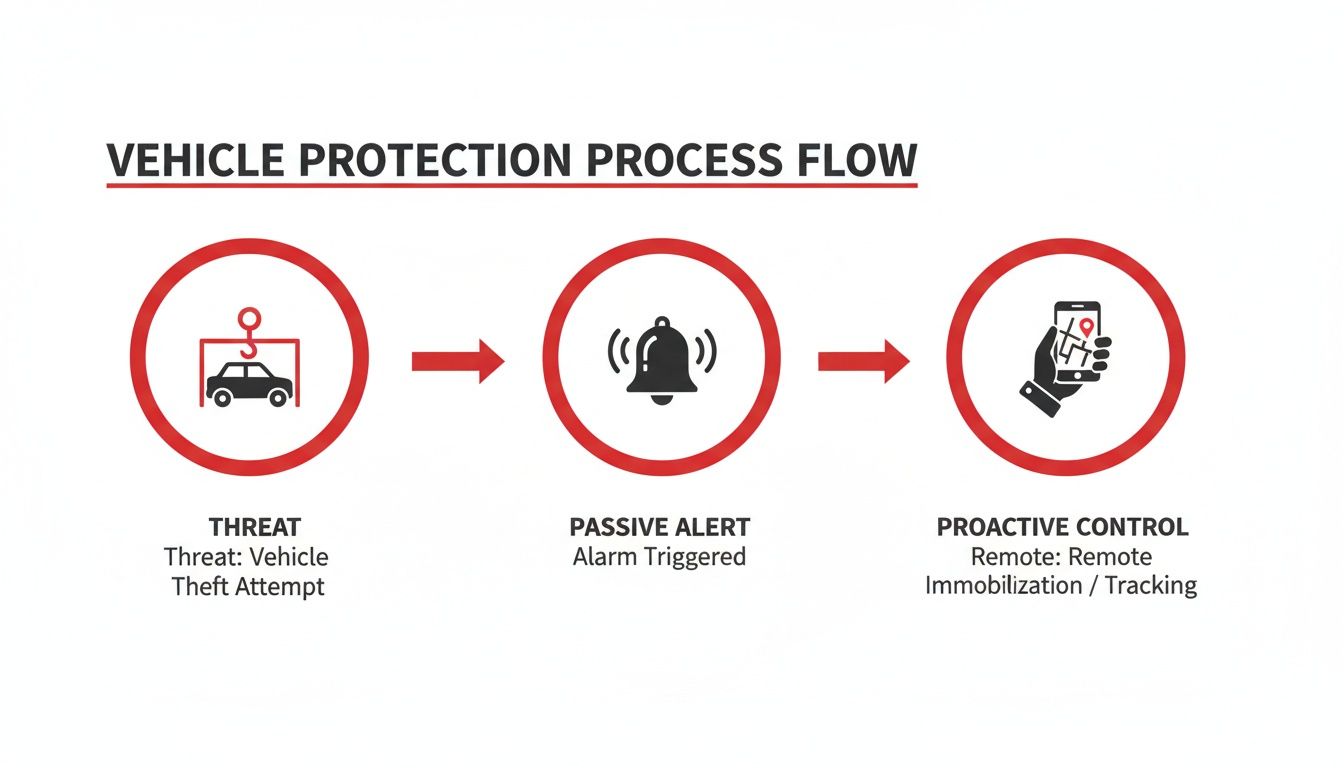
As you can see, it's about shifting from a passive car alarm that just makes noise to an active security partner that alerts and empowers you to act immediately.
Why This Technology Is Booming
It’s no surprise that this technology is taking off. The global market for GPS tracking devices is expected to grow significantly, with one report from Grand View Research projecting a market size of USD 4.93 billion by 2030, driven by a real need for better security and asset management.
In places with high vehicle theft rates, a GPS tracker is becoming less of a luxury and more of a necessity. The data proves their worth: law enforcement agencies frequently cite GPS tracking as a critical tool for rapid vehicle recovery. According to industry reports, using a GPS tracker can slash theft recovery costs by 40-60% for fleet owners and significantly increase the odds of recovery for private owners.
The real power of a GPS tracking program isn't just knowing where your car is. It's about turning raw data into meaningful action. When your car’s engine starts unexpectedly or a strong vibration is detected, the system doesn’t just log it—it alerts you instantly, transforming a potential crisis into something you can handle.
This elegant teamwork between hardware, a cellular connection, and smart software creates a powerful protective shield around your vehicle, ensuring you’re always the first to know what’s happening.
Essential Features Your GPS Program Must Have
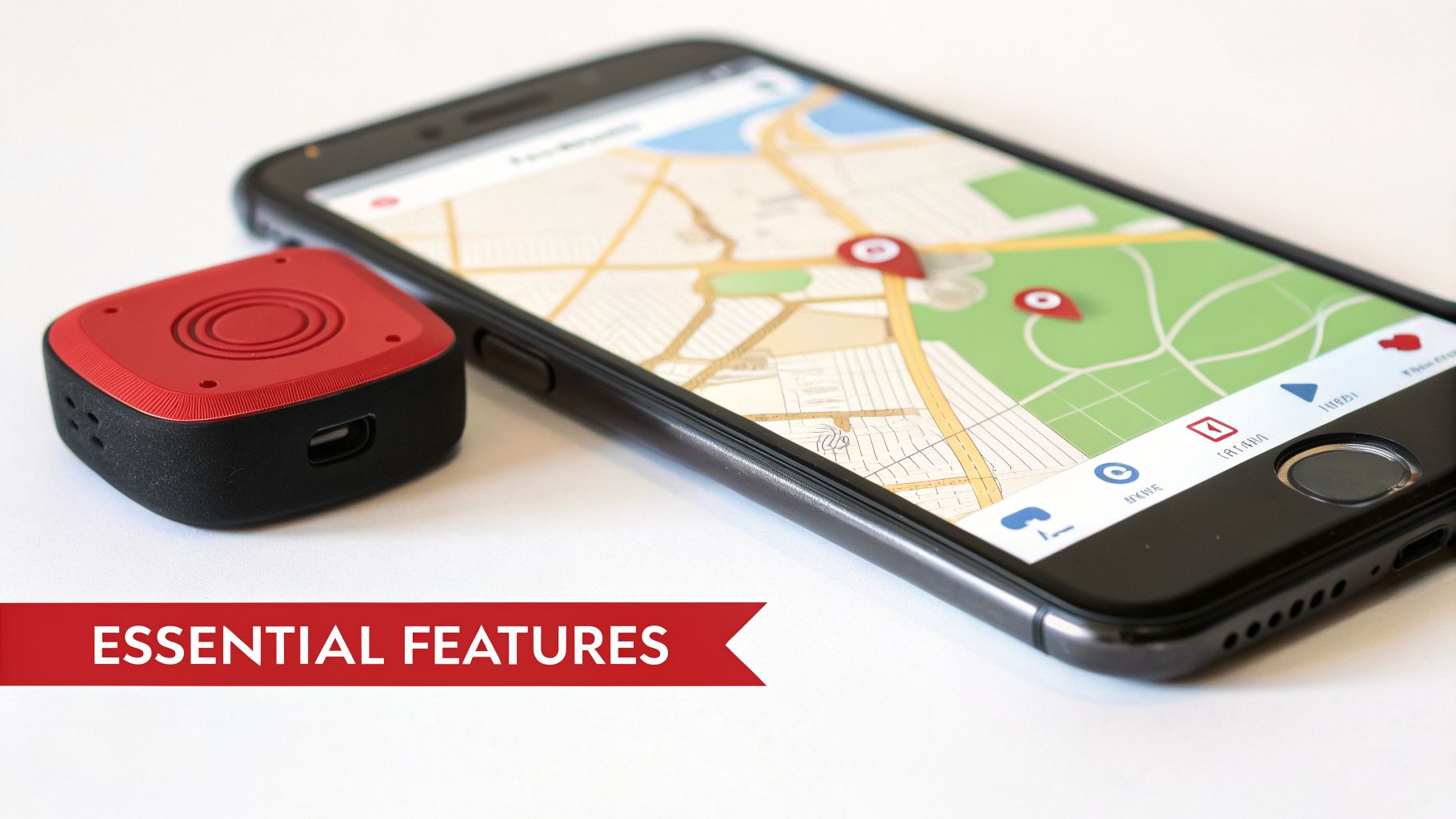
So, you understand the basics of how GPS works. Now comes the important part: figuring out what separates a simple location dot on a map from a true vehicle security system. The right program isn't just about finding your car after it’s gone; it’s about giving you the tools to stop a theft in its tracks.
Think of it this way: you wouldn't protect your home with just a single camera pointed at the door. You’d want motion sensors, door contacts, and a loud alarm. A great GPS tracking program works the same way, layering different features to create a robust shield for your car.
Real-Time Tracking And Geofencing
The cornerstone of any system worth its salt is real-time tracking. This isn’t a once-an-hour update—it's the ability to see your vehicle’s exact position, live, as it moves. If the worst happens and your car is stolen, this is the single most critical piece of information you can give to law enforcement for a quick recovery.
But tracking alone is reactive. That's where geofencing comes in. This feature lets you draw virtual perimeters on a map around important areas, like your home, office, or your kid's school. The moment your car crosses one of those lines—either entering or exiting—you get an instant notification on your phone.
Together, they create a powerful one-two punch: real-time tracking shows you where your car is, and geofencing alerts you the second it goes somewhere it shouldn't.
Critical Security Alerts
While knowing your car's location is good, getting an alert before it's even driven away is much better. These early warnings are often the difference between preventing a theft and just reporting one.
Let's look at the key alerts that transform a tracker from a passive device into an active security guard for your car.
Critical Features of a Modern GPS Tracking Program
To truly secure your vehicle, you need a system that offers more than just a pin on a map. The table below breaks down the essential features that provide layers of protection.
| Feature | What It Does | Why It Matters for Security |
|---|---|---|
| Vibration Detection | Senses unusual vibrations from events like a window smash, forced entry, or towing. | This is your first line of defense, notifying you of an intrusion before the car is started or moved. |
| Engine Start Alert | Sends an immediate notification the moment your car’s engine is turned on. | Confirms a theft is in progress, giving you a critical head start to notify authorities. |
| Device Disconnect Alert | Notifies you instantly if the tracker is unplugged or loses power. | Thwarts a common tactic used by thieves and provides the vehicle's last known location. |
| Geofencing | Lets you set virtual boundaries and receive alerts when your car enters or leaves them. | Provides immediate notification if your car is moved from a "safe" zone like your driveway or office parking lot. |
These features work in concert to create a comprehensive security net around your vehicle, giving you peace of mind and a real chance to intervene.
In fact, a study from Automotive Fleet found that 98% of companies using GPS tracking reported positive results, including benefits like improved driver safety, reduced fuel costs, and enhanced vehicle security. For personal car owners, those results mean faster theft recovery and turning a potential total loss into a quickly resolved incident.
These alerts are a game-changer. They give you the crucial moments needed to act. If you're interested in seeing how these functions come together in a real-world application, you can explore the specific features of a modern GPS app and see how they create a complete security solution.
Real-World Scenarios Where a GPS Tracker Is Invaluable
The specs and features of a GPS tracking program are one thing, but where this technology truly comes alive is in the real world. Let’s move past the technical jargon and look at how these systems solve everyday problems, turning data into real peace of mind.These aren't just edge cases. Reliance on GPS for security and fleet management is booming. Research from Mordor Intelligence valued the GPS tracking device market at USD 2.53 billion in 2023, projecting it to reach USD 5.39 billion by 2028. This massive growth isn't just a trend; it shows a fundamental shift in how people, from parents to business owners, are protecting what matters most.
The Concerned Parent and The New Driver
Handing the car keys to a new teenage driver is a nerve-wracking moment for any parent. This is where a GPS tracking program becomes an essential co-pilot. According to the CDC, drivers aged 16–19 are nearly three times more likely to be in a fatal crash than drivers aged 20 and over.
A parent can easily set up geofences, creating virtual "safe zones" around home, school, or a part-time job. If the car enters or leaves these areas at odd hours, an alert is sent straight to their phone. Speed alerts are another game-changer, letting them know if their teen is driving too fast. It’s not about micromanaging—it’s about having a tool to coach safer driving habits when you can't be in the passenger seat.
The Urban Dweller in a High-Theft Area
If you live in a city, you know the constant anxiety of street parking. Car theft is a real and present danger. For someone in this situation, a vibration detection alert is their first line of defense. The second a thief tries to smash a window or jimmy a lock, the owner gets a notification.
Should the thief get inside and try to start the car, an engine start alert is triggered instantly. This gives the owner a critical window to call the police and share a live tracking link. We’ve seen this lead to vehicles being recovered in minutes, not hours or days.
This instant response capability is what truly separates a modern GPS tracking program from a simple car alarm. Instead of just making noise, it gives you the power to react and provide law enforcement with the exact information they need for a swift recovery.
The Small Business Owner and The Classic Car Enthusiast
For a small business running a few delivery vans, a GPS tracker is a powerful tool for efficiency and security. The owner can review trip logs to spot inefficient routes, make sure drivers are on schedule, and give customers more accurate delivery times. You can learn more about how to monitor vehicle routes and see how it impacts the bottom line.
On the other hand, think about a classic car enthusiast. Their vehicle isn't just transportation; it's an irreplaceable investment. A tracker provides a vital layer of security, sending a disconnect alert if a thief tries to find and disable the device. For a high-value, high-target vehicle, this proactive warning is absolutely essential.
How to Install and Use Your GPS Tracker Effectively
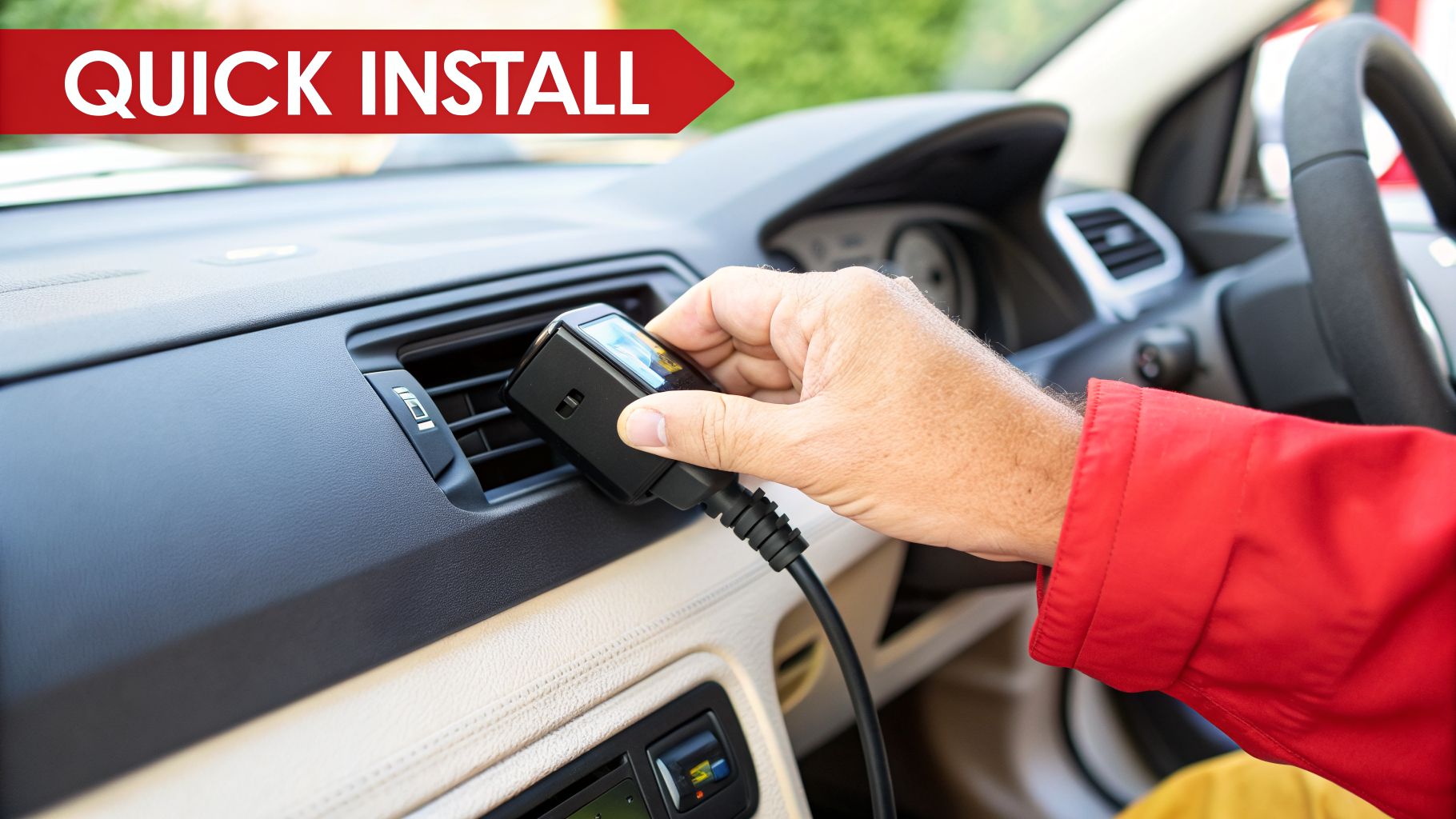
Getting a GPS tracker is a great first step, but learning how to use it properly is what truly secures your vehicle. The good news is that modern systems are built to be incredibly straightforward, putting powerful security tools right at your fingertips. Let's walk through the process, from unboxing to taking action.
Many of the best trackers on the market today, including CarLock, are plug-and-play devices. Forget complicated wiring or a trip to the mechanic. These devices plug directly into your car's OBD-II port, which is standard on all vehicles manufactured after 1996 and is usually found under the steering wheel. Installation takes just a few seconds—it's as easy as plugging in your phone charger. This simplicity is a huge reason the GPS tracker market is projected to grow substantially, as more people discover how easy it is to add a layer of security.
Configuring Your Mobile App for Maximum Security
With the device plugged in, your phone becomes the command center. This is where you'll fine-tune the system to fit your life and give yourself real peace of mind.
To get the most value right away, focus on these three initial settings:
- Draw Your First Geofence: The first thing you should do is create a virtual perimeter around your home, office, or any place you park regularly. This way, you’ll get an immediate notification if your car moves unexpectedly.
- Fine-Tune Alert Sensitivity: Think about where you park. On a busy street with lots of rumbling traffic, you might want to lower the vibration detection sensitivity to avoid false alarms. But in a quiet private garage, a higher sensitivity will catch even the slightest disturbance.
- Learn the Alerts: Take a moment to see what each notification looks like, from "Vibration Detected" to "Engine Started." Knowing what they mean at a glance will help you react quickly and appropriately when it counts.
What to Do When You Get a Theft Alert
Picture this: you're out to dinner, and your phone buzzes with an "Engine Started" alert. The key is not to panic, but to act with purpose. A good GPS tracking program gives you exactly what you need in that moment.
Your first priority is to confirm the threat and give law enforcement clear, actionable information. The faster you act, the better the outcome—vehicles with GPS tracking systems have a recovery rate of over 90%, according to some industry data.
Here’s your immediate action plan:
- Verify the Threat: First, do a quick check to make sure a family member or friend isn't using the car.
- Contact Law Enforcement: Once you confirm it's a theft, call the police immediately. Let them know you have live GPS tracking on the vehicle.
- Share the Live Location: Your mobile app will have a feature to share a real-time tracking link. Send this directly to the police dispatcher to guide officers straight to your car for a quick recovery.
By taking a few minutes to understand the features of your device, you can ensure your car is fully protected from day one.
Answering Your Top Questions About GPS Tracking
When you're thinking about a GPS tracker for your car, a few key questions always come up. Let's tackle them head-on with factual information, because understanding how these devices work in the real world is the best way to feel confident about your choice.
The first big one is always: "What if a thief just unplugs it?"
It's a fair question. And yes, it's possible. But a well-designed tracker is built for exactly this scenario. Any quality system will have a device disconnect alert. The second it's unplugged from the OBD-II port, its small internal battery takes over and it instantly sends an alert to your phone with its last known location. This gives you a critical head start.
Warranty, Subscriptions, and Your Car's Battery
Another common worry is about the vehicle's warranty. "Will this void my car's warranty?" The good news is, for most modern trackers, the answer is no.
In the United States, the Magnuson-Moss Warranty Act protects consumers from being denied warranty coverage simply for using an aftermarket part. While a complicated, hardwired system might cause issues if installed incorrectly, today's best trackers are simple plug-and-play devices. They connect directly to your car’s OBD-II port without any tools or permanent changes. Because they don't modify the car, they are generally considered warranty-safe.
That brings us to the subscription fee. "Why do I need to pay a subscription?" Think of your GPS tracker like a tiny, specialized cell phone. For it to send you its location, it has to transmit that data over a cellular network. The small subscription fee covers the built-in SIM card and the data plan it needs to stay connected 24/7.
Luckily, these devices are incredibly efficient and designed to enter a low-power "sleep mode" when the vehicle is off, ensuring they have a negligible effect on your car's battery.
Have more specific questions? We've compiled a complete guide to help you find the answers you're looking for. You can dive deeper into common questions about GPS trackers on our FAQ page.
Ready to secure your vehicle with a system trusted by thousands? With CarLock, you get instant alerts and real-time tracking for ultimate peace of mind. Learn more at https://www.carlock.co.