

Driver’s Desk
What is a GPS Tracking Unit: A Detailed 2026 Guide to How They Work
We’ve all felt it—that gut-wrenching moment of panic when you can’t find your car. It’s a feeling every owner knows too well. In its simplest form, a GPS tracking unit is a small, powerful device that uses satellite signals to find your car's exact location in real-time. It then sends that crucial information straight to your phone. Think of it less like a complicated gadget and more like a personal guardian angel for your vehicle.
What Is a GPS Tracking Unit, Really?
At its core, a GPS tracking unit is a compact device that uses the Global Positioning System to determine and share a vehicle's precise location. It creates a dedicated link between you and your car, but it offers so much more than just a dot on a map. This technology essentially turns your vehicle into a smart, connected asset you can check on from virtually anywhere.
The demand for this kind of security is exploding. The global market for GPS tracking devices, valued at USD 4.17 billion in 2026, is projected to skyrocket to an incredible USD 12.28 billion by 2035. That growth is fueled by a steady 12.73% compound annual growth rate. This isn't just a niche product anymore; it's becoming essential for everyday car owners worried about theft, parents wanting to keep an eye on teen drivers, and even businesses managing vehicle fleets. For more on this trend, you can check out market analysis from firms like RootsAnalysis.
It's More Than Just Finding a Lost Car
While tracking your car's location is its main job, a modern GPS unit provides a whole suite of features that build a comprehensive security bubble around your vehicle. It’s an accessible and surprisingly robust shield for one of your most valuable possessions.
Let's take a quick look at what the main components of a tracking unit do.
GPS Tracking Unit At a Glance
| Component | Primary Function |
|---|---|
| GPS Receiver | Captures signals from multiple satellites to calculate the precise location (latitude and longitude). |
| Cellular Modem | Transmits the collected location data over a cellular network to a central server. |
| Microcontroller | The "brain" of the unit that processes data from the receiver and other sensors. |
| Accelerometer | Detects motion, vibrations, harsh braking, and acceleration to trigger alerts. |
| Power Source | Can be connected to the car's battery or use its own internal battery for power. |
These parts work together to deliver a seamless experience, giving you a direct line to your vehicle's status.
With these components working in sync, a good tracker delivers some key benefits:
- Real-Time Theft Alerts: You'll get instant notifications on your phone for suspicious activity. This could be a vibration from a break-in attempt or the engine starting when you're not there.
- Driver Monitoring: It's a fantastic tool for keeping tabs on new or young drivers. You can set speed limits or create virtual boundaries (often called geofences) that send you an alert if they’re crossed.
- Total Peace of Mind: Honestly, just knowing you can find your car at any moment brings an incredible sense of security and control.
A GPS tracker is your proactive defense against car theft and misuse. Instead of just reacting after something bad happens, it gives you immediate information, which dramatically boosts the chances of getting your car back and can even stop problems before they start.
Understanding how these functions come together is the first step toward better vehicle security. Once you see past the tech jargon, it’s clear how this tool provides an affordable and powerful layer of protection.
How a GPS Tracker Actually Works Under the Hood
Ever wonder what’s really going on inside that little GPS tracking unit? It might seem like magic, but it's actually a straightforward, three-step process. Think of it as a constant conversation between a network of satellites, the device in your car, and the app on your phone.
It all starts with the tracker's GPS receiver. This component is like an incredibly sensitive ear, always listening for signals broadcasted by a constellation of 31 satellites orbiting Earth. To figure out its exact spot on the map, the receiver needs to lock onto signals from at least four of these satellites. It then uses that information to calculate its precise latitude and longitude in a process known as trilateration.
From Location Data to Instant Alerts
Once the receiver knows where it is, it needs to tell someone. That’s where the built-in cellular modem and SIM card come in. This part of the tracker acts as its voice, taking that location data and sending it over a cellular network to a secure server—almost like sending a text message. This happens in seconds, relaying your car's position from the vehicle to your app.
This constant stream of data is what makes it such a powerful security tool. That instant alert you get on your phone showing your car's location? That's the GPS receiver, antenna, and SIM card all working together seamlessly. It's a technology that's seeing huge growth, with the market valued at USD 4.14 billion in 2026 and projected to climb to USD 7.34 billion by 2030—an impressive 15.4% growth rate. This boom is fueled by demand in everything from commercial fleet management to personal car security, as detailed in these findings on the GPS tracking device market.
This simple flow—from satellite, to vehicle, to your smartphone—is really the core of how GPS tracking works.
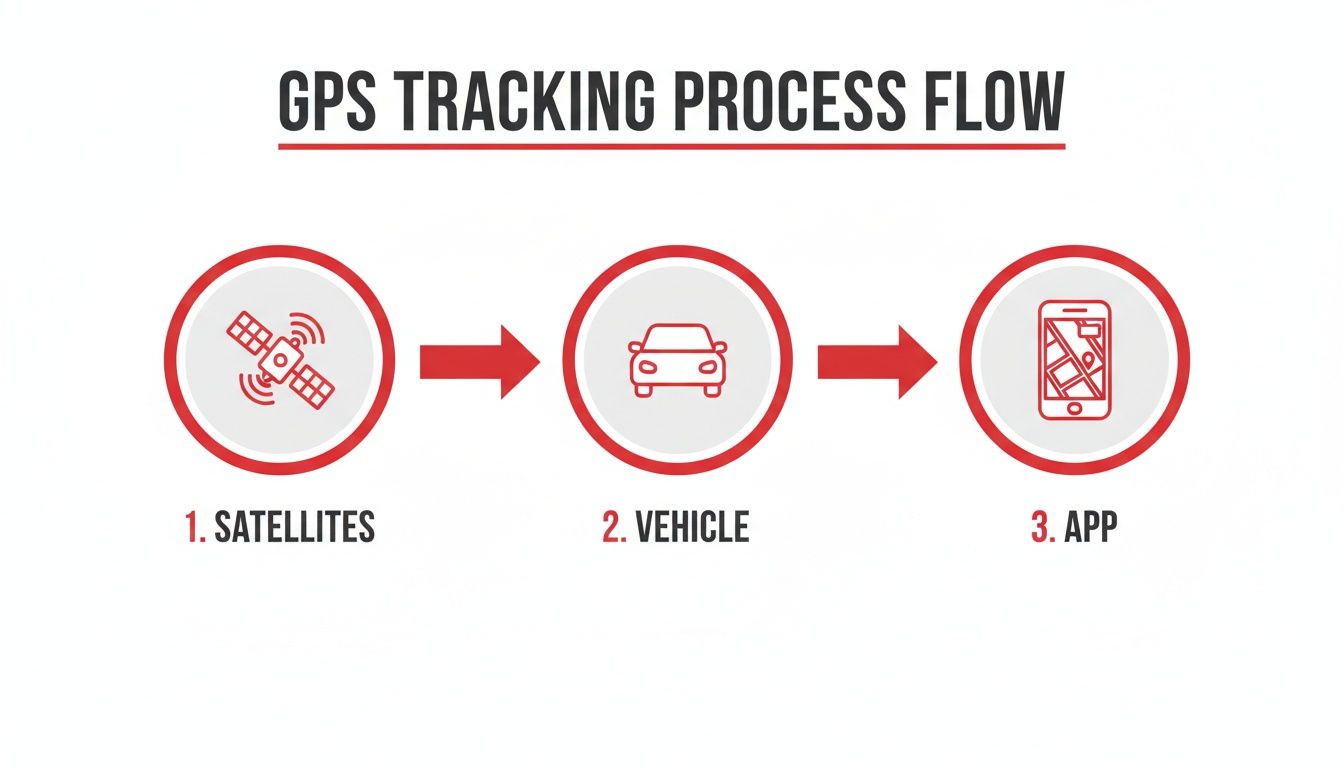
The image above gives you a great visual of how the tracker receives satellite signals and then passes that information straight to your phone, keeping you connected at all times.
The Role of Onboard Sensors
What really turns a simple location tracker into a comprehensive security system are the onboard sensors. These are the device's digital nerve endings, designed to detect physical events and trigger immediate alerts.
Vibration Detection: A sophisticated accelerometer can feel unusual vibrations. Think of the jolt from a window being smashed or a thief trying to pry open a door.
Engine Start Alerts: The tracker is wired to know when your engine turns on. If it starts without you, you’ll get a notification right away.
Movement Alerts: Even if the engine is off, the sensors can tell if the vehicle is being moved—like if it's being towed or loaded onto a flatbed—and send an alert.
All these components work in harmony to create a protective bubble around your vehicle. You can see how these and other advanced features of a modern tracking device come together to deliver real peace of mind.
Key Features That Turn a Tracker Into a Security System
A GPS tracker does more than just show you a dot on a map. Knowing your car’s location is a great start, but the real power comes from the intelligent, instant alerts that turn a simple locator into a proactive security system for your vehicle.
It’s these warnings that give you true peace of mind. They’re what make all the difference.
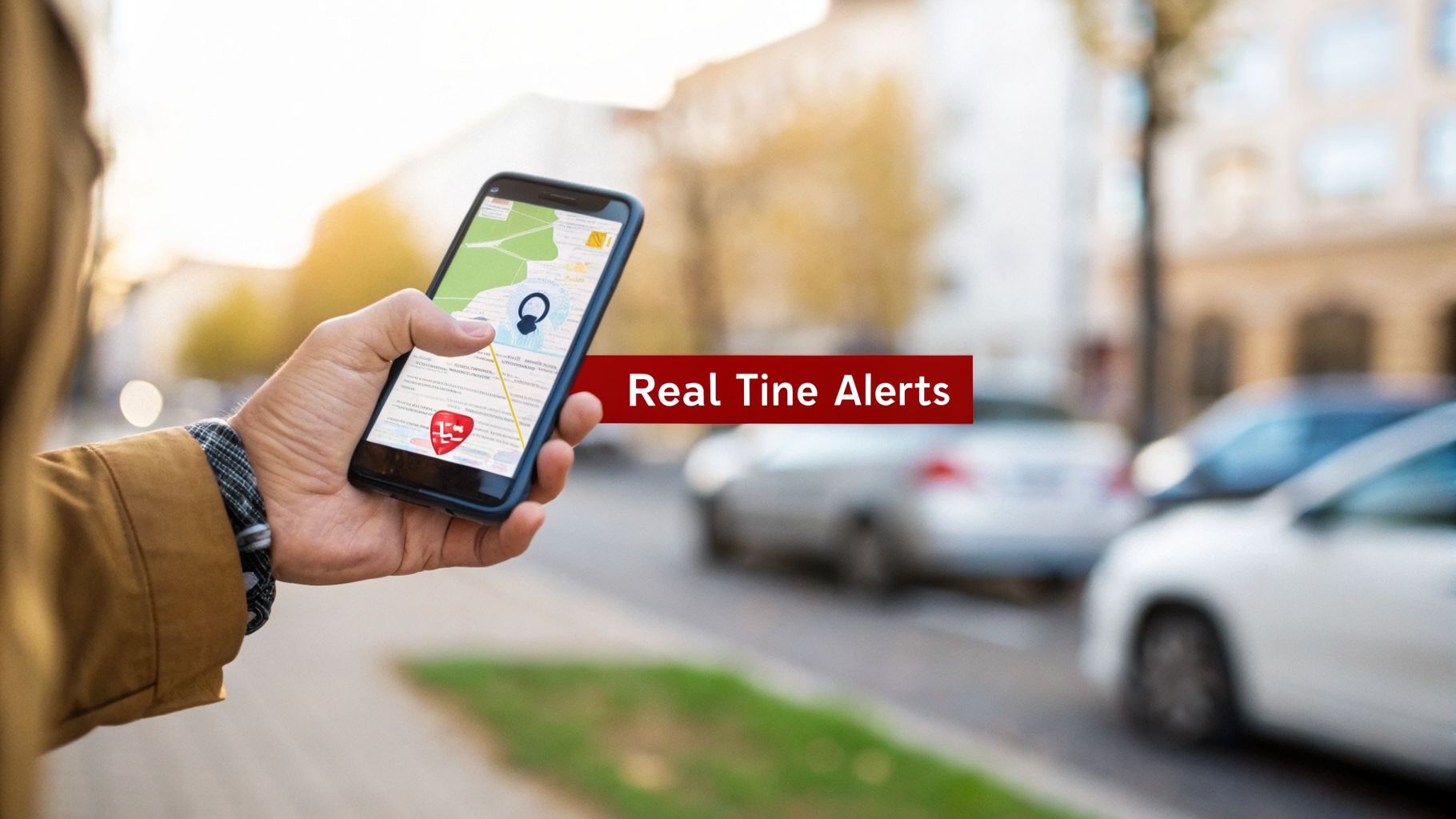
Imagine a thief tries to tow your car, break in, or even just bumps it in a crowded parking lot. A sensitive internal accelerometer picks up on that unusual vibration and immediately pushes an alert straight to your phone. The same thing happens if someone starts the engine without authorization—you’ll know the second it happens. That gives you precious time to react and notify the authorities.
Smart Monitoring and Virtual Boundaries
Beyond pure theft prevention, today's trackers offer features that help you understand how your car is being driven. This is a game-changer for parents with teen drivers or anyone who occasionally lends their car to a friend.
Geofencing: This feature is like drawing a virtual fence on a map. You can set up "safe zones" around your home or your kid's school, or even create "no-go zones" in high-risk parts of town. You’ll get a notification the moment your car crosses one of these boundaries.
Speed Alerts: You can easily set a maximum speed limit right in the app. If the car goes over that limit, you'll know instantly. It's a simple but effective way to encourage safer driving.
These tools aren't about spying; they’re about coaching. They give you a way to encourage responsible driving habits and make sure your car is being treated well, even when you're not in the passenger seat.
This is how a simple tracker evolves into a full-fledged security and monitoring tool. The detailed reporting you get in a system like CarLock builds a complete picture of your vehicle's activity. You can explore the different app features that power a modern car tracker to see just how deep this goes.
Finally, features like Trip History and Driver Scoring create a detailed log of every single journey. This includes the route taken, speeds, and any harsh braking or acceleration events. Over time, this data can not only help you become a safer driver but might even help you negotiate lower insurance premiums by proving you have a consistent record of safety.
Real-World Applications Of GPS Vehicle Tracking
The true power of a GPS tracker isn't in its technical specs—it’s in how it performs in the real world. When you see it in action, a tracker becomes an essential tool for security, savings, and most importantly, peace of mind.
For anyone who has ever worried about leaving their car parked on a busy street, a tracker is one of the single most effective anti-theft measures you can take. Should the worst happen, a GPS device can lead to vehicle recovery rates of over 90% in some documented cases. Suddenly, a total loss becomes a recoverable situation.
More Than Just Theft Prevention
But it's not just about getting your car back after it's gone. The best GPS trackers are incredibly versatile, offering specific features that solve everyday problems for different kinds of drivers.
Here are a few common scenarios where a tracker truly shines:
For Parents of New Drivers: Handing the keys to a teenager is a stressful milestone. A tracker offers invaluable reassurance. It’s not about spying; it's about safety. Features like real-time speed alerts and location boundaries have been shown to reduce risky driving behaviors by up to 40%, helping you coach good habits from the start.
For Owners of Prized Vehicles: If you own a classic car, a high-performance sports car, or any other vehicle you’ve invested your heart and soul into, a simple factory alarm isn't enough. A GPS tracker provides a powerful line of defense against sophisticated thieves who know how to bypass standard security systems.
For Small Business Owners: Even a small fleet can run up big costs. By monitoring vehicle activity, business owners can spot unauthorized trips and find more efficient routes. This simple oversight can slash fuel costs by 15-20%—a significant saving that goes straight to the bottom line. You can see how a detailed route history log makes this kind of analysis possible.
A GPS tracking unit isn't a one-size-fits-all gadget. Its real value comes from applying its features to your specific needs—whether you're trying to protect your family car, safeguard a valuable asset, or run a more efficient business.
Choosing The Right GPS Tracking Unit For Your Needs
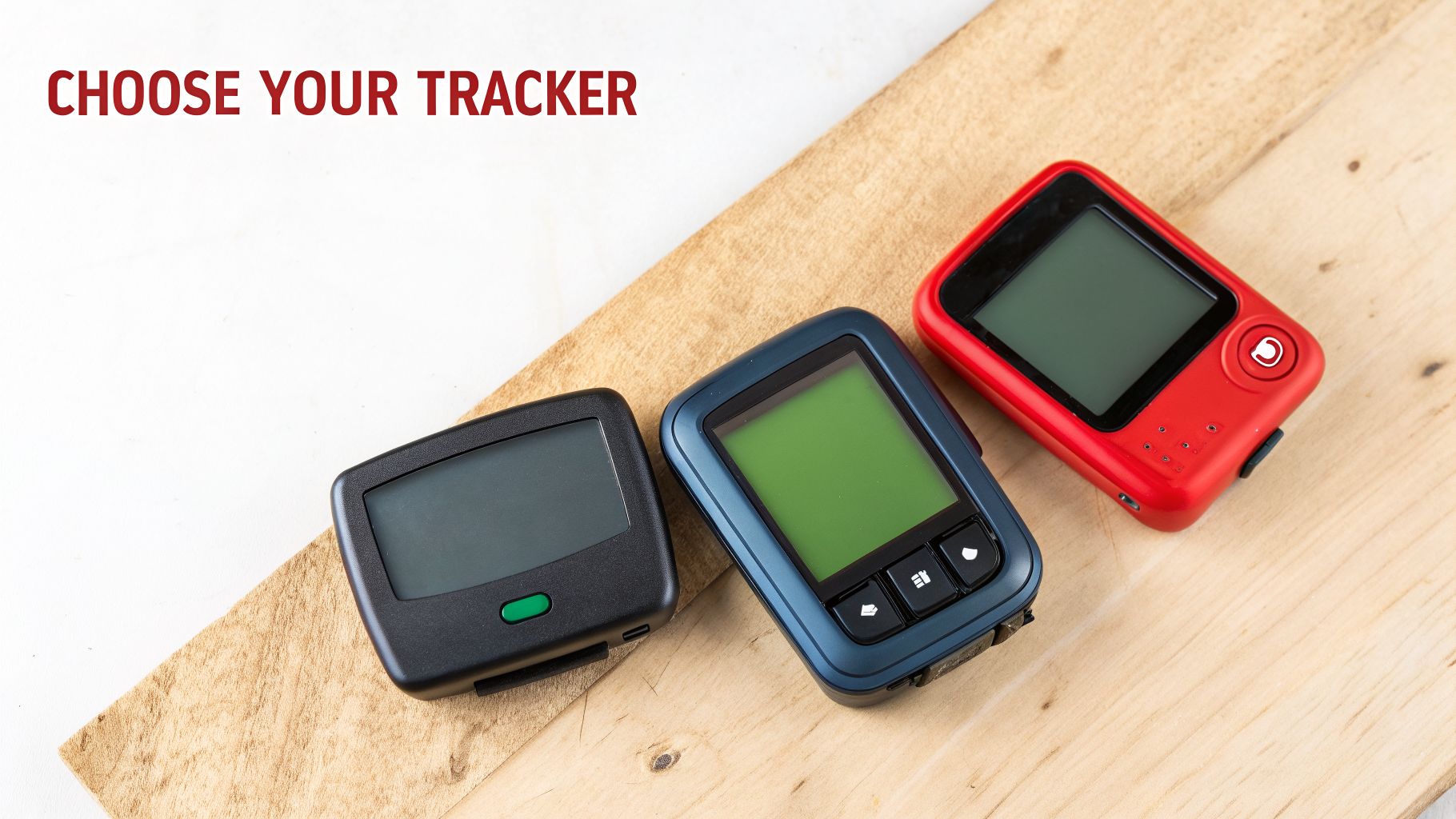
Deciding on a GPS tracker for your car can seem overwhelming at first, but it doesn't have to be. Once you cut through the marketing noise, you'll find there are really just three main types. The best one for you simply comes down to how you plan to use it and how much effort you want to put into the setup.
Let's break them down.
The Plug-and-Go Option
For most people, the easiest and fastest way to get started is with a Plug-and-Play OBD-II tracker. If you're not a car person, don't worry. This is as simple as it gets. Every car made since 1996 has an On-Board Diagnostics (OBD-II) port, usually just under the steering column. You just plug the tracker in like a phone charger, and it's good to go.
It draws power directly from your car, so you never have to think about batteries. Installation takes literally 10 seconds, making it the perfect no-fuss solution for everyday drivers who want reliable security without getting their hands dirty.
The Covert Security Choice
If your main goal is creating a truly invisible security shield, you'll want to look at a Hardwired tracker. This type is wired directly into your vehicle's electrical system, which means it can be tucked away completely out of sight. A thief can't disable a device they don't know exists.
The trade-off is the installation. It’s a more involved process—you can either do it yourself if you’re comfortable with vehicle wiring or have a professional handle it. The payoff is a permanent, tamper-resistant setup that offers the highest level of anti-theft protection.
The Go-Anywhere Tracker
What if you need total flexibility? That's where Battery-Powered trackers shine. These are completely self-contained units with their own power source. You can stick one under a seat, hide it in the trunk, or even attach it to a trailer or other valuable asset that doesn't have its own engine.
Their biggest advantage is their versatility. The only catch is that you have to remember to recharge the battery. Depending on the model and usage, this could be every few weeks or every few months. For tracking anything that moves, with or without a constant power source, they’re a fantastic choice.
To help you visualize which path is right for you, here’s a quick comparison of the most common GPS tracker types.
GPS Tracker Type Comparison
This table breaks down the key differences to help you decide which tracker fits your car security needs.
| Tracker Type | Best For | Installation | Power Source |
|---|---|---|---|
| Plug-and-Play OBD-II | Everyday drivers wanting simple, effective security. | Seconds, no tools needed. | Vehicle's OBD-II port. |
| Hardwired | Maximum anti-theft security and discreet placement. | Professional or DIY wiring. | Vehicle's battery. |
| Battery-Powered | Flexible, portable tracking for any vehicle or asset. | Place it anywhere. | Rechargeable internal battery. |
Ultimately, the "best" tracker is the one that fits your vehicle and your peace of mind. For most car owners, an OBD-II device delivers the perfect blend of advanced features and effortless setup.
One last thing to remember: the hardware is only half the equation. Pay close attention to the monthly subscription costs (for the cellular connection) and the quality of the mobile app. A tracker with a clunky, unreliable app will only cause frustration, so make sure the software experience is just as good as the hardware.
The Future Of Vehicle Security And GPS Technology
The humble GPS tracker has been a game-changer for car security, but what we're seeing now is just the beginning. The next leap forward isn't just about knowing where your car is; it's about your car knowing what's happening around it. This is where Artificial Intelligence (AI) and the Internet of Things (IoT) are changing everything.
We’re moving away from security systems that just react to a theft and toward ones that can actually predict and prevent it. Think about it: your car's security system could tap into local crime data or see a string of break-ins happening a few blocks over, all in real time. It could then send you an alert about a heightened risk before anyone even touches your vehicle.
This isn't science fiction. The same kind of predictive technology is already being used with incredible success. In cities like Singapore, for example, similar analytical models forecast traffic with over 90% accuracy. We're now applying that same data-driven intelligence to keeping your car safe.
The future of vehicle security is all about shifting from reaction to prediction. By combining GPS data with AI and smart sensors, your car won't just know its location—it will understand the potential risks in its immediate environment.
To make this happen, the sensors themselves have to get smarter. Future systems will go far beyond simple motion detectors. We're talking about technology that can identify the distinct sound of breaking glass or even detect a thief's attempt to jam the GPS or cellular signal, ensuring your car stays protected in a world of ever-evolving threats.
Answering Your Top Questions About GPS Trackers
Getting a GPS tracker is a smart move, but it's natural to have a few questions before you dive in. Let's clear up some of the most common things people wonder about so you can feel totally confident about your decision.
Is It Legal to Put a GPS Tracker in My Own Car?
Yes, absolutely. For any vehicle you own, it is 100% legal to install and use a GPS tracker. Think of it as an extension of your car's security system. You have every right to protect your property and monitor its location.
Will a GPS Tracker Kill My Car Battery?
This is probably the number one concern we hear, and it's a fair question. The good news is that modern trackers are designed to be incredibly energy-efficient. When your car is turned off, the tracker goes into a low-power "sleep" mode, drawing less juice than your car's built-in digital clock.
It's a common myth that a GPS device will leave you with a dead battery. The reality is that a quality tracker's sleep mode is so efficient its power draw is practically unnoticeable on a healthy battery, even if the car sits for weeks.
Just How Accurate Is the Location Tracking?
Today's GPS technology is impressively precise. A good tracker can pinpoint your car’s location to within 5 to 10 meters (that's about 16-32 feet).
This level of accuracy is more than enough to find your car on a particular street, identify which level of a parking garage it's on, or spot it in a packed stadium lot. If you have more questions on your mind, feel free to explore these other common questions about GPS trackers.
For the ultimate in vehicle security and peace of mind, trust CarLock to keep you connected to your car. Discover advanced real-time tracking and instant alerts at https://www.carlock.co.