

Driver’s Desk
Anti-theft Device Car: Best Anti-Theft Devices for Cars
Car theft is no longer a problem you solve with one gadget and a little luck. A visible lock can discourage an opportunist. A factory alarm can create noise. But neither one, by itself, gives you a full security plan.
The better way to choose an anti-theft device car setup is to sort every tool by its job. One layer is Deterrence, which tells a thief your car will be trouble. A steering wheel lock works like a Do Not Disturb sign on a hotel door. It does not make entry impossible, but it signals extra effort. The second layer is Prevention, which stops the car from being started or moved without authorization. The third is Recovery, which helps you locate the vehicle quickly if the first two layers fail.
That mental model matters because visible protection often creates false confidence. Owners see a blinking light, hear a siren, or notice the factory key fob and assume the car is covered. Professional thieves look at the same vehicle and ask a different question. Can it still be driven, relayed, cloned, towed, or hidden before anyone notices?
Recovery tools answer that last question. A GPS tracker works like a security camera with a live feed. It does not scare anyone away on its own, but it gives you real-time theft awareness and location visibility when speed matters most.
A strong setup uses all three layers together. That is the difference between owning devices and having a system.
The Unseen Threat Modern Car Theft in 2026
Vehicle theft never stayed stuck in the hot-wire era. Older cars can still be taken with simple physical methods, but many newer thefts start with something less dramatic: a relayed key signal, cloned access, a tow truck, or a car that sits long enough for no one to notice it moving. That shift catches owners off guard because modern convenience features can feel like security features, even when they are not designed to stop a determined thief.
As noted earlier, 810,400 vehicles were reported stolen in the United States in 2020, up from 724,872 in 2019. The point is not just that theft is common. The point is that factory protections did not make the problem disappear.
Why factory protection isn't the full answer
Factory security usually aims for a baseline level of protection. It may be enough to discourage a casual thief in a parking lot. It may be far less effective against someone who already knows the weak points of that make, model, or key system.
A steering wheel lock works like a Do Not Disturb sign on a hotel door. It signals hassle. An alarm works like a smoke detector. It makes noise after something has already started. Neither one answers every question that matters in 2026: Can the car still be started, relayed, loaded onto a tow truck, or hidden before you even know something is wrong?
That is why car security makes more sense when you sort devices by job instead of by popularity:
- Deterrence makes the car look inconvenient to steal.
- Prevention blocks unauthorized starting or movement.
- Recovery helps you locate the car fast if the first two layers fail.
One missing layer creates a blind spot.
Home security offers a useful comparison. A yard sign may make a burglar pause. A deadbolt does more to stop entry. A camera with alerts helps you respond while the event is happening or after it. Car security follows the same logic. Visible protection helps, but visible protection alone can create false confidence.
That false confidence is the unseen threat. Owners see a blinking light or hear a siren and assume the car is covered. Professional thieves look for something different. They want to know how quickly the vehicle can be moved and how long it will take the owner to notice.
That timing gap matters for parents with teen drivers, commuters who leave a car parked all day, and owners in apartment lots or street parking. Faster alerts and location visibility can shrink that gap. CarLock's guide to vehicle theft awareness and real-time alerting explains those patterns in more detail.
The Three Layers of Car Security
Shopping for an anti-theft device car solution gets easier when you stop asking, “Which product is best?” and start asking, “Which job does this device do?”
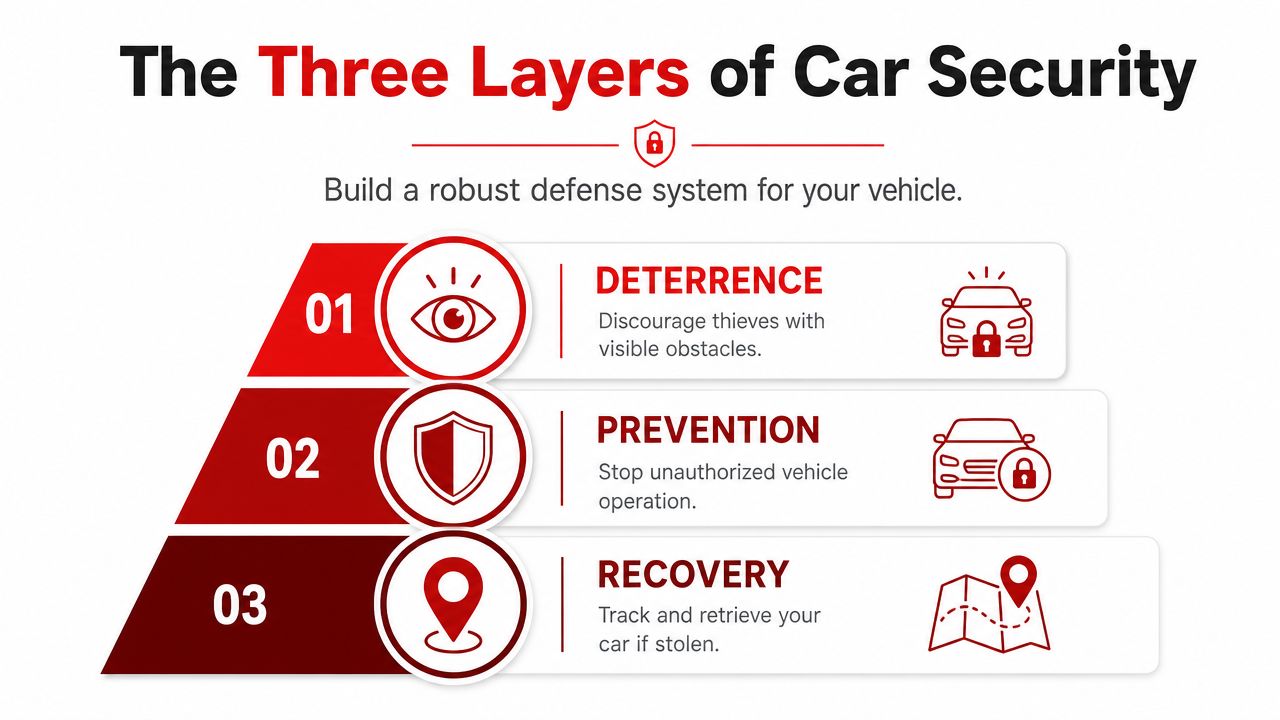
A good vehicle defense system has three layers. Each layer solves a different problem. Confusion happens when owners expect one device to do all three.
Deterrence
Deterrence is the front-yard porch light of car security. It tells a thief, “This won't be easy.”
That includes things like steering wheel locks, wheel clamps, blinking LEDs, and alarm stickers. These tools are visible on purpose. Their job isn't always to physically stop a determined thief. Their job is often to make the thief choose another car.
Think of a steering wheel lock like a Do Not Disturb sign on a hotel door. It doesn't make the room impenetrable. It tells an opportunist to keep moving.
Prevention
Prevention is where real security starts. This layer tries to stop the vehicle from starting, shifting, or being driven away.
Factory immobilizers sit in this category. So do kill switches, some hood locks, and advanced electronic systems that detect engine starts or unauthorized movement. Prevention matters because it changes the theft from “easy transportation” into “technical problem.” Thieves hate technical problems when time is tight.
Recovery
Recovery is the layer often ignored until after a theft. That's a mistake.
Recovery tools help you locate the vehicle after it's gone. GPS tracking, tamper alerts, motion alerts, and trip history live here. If deterrence is a warning sign and prevention is a locked door, recovery is a security camera with a live feed that tells you where the intruder went.
Here's the difference in one glance:
| Layer | Main purpose | Typical tools |
|---|---|---|
| Deterrence | Make the car look like a difficult target | Steering wheel lock, visible alarm LED, wheel clamp |
| Prevention | Stop unauthorized operation | Engine immobilizer, kill switch, security system triggers |
| Recovery | Help locate and retrieve the vehicle | GPS tracker, geofence alert, tamper notification |
One visible device can help. A layered system changes the odds because it forces the thief to beat more than one problem.
Many drivers buy only the first layer because it's easy to understand. The better question is whether your setup includes all three jobs. If you're comparing modern systems that combine alerts and tracking, CarLock's overview of a car security system shows how these layers can work together in one setup.
Visible Deterrents and Audible Alarms
Visible devices remain popular because they're simple. You can hold them in your hand, install them in seconds, and see them every time you park. That makes them emotionally satisfying. It also makes people overestimate what they do.
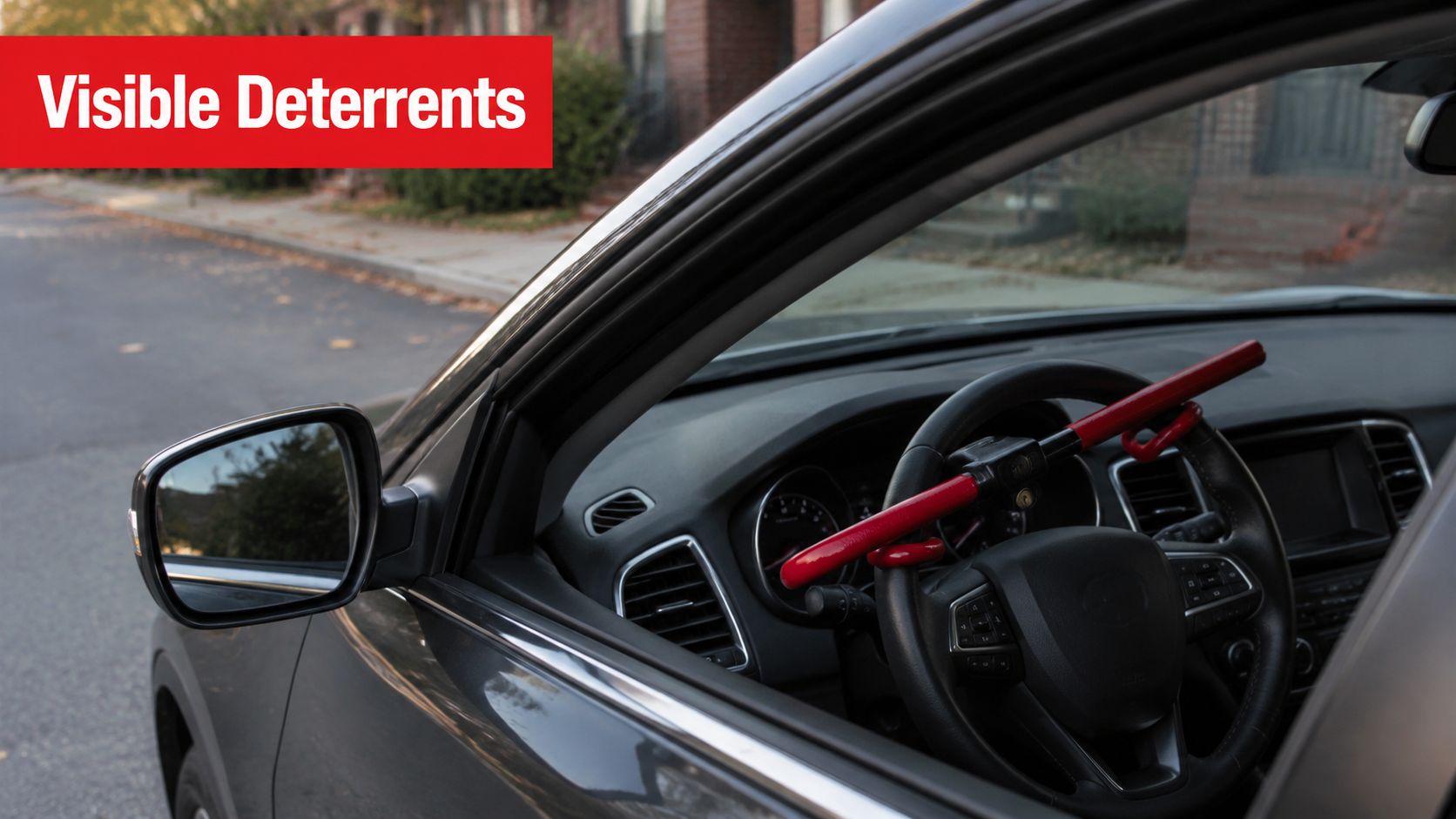
A steering wheel lock, pedal lock, or flashing alarm light still has a role. For an opportunistic thief scanning a row of cars, a visible obstacle can be enough to send them toward an easier target. That's the best-case use for deterrence.
Why visible deterrents still sell
Visible anti-theft products speak a language thieves understand instantly. No training required. No app required. No explanation required.
They can work well in situations like these:
- Street parking overnight where the goal is to avoid looking easy.
- Short public stops where a casual thief wants speed.
- Older cars that need a stronger visual warning because they may lack newer electronics.
But visible deterrents have a ceiling. They're strongest against convenience crime, not against preparation.
The false sense of security problem
This is the part many product roundups skip. Visible deterrents like steering wheel locks create a false sense of security, and data discussed in this source notes that thieves can bypass them in seconds with basic tools like angle grinders. Professional thieves treat these as speed bumps rather than barriers according to this discussion of anti-theft device limitations.
That doesn't mean steering wheel locks are useless. It means you should judge them for what they are. They are friction tools, not miracle tools.
A good analogy is a bicycle cable lock outside a busy store. It may stop a lazy thief. It won't impress someone who arrived prepared.
A visible lock tells you the car is protected. A thief asks a different question: “How long will this take me to defeat?”
Why alarms often fail in real life
The old-school car alarm has a second problem. People have learned to ignore it.
In a crowded apartment complex or urban parking lot, alarms go off for harmless reasons all the time. A loud siren may still interrupt a theft attempt, but many bystanders no longer respond with urgency. That's the downside of alarm fatigue. Noise without context blends into the background.
Audible alarms still make sense when paired with owner alerts. On their own, they're often like a smoke detector that rings in someone else's building. You hear it. You don't know whether to act.
If you want to see how modern alerting goes beyond a siren, CarLock's explanation of a car alarm with smartphone notifications shows the difference between “noise happened” and “your vehicle was disturbed.”
Here's a practical look at common deterrents:
| Device | What it does well | Where it falls short |
|---|---|---|
| Steering wheel lock | Visible warning, simple to use | Can be bypassed by prepared thieves |
| Pedal lock | Adds friction to operation | Less convenient for daily use |
| Audible alarm | Draws attention in some settings | Often ignored because of false alarms |
| Window stickers and LEDs | Low-cost visual warning | Little value without stronger layers |
Later in the stack, video makes the weakness of some physical devices easier to understand:
The right conclusion isn't “skip visible deterrents.” It's “use them in the right role.” They should be your first impression layer, not your only layer.
Immobilizers The Foundation of Prevention
If visible deterrents are the warning signs, electronic engine immobilizers are the locked control room. They operate discreetly, and that's exactly why they matter.
An immobilizer usually relies on a digital handshake between the vehicle and the key. When you insert the key or use a paired fob, the system checks for an authorized code. If that code isn't present, the engine won't start properly, even if someone gets into the car and tries old-school methods.
Why immobilizers changed car theft
This wasn't a small improvement. Vehicles equipped with electronic engine immobilizers experienced an 80 percent decline in theft rates relative to a matched control group of vehicles without such devices, according to a 2025 analysis published by Springer.
That figure explains why hot-wiring faded as a mainstream theft method on many modern vehicles. Once manufacturers tied ignition to an electronic authorization process, the old “break in and start it” playbook stopped working for a large share of the market.
How to think about the technology
You don't need to know the engineering details to understand the logic. Think of an immobilizer like a two-part login:
- Part one is physical access to the car.
- Part two is digital permission to start it.
Without both, the vehicle stays put.
That makes immobilizers the baseline for prevention. They don't announce themselves like a steering wheel lock, but they solve a more important problem. They stop unauthorized operation at the source.
Immobilizers don't try to scare thieves. They deny the basic function thieves want most, which is the ability to drive the vehicle away.
Where the limits show up
An immobilizer is still only one layer. It helps most against direct start-and-drive theft. It doesn't solve every modern scenario by itself. Thieves may target the key signal, use towing, or exploit other weaknesses around access and response time.
That's why prevention and recovery belong together. If prevention slows or blocks the theft, recovery gives you a way to respond when the theft attempt changes form. The most resilient setups assume that any single measure can be challenged.
Recovery Technology The Modern Solution
Recovery technology is where vehicle security becomes practical rather than symbolic. If your car is already moving away from where you left it, you no longer care whether the device looked intimidating. You care whether you can find the vehicle, verify what happened, and give usable information to police.
That's why recovery deserves its own category. In modern theft, it's often the difference between “I think my car was taken” and “I can see where it is right now.”
GPS trackers and Bluetooth finders are not the same tool
A lot of owners confuse a real vehicle tracker with an item finder. They shouldn't.
A Bluetooth finder is designed for misplaced personal items. It usually depends on nearby devices to help report location. That can be helpful for keys, bags, or luggage. It's not the same as a dedicated anti-theft device car system built around continuous vehicle monitoring.
A proper GPS vehicle tracker uses satellite positioning and cellular communication. It's designed to keep reporting where the vehicle is, not just where a nearby phone last noticed it.
Why GPS works better for stolen vehicles
Modern anti-theft GPS trackers achieve location accuracy of 8 to 15 feet in open-sky conditions by using multi-GNSS receivers that lock onto GPS, GLONASS, and Galileo at the same time, according to Car and Driver's tested overview of GPS trackers. That matters because a stolen vehicle recovery is a location problem. Better signal stability and better positioning give law enforcement clearer, faster information.
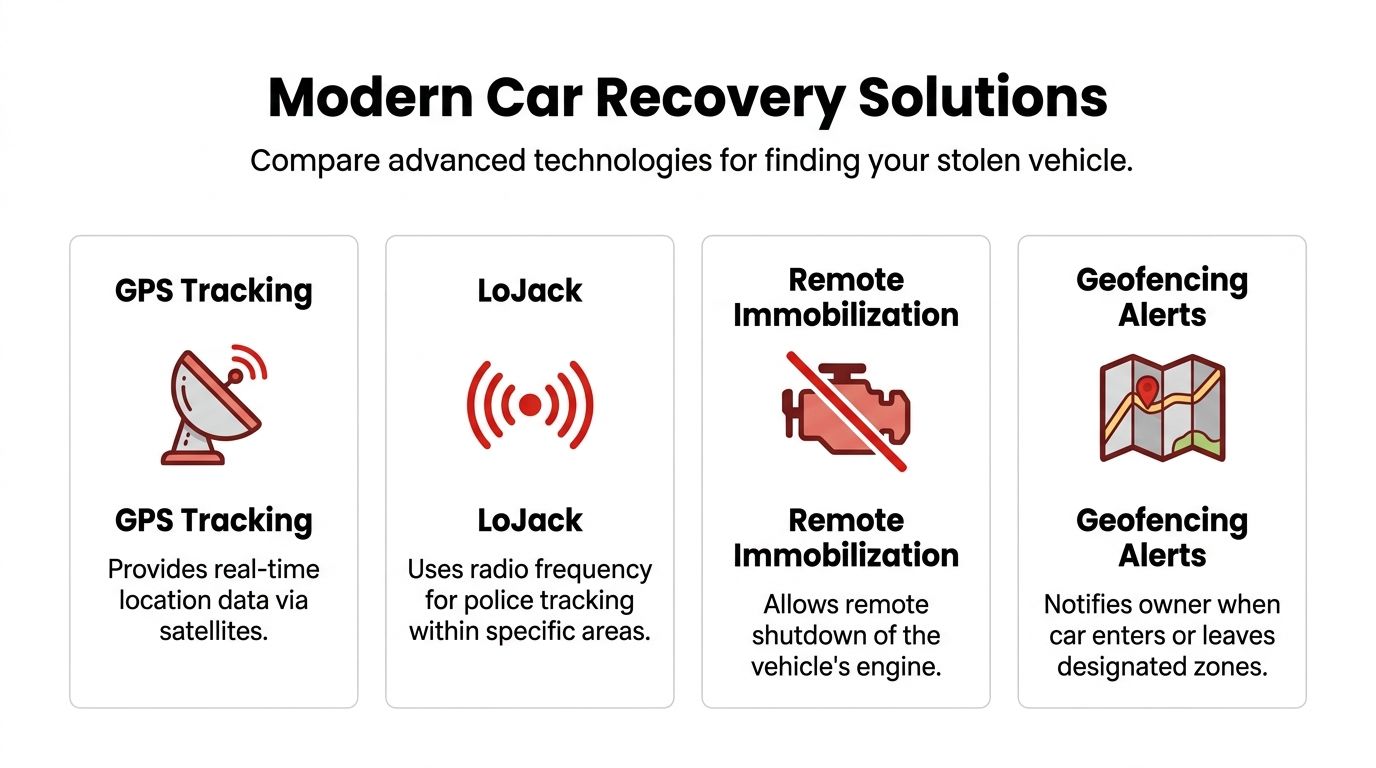
A useful comparison looks like this:
| Technology | Strength | Limitation |
|---|---|---|
| GPS tracking | Real-time location through satellite positioning and cellular reporting | Usually involves ongoing service |
| Bluetooth item finder | Helpful for misplaced belongings nearby | Not purpose-built for stolen vehicle recovery |
| LoJack-style recovery | Specialized recovery method in supported areas | Depends on compatible coverage and workflow |
| Geofencing alerts | Warns when a car leaves or enters set zones | Best as part of a broader system |
The role of cellular connectivity
Cellular service is the missing piece in many buyer decisions. GPS tells the device where it is. Cellular service tells you where it is.
Without cellular communication, a tracker may know the vehicle's coordinates but still struggle to deliver that data quickly to your phone or cloud dashboard. That's why subscription-based systems exist. You're not just paying for a map dot. You're paying for live communication, remote alerts, and consistent reporting.
This matters for more than theft. Parents monitoring a teen driver, owners checking on a vehicle at a repair shop, and small businesses overseeing work vehicles all need the same thing: timely, usable information.
For organizations that manage multiple low-speed or specialty vehicles, this guide for fleet managers offers a useful look at tracking logic in a fleet setting. The context is different, but the core lesson is the same. Recovery technology becomes more valuable when you manage patterns, routes, and exceptions, not just emergencies.
Hardwired devices and portable trackers
Portable trackers are convenient. They can also be easier to remove, easier to forget, and easier to leave uncharged.
Hardwired or continuously powered systems fit vehicle security better because they're built around the car's real use pattern. A theft doesn't wait for you to recharge your tracker. If the device is dead, loose, or buried where signal quality suffers, the recovery layer weakens fast.
That's also why hidden placement matters. A visible deterrent should be seen. A recovery tracker usually shouldn't.
Recovery tools work best when the thief doesn't know they're there and you know immediately when the vehicle moves.
What modern recovery should include
When evaluating a recovery system, these features matter more than flashy marketing:
- Real-time location reporting so you can act while the event is still unfolding.
- Motion and ignition alerts so theft attempts don't stay invisible.
- Trip history so movement patterns can be reviewed later.
- Geofencing to flag movement outside expected zones.
- Tamper awareness in case someone tries to disable the device.
If you want to see how these features come together in a vehicle-focused platform, CarLock's page on car tracking is a clear example of what recovery-oriented monitoring looks like in practice.
The larger point is simple. Recovery isn't a backup afterthought anymore. For many owners, it's the most actionable layer in the entire stack.
Choosing Your Anti-Theft System
Choosing an anti-theft device car setup gets easier once you stop comparing everything in one pile. Start with your risk, your parking habits, and who drives the vehicle.
A parent with a teen driver doesn't need exactly the same setup as an owner of a weekend sports car. A contractor with several vehicles has different blind spots than someone parking one sedan in a private garage. The device should match the actual use case, not just the product category.
Start with the non-negotiables
The most useful checklist is short.
- Cellular connectivity matters if you want live alerts instead of delayed awareness.
- Tamper detection matters because a disconnected device can't protect anything unless it reports the attempt.
- Backup power matters because thieves often attack the easiest point of failure.
- App quality matters because a system that buries alerts in a clumsy interface won't help under stress.
One detail many buyers overlook is insurance. According to InsureOne's overview of car anti-theft devices, insurers commonly offer premium reductions for professionally installed tracking systems, but they rarely give a clean public list of qualifying devices, the specific discount percentages often discussed, or clear rules beyond expectations like cellular connectivity and tamper detection. That's important because it points buyers toward systems built for real monitoring rather than simple gadget convenience.
Match the system to the way the car lives
A good decision usually comes from asking a few direct questions:
| Your situation | What to prioritize |
|---|---|
| Street parking every night | Visible deterrent plus hidden recovery tracking |
| Older vehicle without strong factory security | Added prevention layer plus real-time alerts |
| Teen driver in the family | Trip history, driving behavior alerts, movement notifications |
| Small business or fleet use | Multi-vehicle visibility, geofences, tamper alerts |
Don't underrate backup battery and tamper alerts
A tracker is most valuable when someone tries to disable it. That's the exact moment cheap systems often fail.
If the device depends entirely on vehicle power and doesn't warn you when it's unplugged, a thief may get a clean head start. A better design treats disconnection itself as a security event. That changes your response window.
One practical example in this category is CARLOCK, which combines movement alerts, engine start alerts, tamper notifications, and app-based monitoring in a vehicle-specific system. That kind of setup fits owners who want one platform for theft awareness, recovery visibility, and everyday monitoring rather than a separate gadget for each task.
If you're comparing user experience and want to see the kind of features a mobile-first tracker should expose clearly, CarLock's overview of its app features is useful because it shows the operational side, not just the hardware side.
Buy for the moment when something goes wrong, not for the moment you open the box.
That mindset usually leads to a better decision than buying whatever looks toughest in a product photo.
The CarLock Advantage In Action
The strongest vehicle security systems don't live neatly in one category. They blend layers. That's where an integrated platform becomes more useful than a single-purpose gadget.
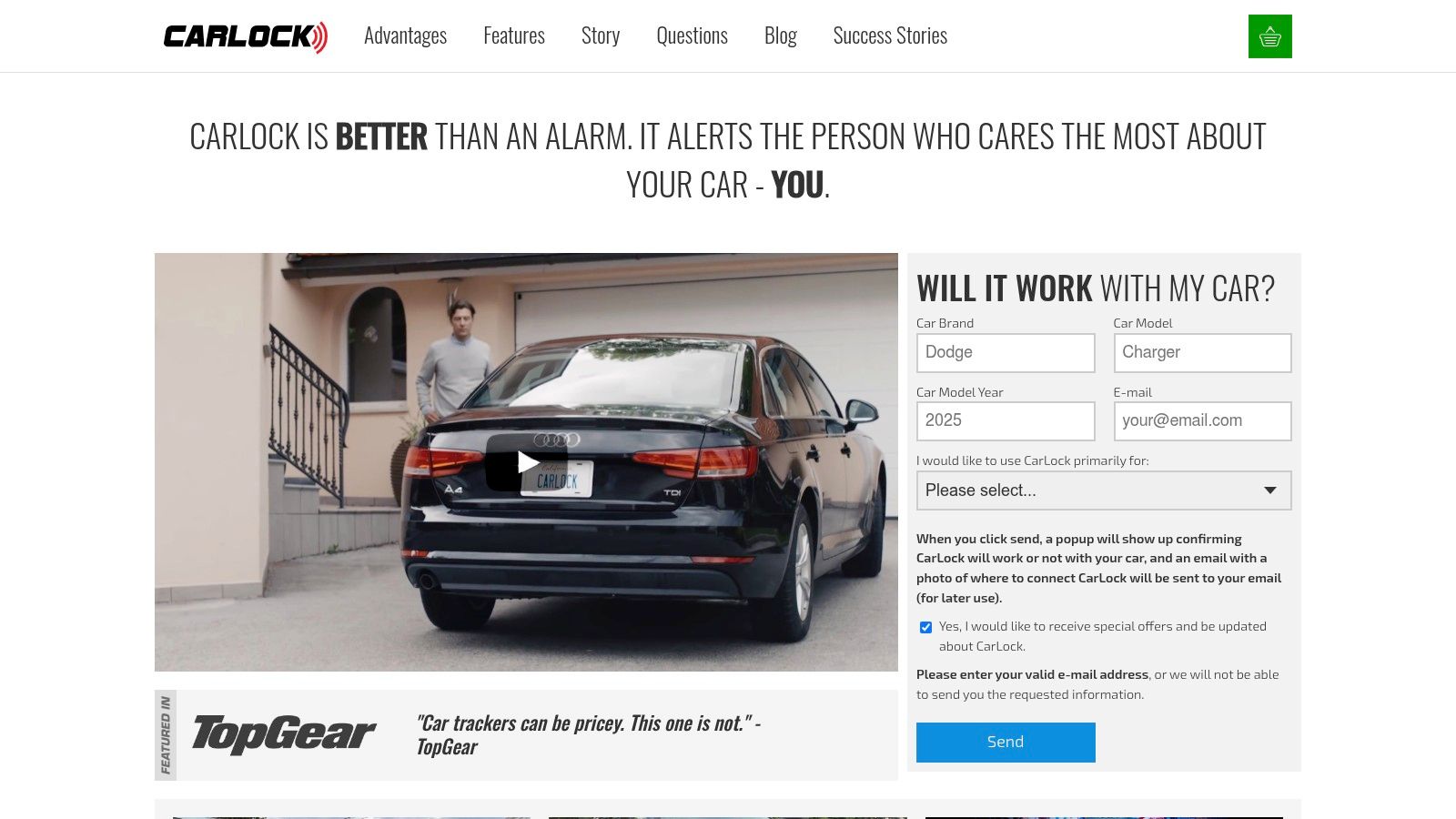
A modern setup can act like prevention before a theft is complete and recovery after the vehicle moves. If your phone gets an alert for unusual vibration, unauthorized engine start, or movement at the wrong time, you may catch the problem while it's still developing. That's a different model from the old siren-only approach.
Why tamper resilience matters
One of the most useful capabilities in advanced vehicle security is staying alive after sabotage starts. Advanced vehicle anti-theft systems integrate vibration sensors and tamper detection with backup batteries. If a thief disconnects the device, the internal battery instantly triggers a tamper alert and continues transmitting location data for a critical window, according to GearJunkie's overview of anti-theft devices.
That feature closes a major gap in basic plug-in devices. A tracker that goes dark the moment it's unplugged may only tell you where the car used to be. A tamper-aware device can tell you the theft is underway and continue reporting when that information matters most.
How the layers work together
In practice, the value comes from the sequence:
- Suspicious activity happens and the system detects vibration, movement, or engine start.
- The owner gets alerted on a smartphone instead of depending on bystanders to react.
- Location tracking continues if the vehicle is moved.
- Tamper detection adds resilience if someone tries to disable the hardware.
That combination gives the owner something older tools rarely provide: context. Not just noise. Not just a locked wheel. Actual information.
If you want a security setup that goes beyond visible locks and sirens, CARLOCK gives you a practical way to add real-time alerts, GPS tracking, tamper awareness, and trip monitoring to the vehicle you already own. It's a sensible next step for drivers who want a layered anti-theft device car strategy instead of a single-point gadget.