

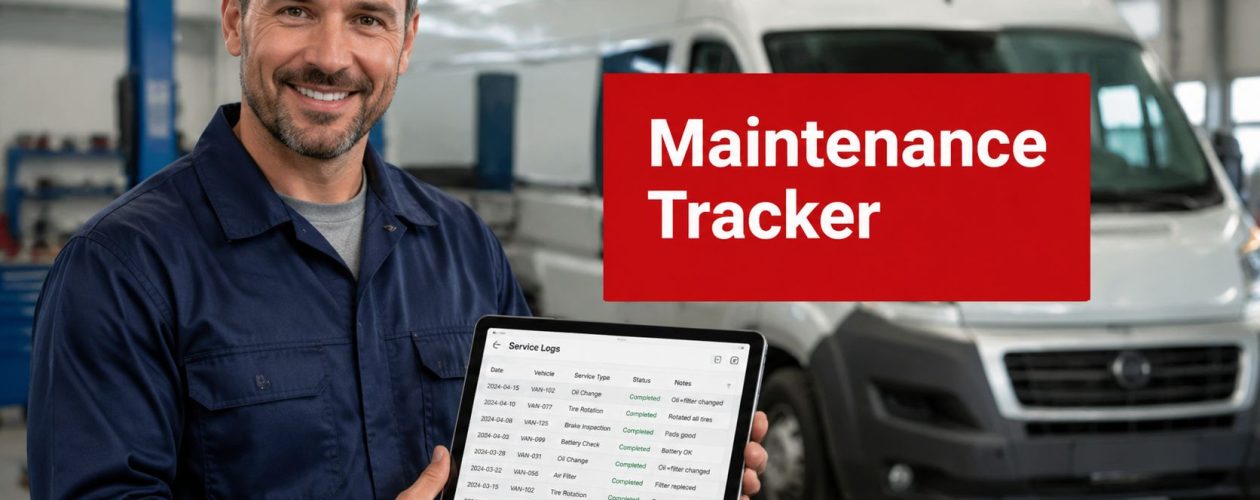
Driver’s Desk
Vehicle Maintenance Tracking: The Complete Guide
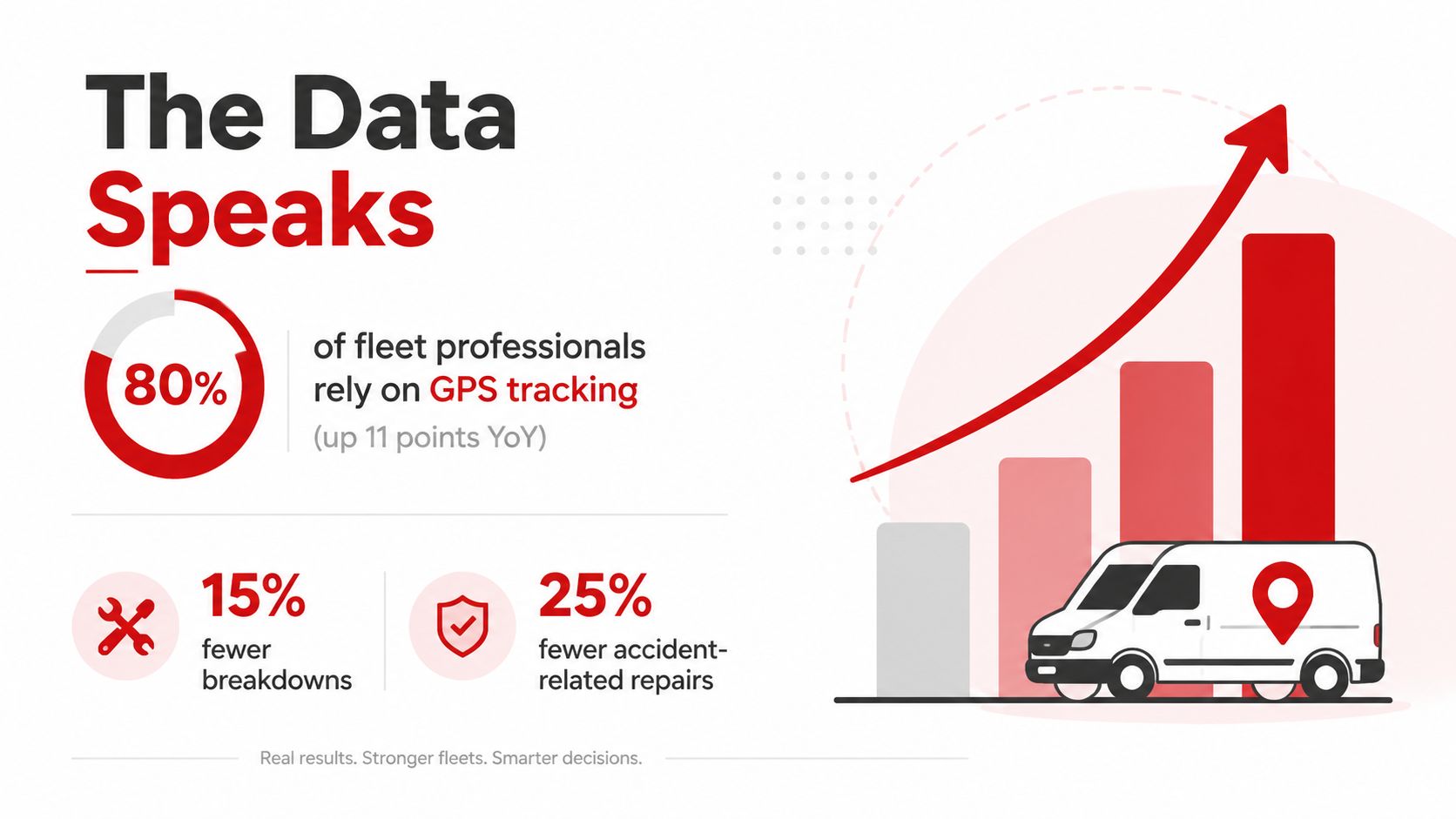
80% of fleet professionals now rely on GPS tracking, and users report a 15% average maintenance-cost savings. The practical answer is clear: vehicle maintenance tracking delivers the most value when reminders are connected to actual mileage, vehicle health, service history, and operating data.
That finding from the 2026 Verizon Connect Fleet Technology Trends Report reframes maintenance as more than a calendar task. A connected system can help an individual owner protect a vehicle investment, while giving a fleet manager the records, alerts, and performance measures needed to control cost, uptime, safety, and compliance.
Why Vehicle Maintenance Tracking Matters Now More Than Ever
A decade ago, many owners managed maintenance with a glove-box folder, a mechanic's sticker, or memory. Fleet managers often relied on spreadsheets and paper work orders. Those methods can record what happened, but they make it difficult to connect service timing with actual vehicle use or emerging mechanical problems.
The adoption data shows how quickly that model is changing. 80% of fleet professionals now rely on GPS tracking, up 11 points year over year, and users report a 15% average maintenance-cost savings, according to the 2026 Verizon Connect report. GPS tracking is no longer a specialist tool reserved for large transport operations. It has become part of a broader shift toward connected vehicle care.
The same problem looks different by owner type
For a private owner, the immediate concern may be an unexpected repair, missed service, or a weaker resale position because receipts are scattered. A connected maintenance record can tie together mileage, dates, repairs, parts, and battery condition, giving the owner a more reliable view of what the vehicle needs and what has already been done.
For a fleet manager, the consequences extend further. A missed inspection or incomplete service history can create compliance exposure. A breakdown can interrupt deliveries, affect driver safety, and force maintenance work into an inconvenient service window. The vehicle health capabilities available through CarLock illustrate how connected monitoring can also bring battery and vehicle-condition awareness into the owner's daily workflow.
Why tracking has become practical
Vehicles have become more complex, while repair decisions increasingly depend on information that a driver can't see from the dashboard alone. At the same time, GPS, cellular connectivity, mobile apps, and onboard diagnostics have made data collection more accessible to smaller operators and individual owners.
The important conclusion isn't that every vehicle needs the most advanced platform. It's that maintenance tracking should match the risk and operating pattern of the vehicle. A lightly used personal car may need dependable records and usage-based reminders. A commercial fleet may need auditable files, automated alerts, and diagnostic integration. Understanding what a tracking system records is the foundation for choosing the right level of capability.
Understanding Vehicle Maintenance Tracking Systems
Vehicle maintenance tracking is the organized process of recording service events, monitoring vehicle use, scheduling upcoming work, and preserving evidence of completed maintenance. The distinction matters because a reminder by itself doesn't prove that service occurred. A useful system connects the reminder to the work order, invoice, mileage, parts, technician, and next due item.
Traditional methods were fragmented by design. A driver might write an oil change in a notebook, keep a tire receipt in an email, and rely on a dashboard sticker for the next interval. That approach can work until the vehicle changes hands, several mechanics perform repairs, or the owner forgets to update one record.
Modern systems create a connected maintenance history. A vehicle tracking platform can add location and trip context, while other systems combine telematics, diagnostic information, and service records. The shift is from asking, “How long has it been since the last service?” to asking, “How has this vehicle been used, and what does its current condition indicate?”
Three practical system tiers
The first tier consists of basic reminder applications. These tools store service dates or mileage targets and notify the user when work may be due. They're useful for building discipline, but they usually depend on accurate manual updates.
The second tier adds structured service histories, odometer entries, invoices, parts, and notes. This level helps owners and managers answer operational questions, such as who performed a repair, what was replaced, and whether the same issue has returned.
The advanced tier combines live telematics with historical records and predictive analysis. Fleet guidance identifies inputs such as mileage, engine hours, diagnostic trouble codes, battery voltage, tire pressure, and coolant temperature as signals that can support condition-based maintenance through predictive maintenance.
The compliance dimension
Commercial operators also need durable documentation. The DOT “1 and 6” retention rule requires records to be kept for at least 1 year while a vehicle is under active control and for 6 additional months after disposal, as described in commercial fleet management guidance.
That requirement changes the role of maintenance tracking. A fleet isn't only trying to remember the next service. It must also preserve a chronological repair history, inspection records, and service logs that can be produced during an audit or review.
Practical rule: Treat every maintenance event as both an operational record and a future evidence record.
The Four Core Components of Effective Maintenance Tracking
An effective system has four connected components. Scheduling, logging, alerting, and telematics shouldn't operate as separate features. Each one improves the usefulness of the others.
Scheduled maintenance planning
Scheduling establishes what should happen and when. Basic systems use calendar dates, but stronger systems also account for mileage, engine hours, and actual utilization. A vehicle that makes frequent short trips may accumulate wear differently from one that travels long distances, even when both have the same service date.
Usage-based scheduling is more precise because it reflects how the vehicle operates. Fleet telematics guidance explains that accurate usage data can help estimate a next-due date from average daily activity and improve resource allocation when combined with service history and diagnostics.
Mileage and runtime logging
The odometer provides the reference point for many maintenance decisions. Fleet maintenance guidance recommends capturing odometer readings at each service event, alongside service date and time, work-order type, labor hours, and parts used, as detailed in this fleet maintenance metrics guide.
Engine hours add another layer for vehicles or equipment that may run for long periods without traveling far. Without reliable mileage or runtime data, the system can't distinguish a lightly used vehicle from one operating continuously.
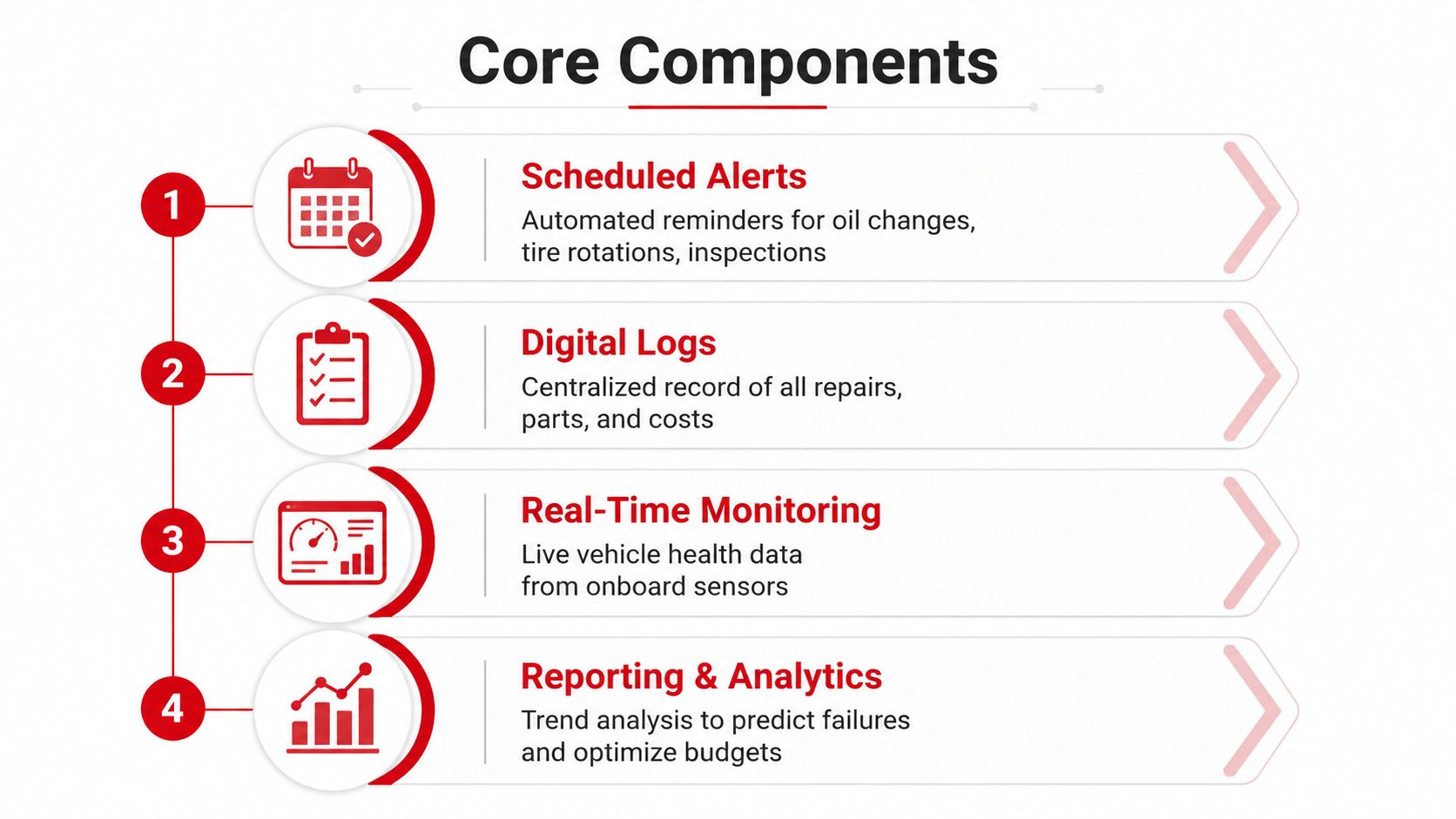
Intelligent alerting
A reminder becomes useful only when it leads to an appropriate action. Too many generic alerts create noise, while correlated alerts can identify a developing condition. For example, a temperature anomaly becomes more meaningful when the system can relate it to vehicle use, engine data, and previous cooling-system work.
Telematics integration
GPS location, route history, diagnostic trouble codes, and sensor readings create a shared operational view. A fleet manager might notice coolant temperature behaving abnormally during certain operating conditions, schedule an inspection, and prevent the issue from becoming a roadside failure.
The system works as a feedback loop. Service records improve future schedules, usage data improves alert timing, alerts create work orders, and completed work adds evidence to the vehicle history. The features available in connected vehicle devices show why hardware and software need to work together rather than leaving the owner to reconcile separate tools.
The key insight: A maintenance tracker is most valuable when every component strengthens the others, not when it merely sends more reminders.
Real-World Use Cases for Owners and Fleet Managers
A private owner and a fleet manager may use the same connected approach for very different reasons. The owner wants to protect personal capital and avoid preventable disruption. The fleet manager needs vehicles available, records organized, and service decisions aligned with operating schedules.
The individual owner
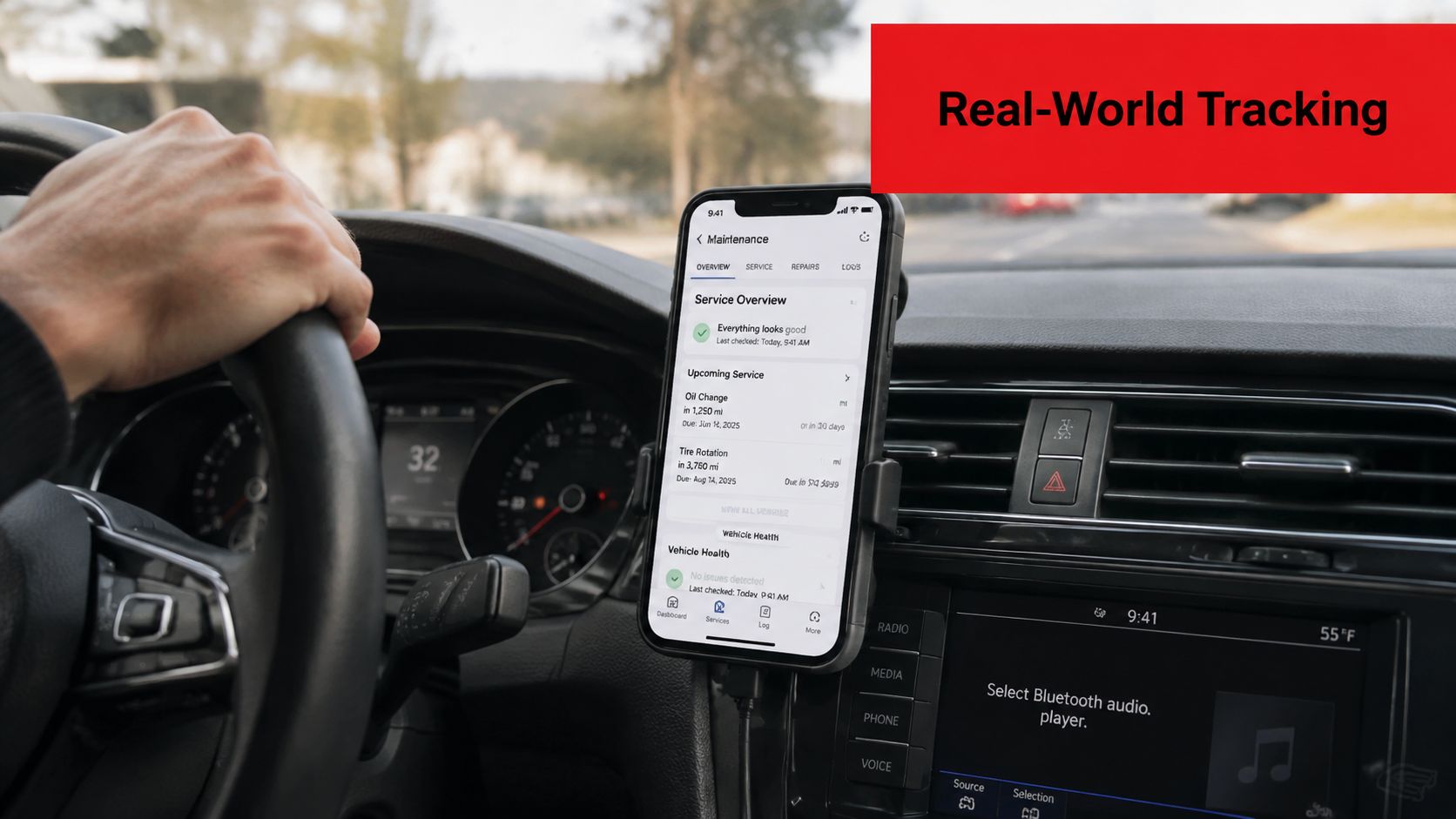
Consider a commuter who assumes the car covers moderate annual mileage. A GPS-integrated tracking app may reveal that daily errands, school runs, and weekend travel add up to much more use than expected. That information can prompt earlier service based on actual mileage rather than an assumption based on the calendar.
The owner can record oil changes, tire rotations, brake inspections, battery events, invoices, and parts. When the vehicle is sold, a complete history gives a prospective buyer clearer evidence of how the car was maintained. It also helps the owner distinguish normal wear from recurring problems before deciding whether a repair deserves further investigation.
Trip history adds context to maintenance records. A tool such as route history for vehicle monitoring can help the owner understand how the vehicle is used, which supports better service planning and more accountable handoffs to family members or mechanics.
The small fleet manager
A manager overseeing delivery vans faces a different operating equation. The priority is to schedule service around delivery commitments, identify vehicles that may need attention, and preserve the chronological documentation required for commercial operations.
Connected maintenance tracking can reduce manual coordination by combining vehicle use, service history, and alerts in one workflow. GPS fleet tracking users reported a 15% average maintenance-cost savings, according to the Verizon Connect fleet technology report. That figure is a reported average, not a guaranteed result for every fleet, but it demonstrates why operators are linking maintenance with telematics.
For heavier vehicles and commercial equipment, a specialized resource on trailer maintenance can complement a connected tracking program by addressing the service requirements of assets that may not fit a passenger-car workflow.
This video provides another practical visual reference for how connected vehicle information can support everyday monitoring:
The dividing line between consumer and fleet-grade tools is becoming less distinct. Both users need trustworthy records, accurate usage data, actionable alerts, and a clear connection between a detected issue and completed work. The difference lies mainly in the scale, compliance burden, and metrics used to judge the outcome.
How to Set Up and Use a Vehicle Maintenance Tracking System
Start with the operating decision, not the feature list. A basic reminder app may suit one vehicle and a simple service routine. A structured logging platform is more appropriate when several mechanics, receipts, warranties, or ownership changes are involved. A telematics-connected system becomes more valuable when you need live vehicle data, fleet oversight, or predictive signals.
Use three questions to narrow the choice:
- Vehicle count: Are you managing one car, several family vehicles, or commercial assets?
- Documentation need: Must you produce organized records for compliance, internal review, resale, or warranty support?
- Prediction requirement: Do you only need scheduled reminders, or do you want alerts based on actual vehicle condition?
Build a reliable baseline
Before activating alerts, enter the current odometer reading, most recent service date, completed maintenance, known upcoming work, and any unresolved issue. An incorrect baseline can make every future reminder less useful.
Then connect the available data sources. Depending on the system, that may include a mobile app, a GPS device, vehicle diagnostics, service invoices, and manual notes from a mechanic. Configure alerts around meaningful thresholds instead of enabling every available notification.
Close the recordkeeping gap
Small-fleet and consumer users often struggle with scattered receipts and disconnected service histories. A user-study summary found that easy access to vehicle service histories was missing in 4 out of 5 tested apps, according to the fleet trends research report.
That finding points to a selection criterion many buyers overlook. A reminder that doesn't connect to documentation leaves the user with the same administrative problem after the alert arrives. Choose a workflow that lets you attach invoices, enter parts and labor, record who performed the work, and set the next service event from the completed record.
Make the habit durable
Tie logging to an existing event, such as collecting the vehicle after service or reviewing fuel and trip activity. Photograph paper receipts immediately, use consistent names for recurring repairs, and review the history monthly. Fleet managers should assign responsibility for entering work and checking overdue items, rather than assuming the system will maintain itself.
The best setup is the one that turns a completed repair into a durable record without requiring a second administrative project.
Key Metrics and Best Practices for Continuous Improvement
Tracking becomes management only when the records produce comparable measures. Two useful starting points are preventive-maintenance compliance and cost per mile.
PM compliance measures whether scheduled preventive work was completed:
Completed PMs ÷ Scheduled PMs × 100
For example, if a fleet completed 18 scheduled preventive-maintenance tasks out of 20, its PM compliance would be 18 ÷ 20 × 100 = 90%. The formula is defined in fleet maintenance KPI guidance. Review the result over time and by vehicle, because a fleet average can conceal one asset that repeatedly misses service.
Cost per mile provides the financial counterpart:
Total maintenance cost ÷ Total miles driven
The formula comes from the same fleet KPI reference. PM compliance and cost per mile should be read together. A falling compliance rate can precede avoidable repair work, while a rising cost-per-mile trend can identify vehicles that need a deeper review.
From scheduled to predictive decisions
Predictive maintenance combines real-time telematics with historical service records to estimate when a component may fail. Inputs can include mileage, engine hours, diagnostic trouble codes, battery voltage, tire pressure, and coolant temperature, as described in Geotab's predictive maintenance guidance.
The practical advantage is not earlier notification. The system can compare current signals with prior repair patterns and actual usage, shifting decisions from fixed-interval assumptions toward vehicle-condition evidence. Accurate telematics can also estimate next-due timing from average daily use, while merged GPS, diagnostic, and history data supports trend-based alerts.
| Maintenance approach | Cost profile | Downtime risk | Data requirement |
|---|---|---|---|
| Reactive | Unplanned work can be harder to budget | Highest when failures occur without warning | Basic repair records |
| Scheduled | More predictable than emergency work | Lower when schedules reflect actual use | Service dates, mileage, and work history |
| Predictive | Supports targeted intervention and resource planning | Lower when reliable condition signals identify emerging issues | Telematics, diagnostics, utilization, and historical records |
A connected platform such as CarLock's cloud features can fit into the broader data layer by making vehicle activity and selected health information available for review. The right KPI program doesn't reward more alerts. It rewards fewer missed services, clearer records, better-timed work, and decisions based on evidence.
The Future of Connected Vehicle Maintenance
Vehicle maintenance tracking has moved from paper logs to digital histories, and from calendar reminders to connected monitoring. The strongest systems combine four functions: scheduled planning, complete service logging, intelligent alerts, and telematics integration. Separating those functions weakens the record and increases the chance that a warning won't lead to action.
For individual owners, the value appears in better organization, earlier awareness of battery or vehicle-health issues, and stronger evidence when the car changes hands. Fleet managers gain a more controlled process for service scheduling, compliance documentation, resource allocation, and cost review. PM compliance and cost per mile give both audiences measurable ways to evaluate whether the process is working.
A more connected maintenance model
AI-assisted predictive maintenance is the next logical development. Machine-learning systems can compare sensor patterns, utilization, and repair history to identify conditions that resemble earlier failures. The quality of the output still depends on the quality of the underlying records. An advanced model can't correct missing odometer readings, incomplete work orders, or inconsistent service descriptions.
As manufacturers add built-in connectivity and aftermarket systems become easier to deploy, owners can access more vehicle information without building a complex technical stack. For private owners, CarLock can monitor electrical-system status and alert users to low battery or unusual battery drain, which makes vehicle health relevant to a security and maintenance workflow.
Connected records also help protect the integrity of ownership information. When buying a used vehicle, readers researching how to detect rollback fraud can see why consistent mileage records matter beyond routine service scheduling. The odometer reading is part of the vehicle's history, and gaps or inconsistencies deserve investigation.
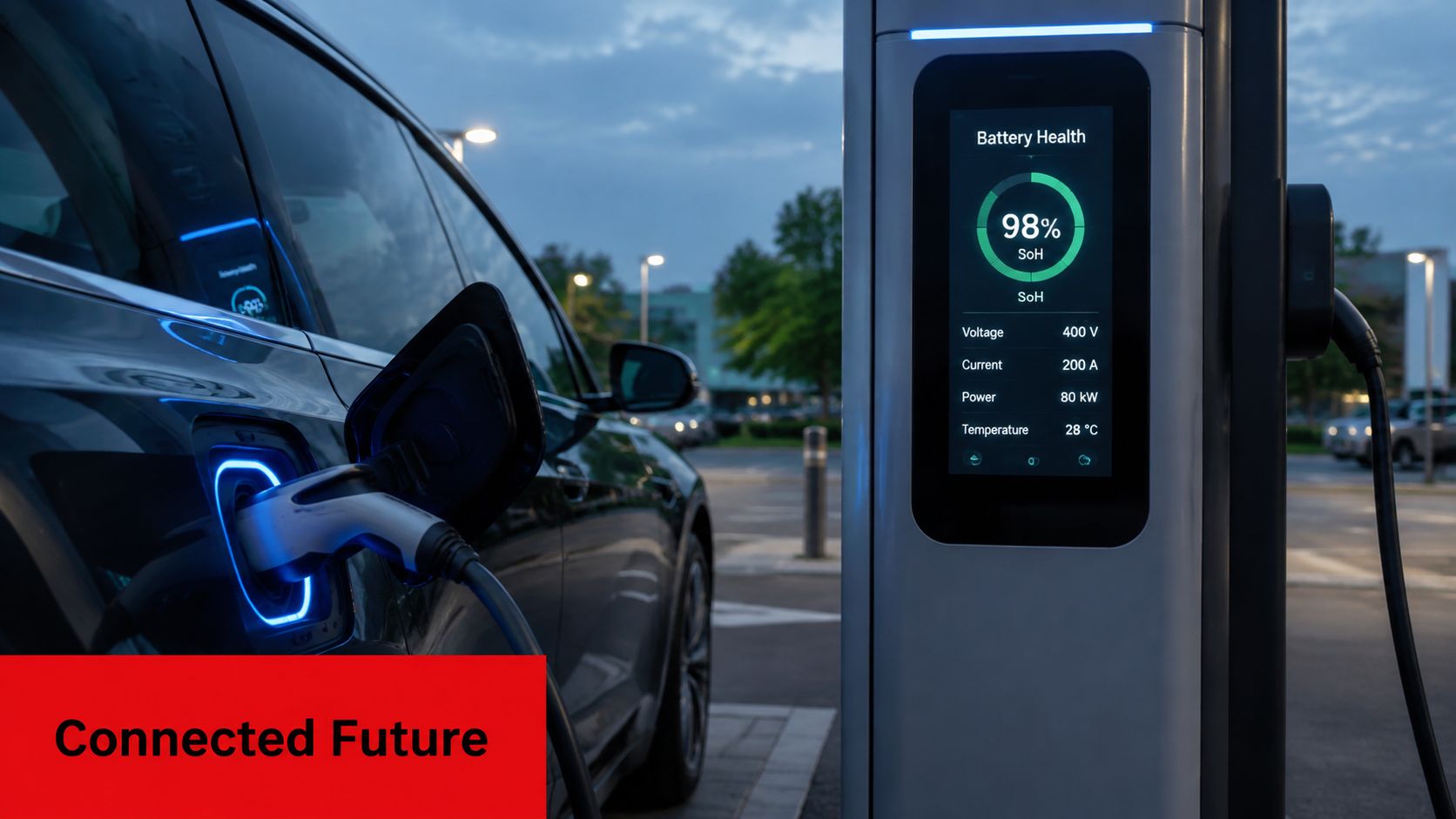
The broader lesson is financial as much as operational. Vehicles that receive timely, documented care are easier to evaluate, easier to hand over, and less likely to surprise their owners with preventable service gaps. The 80% of fleet professionals already relying on GPS tracking represent an established shift toward data-driven vehicle care, not the endpoint of it.
CARLOCK helps connect vehicle security, trip awareness, and selected vehicle-health alerts in one smartphone-based system. If you want a more dependable maintenance record supported by real-time monitoring, visit CARLOCK and explore how it can fit your vehicle or small fleet workflow.