

Driver’s Desk
GPS Car Rental: What Renters and Fleet Operators Need
Most advice about GPS car rental starts with a simple question, “Does the vehicle have navigation?” That question matters, but it points renters toward the least important part of the technology. A rental car may lack a dashboard map while still carrying telematics that report its location, mileage, movement, or trip history to the fleet operator. The practical issue is no longer only whether a renter can follow turn-by-turn directions. It's who can access location data, why they can use it, how long they can retain it, and what safeguards apply.
Rental companies use GPS for security, maintenance, fleet utilization, and recovery. Renters, meanwhile, may connect phones, contacts, call logs, navigation destinations, and streaming accounts to the vehicle's infotainment system. Those two data environments overlap, but they aren't the same. Understanding that distinction helps renters protect their information and helps operators build tracking programs that support security without turning ordinary driving into unauthorized behavioral surveillance.
Rethinking GPS in Rental Cars
The popular question, “Does a rental car have GPS?” focuses on the feature a renter can see. The more consequential issue is what the operator can do with location data. Fleet tracking often matters more to the rental company than dashboard navigation does to the renter. Rental and leasing operations may use GPS to check a vehicle's location, record mileage, support maintenance and lease protection, review trip history, and assist with theft recovery, as described in rental-fleet GPS management guidance.
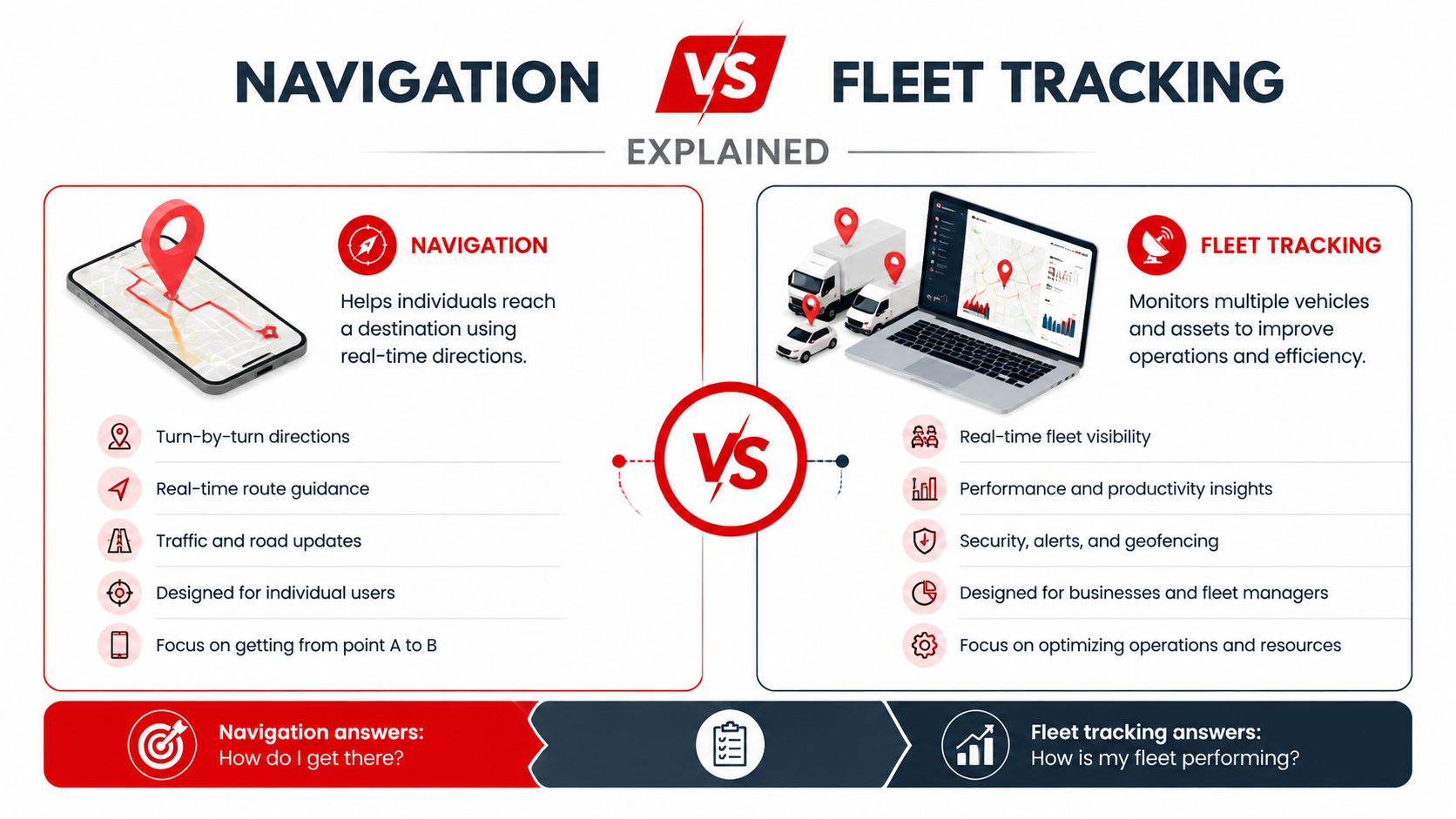
A navigation system answers, “How do I reach my destination?” Telematics answers, “Where is this vehicle, how has it been used, and does its status require action?” Navigation is visible and consumer-facing. Telematics can work in the background, without a screen that reveals its presence.
The fleet operator's view
Rental fleets are mobile assets spread across airports, branches, repair facilities, customer locations, and unfamiliar regions. Managers need visibility when a vehicle is overdue, abandoned, missing, damaged, or suspected of being stolen. GPS can locate the asset without relying only on a renter's account of where it was last driven.
Location and mileage records also support utilization decisions. A manager can identify idle vehicles, coordinate transfers between locations, and schedule maintenance according to recorded mileage rather than assumptions. GPS therefore functions as a capital-management and security tool.
The relevant question is whether the operator has defined a legitimate purpose for collecting and using location data.
That purpose does not remove the need for notice, access controls, retention limits, or procedures for responding to misuse. Tracking a fleet asset for recovery is materially different from using trip history to examine a renter's ordinary behavior without a documented operational reason.
The renter's view
Renters generally weigh convenience, price, and privacy. Built-in navigation can help, but it is not included in every vehicle. A portable GPS unit may be an optional extra rather than standard equipment, according to independent guidance on rental GPS and smartphone navigation. A smartphone may provide directions while a separate telematics unit supplies the fleet information the operator needs.
A vehicle location solution should therefore be assessed according to its user and purpose. Renters need clear notice, understandable limits, and practical privacy controls. Fleet operators need reliable location information, documented retention rules, and processes that distinguish legitimate recovery from intrusive monitoring.
The shift is toward invisible operational control, not merely visible navigation. GPS in rental cars is consequently a question of governance as much as equipment: who collects the data, why, for how long, and under what safeguards.
Navigation Versus Fleet Tracking Explained
A navigation screen does not reveal whether a rental vehicle is being tracked, and the absence of a screen does not prove the opposite. Both systems can use satellite positioning, but they serve different users, collect different information, and create different privacy questions. The distinction matters because rental companies may use tracking for asset control even when renters receive no navigation service.
Renter-facing navigation
Navigation is built for the driver. It may be factory-installed, supplied as a portable rental accessory, or delivered through a phone interface such as Apple CarPlay, Android Auto, Google Maps, Apple Maps, or Waze. Its functions usually include:
- Route guidance: Directions are calculated for a destination selected by the driver.
- Traffic assistance: Connected applications can use current traffic information to recommend alternative routes.
- Offline support: Downloaded maps can remain available when mobile coverage is weak.
- Shared usability: A built-in display or portable unit can serve multiple authorized drivers.
Availability depends on the vehicle and rental category. A budget or compact vehicle may lack built-in navigation, while a dedicated GPS unit may be an optional extra, according to independent guidance on rental GPS and smartphone navigation. The rental agreement and vehicle specification are more reliable than the presence of a dashboard display. A screen may be an entertainment or phone-integration interface rather than a service included in the rental price.
Navigation can also create a separate personal-data trail. A driver may enter an airport, hotel, home, workplace, or other private destination. Pairing a phone may transfer contact or call information to the vehicle. Deleting recent destinations and removing the paired device before return can reduce residual exposure, although those steps do not control a separate telematics system installed for fleet operations.
Back-end fleet tracking
Fleet telematics serves managers, security personnel, maintenance teams, and recovery partners. It can record location updates, geofence events, mileage, and trip history. Operators may use that information to identify movement outside an authorized area, locate a missing vehicle, or plan service around actual use.
The renter may never see a tracking screen or receive a direct alert. The device can transmit operational data without being noticed, which is why GPS presence cannot be inferred from dashboard equipment. Its legal use still depends on the stated purpose, notice, applicable consent rules, retention period, and access controls. Recovery after theft and routine examination of a renter's travel history are different uses and should not be treated as equivalent.
The practical distinction is clear: GPS in a rental car often supports hidden fleet-security operations, not complimentary navigation. Renters are choosing a navigation tool for directions. Rental companies are controlling an asset, managing risk, and preserving evidence. Those functions can share positioning technology while remaining separate in purpose and legal treatment.
How GPS Tracking Benefits Rental Fleets
GPS tracking changes rental-fleet management from periodic reporting to continuous operational visibility. Managers can see where vehicles are, how much they have been driven, and whether movement matches the expected operating pattern. Location updates, geofences, mileage readings, and trip history support decisions about deployment, maintenance, recovery, and asset control.
The benefits accumulate across routine operations. Location data can expose underused vehicles, reveal imbalances between branches, and help coordinate transfers. Mileage and usage records can inform service scheduling, while route history can help reconstruct movement after an incident through GPS route-history functionality.
Operational impact at a glance
| Metric | With GPS Tracking | Without GPS Tracking |
|---|---|---|
| Vehicle location | Managers can receive live location information and review movement history. | Staff may depend on check-in records, customer updates, or physical searches. |
| Utilization | Location and movement data can reveal idle vehicles and support better deployment. | Idle time and branch-level imbalances are harder to identify promptly. |
| Theft recovery | Tracking can provide a current or recent location for recovery teams. | Recovery depends more heavily on reports, witnesses, and other investigative information. |
| Maintenance planning | Odometer and usage data can support service scheduling. | Staff have less direct visibility into actual mileage between handoffs. |
| Geofence control | Alerts can flag movement into or out of defined areas. | A vehicle may leave an expected area without immediate operational notice. |
A fleet-management benchmark cited in rental-industry GPS tracking material reports that GPS solutions can improve fleet utilization by 32% on average. For rental operators, improved utilization can reduce idle inventory and support more efficient use of vehicle capital. The figure is not a universal forecast. Results depend on fleet size, reservation demand, branch structure, pricing, maintenance capacity, and whether managers act on the information.
Security changes the economics
The same source reports that around 12,000 vehicles are stolen in New Zealand each year. It also reports recovery rates above 80% for GPS-tracked rental fleets, compared with roughly 20% for untracked operations. These figures explain why tracking has become a security control as well as a convenience feature. The operator is purchasing measurable recovery speed and a clearer path from an unexplained loss to a recoverable asset.
That value depends on governance. Operators should limit access to authorized personnel, record valid activation conditions, and connect alerts to a defined response process. Location data should not become a shortcut for automatic fines or behavioral scoring. A tracking system earns its operational cost when it helps locate, maintain, deploy, or recover vehicles under documented rules.
Privacy Laws and Renter Rights Across Regions
The key legal question is not whether a rental car has GPS. It is what the rental company may do with the resulting location data. Vehicle ownership supports security controls, but it does not automatically permit unrestricted monitoring of a renter's movements, habits, or destinations. Rules increasingly focus on purpose, notice, consent, access, and retention.
California shows this shift clearly. Under California rental-car GPS guidance, rental companies generally cannot use GPS or electronic tracking devices to monitor a renter's location, movement, or driving habits. Permitted uses include stolen-vehicle recovery, vehicles that are 72 or more hours overdue, and tracking authorized through the renter's written consent.
California's AB 1197 applies a broader governance test. It restricts the use of location data to track renter behavior or impose fines and surcharges. The permitted activation grounds center on theft, abandonment, missing vehicles, or lawful process. The measure also adds notice and recordkeeping duties, as described in the AB 1197 rental-vehicle analysis.
Regional rules don't follow one template
New York and Connecticut illustrate why a single national assumption is unreliable. An industry legal summary of rental telematics reports that New York prohibits using GPS data to impose costs, fines, or charges on renters or authorized drivers. Connecticut requires disclosure when rental vehicles use telematics.
South Korea places greater weight on consent. The Ministry of Land, Infrastructure and Transport interpretation states that a rental car's GPS terminal can make the company's tracking a collection and use of personal location information under the Location Information Protection and Use Act. The renter must consent and receive notice that a tracking device is installed.
Across these jurisdictions, the operational boundary is consistent: security purposes may justify limited tracking, but vehicle ownership does not automatically justify unrestricted surveillance. Rental agreements should identify telematics, explain its purpose, specify who may access the data, define the events that permit active use, and state when records are deleted or anonymized.
Renters comparing vehicle-related data practices can review auto insurance privacy details. Operators need a documented vehicle privacy framework that separates recovery intelligence from discretionary monitoring and makes each access decision auditable.
Protecting Your Personal Data in Connected Rental Cars
The privacy risk in a connected rental car is broader than location tracking. A University of Michigan study of rental vehicles identifies personally identifiable information that may remain in infotainment systems, including contact lists, call logs, and navigation history. Returning the car without clearing these records can expose a renter's contacts, destinations, and account activity to the next user.
Clean the infotainment system before return
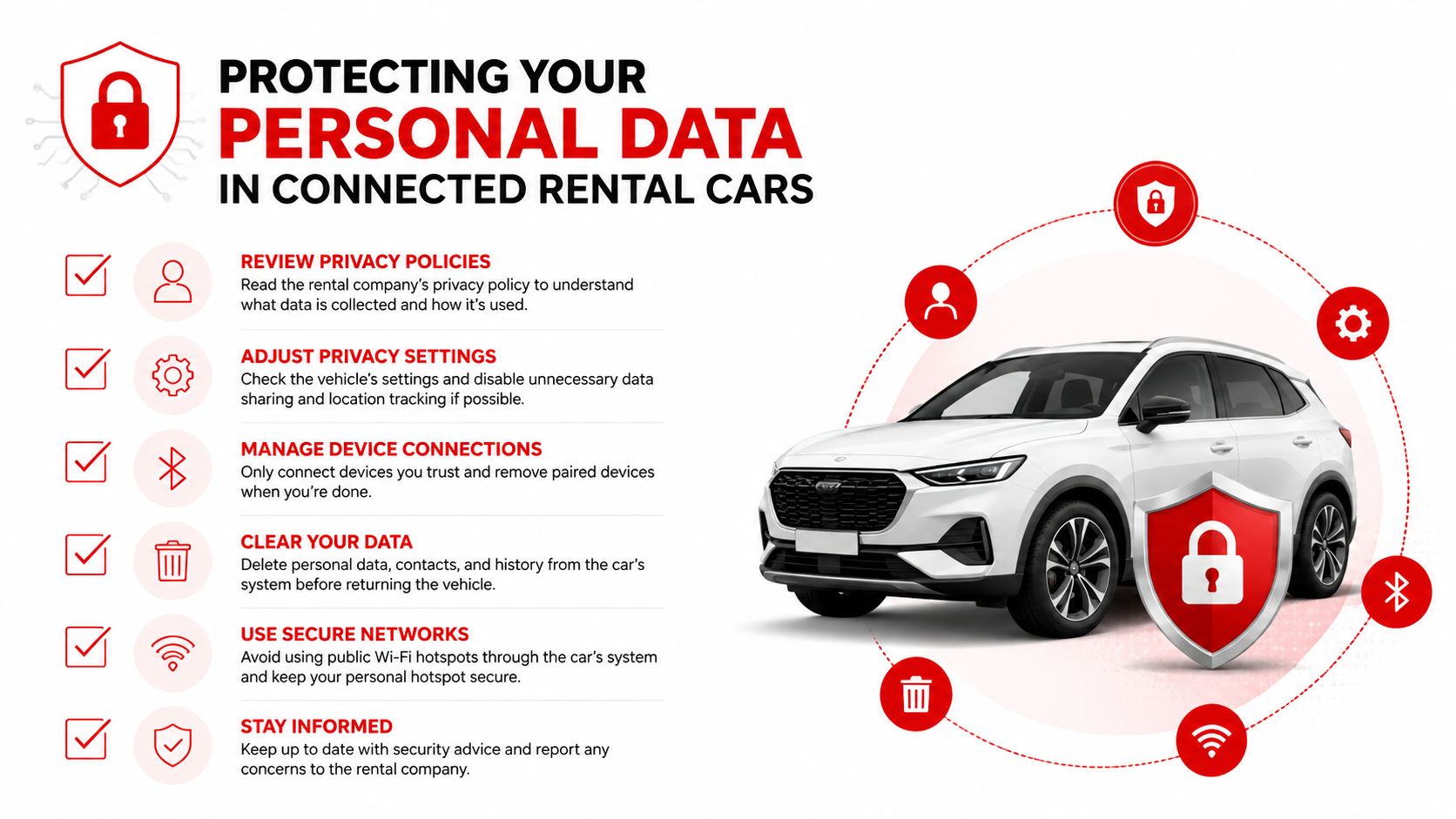
Begin with every device you paired. Remove phones, tablets, and other hardware from the Bluetooth list, delete saved contacts and recent calls, erase navigation destinations, and sign out of services such as Spotify. If Apple CarPlay or Android Auto was used, disconnect the phone and remove its saved profile.
Then locate the vehicle's factory reset or personal-data deletion function. Menu names differ by manufacturer, so follow the on-screen instructions instead of assuming that deleting one destination removes all stored information. A reset matters especially when you entered addresses manually or connected cloud services.
Use this sequence:
- Disconnect paired hardware: Remove phones, tablets, and portable devices from the remembered-device list.
- Delete navigation records: Clear destinations, saved locations, recent routes, and favorites.
- Sign out of services: Log out of streaming, messaging, email, and other accounts used through the vehicle.
- Reset the system: Perform the available factory reset after confirming that it will not affect required rental functions.
- Check manually: Reopen Bluetooth, navigation, and application menus to verify that your details no longer appear.
A short visual walkthrough can help renters identify the connected-vehicle records that require attention:
The phone itself also needs review. Remove permissions granted to the rental vehicle, check which accounts were connected, and confirm that cloud synchronization did not transfer more information than intended. Vehicle infotainment records are different from dedicated surveillance equipment. Renters concerned about unauthorized electronic surveillance in another setting can consult bug detection services Birmingham.
Fleet operators have the larger control obligation. They should erase the previous renter's data before reassignment, limit staff access, and provide clear return instructions. Retaining personal information after handoff is a data-management failure, even when vehicle tracking serves a legitimate security purpose. Operators reviewing cloud-connected GPS tracking features should assess retention, deletion, and access controls as part of the system design. Clear operational controls protect renters without weakening legitimate recovery work.
Why Modern Vehicle Security Demands Real-Time GPS Tracking
A rental fleet can have locks, alarms, and immobilizers yet still lack the information needed after a vehicle moves. These tools are mainly passive or local defense. A steering-wheel lock can be defeated, an alarm can be overlooked amid false alerts, and an immobilizer can restrict engine operation without showing where the vehicle is or whether it is being towed. Real-time GPS addresses that information gap.
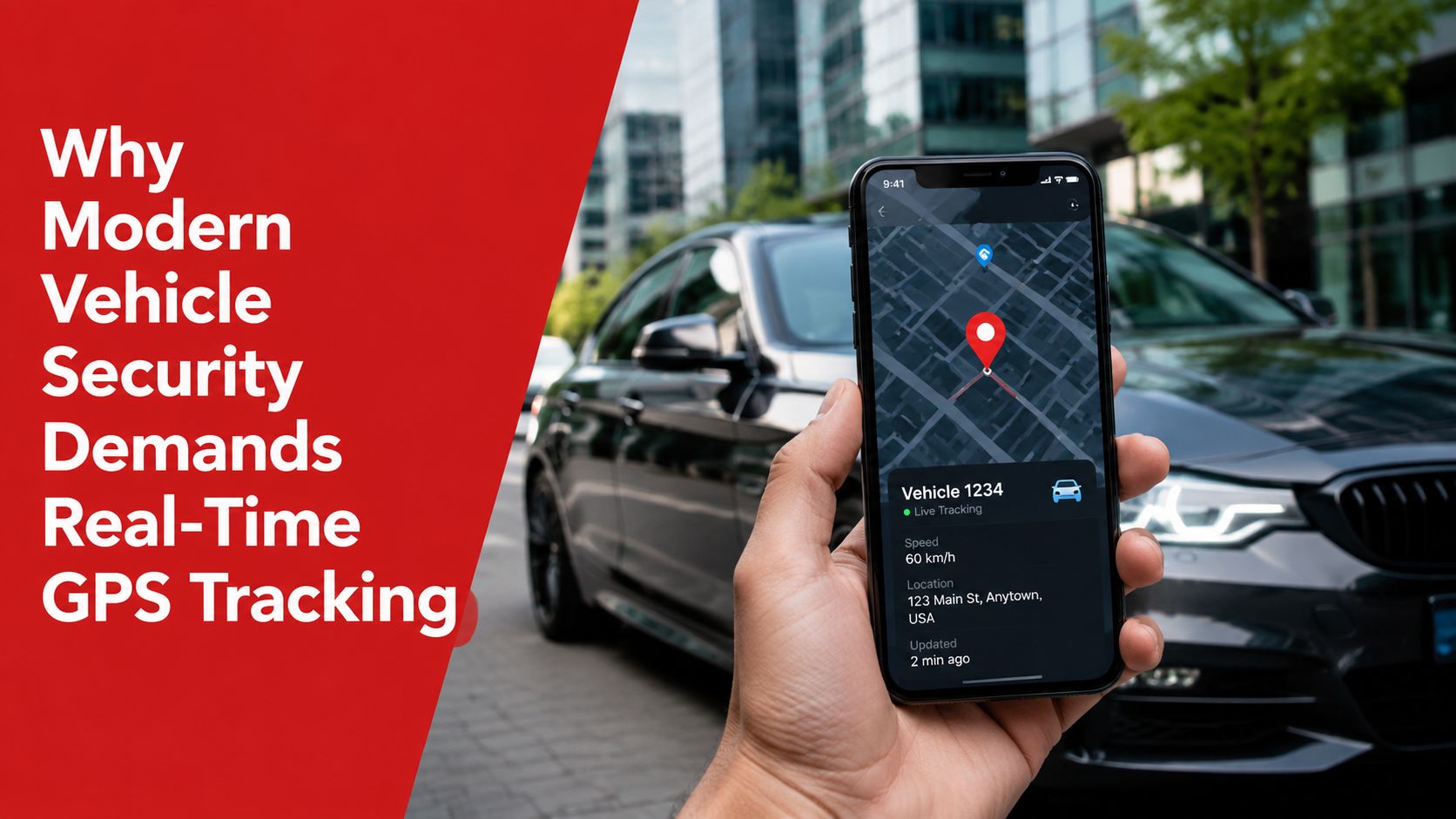
Tracking changes the response from retrospective confirmation to active assessment. A connected system can flag unexpected movement and send relevant information to the person responsible for the vehicle. That person can check whether the trip is authorized, contact the driver, involve a recovery provider, or share location details with law enforcement when appropriate.
Passive deterrence versus active intelligence
Traditional protections remain useful. A steering-wheel lock signals resistance, an alarm may attract attention, and an immobilizer can interfere with unauthorized starting. Their limitation is visibility. A cloud-connected tracker can record location and communicate beyond the vehicle, giving an operator information while an incident is developing.
A real-time system can be configured to identify:
- Unauthorized movement: An alert can show that the vehicle moved outside expected use.
- Engine activity: An engine-start notification can identify use before a later explanation reaches the fleet manager.
- Vibration or towing: Unusual movement may indicate lifting, towing, impact, or attempted entry.
- Tampering: A disconnected or disturbed device can create a separate security event.
- Battery problems: Low voltage or abnormal drain can signal a condition that may disable other protective equipment.
The value is therefore not a promise that GPS prevents every theft. It is timely, actionable information after the vehicle's status changes. For rental operators, that information supports recovery and incident review across vehicles located in different places. It can also help private owners and parents supervising authorized drivers, provided the monitoring purpose remains clear.
A system such as CARLOCK's car security system combines GPS location, cellular connectivity, alerts, and trip history in a mobile interface. That operating model differs from Bluetooth item finders, which depend on nearby phones and are intended for objects such as keys or bags rather than continuous vehicle security.
The operational benefit creates a privacy obligation. Fleet operators should configure alerts for defined security events, document who may access the records, and avoid turning legitimate recovery tools into unrestricted surveillance of renters. Real-time visibility is defensible when it supports recovery, safety, and asset protection within limits communicated before the rental begins.
Key Takeaways for Renters and Fleet Operators
For renters, the central lesson is simple: GPS in a rental car may be back-end telematics rather than dashboard navigation. Check whether navigation is included, read the tracking disclosure, ask what purposes are permitted, and remove personal data before returning the vehicle. California, New York, Connecticut, and South Korea demonstrate that notice, consent, purpose limitation, and restrictions on charges can vary by location.
For fleet operators, GPS creates practical value through location visibility, mileage management, geofencing, trip history, utilization planning, and theft recovery. The benchmark cited earlier reports a 32% average utilization improvement for GPS solutions, while the New Zealand rental material reports recovery above 80% for GPS-tracked rental fleets compared with roughly 20% for untracked operations. Those figures support investment in telematics, but they don't eliminate the need for privacy controls.
The stronger operating model is security-first and privacy-aware. Collect only what the business needs, document activation conditions, limit access, provide clear notice, and delete records according to a defined retention policy. Renters should protect infotainment data with the same care they apply to a personal phone.
CARLOCK gives vehicle owners real-time location monitoring, trip history, movement alerts, engine-start notifications, towing and vibration detection, and tamper alerts through its connected security system. Visit CARLOCK to see how continuous GPS visibility can add a practical security layer for a personal vehicle or small fleet.