


Driver’s Desk
Small Fleet Management: Proven Strategies for 2026
Most small fleets are already losing money before anyone notices the pattern. In one survey, 65% of small fleet managers said they handle fleet operations entirely on their own, another 26% had only two to three people supporting them, and nearly 80% spend 10–30+ hours per week on fleet tasks, with 54.5% doing most of that work after normal business hours (survey summary). That staffing reality changes everything, because even modest downtime can hit cash flow hard, especially when 41% of fleets under 50 vehicles estimate annual downtime costs of $10,000–$50,000, and 14.5% report losses above $100,000 (same survey summary).
Small fleet management isn't enterprise fleet control with fewer trucks. It's a different operating model, where one missed service, one bad route decision, or one underused asset can do real damage because there isn't much slack in the system. The fleets that stay healthy treat visibility, maintenance, and asset discipline as core operations, not admin work.
Why Small Fleet Management Demands a Different Approach
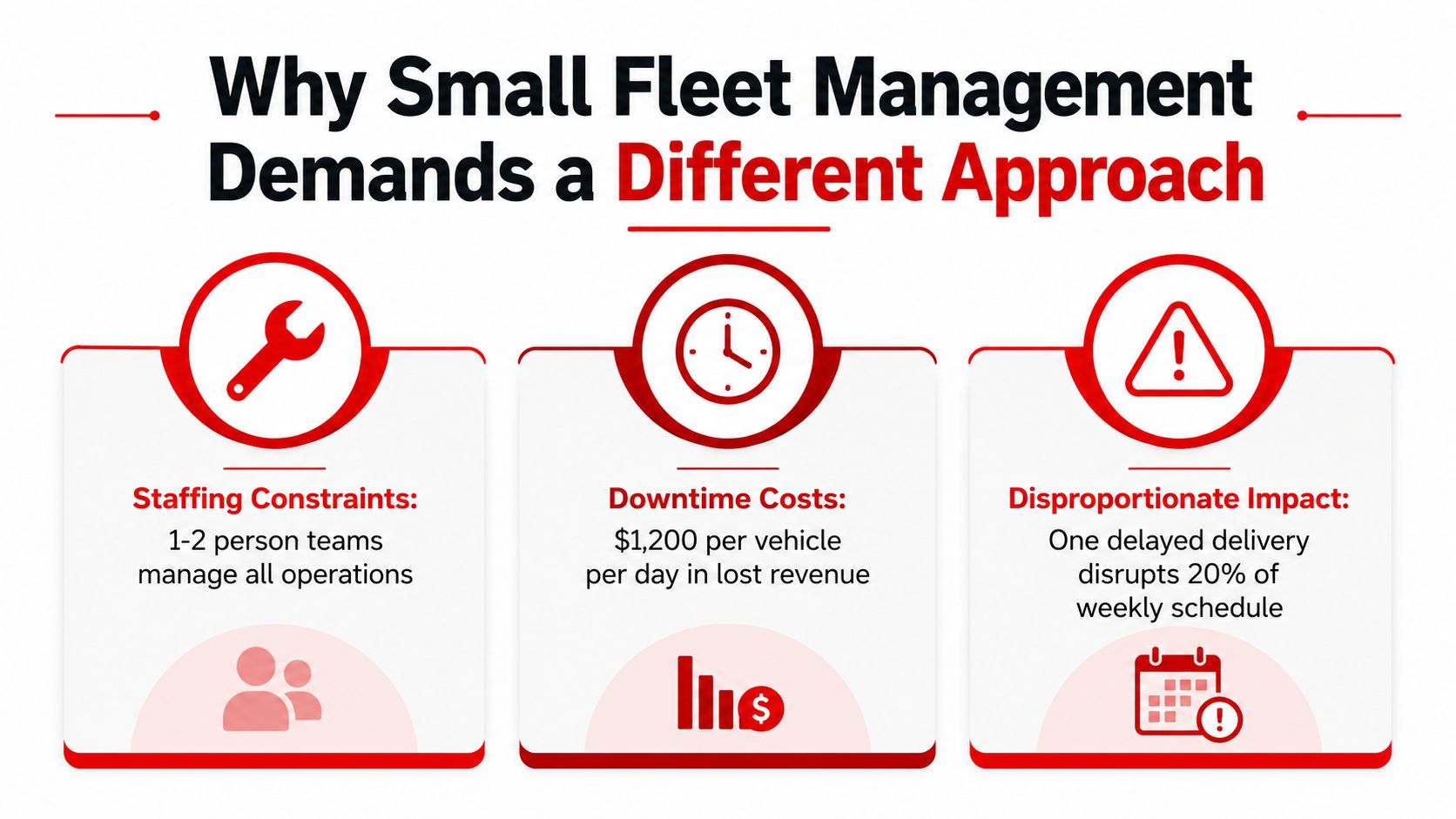
Small fleets run on thin margins, so waste shows up fast. Industry guidance puts small fleets around 5 to 20 commercial vehicles (small fleet definition), but the pressure comes from how many jobs sit on one person's desk at the same time. Dispatch, maintenance, inspections, driver oversight, insurance, and customer promises all compete for attention, and there is very little slack when a vehicle is out of service or a schedule slips.
The workload lands on too few people
The staffing gap is easy to miss until something breaks. A manager handling every call, inspection record, and service reminder cannot keep a clean view of the fleet if the work lives in email, memory, and whatever note got written down last. Survey findings on small fleet operations show how often that burden sits with one person or a very small team (survey summary).
That is where hidden cost leakage starts. Jobs get approved late, defects get handled after they become road calls, and a vehicle can sit idle because nobody had the full picture in time.
Practical rule: If the fleet depends on memory, inbox search, and phone calls, the system is already fragile.
Downtime is the hidden tax
Large fleets can spread the pain across more units. Small fleets usually cannot. One missed day can cancel a route, push a customer commitment off schedule, and force another vehicle to carry more than it should. The cost is not just the repair invoice, it is the lost work, the rescheduled dispatch, and the extra strain on the rest of the fleet.
Visibility gaps turn into cost leakage
When vehicle location, driver status, fuel, maintenance, and compliance sit in different places, managers lose time before they lose money. That fragmentation delays decisions, creates duplicate charges, lets unnecessary service work slip through, and makes fuel waste harder to spot. A single operational view matters because small fleets do not have room for missed maintenance windows, duplicate work orders, or vehicles sitting underused while other units run hot (fleet management reference guide).
A missed maintenance window is rarely just a maintenance issue. It turns into a route problem, then a customer service problem, and often a cash flow problem before anyone catches up.
The shift happens when the fleet stops treating itself like a stack of vehicles and starts treating itself like one operating system. Then the priority moves from reacting to problems to cutting off the conditions that create them.
Defining Small Fleet Management and Its Core Challenges
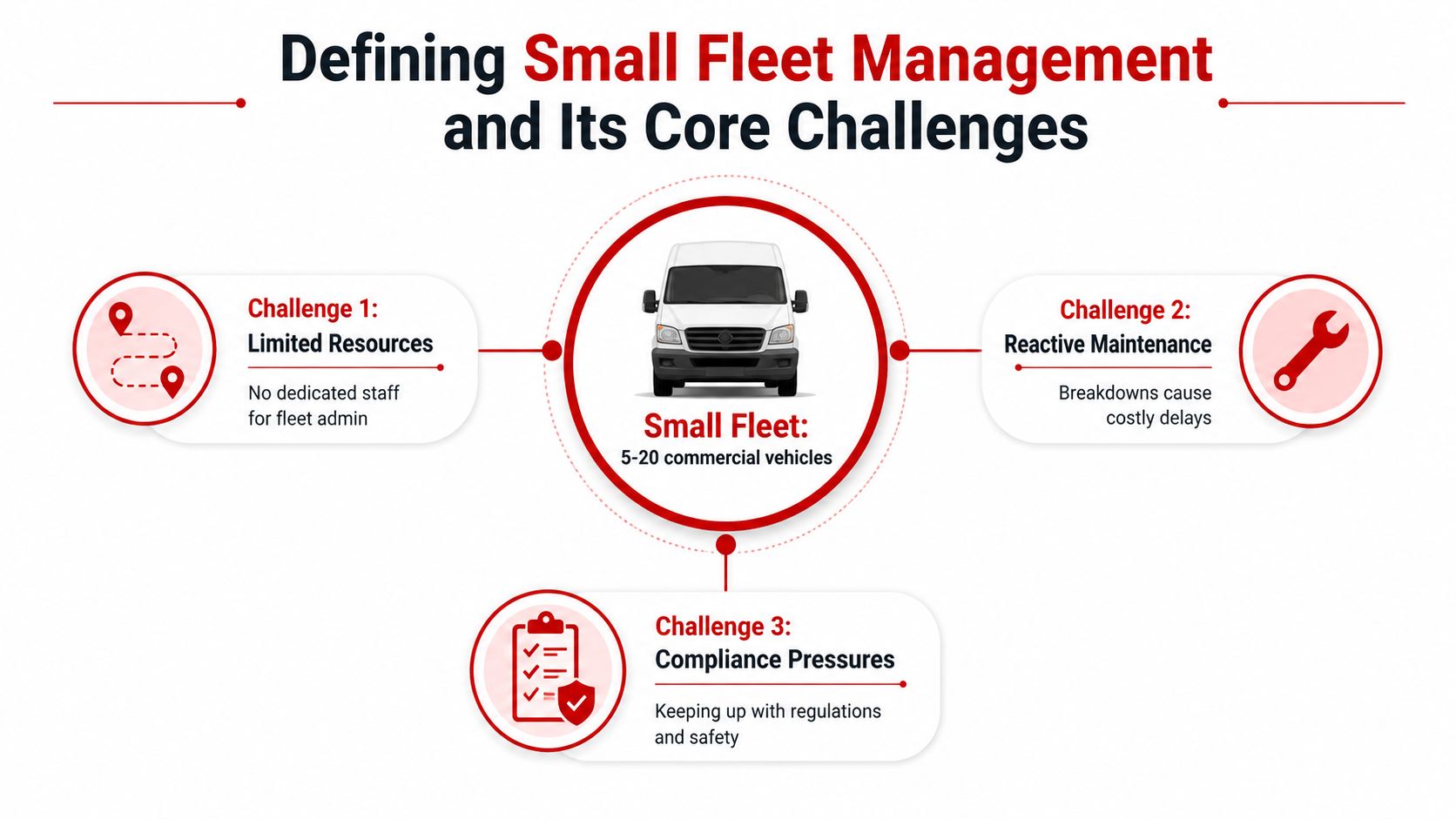
Small fleet management usually means a handful of commercial vehicles run under tight budgets, limited staff, and constant trade-offs. One industry guide places the category at 5 to 20 vehicles (small fleet definition), while broader small-business fleet guidance can stretch that range depending on the operation. The exact count matters less than the operating reality. The same person often owns the work, the risk, and the accountability, so every gap shows up fast in the day-to-day.
Visibility fragmentation is the first bottleneck
The most expensive small-fleet problems usually start as information problems. When routing lives in texts, service history sits in spreadsheets, and inspection results are on paper, nobody gets a clean picture of what is happening right now. That fragmentation slows dispatch, makes maintenance harder to prioritize, and gives waste a place to hide.
A simple rule helps here. If a manager has to ask three people and check two systems to answer one operational question, the fleet is already paying for the split.
Reactive maintenance is a staff problem, not just a vehicle problem
Lean teams do not fail because they do not care. They fail because there is too little time to track mileage, engine hours, and defect reports consistently, so maintenance slips from planned work to reactive work (SME fleet challenges and solutions). That shift matters because roadside failures do not arrive with warning labels, and once a truck is down, every related task gets more expensive.
A small fleet cannot afford to be surprised by the same failure twice.
Underutilized vehicles drain capital
The harder call is often the right one. The biggest savings do not always come from another dashboard or another alert. They come from removing low-value assets, pooling vehicles, or outsourcing work that does not justify ownership. Commentary in the space increasingly treats idle vehicles as a silent drain, and that framing fits what I have seen in practice, because underused capacity still carries insurance, maintenance, and management overhead (underutilized vehicle economics discussion).
The point is not to cut vehicles blindly. It is to stop carrying assets that exist mostly out of habit. Once a fleet measures utilization, the answer is sometimes smaller, not more complicated. A good checkpoint is whether the fleet can explain why each unit earns its place, or whether it is just sitting there because nobody wants to make the call. For teams comparing replacement and hauling needs, trailer buying tips for jobsites can help frame the ownership decision around actual work, not legacy habits.
Real-Time GPS Tracking and Vehicle Security Fundamentals
GPS tracking matters in small fleet management because it solves two problems at once, control and security. Real-time location data, trip history, geofencing, and driver-behavior monitoring create a single operational layer that helps a manager dispatch better, verify work, and respond to suspicious activity faster than a traditional alarm ever could. For small fleets, that single layer is the difference between guessing and knowing.
A practical security system needs more than a visible dot on a map. CarLock's real-time tracking and cloud-based alerts are one example of a vehicle-security tool built around GPS and cellular connectivity, and its feature set includes trip history, movement alerts, tamper detection, and driver-behavior monitoring for harsh acceleration, hard braking, and sharp cornering (CarLock car tracking). That mix matters because stolen-vehicle protection and operational oversight often use the same data.
Why satellite and cellular tracking beats “find my device” thinking
Bluetooth trackers are fine for keys and bags, but fleets need vehicle-grade visibility. A car can be moved, towed, or parked in a place where nearby-device networks don't help much, while GPS and cellular reporting keep the asset visible across broader conditions. That's the technical reason telematics is more than a convenience feature for fleet owners.
Real-time trip records also solve a very ordinary problem, proving where a vehicle went and when. That helps with service verification, customer disputes, and after-hours use control. If the vehicle was at a site, the data should show it.
Driver behavior isn't just a safety metric
Harsh acceleration, hard braking, and aggressive cornering create wear, raise risk, and usually show up before the operator admits anything is wrong. When a fleet tracks those patterns, coaching becomes specific instead of emotional. The conversation shifts from “drive better” to “this route, this vehicle, this behavior.”
For a fleet that hauls gear or tools to jobsites, the vehicle itself also needs to be selected with the work in mind. If you're comparing trailers or support equipment for work transport, these trailer buying tips for jobsites are a useful reference point for matching capacity to actual usage.
Trip history and geofencing make the data usable
A security alert without context is just noise. Trip history shows whether a vehicle completed the expected route, and geofencing tells you when it entered or left a defined area. That combination is what turns tracking into accountability.
If the vehicle is where it should be, the system should be boring. If it isn't, the alert should be immediate.
Maintenance Scheduling and Utilization Control Strategies
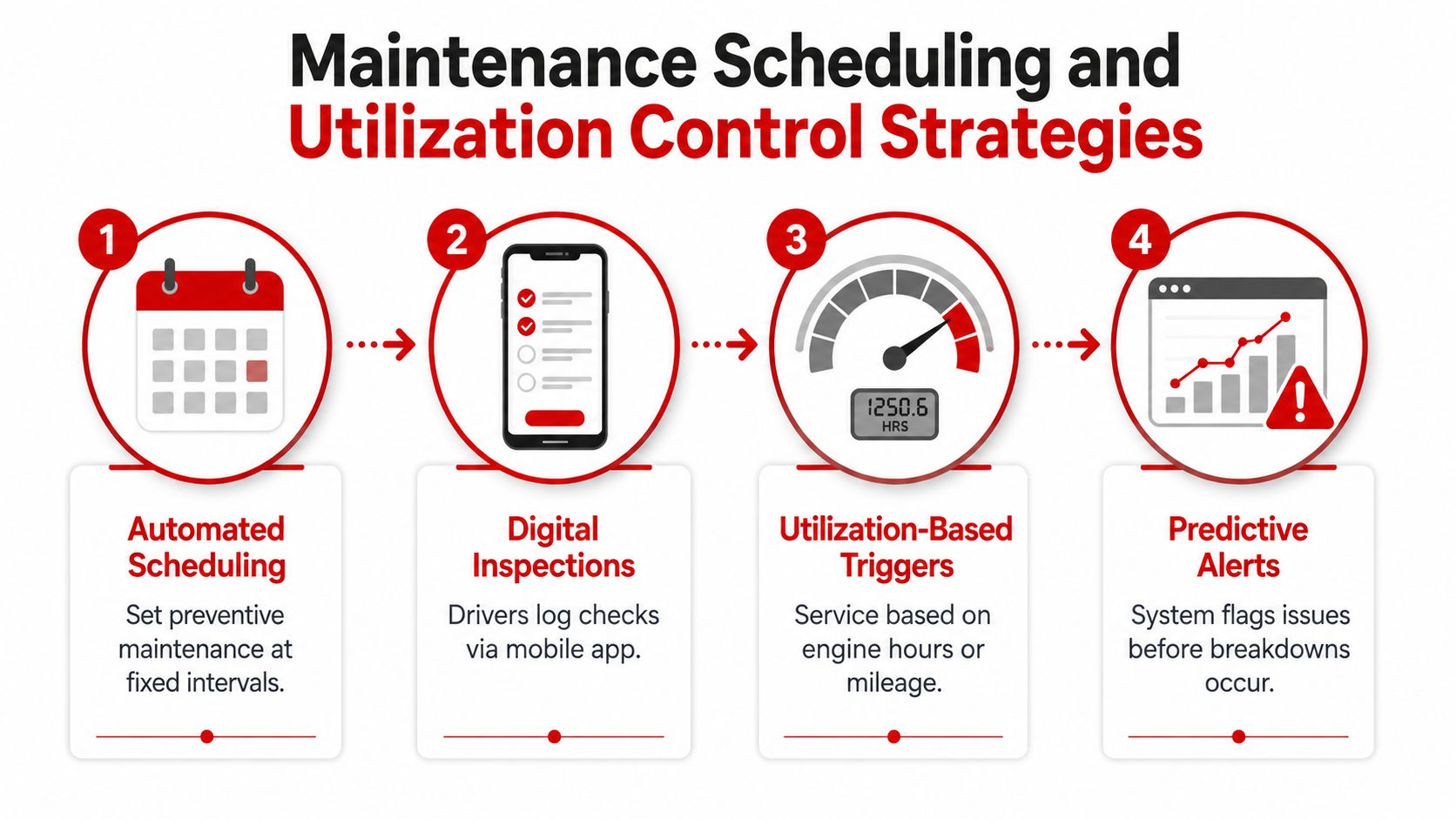
The hidden cost leak in a small fleet usually shows up in service delays, parked assets, and repair decisions made too late. Maintenance works better when it follows how a vehicle is used, not a calendar reminder nobody checks. Mileage, engine hours, and defect reports give a more honest picture of wear. A month on the clock means very little if a truck has been running hard every day.
Replace paper inspections with searchable records
Digital vehicle inspection reports, or DVIRs, make defects visible and traceable. Paper forms get lost in glove boxes, on desks, or in someone's memory. A digital record can be searched, audited, and matched to service history, which is why lean fleets use them to catch repeat problems before they turn into road calls.
That process works only if each step is clear. The driver checks the vehicle, logs the issue, the manager sees the alert, and service is booked before the defect spreads. If any part of that chain depends on guesswork, the leak stays open.
Utilization control is maintenance control
A vehicle that sits still still ties up cash. Small fleets need a clear view of which units are busy, which are underused, and which are sitting on the books because no one has challenged the default. That is where right-sizing happens. If an asset is rarely used, the better move may be to sell it, pool it, or outsource the work instead of paying to keep it available.
The maintenance plan and the fleet size plan should be reviewed together. If they are separate, you end up servicing vehicles you do not need and keeping vehicles you should have retired.
Centralized tools help because they put service status, defect notes, and usage patterns in one place. A practical example is a vehicle health dashboard, since alerts only matter when they connect to a clear service workflow. That matters for day-to-day planning, and it matters even more when you are coordinating parts, technicians, and dispatch around the same vehicle.
The payoff is fewer surprises
When service is triggered by real use, preventive work happens before a roadside failure forces the issue. The fleet is not scrambling to cover missed deliveries, overtime, and customer complaints at the same time. Planned maintenance is visible. Surprise downtime spreads into the rest of the operation, and that is where the cost gets ugly.
This is also where operational discipline affects risk. A truck that is regularly maintained is easier to defend after an incident, and the records matter when a manager has to review a claim or a service dispute. If a vehicle is used for commercial work, the maintenance file should be solid enough to support decisions that may touch commercial auto insurance for delivery drivers.
Cost Control Through Driver Behavior and Fuel Management
Fuel is one of the few costs a small fleet can influence every day. Coast's guidance is blunt about the controllable behaviors that matter, steady acceleration, smooth braking, consistent highway speeds, and reduced idling (small fleet fuel and idling guidance). That's useful because it turns “be efficient” into something a manager can observe and coach.
Start with a baseline, not a guess
A fleet can't improve what it doesn't record. The most useful starting metrics are fuel spend per mile, idle hours per vehicle, and maintenance costs per vehicle, because those numbers show whether the fleet is burning cash through poor driving habits, route design, or neglected service (fleet best practices guide). Once the baseline exists, the manager can see which vehicle, route, or driver needs attention.
Small Fleet Cost Control Metrics
| Metric | Target Benchmark | Measurement Frequency | Action Trigger |
|---|---|---|---|
| Fuel spend per mile | Baseline set by vehicle class | Weekly | Review routes and driving habits |
| Idle hours per vehicle | Baseline set by route type | Weekly | Coach driver and check dispatch patterns |
| Maintenance costs per vehicle | Baseline set by age and use | Monthly | Inspect for repeat defects or overdue service |
| On-time delivery rate | Baseline set by route | Weekly | Rework scheduling or dispatch logic |
Coaching works better when it's specific
A driver who idles at pickup points needs a different conversation from one who brakes hard on every stop. The data lets the manager separate habit from circumstance. That's also where fleet security and fuel control overlap, because unauthorized use, route detours, and fraud all become easier to spot when trip history is clean and auditable through route history review.
Fuel fraud audits work best when route data, fill-ups, and utilization records line up cleanly.
Insurance also matters here, because risky driving patterns can affect both cost and liability. If your operation includes deliveries or regular road exposure, commercial auto insurance for delivery drivers is worth reviewing alongside your telematics policy.
Better habits show up in the numbers
Telematics is associated with 10–15% fuel savings within the first year in industry data (fleet management market analysis). The point isn't to promise that outcome automatically. The point is that fuel and idling are measurable, and measurable problems are manageable.
Technology Selection and Deployment Roadmap
Small fleets lose money in quiet ways, through vehicles sitting idle, missed service windows, and data spread across too many tools. Independent guidance for small-business fleets recommends starting with one real-time map that shows every vehicle, plus digital inspections and centralized records, rather than juggling multiple disconnected tools (small business fleet guide). That keeps the first rollout focused on the cost leaks that show up in day-to-day operations.
Start with visibility, not complexity
A real-time GPS map and a single dashboard clear up the first layer of operational confusion fast. The next layer is where small fleets usually bleed time, because inspection reporting, vehicle health, and alert handling need to land in one place, not three or four. If installation takes too long, the mobile app is awkward, or managers have to hunt through menus to find basic trip data, adoption drops and the platform becomes shelfware.
A practical evaluation checklist looks like this.
- Installation effort: Can the system be deployed without pulling vehicles out of service for long?
- Mobile usability: Can dispatch and managers act on alerts from a phone?
- Alert control: Can alerts be tuned so the team avoids noise and only sees what needs action?
- Integration fit: Can the data move into the systems you already use?
- Cloud access: Can the team review trips, alerts, and records remotely through cloud fleet features without adding another reporting bottleneck?
Deploy in phases
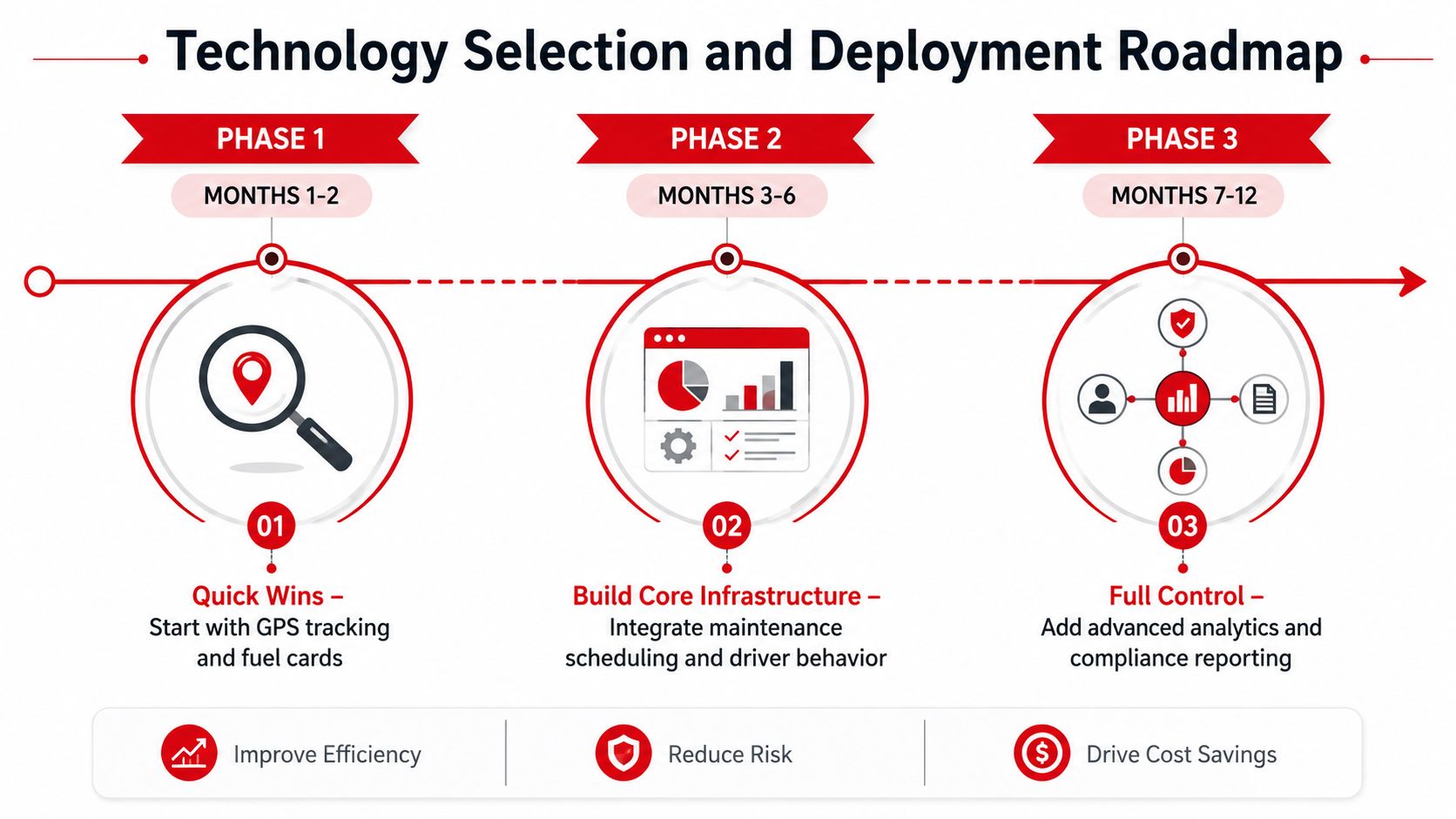
Start with tracking and route visibility, because those tools show where time and fuel are leaking. Once the team is checking the same information every day, add maintenance scheduling and driver-behavior tools so the data leads to action, not just more dashboards. Advanced analytics and compliance reporting belong later, after the basics are being used consistently and the records are clean.
CarLock fits into that first layer as one option for real-time vehicle monitoring, trip history, tamper alerts, and multi-vehicle oversight in a single account, which can help smaller operators keep security and visibility in the same system. The brand matters less than the fit. The platform should reduce fragmentation, not create another place where managers have to look for answers.
Implementation Checklist and Real-World Scenarios
A good rollout starts small and gets disciplined fast. The fleets that do this well pick one operational pain point, set a baseline, and force the team to use the same data every week. The worst rollouts try to solve tracking, maintenance, compliance, and coaching at the same time, then wonder why nobody adopts the system.
A workable 90-day sequence
- Week 1 to 2: Record every vehicle, current mileage, service history, and recurring issue.
- Week 3 to 4: Turn on GPS tracking and trip history for the vehicles that cause the most coordination headaches.
- Week 5 to 8: Replace paper inspections with digital reporting and connect service alerts to mileage or defects.
- Week 9 to 12: Review fuel, idle time, and route patterns, then coach the drivers with the most visible exceptions.
A service company with a few trucks may only need tracking and inspection records to stop the bleeding. A delivery operation with multiple drivers per vehicle may need route history and behavior monitoring much sooner. A mixed-use fleet usually needs both, because the same vehicle can be a work truck in the morning and a security risk after hours.
The best questions are simple ones, which is why a reference like these fleet tracking questions helps teams pressure-test what they need before they buy.
Baselines matter more than optimism. If you can't measure the starting point, you can't prove the rollout worked.
The common failure points are predictable. Teams skip the baseline, overload drivers with new rules, or buy a system that nobody owns internally. Fix those three things and the rest gets much easier.
CARLOCK gives small fleet owners real-time GPS tracking, trip history, tamper alerts, and vehicle-health visibility in one system. If you're trying to cut downtime, tighten security, and reduce the cost leakage that hides in lean operations, visit CARLOCK and see whether it fits the way your fleet works.