


Driver’s Desk
A Pro Guide to Car GPS Tracker Installation
A proper car GPS tracker installation is more than just a simple tech project—it's a critical reinforcement of your vehicle's security. In a world where vehicle theft is an ever-present threat, a correctly installed tracker provides the reliable, real-time data essential for asset recovery, operational efficiency, and, most importantly, peace of mind. According to the National Insurance Crime Bureau (NICB), over one million vehicles were stolen in the U.S. in 2022, a 7% increase from the previous year, underscoring the necessity for robust security measures.
Why a Flawless Installation Is Non-Negotiable
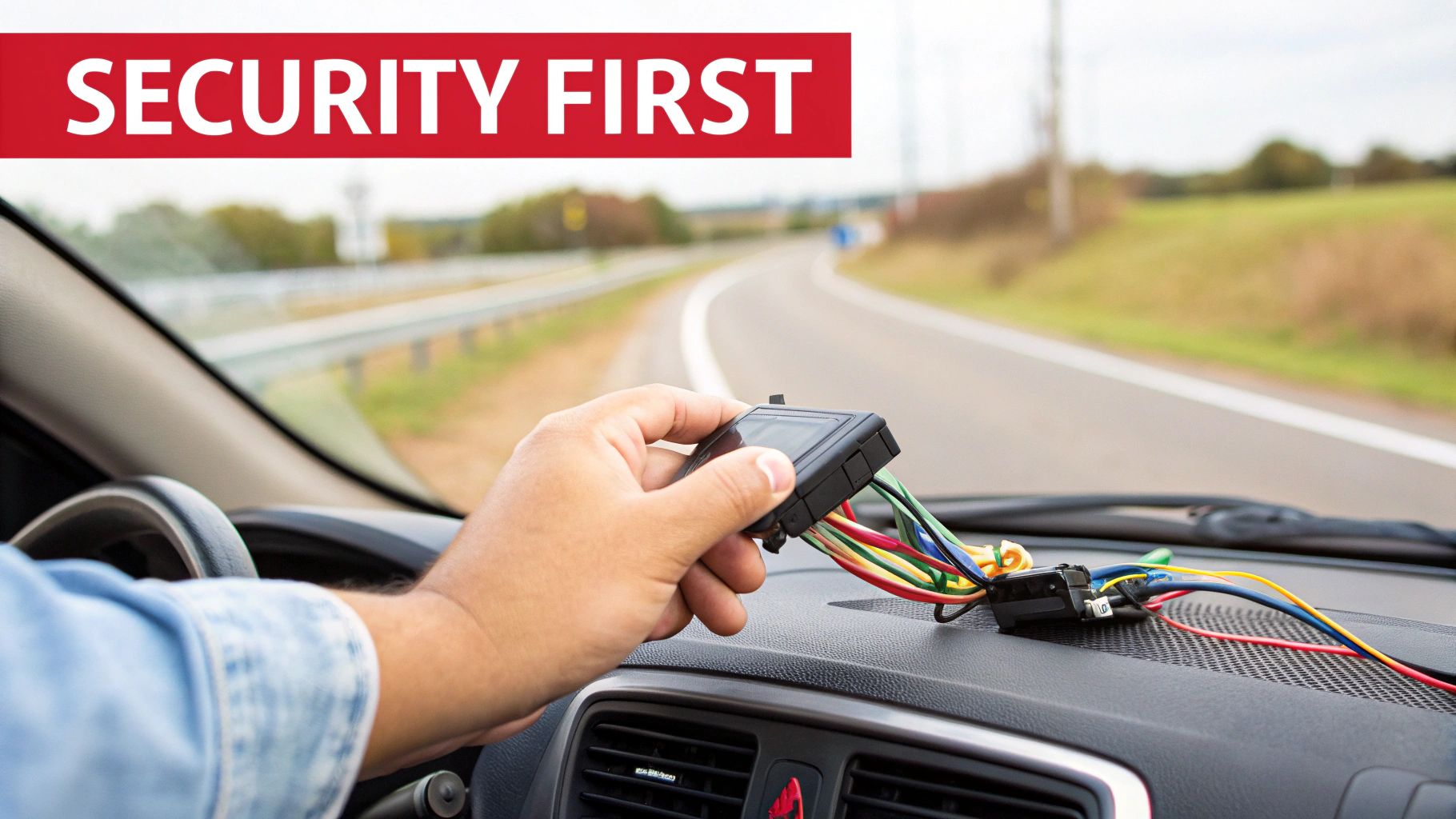
Treating your GPS tracker installation as a critical security upgrade, not a minor DIY task, is paramount. A rushed or incorrect setup can lead to a cascade of issues: false alarms, parasitic battery drain, or—in the worst-case scenario—a device that fails at the moment it's needed most.
This growing reliance on tracking technology is reflected in market trends. The global car GPS tracker market reached approximately $2.4 billion in 2023 and is projected to more than double to around $4.8 billion by 2032. This expansion is directly fueled by increasing consumer and commercial concerns over vehicle theft and the need for effective asset management solutions.
The Foundation of Reliable Security
A professional-grade installation ensures the tracker is both covertly placed to evade detection by thieves and reliably connected to a stable power source. This foundational step is what transforms a small electronic gadget into a powerful security asset, capable of providing crucial location data when every second counts.
Getting the installation right from the start provides tangible benefits that go far beyond just seeing a dot on a map. It's about turning your tracker into a robust, reliable security tool.
Benefits of a Professional-Grade GPS Installation
| Feature | Benefit for Vehicle Owner | Security Impact |
|---|---|---|
| Covert Placement | Peace of mind knowing the device is hidden from view and not easily accessible. | Prevents a thief from quickly finding and disabling the tracker, buying you critical time. |
| Stable Power Connection | The tracker remains active 24/7 without draining your car's main battery. | Ensures the device is always online and ready to transmit its location, especially after a theft. |
| Optimal Signal Strength | Guaranteed strong connection to GPS and cellular networks for consistent, accurate location data. | Eliminates tracking dead zones and delayed updates, providing reliable real-time information. |
| Tamper Resistance | Wires are secured and integrated into the vehicle's existing harness, making them difficult to disconnect. | Drastically reduces the chances of a "smash and grab" thief being able to defeat your security system. |
Ultimately, a quality installation is what makes your entire car security system effective.
For those who prefer professional expertise, reputable shops like Carmedics Autowerks can handle the job, ensuring your tracker is installed to the highest standards from day one.

A poorly installed tracker is a liability. A perfectly installed one is your first line of defense, offering the crucial minutes needed to alert authorities and recover your property before it disappears for good.
Your Pre-Installation Toolkit and Checklist
A successful car GPS tracker installation is built on meticulous preparation. Before touching a single wire, assembling the right tools and forming a solid plan will prevent headaches and potential damage to your vehicle's sensitive electrical system. This process is about setting the stage for a clean, secure, and professional-grade installation.
Attempting an installation without a checklist often leads to common errors, such as choosing an unstable power source or placing the tracker in a location with poor signal reception. Getting it right the first time is significantly easier than troubleshooting a faulty setup later.
Assembling Your Essential Tools
For a hardwired installation, the correct equipment is non-negotiable. While some trackers offer plug-and-play simplicity, a hardwired unit provides superior concealment and reliability, rendering it virtually invisible to thieves.
Here’s the essential gear for the job:
- A reliable multimeter: This is your most critical tool. It is the only way to safely identify a constant power source, an ignition-switched wire, and a solid ground point without resorting to dangerous guesswork.
- Wire strippers and crimpers: These are necessary for creating clean, secure, and lasting connections between the tracker’s harness and your vehicle’s wiring.
- Automotive-grade connectors: Use high-quality T-taps or posi-taps to ensure connections will not vibrate loose over time, maintaining the circuit's integrity.
- Zip ties and electrical tape: Essential for managing wires neatly and securely mounting the tracker unit in its concealed location.
- Interior trim removal tools: These non-marring plastic tools allow you to access behind dashboard panels without scratching or cracking expensive trim pieces.
Final Safety and Planning Checks
With your tools assembled, perform a final pre-installation check. First and foremost, disconnect the negative terminal of your car battery. This is a critical safety step that prevents short circuits, which could damage your vehicle’s electronic control units (ECUs) or the tracker itself.
Next, scout potential hiding spots. You need a location that is both discreet and offers good signal access—think under the dash, but not buried beneath layers of metal. Consider your device's capabilities; advanced trackers may have features that influence your installation plan. You can learn more about the CarLock tracker device features to see how they might inform your choice.
Remember, the goal of a great car GPS tracker installation is to make the device look like it was never there. A little planning now saves you from significant issues down the road.
Mastering the Hardwiring Process
For maximum security, hardwiring your GPS tracker is the superior method. This approach distinguishes a professional installation from an amateur one, providing the device with a constant, reliable power supply while keeping it completely concealed. While more involved than using a plug-in device, the resulting peace of mind is invaluable.
The success of a hardwired installation depends on correctly identifying three specific wires within your vehicle’s electrical system. This task requires a multimeter; guessing is a surefire way to blow a fuse or cause irreparable damage to your car’s computer.
Before you begin, ensure the vehicle is off and the negative battery terminal is disconnected. This quick checklist covers the essentials to get right before you start.
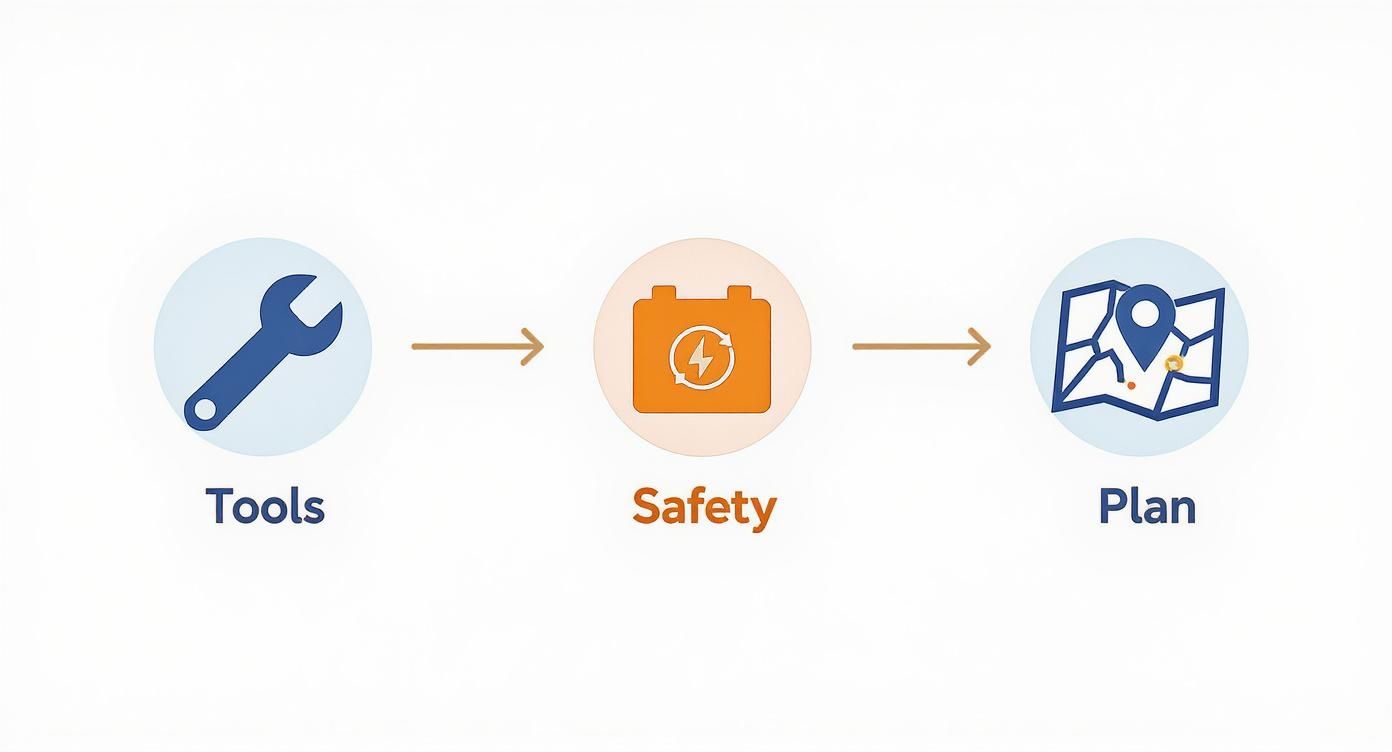
As you can see, gathering your tools, disconnecting the battery, and picking your spot are the three pillars of a smooth installation.
Finding Your Key Connections
With your multimeter ready, you will identify three specific electrical lines. A common starting point is the wiring loom under the steering column or behind the main fuse box.
- Constant 12V+ Power: This wire remains live even when the car is off. Probe wires with your multimeter until you find one that reads approximately 12 volts with the ignition off. This is the lifeline that will keep your tracker powered 24/7.
- Ignition-Switched 12V+ Power: This wire is only energized when the key is in the "On" or "Accessory" position. You are looking for a wire that shows 12 volts when the car is on and 0 volts when it is off. This connection signals to the tracker that the engine has started.
- Ground (Negative): A solid ground connection is essential for a stable circuit. You can typically find a dedicated ground wire (often black) or connect directly to a bare metal part of the car's chassis. A continuity test between your chosen point and another metal point on the frame will confirm a good ground.
Making Clean and Secure Connections
Once you've confidently identified the three wires, connect the tracker's wiring harness. It cannot be overstated: avoid twisting wires together and wrapping them in electrical tape. This is a common amateur mistake and a frequent point of failure. Use proper connectors like T-taps or Posi-Taps to create a secure, vibration-proof connection that will last the life of the vehicle.
Your goal should be a factory-finish look. A tidy installation isn't just about being neat; it ensures reliability and makes the device practically invisible to a potential thief. A messy nest of wires is a dead giveaway.
With the power and ground connected, the final touch is smart wire management. Carefully route the tracker's cables along existing factory wiring looms, using zip ties every few inches to secure everything. This prevents cables from becoming snagged on moving parts like the steering column or pedals.
When done correctly, the tracker becomes a silent guardian, working in the background like a modern car alarm system to provide constant protection.
Finding the Perfect Hiding Spot for Your Tracker
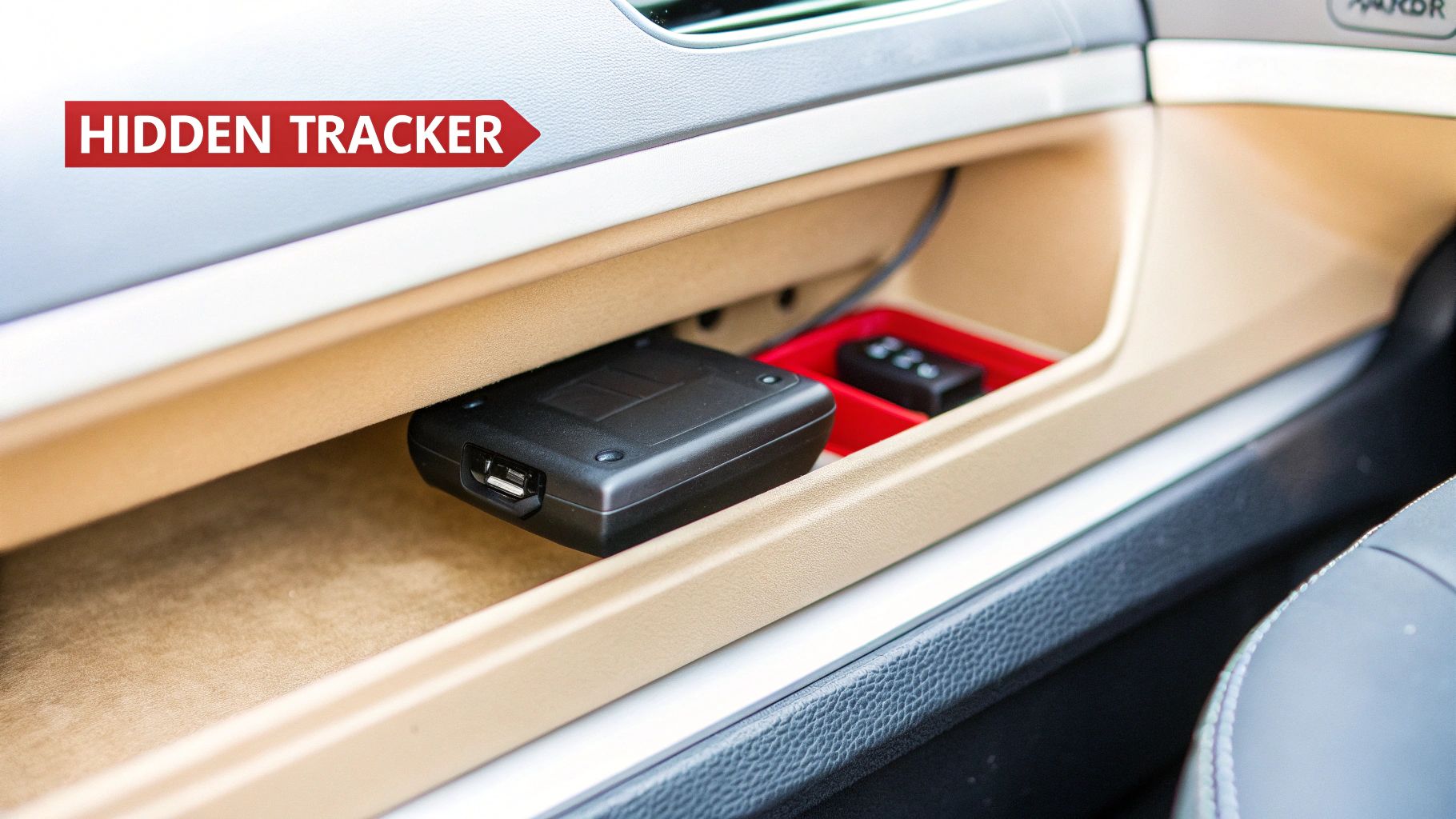
The placement of your tracker is as critical as its wiring. A GPS tracker that a thief can find in seconds is entirely ineffective. The objective of a covert installation is to place the device where a criminal, operating under pressure and time constraints, will not think to look. This involves finding the optimal balance between concealment and performance.
A poorly chosen location can render the tracker useless. A thief could disable it in moments, or its signal could be blocked by metal, turning it into a non-functional piece of plastic. You must anticipate a thief's actions and avoid obvious hiding spots.
Prime Locations for Covert Installation
Your main goal is to find a location with minimal metal obstruction that is still deeply integrated within the car's interior. Metal acts as a Faraday cage, blocking the GPS signals your tracker needs to determine its position.
Through extensive professional experience, we have identified several locations that work effectively in most vehicles:
- High Up Under the Dashboard: This is a classic for good reason. Tucking the tracker behind the instrument cluster or deep within the glove box area makes it extremely difficult to access quickly. This position often provides a clear view of the sky through the non-metallic windshield.
- Inside an A-Pillar or C-Pillar: The plastic trim panels along your vehicle's front and rear pillars are often hollow. They provide a perfect cavity to conceal a small tracker, keeping it high in the vehicle for a strong signal.
- Within the Center Console: Many center consoles contain surprisingly deep, unused spaces. As long as it is not completely enclosed by a metal frame, this can be an excellent hiding place.
A significant amateur error is hiding a tracker in the engine bay. The extreme heat can destroy the device's sensitive electronics, and the massive metal hood and engine block will almost certainly block any GPS signal. It's the worst of both worlds.
Wireless vs. Wired Placement Considerations
The GPS tracker market is booming. The commercial vehicle segment alone was valued around USD 818 million and is projected to reach nearly USD 1.4 billion by 2032. While hardwired trackers still constitute about 62% of the market, the flexibility of wireless, battery-powered options is making them increasingly popular for certain applications.
Your choice between a wired or wireless unit directly impacts placement options. A hardwired tracker must be near a power source, which limits its potential locations. A battery-powered one, however, offers the freedom for more creative placement. Selecting the right spot is what transforms your tracker into a powerful car locator you can rely on when it matters most.
Bringing Your Tracker Online and Configuring Alerts
With the physical installation complete, the final step is to activate your new security system.
Carefully reconnect the negative terminal to your vehicle's battery. The CarLock tracker should power up automatically. You will likely see a small LED indicator blink as it acquires its first connection to GPS satellites and the cellular network.
This initial power-up serves as a system check. If the device shows no signs of life, pause and meticulously re-check your wiring. A solid, reliable connection to constant power and ground is the foundation for all subsequent functions.
Setting Up Your Mobile Command Center
With the tracker powered, the final piece is linking it to your smartphone. Navigate to your phone's app store, download the official CarLock app, and create an account. The app will provide step-by-step instructions for activating the device, which typically involves scanning a QR code or entering the unique ID number printed on the tracker.
This application is now your primary interface for vehicle security. It is highly recommended to spend a few minutes exploring the full range of CarLock app features, from real-time location tracking to reviewing detailed trip logs.
Pro Tip: Do not assume the system is working correctly. Before finishing, take the vehicle for a short drive around the block while monitoring the app on your phone. Confirm that the location updates accurately and smoothly on the map. This simple test provides verification that the entire system is configured correctly.
Fine-Tuning Your Security Alerts
The true power of a modern tracker like CarLock lies in its instant notifications. This is where you customize the system to match your specific security needs.
Here are the key alerts to configure immediately:
- Geofencing: This feature allows you to create virtual perimeters around important locations like your home, office, or a parking garage. You will receive an immediate alert if your vehicle crosses this boundary without authorization.
- Motion and Vibration Alerts: This is your first line of defense against break-ins or towing. The tracker's sensitive internal accelerometer detects unusual vibrations or movement and notifies you instantly.
- Engine Start Notifications: This is the most critical alert. You will be notified the moment your car's ignition is turned on, giving you a crucial head-start to alert authorities in the event of a theft.
We Get a Lot of Questions About GPS Tracker Installation
Even with a detailed guide, questions often arise during a hands-on GPS tracker installation. Let's address some of the most common inquiries to ensure you can complete the job with confidence.
One of the primary concerns is battery drain. A professionally engineered tracker is designed for extremely low power consumption, especially when the vehicle is parked. High-quality units feature a "sleep mode" that activates when the vehicle is stationary, drawing a negligible amount of current (typically less than 10 milliamps) that a healthy car battery will not notice.
Another frequent question is about the best place to hide the tracker. You're looking for that perfect spot that balances being well-hidden with getting a clear signal. Think high up under the dashboard or tucked away inside a plastic A-pillar trim—places a thief in a rush is going to completely miss.
Is a DIY Install Always the Right Move?
If you are comfortable with basic automotive wiring and proficient with a multimeter, installing a tracker yourself can be a satisfying project. However, for modern vehicles with complex CAN bus systems and sensitive electronics, professional installation is the smarter—and safer—choice to avoid costly damage.
While this article focuses on cars, the fundamental principles of installation are largely universal. For broader insights, you might check out a general installation guide.
This growing interest in getting the details right is why the demand for these devices is absolutely skyrocketing. The global GPS tracking device market was valued at USD 3.74 billion and is projected to reach nearly USD 10.88 billion by 2033. North America currently dominates the market, driven by a strong focus on vehicle security and fleet management. You can dig into more details in this GPS tracking device market report.
Secure your vehicle with the industry's leading real-time GPS tracker. CarLock provides instant alerts for unauthorized movement, engine starts, and vibrations, giving you complete peace of mind. Protect your car today with CarLock.