

Driver’s Desk
Vehicle Tracking System Market: 2026 Analysis & Forecasts
The vehicle tracking system market no longer belongs in the “car gadget” category. It's now a large, durable industry. Market Research Future estimated the market at USD 25.83 billion in 2024 and projected it to reach USD 92.92 billion by 2035, with a 12.34% CAGR from 2025 to 2035 in its vehicle tracking system market forecast. That scale changes how product owners, security vendors, and fleet operators should think about the category.
The headline isn't just growth. It's the market's center of gravity. Buyers increasingly want connected systems that report location, movement, and risk in time to act, not alarms that only describe what already happened. That distinction matters in security, where the wrong product category can create a false sense of protection.
For vehicle owners trying to explore advanced vehicle security, the market's expansion is a sign that protection has moved beyond sirens and immobilizers. For vendors building products in this space, it means competition is no longer about shipping a tracker. It's about solving a specific operational or security problem clearly enough that buyers understand why a dedicated car security system differs from a generic location tag.
The Rapidly Expanding World of Vehicle Security
Vehicle security has become a software, connectivity, and response problem. That is the shift behind the market numbers. A larger market doesn't just mean more devices sold. It means more buyers now expect a vehicle to be visible after it leaves the driveway, after it enters a parking structure, and after someone moves it without permission.
Traditional anti-theft products still have a role, but their logic is reactive. They deter, they warn, and they sometimes slow down an attacker. Connected tracking systems change the timing. They give owners and operators information while an event is unfolding, which is why the category has moved into mainstream consumer, fleet, and insurance discussions.
Why the market matters beyond investors
For stakeholders in security, the growth story points to a practical reality. More demand is flowing toward tools that combine location, alerting, and trip visibility in one system. That pushes the conversation away from “Do I need tracking?” and toward “What kind of tracking fits my risk?”
Three buyer groups now shape the market in different ways:
- Private owners: They want theft visibility, tamper awareness, and confidence that a vehicle can still be found after it moves.
- Parents and households: They care about where a car went, who drove it, and whether behavior looked normal.
- Fleet operators and small businesses: They need oversight, route awareness, and evidence they can act on.
Security buyers don't purchase “tracking” in the abstract. They purchase response time, visibility, and peace of mind.
That's why the vehicle tracking system market has become strategically important for security vendors. The category is broad, but buyer expectations are getting sharper.
Understanding the Technology Driving Market Growth
The most important technical distinction in this market isn't brand. It's active versus passive tracking.
Grand View Research's market analysis describes a category where active systems dominate because they deliver real-time data, while passive systems still matter for buyers who prefer lower cost and don't need immediate feedback in its vehicle tracking systems market overview. That single distinction explains much of the market's product design, pricing, and customer confusion.
How active systems work
An active system combines three layers.
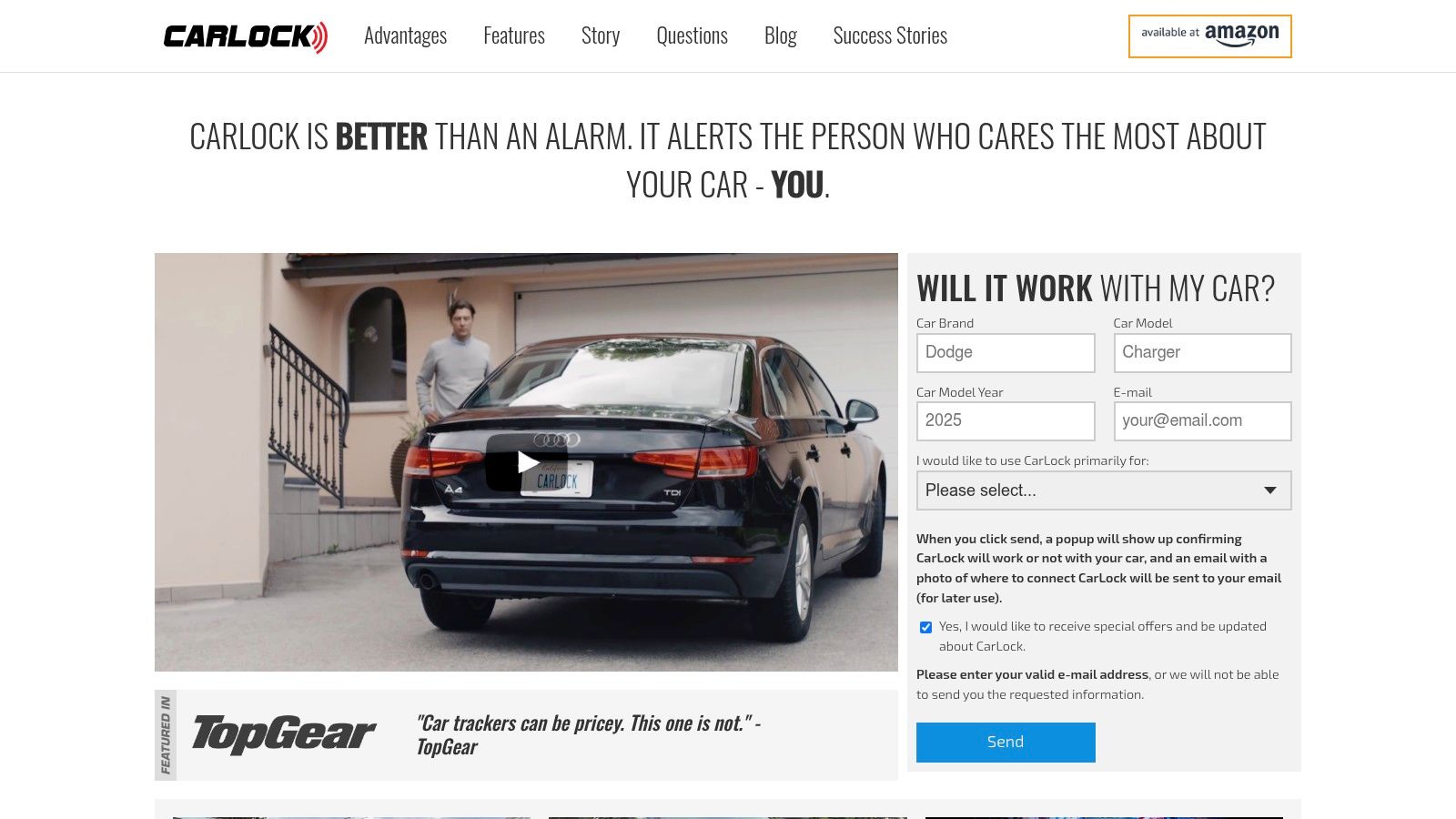
First, GPS determines where the vehicle is. Second, cellular or satellite connectivity sends that information out of the vehicle. Third, a cloud platform receives, stores, and turns that data into alerts, trip history, and map views for the user. If you want a practical explanation of how that live model works in everyday use, this primer on real-time car tracking is a helpful non-technical reference.
That architecture matters because security depends on transmission, not just location capture. A tracker that knows where the car is but can't report it in time doesn't solve the same problem as one that can push alerts and route data to a phone or dashboard through cloud-connected tracking features.
Why passive products still exist
Passive systems usually store route or location logs for later retrieval. They can be useful when a buyer wants delayed reporting, route verification, or a lower-cost setup. In some cases, that's enough.
But passive logging is weak for anti-theft scenarios. If a vehicle is moved, towed, or taken, the owner often needs to know during the event, not after the device is physically recovered and downloaded.
A simpler way to frame it is this:
| Tracking type | What it does well | Where it falls short |
|---|---|---|
| Active tracking | Live location, alerts, theft response, fleet oversight | Ongoing connectivity and service requirements |
| Passive tracking | Lower-cost route history, delayed review | Limited usefulness for immediate intervention |
Why security vendors need to clarify category boundaries
A lot of market content lumps professional vehicle security tools together with general-purpose item finders. That creates bad buying decisions. A dedicated vehicle security system is designed around continuous awareness, tamper visibility, and remote reporting. An item finder is designed around locating belongings within a broader device ecosystem.
Practical rule: If the buyer's question is “Can I find my car after someone takes it?”, active connected tracking belongs in the shortlist. If the question is “Can I review where this vehicle went later?”, passive options may still fit.
For product owners, that's not a messaging detail. It's core positioning. The vehicle tracking system market includes multiple jobs to be done, and vendors that fail to separate them end up competing on price with products that solve a different problem.
Global Market Size and Growth Forecast
USD 25.83 billion in 2024, with projections reaching USD 92.92 billion by 2035. As noted earlier in the article, that forecast implies sustained double-digit expansion over a long planning cycle, which matters more than any single market-sizing model. For product owners and security vendors, the signal is straightforward. Vehicle tracking is shifting from a discretionary add-on into a recurring data service attached to security, operations, and insurance workflows.
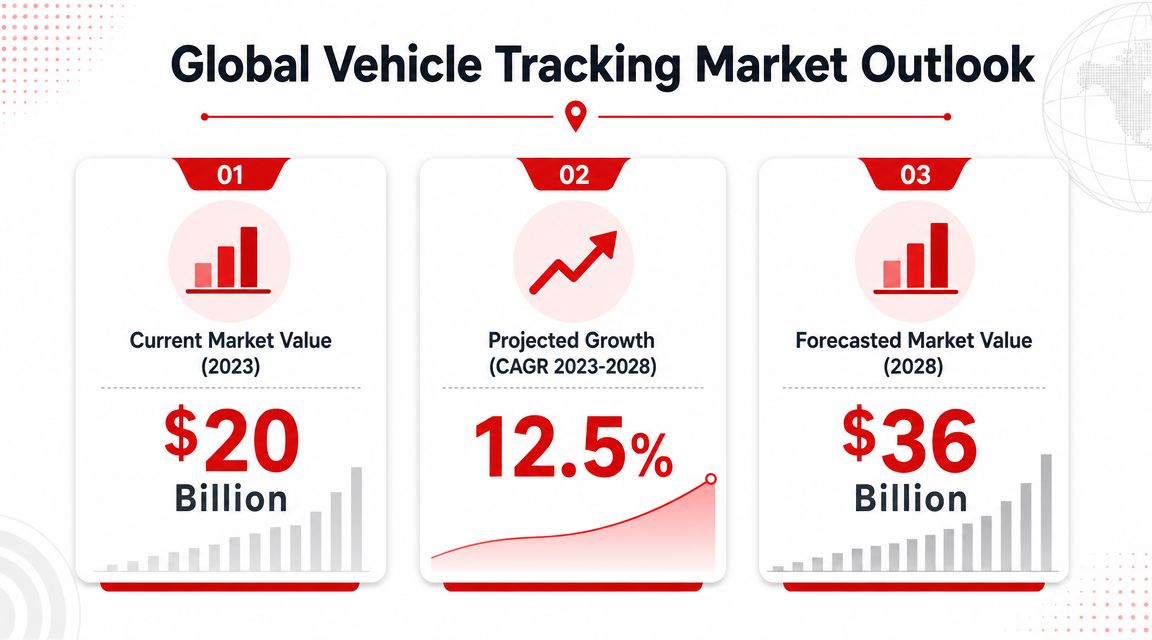
The more useful interpretation of this forecast is not "the category is getting bigger." It is that several buyer groups are now funding the same core infrastructure for different reasons. Fleets want persistent visibility. Consumers want theft alerts and recovery support. Insurers and mobility platforms want verified trip and driver data. That shared demand base usually produces durable market growth because vendors are not dependent on one narrow use case.
That dynamic also changes competition. As spending rises, the market tends to split into clearer product classes rather than converge into one universal solution. A professional security platform built for live alerts, tamper detection, and remote monitoring serves a different purchase decision than a low-cost tracker used mainly for later route review. Product teams that ignore that distinction often dilute their roadmap and pricing. Teams that define the job clearly can defend margins.
For vendors in the security segment, specialization is not a constraint. It is a positioning advantage.
One practical implication is portfolio design. Companies offering car tracking tools should decide early whether the product is being bought to reduce theft losses, support fleet control, document driver behavior, or combine those functions in a deliberate way. Each path requires different alert logic, retention policies, support expectations, and channel partners.
Growth forecasts also suggest a harder truth. A larger market attracts more low-cost entrants, including products that appear similar in search results but solve a different problem in practice. That is especially relevant in vehicle security, where passive item trackers and professional connected systems are still grouped together too often. For security vendors, the opportunity is not just to sell tracking. It is to explain why real-time reporting, tamper awareness, and incident response produce a different outcome than delayed-location tools.
The companies most likely to benefit from the next phase of market growth are the ones that treat market expansion as permission to focus. Wide demand does not reward vague positioning for long. It rewards products that map cleanly to a defined risk, user, and response workflow.
Key Growth Drivers and Market Restraints
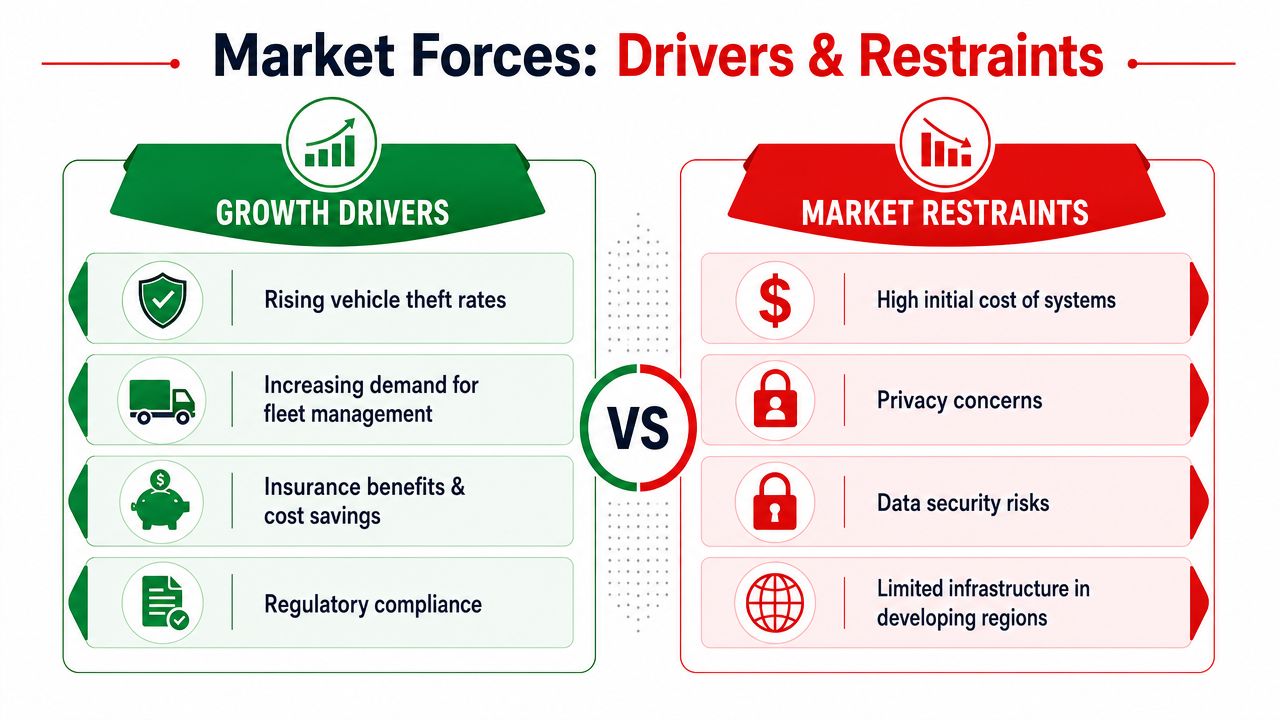
The vehicle tracking system market is expanding because connected visibility solves several problems at once. Security is one driver, but it isn't the only one. The same infrastructure that helps an owner locate a stolen vehicle can also help a fleet manager monitor routes, a parent review driving behavior, or an insurer support telematics-based programs.
That overlap is one reason the category keeps widening. Tracking systems aren't sold only as anti-theft products anymore. They're sold as operating tools.
What's pushing demand forward
Several forces reinforce each other.
- Security needs: Vehicle owners want more than an audible alarm. They want awareness when a car moves, starts, or behaves abnormally.
- Fleet efficiency: Commercial operators use tracking to reduce uncertainty around where vehicles are and how they're being used.
- Connected-car expectations: Buyers increasingly assume that a modern vehicle service should include live data, remote visibility, and app-based access.
- Insurance and driver oversight: Tracking data can support behavior monitoring and create a record of trips and events.
These drivers don't all point to the same product. That matters. Security-first buyers care about immediacy and alerts. Operational buyers often care about dashboards, logs, and visibility across multiple vehicles. Vendors that blur those needs together often produce weak product messaging and bloated feature sets.
The underappreciated market restraint
The strongest restraint isn't always demand. It's connectivity economics.
Analog Devices highlights a key issue in its discussion of vehicle tracking technology: active trackers depend on cellular or satellite transmission, and coverage can weaken in rural areas, underground garages, or across borders in its technical analysis of vehicle tracking connectivity. That creates a real gap between product promise and field conditions.
This point deserves more attention than it usually gets. Security products are judged hardest at the exact moment infrastructure is least reliable.
Why this matters for product design
A security vendor can't market “always-on awareness” as a simple binary. Real-world performance depends on where the vehicle is parked, where it travels, and what network conditions apply.
That has direct consequences for design and customer education:
| Constraint | Product implication |
|---|---|
| Coverage gaps | Alert timing and map updates may vary by environment |
| Subscription sensitivity | Buyers compare ongoing value against monthly service costs |
| Installation friction | Easier deployment broadens the addressable market |
| Expectation mismatch | Clear onboarding reduces disappointment and support load |
What stakeholders should do with this insight
Product owners should build around the hard moments, not the ideal demo. That means better alert logic, clearer communication about network dependence, and user experiences that explain what happened when reporting is delayed.
Security vendors should also emphasize awareness features that remain useful before and after a location gap. A buyer may still value motion alerts, trip history, battery-related warnings, or tamper notifications accessed through a system focused on vehicle awareness and event monitoring, even if continuous reporting isn't perfect in every environment.
Buyers forgive limits more easily than surprises. They react badly when a product is sold as universal and behaves conditionally.
The market will keep growing, but product trust will increasingly depend on how transparently vendors handle edge conditions.
Market Segmentation A Deep Dive
The vehicle tracking system market isn't one buyer pool. It's a collection of overlapping segments with different economics, urgency levels, and product expectations.
Coherent Market Insights projected North America to hold 33.3% of global revenue in 2025, the passenger vehicle segment to account for 44.2% of the market in 2026, and reported that GPS/satellite technology held 49.8% of the market in 2022 in its vehicle tracking market segmentation analysis. Those figures point to a market grounded in connected, live location services, but they also reveal where demand is concentrated.
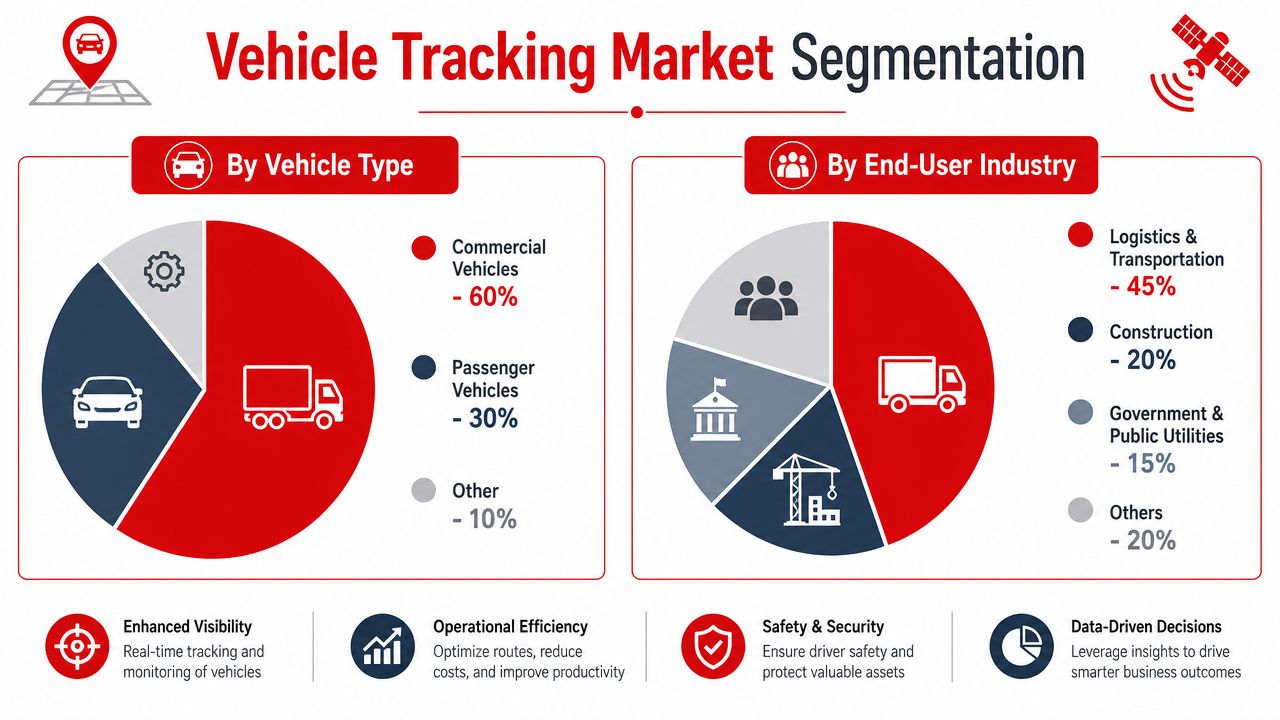
Passenger and commercial buyers don't purchase for the same reason
The projected 44.2% share for passenger vehicles in 2026 is easy to misread. It doesn't mean consumer demand works like fleet demand. It means connected tracking has become relevant well beyond enterprise operations.
Passenger vehicle buyers often want:
- Theft recovery support
- Teen driver oversight
- Trip visibility
- Tamper awareness
- Vehicle status signals, including items related to vehicle health monitoring
Commercial buyers often focus elsewhere. They need oversight across multiple vehicles, repeatable reporting, and operational consistency. The same GPS feed serves both groups, but the product layer above it differs sharply.
The technology mix says more than the category labels
The 49.8% share for GPS/satellite technology in 2022 shows why this market is structurally different from proximity-based item finding. The category is anchored in systems designed to know where a vehicle is over distance, not only when another nearby device helps detect it.
That distinction matters most when vendors position “tracking” as if every product form solves the same problem. It doesn't. The market's technology mix shows that live geolocation remains central because buyers continue to value visibility that travels with the vehicle.
Regional concentration has strategic consequences
North America's projected 33.3% revenue share in 2025 tells vendors where mature demand is concentrated, but it also hints at uneven adoption conditions elsewhere. Regional opportunity isn't only about market size. It's also about network reliability, installation habits, consumer trust, and local security concerns.
A simple way to interpret the segmentation is below:
| Segment lens | What the data suggests | Strategic takeaway |
|---|---|---|
| Region | North America holds a large share | Mature channels and buyer familiarity matter |
| Vehicle type | Passenger vehicles represent a major segment | Consumer security products have meaningful room to grow |
| Technology | GPS/satellite remains core | Dedicated tracking systems still define the category |
The most useful segmentation question isn't “Which segment is biggest?” It's “Which segment has a problem painful enough to justify continuous tracking?”
That's the lens security vendors should use. A market report can describe size, but only problem intensity explains product fit.
The Competitive Landscape and Key Players
Competition in the vehicle tracking system market doesn't break neatly by company size. It breaks by business model and problem definition.
One group competes in enterprise fleet management. These vendors sell broad platforms that combine tracking with dispatch, reporting, compliance workflows, and administrative controls. Their strength is operational depth. Their weakness, for some buyers, is complexity. A private owner trying to protect one vehicle usually doesn't want enterprise software logic.
A second group focuses on hardware-first tracking. These products often compete on price, installation simplicity, or basic map visibility. They can fit buyers who want route logs or lightweight oversight, but they may leave gaps around alert quality, tamper detection, and security-specific workflows.
Where consumer security brands sit
The third group includes consumer and small-business security products built around anti-theft awareness, motion alerts, trip monitoring, and event-driven notifications. This segment serves people who need fast, understandable information rather than fleet administration layers.
That's where category clarity matters most. A security-focused buyer doesn't just compare tracker against tracker. They compare:
- Dedicated vehicle security systems
- Low-cost loggers
- Bluetooth item finders
- Enterprise telematics platforms
Those aren't direct substitutes, even when they all use the language of tracking.
The strategic dividing lines
The strongest competitive differences usually appear in four places:
| Competitive axis | Low-cost tracker | Enterprise platform | Security-focused consumer tool |
|---|---|---|---|
| Primary promise | Basic location visibility | Fleet operations control | Theft and movement awareness |
| User type | Individual buyer | Fleet manager | Vehicle owner or small operator |
| Complexity | Lower | Higher | Moderate, app-centered |
| Decision trigger | Price | Operational oversight | Risk reduction |
A brand such as CarLock fits the third category. It's positioned around real-time GPS tracking, suspicious-activity alerts, trip history, and behavior awareness for vehicle owners and small fleets, rather than broad enterprise administration. That kind of positioning can be powerful because it avoids direct competition with fleet suites on one side and item-finder expectations on the other.
In this market, the clearest competitors often aren't the companies with similar technology. They're the products that shape a buyer's idea of what “tracking” means.
For vendors, the practical lesson is simple. Don't describe your product as a generic tracker. Define the decision context you're built for.
Future Opportunities and Strategic Recommendations
The next phase of the vehicle tracking system market won't be won by vendors who add the longest feature list. It will be won by those who reduce uncertainty for a clearly defined buyer.
The best opportunities sit where visibility has immediate value. Anti-theft response is one. Driver safety is another. Small-fleet oversight is a third. These use cases justify continuous monitoring because the data changes what the user can do in the moment.
Where product owners should focus
First, vendors should narrow their promise. A system designed for theft awareness should lead with movement alerts, tamper detection, and trip visibility. A fleet system should lead with oversight and operational control. Buyers reward relevance faster than breadth.
Second, companies should treat connectivity limits as a product problem, not a footnote. The vendors that explain network dependence clearly, design sensible fallback behavior, and set honest expectations will build stronger retention than those that oversell universal coverage.
Third, the interface matters more than many hardware-led companies assume. Tracking data only creates value when users can interpret it quickly. Clear alerts, readable history, and obvious event summaries are strategic assets, not cosmetic details.
What security vendors should avoid
Security brands shouldn't race to the bottom on price by collapsing the distinction between professional vehicle tracking and simple item finding. That move may widen the top of the funnel, but it weakens trust once buyers discover the products serve different purposes.
They also shouldn't assume that all growth in the vehicle tracking system market belongs to fleets. Passenger-vehicle demand remains significant, and many consumer buyers now expect connected awareness as part of normal ownership rather than as a specialist add-on.
The market is growing fast, but growth alone won't protect margins. Clear positioning, honest communication about real-world conditions, and disciplined focus on high-value use cases will.
If you're evaluating vehicle security options and want a system built around real-time GPS tracking, suspicious-activity alerts, trip history, and direct smartphone notifications, CARLOCK is one option to review alongside other dedicated vehicle security platforms. The key is to choose a product that matches your actual risk. Theft recovery, driver monitoring, fleet oversight, and delayed route logging are related needs, but they aren't the same need.