

Driver’s Desk
Tamper Detection Sensors Explained for Vehicle Security
You park in a familiar garage, lock the doors, and walk away. Later, you find the car shifted slightly, a door sitting unevenly, or a tracker that has stopped reporting. No siren sounded. No neighbor called. A thief may have pushed, jacked, towed, opened, or unplugged something without creating the kind of disturbance a traditional alarm recognizes.
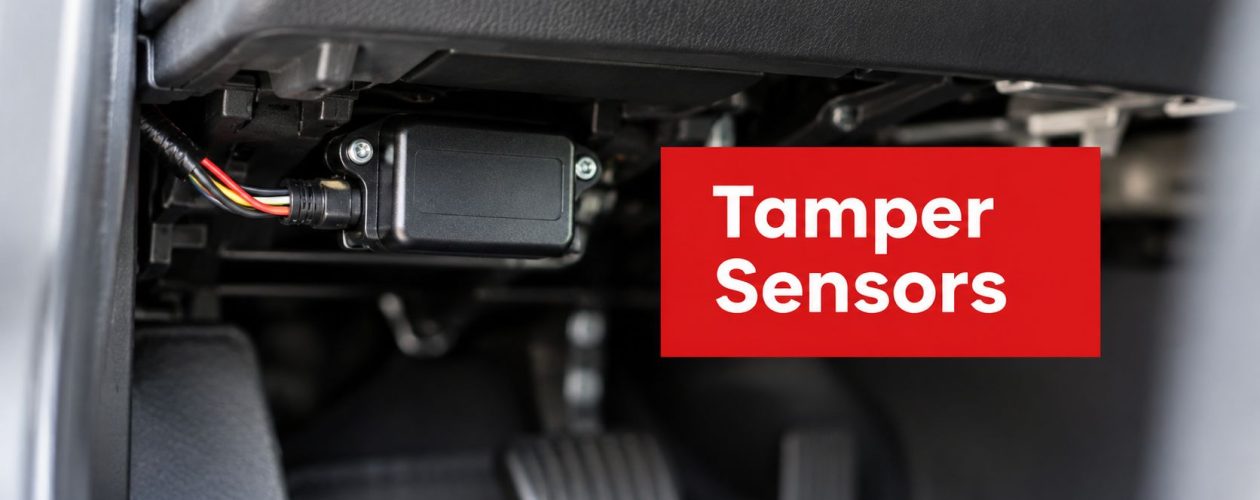
That's where tamper detection sensors become useful. They don't wait for a full break-in. They look for physical evidence that someone is interfering with the vehicle, then connect that event to an alert or protective response. For a car owner, that can mean knowing about suspicious activity while it's happening. For a fleet manager, it can mean distinguishing an authorized service visit from an unexplained movement or disconnection.

Introduction to Tamper Detection Sensors for Vehicle Owners
A conventional alarm mainly announces an event locally. That can help deter an intruder, but it doesn't necessarily tell you what happened, where the vehicle is, or whether the alarm was triggered by a genuine threat. If the siren is ignored, disconnected, or out of hearing range, the vehicle owner may learn about the incident only after returning to the car.
Tamper detection adds an earlier layer. A sensor can notice unusual vibration from drilling or prying, a change in angle caused by jacking or towing, a broken electrical connection, or the opening of a protected enclosure. The response might be a local alarm, a logged event, a smartphone notification, or a combination of these actions.
The practical difference: A loud alarm tells nearby people that something may be wrong. A connected tamper alert tells the person responsible for the vehicle what happened and gives them a chance to respond.
The technology isn't new. Publicly indexed patent records show practical tamper-related hardware activity by the late 1980s and 1990s, including a 1987 publication, a 1991 tamper detect monitoring device, a 1997 tamper detection device, and a 2000 patent covering tamper detection and prevention for object control and tracking systems. This progression, documented in the public patent record for tamper detection and monitoring, shows how the idea expanded from specialist hardware protection into wider asset security.
For vehicle owners, the subject matters because theft doesn't always begin with a broken window or an engine start. A person may target a tracker, interfere with wiring, lift the vehicle, or open a sensor enclosure. Understanding how those signals work helps you choose a setup that balances detection with sensible alert handling. A broader overview of connected protection is available in this vehicle security guide.
What Tamper Detection Sensors Are and Why They Matter
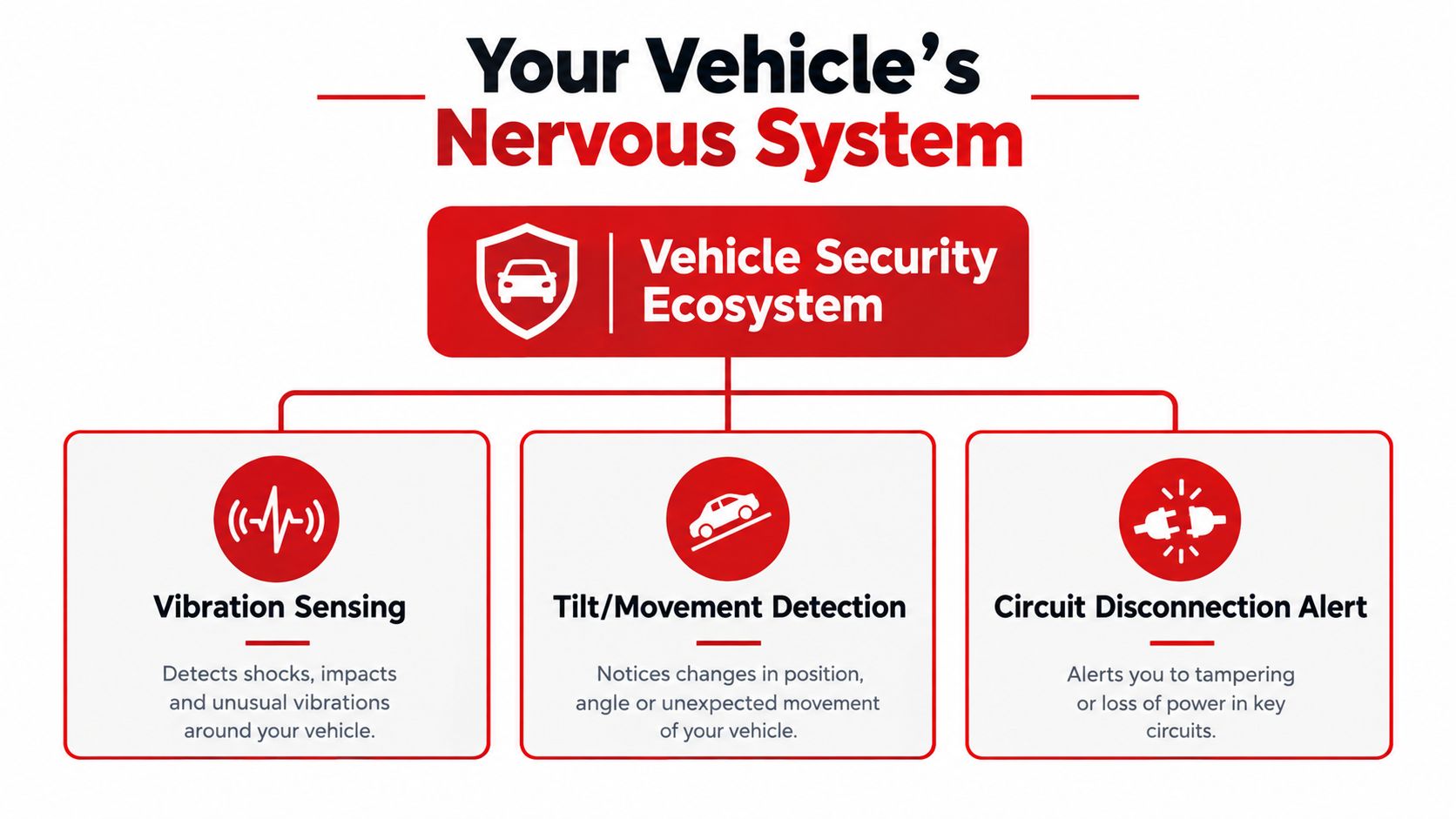
Think of a vehicle's security system as a nervous system. The brain is the software or control unit. The nerves are the sensors, wiring, and communication paths that carry evidence of something unusual. A hand touching a hot surface, a sudden change in balance, or a severed connection gives the system a different signal, just as a car sensor reacts differently to vibration, tilt, or power loss.
A tamper detection sensor looks for evidence of interference, not just evidence of driving. That evidence can include:
- Enclosure opening: A case, cover, door, hood, or protected module changes state.
- Component removal: A mounted sensor separates from its plate or its expected position.
- Abnormal vibration: Drilling, cutting, striking, pushing, bending, or similar force reaches the mounting surface.
- Tilt or movement: The vehicle's angle changes during jacking, towing, or wheel removal.
- Electrical change: Power disappears, wiring is cut, voltage becomes abnormal, or a device is disconnected.
- Environmental change: Light, temperature, or motion changes in a way that indicates interference.
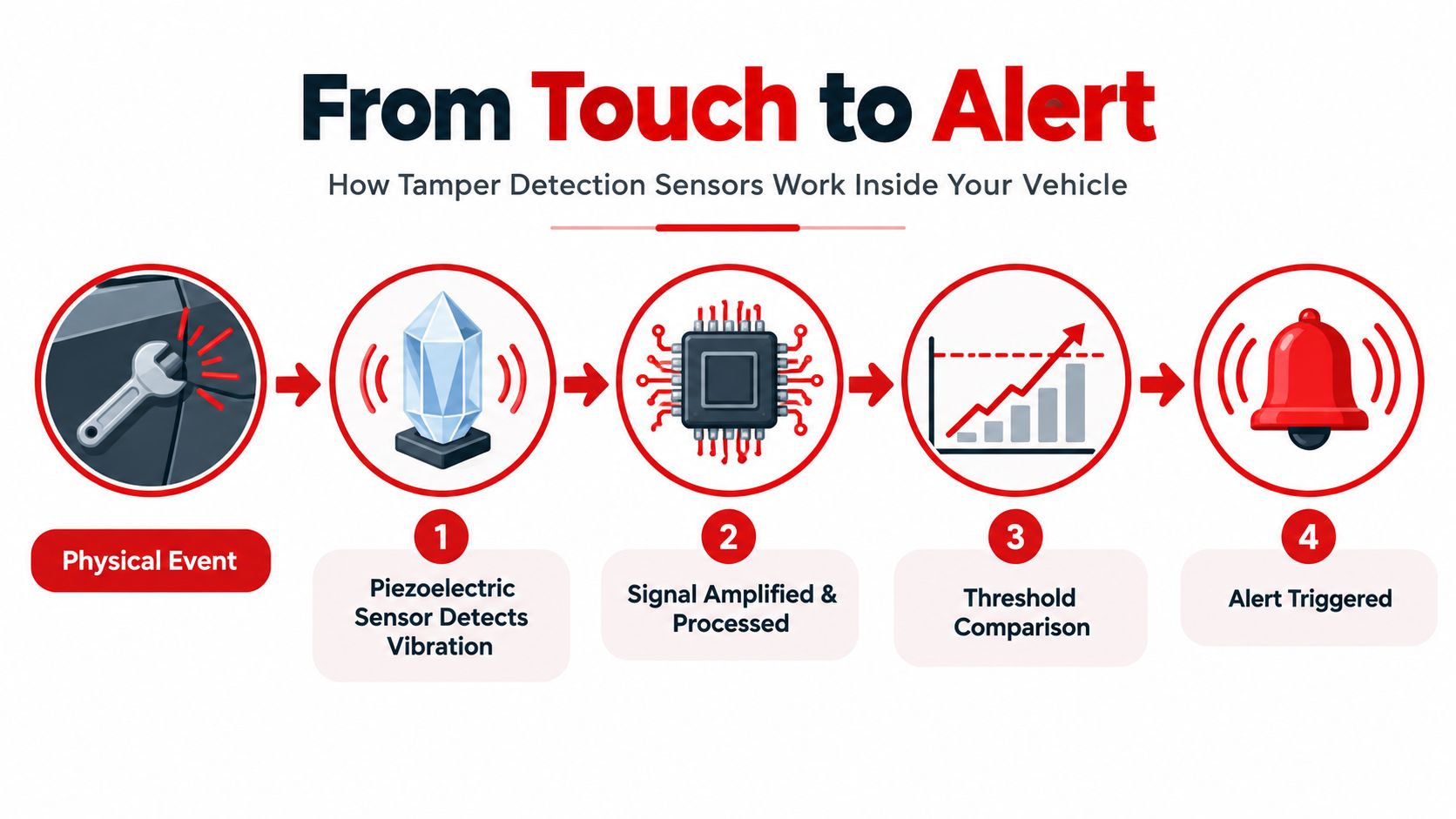
The sensor doesn't decide the entire security outcome by itself. It sends an event to a controller, which compares the signal with configured rules and then triggers an alert, records the event, disables a function, or sends information through a connected service.
Why standards make the concept more meaningful
Tamper detection has formal relevance beyond consumer alarms. ISO/IEC TS 30104:2015, published on 2015-05-15, documents physical security attacks, mitigation techniques, and security requirements for hardware cryptographic modules in its published technical specification. NIST SP 800-53 also includes SR-9, a control addressing tamper resistance and detection.
Commercial solutions may be designed to support high-assurance goals such as FIPS 140-2 Level 4, the highest level in that older framework. That level focuses on strong physical protection against unauthorized access and tampering. The same principle applies to a vehicle tracker or protected module. A security system becomes more useful when it can identify interference, preserve the event, and communicate it rather than merely making noise.
How Tamper Detection Sensors Work Inside Your Vehicle
The physics is easier to understand if you follow the path from an action to an alert. A person applies force, the sensor converts that physical change into a signal, electronics process it, and software decides whether the event crosses a configured threshold.
Vibration becomes an electrical signal
A piezoelectric sensor works somewhat like a tiny microphone attached to the vehicle's structure. When the surface vibrates, the piezoelectric material responds with an electrical signal. Software can then classify the signal according to its strength, duration, and pattern.
This makes piezoelectric sensing useful for structure-borne events. Drilling into a panel, cutting a bracket, striking a protected area, pushing against a door, bending a mounting point, or producing a sharp shock can create a recognizable vibration pattern. Commercial systems use adjustable thresholds so they can account for the surface and the local environment, as described in the Ajax Superior SeismoProtect G3 product description.
Sensitivity is a tradeoff. A detector set too low may react to passing vehicles, wind, construction, or routine maintenance. A detector set too high may ignore a real interference event.
Tilt and movement reveal lifting or towing
A tilt sensor or accelerometer tracks changes in orientation and movement. If someone raises one end of the vehicle, loads it onto a tow truck, or shifts it significantly while working on a wheel, the sensor can identify a change that a door contact may never see.
This signal needs context. Normal driving creates movement, so the system must distinguish a parked vehicle from a moving vehicle. A well-configured setup can treat a change while the car is secured and stationary differently from the same movement during an authorized trip.
Disconnection exposes interference with the security device
A tracker or security module may monitor its own power and connection state. If someone unplugs it, cuts its supply wires, or causes an abnormal voltage condition, the system can treat that loss as a tamper event. An attacker may try to silence tracking before moving the car.
Some systems also use a physical switch, light sensor, temperature monitor, or motion sensor inside an enclosure. Opening the case changes the condition being measured. In regulated vehicle applications, security requirements can go further. EU digital tachograph guidance requires tampering events to be detected and reported, while protecting the integrity of signals and data connected with systems such as OBD, emission controls, and odometer information, as set out in this anti-tampering and cybersecurity implementation document.
Magnetic contacts detect opening and removal
A magnetic or reed switch uses the relationship between a magnet and a sensing element. When the door, hood, or cover moves away from its expected position, the magnetic field changes and the circuit changes state.
Hall-effect sensors offer a more flexible magnetic approach. High sensitivity, omnipolar response, and high dynamic range help address an attacker using a strong external magnet from different angles. Vertical Hall technology is recommended for exposed devices such as meters, locks, and vehicle modules because it can detect magnetic interference regardless of polarity or axis, as explained in this technical discussion of vertical Hall tamper detection.
For a visual explanation of the event path, this embedded video provides an additional demonstration:
Vehicle data and connected monitoring can also provide context around these events. Device status information, power changes, and other indicators can be reviewed through vehicle health monitoring features.
Types of Tamper Detection Sensors Compared
No single sensor covers every physical attack. Vibration sensing can notice force applied to a panel, but it may not identify a slow power interruption. A tilt sensor can recognize lifting, but it won't necessarily know that someone opened a device case. Most dependable vehicle setups combine sensing methods according to the vehicle, installation point, and likely threat.
| Sensor Type | What It Detects | Best Vehicle Use | Key Consideration |
|---|---|---|---|
| Vibration or piezoelectric | Structure-borne shocks, drilling, cutting, pushing, bending, and impact | Protecting panels, mounted devices, and vulnerable body areas | Thresholds must match the mounting surface and normal vibration environment |
| Tilt or accelerometer | Changes in vehicle angle, movement, jacking, or towing | Detecting lifting, wheel theft attempts, and unauthorized towing | Normal driving movement must be separated from parked-state events |
| Disconnect or power-loss | Unplugging, severed wiring, abnormal voltage, or device removal | Protecting hardwired trackers and security modules | The system needs a reliable power path and a clear response to loss of supply |
| Magnetic, reed, or Hall-effect | Opening, separation, magnetic interference, or cover movement | Doors, hoods, enclosures, locks, meters, and exposed modules | High sensitivity, omnipolar response, and dynamic range improve resistance to magnetic bypass |
Matching the sensor to the vehicle risk
A daily driver parked in a private garage may prioritize device disconnection and movement alerts. A vehicle left outside in a busy area may benefit from vibration and tilt detection because physical interference can happen before the engine starts. A fleet operator may need all of these signals, but the most important feature is often event clarity. The manager needs to know whether a unit moved, lost power, or experienced a physical alert during an assigned route.
Magnetic detection deserves special care. An external magnet can be applied from different distances and orientations, and magnetic field strength falls rapidly as separation increases. A sensor with narrow operating assumptions may miss an interference attempt from an unexpected side. This is why omnipolar and multi-axis behavior matters for exposed vehicle modules.
Vibration sensors also require judgment. A detector that reacts to every bump may become an operational burden, while one that ignores low-level interference loses value. Adjustable thresholds and installation-specific calibration let the owner define what counts as suspicious without treating every road surface or nearby maintenance task as an attack.
The right question isn't “Which sensor is strongest?” It's “Which physical event do I need to detect, and what normal activity could look similar?”
Real World Use Cases and Integration With GPS Trackers Like CarLock
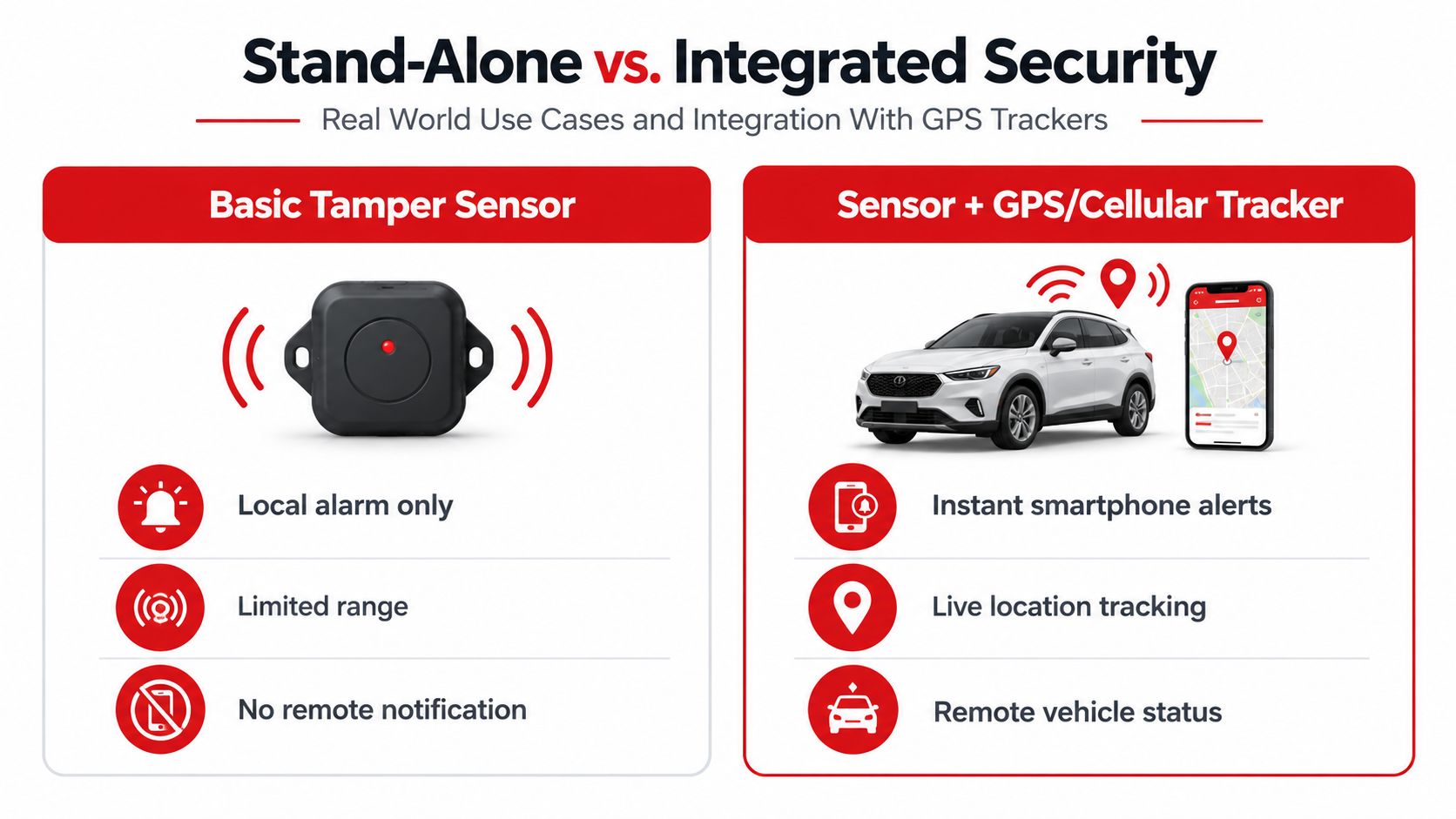
A stand-alone sensor can detect a physical event, but its usefulness depends on what happens next. If it only activates a siren, the owner may be too far away to hear it. If it sends an event through a connected GPS and cellular system, the owner can receive a notification and examine the vehicle's current status and location.
A daily driver in a public car park
A thief may rock the vehicle, attempt to tow it, interfere with a mounted device, or start the engine. A local alarm may alert people nearby, but the owner still lacks immediate information about the event. With connected reporting, a movement or tamper notification can prompt the owner to check the app, confirm the location, and decide whether to contact building security or law enforcement.
GPS and cellular connectivity also solve a limitation found in nearby-device tracking. Bluetooth finders depend on compatible nearby devices to relay location, while a vehicle-focused system communicates through cellular networks and receives positioning information from GPS satellites. Owners comparing these approaches can use this practical guide to key fob trackers to understand why an item finder and a vehicle security system serve different purposes.
A parent monitoring an authorized driver
Parents may want to know whether a teenager started the engine, moved the car unexpectedly, or took a route that requires attention. Tamper detection adds another layer by flagging interference with the security hardware itself. Trip history then helps place the alert in context, such as a normal departure, a mechanic visit, or movement while the vehicle should have remained parked.
The value comes from combining signals rather than treating one event as proof of theft. A vibration alert followed by movement and an engine-start notification is more actionable than a vague local sound. The owner can review the sequence and respond to the actual situation.
A fleet manager protecting vans and trucks
A fleet manager may face several different scenarios. A vehicle can be towed without an engine start, a tracker can be unplugged before the vehicle moves, or a technician can legitimately access a protected area. Connected reporting creates a record that can be matched against work orders, driver assignments, and trip history.
CarLock monitors vehicle movement, engine starts, unusual vibration or towing activity, device disconnection, and battery drain, with smartphone alerts and trip history available through its connected service. Its relevant vehicle security features illustrate the broader design principle: detection identifies the event, while live reporting supplies the context and location.
A loud alarm still has a role as a deterrent. It shouldn't be the only response path when a vehicle may be moved beyond earshot. Sensor data paired with remote communication gives the owner a direct line to the incident.
Installation Placement and False Alarm Prevention
A sensor can be technically capable and still perform poorly if it's mounted on a loose, flexible, or unsuitable surface. Installation determines what the device feels. A piezoelectric sensor fixed to a rigid structural area receives clearer vibration than one attached to a trim panel that rattles during ordinary driving.
Start with the event you need to detect. For vibration, choose a firm mounting point close to the protected area. For tilt, secure the sensor so its orientation remains stable and follow the manufacturer's directional requirements. For magnetic contacts, keep the magnet and sensing element aligned during normal operation, then confirm that the expected opening or separation creates a clear state change.
A practical setup check
- Inspect the mounting surface. Remove dirt, moisture, and loose material before attaching the sensor.
- Confirm mechanical fit. A device that can shift, rattle, or briefly separate may create alerts unrelated to an intrusion.
- Check the orientation. Tilt and magnetic sensors depend on how they sit relative to the vehicle and the protected cover.
- Verify power and wiring. Route connections so ordinary service work won't pull on them, and confirm that a deliberate disconnection produces the expected event.
- Test normal activity. Lock the vehicle, close doors and the hood, drive over familiar surfaces, and observe whether alerts match the intended parked-state behavior.
- Tune gradually. Increase sensitivity only when the sensor misses a meaningful event. Don't begin with the most sensitive setting.
A short separation can be enough. Independent sensor documentation notes that even brief separation from a mounting plate may trigger a tamper alert. If alerts repeat while the device appears secure, check the fit and the device identifier before assuming an intrusion, as described in this tamper alert troubleshooting guidance.
Daily driving creates unavoidable vibration. Nearby construction, wind, passing vehicles, and maintenance work can also reach the vehicle structure. Piezoelectric systems are therefore tuned against the installation's ambient vibration profile, rather than treated as universal plug-and-play thresholds.
Vehicle security requirements can also demand resilience during power loss. EU cybersecurity clarifications for digital tachograph motion sensors state that a case-opening event should be detected even when external power is absent for a minimum of 6 months, and that the paired vehicle unit should be notified when physical tampering occurs, according to the EU motion sensor security clarification. Consumer installations may not follow that exact requirement, but it shows why power integrity and independent tamper paths deserve attention.
For a broader alarm layer, review the available car alarm options, then decide whether the system can report events remotely or only produce a local sound.
Choosing the Right Tamper Detection Setup for Your Needs
Choose sensors by starting with the vehicle's exposure, not the product label. A car parked on a public street may need vibration, tilt, and disconnect coverage. A family vehicle may place greater emphasis on movement, engine-start context, and trip history. A work fleet may need reliable power-loss reporting, clear event records, and remote visibility across several vehicles.
The physical installation also determines the sensible sensitivity level. A rigid mounting point and a stable enclosure support clearer readings. A loose panel, exposed wiring, or poorly aligned magnetic contact can produce false alerts or leave gaps. Ask the installer or supplier how the system handles brief separation, power loss, case opening, and maintenance activity before you rely on it.
Data integrity matters as much as physical detection in regulated vehicle systems. EU vehicle-security rules require stored distance values to be protected against manipulation, showing that anti-tamper design can cover recorded information as well as the device exterior, as documented in this European vehicle-security implementation document. European inspection rules also state that interference with interior movement sensors must trigger the alarm, according to this vehicle security inspection standard.
A basic alarm can suit a low-risk vehicle where local deterrence is the main objective. An integrated system makes more sense when the owner needs remote notification, current location, device status, and a history of what happened. The CarLock mobile app features represent that connected approach, where alerts and vehicle information are available away from the car.
Audit your current setup today. Check whether it can detect vibration, tilt, opening, and disconnection, then ask whether it can tell you remotely when one of those events occurs. If the answer stops at a siren, the next upgrade should focus on reporting and context, not adding more noise.
CARLOCK combines vehicle tamper and disconnect monitoring with GPS and cellular reporting, so you can receive smartphone alerts when your vehicle moves, experiences suspicious vibration, or loses its security connection. Visit CARLOCK to review the connected vehicle security options and choose coverage that matches your car or fleet.