

Driver’s Desk
Truck Anti Theft Devices: What Actually Works
Electronic immobilizers helped drive vehicle theft down by around 40% in several countries after they were installed across about half of the vehicle fleet, according to research summarized in a UK government report. That result changes the central question for truck owners. The issue isn't whether a device has an alarm, an app, or a tracking map. It's whether the device stops unauthorized movement, or only helps locate the truck after someone has already taken it.
Truck anti theft devices sit on a spectrum from prevention to recovery. Immobilizers, kill switches, steering locks, and wheel clamps create barriers that can stop a thief from driving away. GPS trackers and telematics improve visibility and response after suspicious movement begins. A serious fleet-security plan needs both, but it shouldn't confuse the second category with the first.
The Prevention Versus Recovery Gap in Truck Security
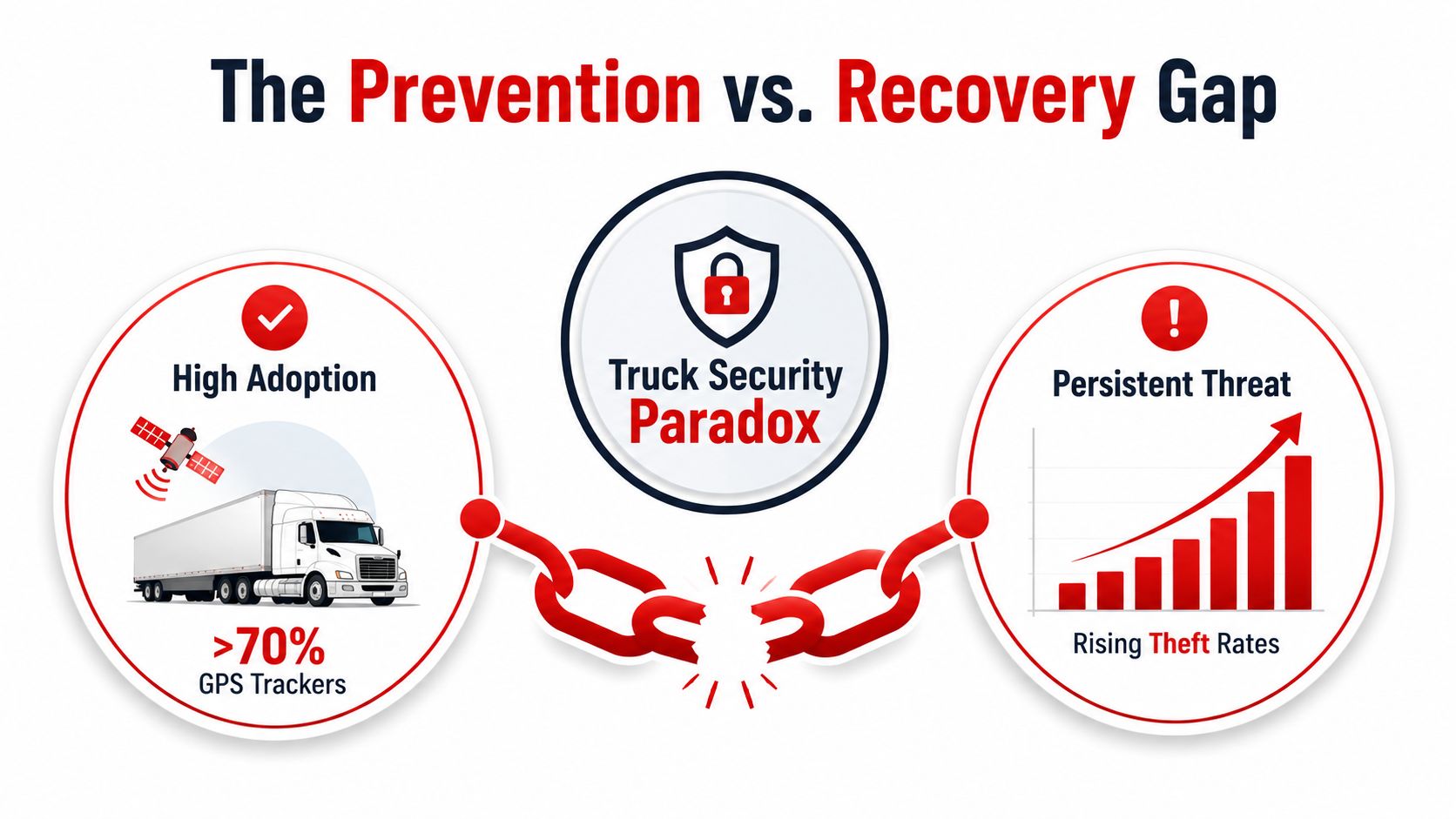
The UK's recent vehicle-security picture illustrates the problem. Only 10% of vehicles stolen in 2024 reportedly had trackers, while vehicle theft reached 121,825 in the year ending March 2025, according to figures summarized in NHTSA's vehicle-theft prevention guidance. The mismatch doesn't prove that trackers cause theft or that every untracked vehicle is vulnerable. It does show why adoption and prevention shouldn't be treated as the same measurement.
A tracker can transmit a truck's location, record movement, and support recovery. It generally doesn't stop a thief from opening the cab, starting the engine, or towing the vehicle unless it forms part of a broader system with an immobilization function. That distinction matters because recovery begins only after the theft event has already created operational disruption, police involvement, insurance exposure, and potential cargo loss.
Prevention and recovery solve different problems
Government guidance separates audible and visible deterrents, immobilizers, and vehicle recovery systems rather than treating them as interchangeable. Academic research reaches the same practical conclusion. Immobilizers change whether the vehicle can be started, while a tracker changes how much information the owner has after unauthorized movement.
A truck locator system belongs in the recovery and monitoring layer unless it also connects to a validated engine-interruption feature. It can help a manager identify movement outside an authorized area, but an alert isn't a physical barrier. A thief may still gain valuable time before anyone responds.
Practical rule: Measure every security purchase against one question. Does it make the theft harder, or does it make the aftermath easier to manage?
The strongest evidence favors layered protection. Electronic immobilizers contributed to about 43% of the total decline in UK vehicle theft from 1992 to 2013, equivalent to roughly 4 million fewer offenses over 20 years, according to a government review of vehicle crime. That history doesn't mean a truck receives the same protection from any aftermarket immobilizer. It does establish that blocking unauthorized engine starts can influence theft at population scale.
For fleet managers, the investment imbalance is often easy to spot. A connected dashboard may show exactly where a stolen truck is, while a missing immobilizer leaves the thief's first objective largely unchallenged. Prevention should anchor the system, with tracking retained as the safety net.
How Each Truck Anti Theft Device Category Works
The right device depends on the theft method it addresses. A product that blocks a relay attack won't necessarily stop towing, and an alarm that detects a door opening won't necessarily prevent a thief from starting the engine.
Immobilizers target unauthorized engine starts
An electronic immobilizer interrupts a critical control path, such as the engine control unit, fuel control unit, or ignition control unit. When armed, it prevents the start sequence from completing without the correct key or authorization. Transport Canada describes immobilizers as required on certain truck classes in Canada and links adoption after CMVSS 114 took effect in 2007 to a roughly 50% theft decline in the relevant vehicle context, as explained in its background on vehicle immobilizers.
US requirements provide another concrete reference. FMVSS 114 applies to trucks and multipurpose passenger vehicles with a gross vehicle weight rating of 10,000 pounds or less. It requires a key-locking mechanism that prevents starting and locks the steering, transmission, or both, plus a warning signal when the key remains in the ignition as the driver's door opens, according to FMVSS 114 information from NTEA.
The limitation is bypass technique. A passive keyless immobilizer may be exposed to a relay attack if the underlying authentication system allows an attacker to extend the key signal. An immobilizer with stronger authentication, a concealed secondary interruption, or a separate mechanical barrier reduces dependence on one electronic control path.
Physical locks create visible friction
A steering-wheel lock or column lock blocks physical steering control. It doesn't necessarily prevent the engine from starting, but it makes the truck visibly less convenient than an unprotected target. A wheel lock or clamp goes further for parked equipment by obstructing wheel rotation or movement, making brute-force removal, towing, or unauthorized driving more difficult.
These devices work best when the truck remains stationary for long periods. Their weakness is operational compliance. A driver must apply and remove them correctly, and a determined thief with time and tools may attack the lock itself.
Alarms attract attention, but attention varies
An alarm detects intrusion, impact, tilt, or other triggers and responds with a siren, lights, or a phone notification. Its main target is the break-in stage, not necessarily the completed start sequence. Government analysis found that alarms alone had only a marginal effect on reducing vehicle theft, with an SPF of 1.2, while their effect against theft from the vehicle was stronger at 1.5, according to the UK vehicle-security analysis.
A remote truck stop, isolated yard, or noisy industrial area reduces the value of an audible response. For installation and sensor-selection considerations, fleet operators can review this practical resource to secure your ride with an alarm. The alarm becomes more useful when it sends a verified alert to someone who can act.
Trackers and telematics add visibility
A GPS tracker transmits location data and can support geofencing, movement alerts, and trip history. It addresses the scenario in which the truck has moved without authorization, but its basic function remains recovery and monitoring rather than ignition prevention.
Telematics platforms can combine GPS, driver or vehicle data, geofencing, and, where supported, remote immobilization. Their limitation is system dependency. Cellular coverage, installation quality, power availability, account access, and response procedures all affect the result. A fleet that receives alerts but has no escalation plan has bought information without building a response.
| Device Category | Theft Method Blocked | Operating Principle | Primary Limitation |
|---|---|---|---|
| Electronic immobilizer | Unauthorized engine start and hot-wiring | Interrupts a critical control path until authorization is verified | May require additional protection against relay or diagnostic attacks |
| Steering or column lock | Unauthorized steering and opportunistic driving | Physically restricts steering movement | Visible and potentially removable with tools |
| Wheel lock or clamp | Drive-away theft and some towing attempts | Physically obstructs wheel movement | Requires regular manual use and storage |
| Alarm system | Break-in, impact, tilt, or tampering | Triggers sound, lights, or notifications | Bystanders may ignore alerts, especially in remote locations |
| GPS tracker | Delayed discovery and poor post-theft visibility | Sends location and movement data through connected services | Usually doesn't prevent the initial theft |
| Telematics platform | Unauthorized movement, with some systems also interrupting operation | Combines vehicle data, geofencing, alerts, and optional controls | Depends on connectivity, configuration, and active response |
Comparing Real World Effectiveness of Anti Theft Devices
Published evidence separates the devices that change theft probability from those that improve the owner's position afterward. In Australia, vehicles with Australian Standard immobilizers installed as original equipment recorded 29.1 thefts per 10,000 registrations, compared with 140.1 per 10,000 registrations for vehicles without an immobilizer, according to the peer-reviewed Potter and Thomas research. The difference is not a manufacturer promise. It's a measured contrast between protected and unprotected vehicles.
The same research line reported an average theft-rate reduction of 72% in one analysis period and a broader reduction of 46% across 1995 to 2008 after accounting for some displacement toward older vehicles. That caveat matters. When only part of a fleet is protected, offenders can redirect attention toward easier targets. A security program should therefore cover the vehicles most exposed to the same attack pattern, not just the most valuable unit.
Why combinations outperform isolated features
A review of vehicle-security devices found that vehicles with central locking and an electronic immobilizer, often combined with an alarm, were up to 25 times less likely to be stolen than vehicles without security. The Office of Justice Programs summary attributes the strongest outcomes to interaction between devices, not only to adding independent features.
That finding gives fleet buyers a better ranking method. A tracker can be valuable, but its prevention score remains limited when it doesn't interrupt movement. An alarm can create friction, but an immobilizer addresses the start sequence directly. A visible lock creates an immediate target-selection penalty, while the electronic layer remains useful if the thief defeats or ignores the visible one.
| Device Type | Prevention Effectiveness | Recovery Contribution | Combined Value Rating |
|---|---|---|---|
| Electronic immobilizer | High, because it blocks unauthorized starting | Low by itself | High |
| Steering lock or wheel clamp | Moderate as a visible physical barrier | None | Moderate to high when paired with immobilization |
| Alarm system | Low as a standalone theft-prevention tool | Moderate through alerts | Moderate when response is reliable |
| GPS tracker | Low for preventing initial theft | High for location visibility and recovery support | High when paired with prevention |
| Integrated telematics with immobilization | High when properly configured | High through monitoring and location data | Very high, subject to connectivity and response |
| Layered physical, electronic, and recovery system | Highest practical value because barriers cover different stages | High | Highest |
A fleet manager comparing a mid-range immobilizer plus a mechanical lock with a premium telematics subscription should judge the options by objective. For pure theft prevention, the first combination may offer more direct protection. The connected system becomes more compelling when fleet visibility, remote response, route oversight, and recovery all matter.
For independent reviews and product-specific validation, consult vehicle security reviews, but keep the evaluation anchored to the threat model. Feature density isn't the same as theft reduction.
Connected and AI Enabled Security for Modern Trucks
Electronic theft changes the value of traditional protection. A steering lock still blocks steering, but it doesn't identify an unauthorized key exchange, abnormal diagnostic activity, or a truck moving outside an approved operating window. Connected systems address those gaps by observing the vehicle and its environment rather than waiting for a visible break-in.
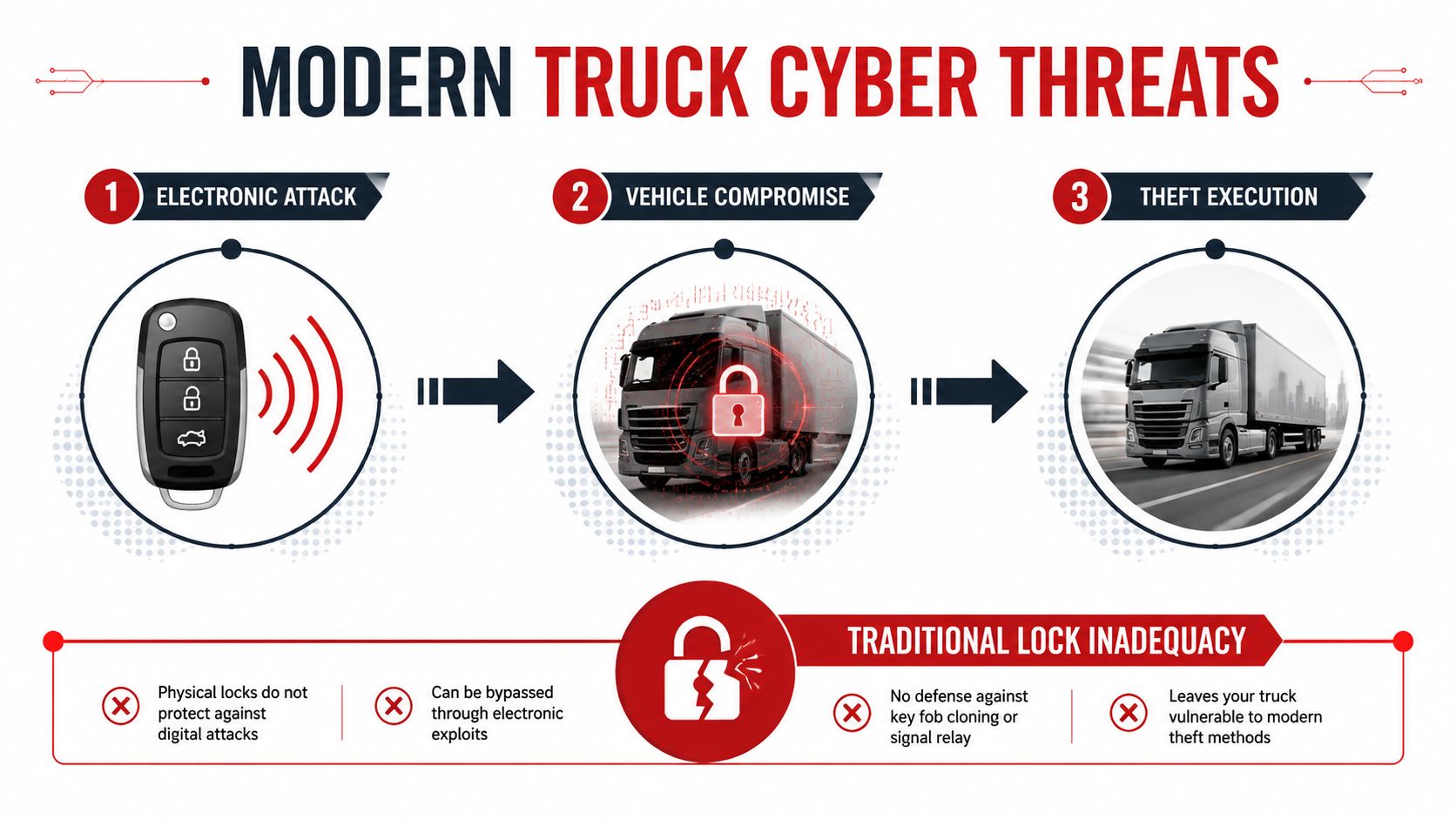
A cellular tracker with geofencing can alert a fleet manager when a truck leaves a depot during an unauthorized period. A more integrated platform may combine location, engine status, driver behavior, and a remote immobilization command. That creates a meaningful difference between detecting that a truck has gone and detecting a suspicious sequence early enough to interrupt movement.
Connected systems add context, not magic
The global vehicle anti-theft system market was valued at USD 13.6 billion in 2024 and is projected to reach USD 21.4 billion by 2030, while factory-fitted connected security is identified as a growth driver in the 2026 market report. The same report projects that about 66.7% of new passenger vehicles may integrate factory-fitted anti-theft systems by 2026. Those figures describe market direction, not proof that every connected product prevents truck theft.
Connected security becomes useful when the data leads to a defined action. For example, a truck starts outside approved hours, moves beyond a depot geofence, and generates an alert while the assigned driver is off duty. A manager can verify the event, contact the driver, and, where the hardware supports it, initiate an immobilization response. Without that workflow, AI-generated anomaly scores may produce more notifications without improving decisions.
Cloud databases, LTE or 4G connectivity, geofencing, and anomaly detection are moving security toward continuous monitoring, as discussed in the cloud GPS tracker features. Coverage remains a constraint in rural areas, underground parking, enclosed metal structures, and locations where cellular or satellite signals are weak. A connected system should therefore supplement, not replace, a physical and electronic barrier.
For operators reviewing camera visibility around loading areas, a practical guide to backup cameras for trucks can complement anti-theft planning. Cameras improve awareness and maneuvering visibility, but they shouldn't be classified as immobilization.
The subscription question is operational, not purely financial. Recurring connectivity may be justified for high-value assets, remote depots, and routes where rapid notification can limit loss. A one-time mechanical device may be more appropriate for a truck stored securely and operated predictably. The correct comparison is the cost of continuous monitoring against the consequences of delayed discovery, not against the purchase price of a clamp.
Choosing the Right Device for Your Risk Profile
A truck's risk profile comes from three variables: where it parks, how it operates, and what it carries. Treating every vehicle in a fleet identically can waste money on low-risk units while leaving high-exposure trucks without a meaningful prevention layer.
Start with the parking environment. A secured depot with controlled access lowers opportunistic exposure but doesn't eliminate insider risk, unauthorized use, or electronic attacks. A public lot or street parking creates more opportunity for observation, tampering, and drive-away theft. Remote parking also increases the time between an event and human intervention, which raises the value of both visible deterrence and immediate alerts.
Usage changes the practical choice. A long-haul fleet moves through varied parking environments and may need monitored telematics with geofencing and authorized-driver controls. A local-delivery truck returns to a known base, so the owner can emphasize depot controls, immobilization, and a defined after-hours alert policy. An owner-operator who parks in a locked garage may prefer a mechanical lock and a tracker, provided the security routine is followed consistently.
Match the layer to the exposure
Cargo value can override parking assumptions. A truck carrying high-value freight deserves layered electronic and mechanical protection even if it spends nights in a controlled facility. The vehicle itself isn't the only loss; unauthorized movement can expose cargo, schedules, customer relationships, and driver safety.
Use this decision table as a starting point, then adjust it after an installer inspects the truck's electrical architecture and operating routine.
| Risk Profile | Parking Environment | Recommended Primary Device | Recommended Secondary Device | Estimated Annual Cost |
|---|---|---|---|---|
| Lower exposure, single truck | Locked garage or controlled private yard | Steering lock or wheel clamp | GPS tracker with movement alerts | Obtain current installer and service quotes |
| Moderate exposure, local delivery | Public lot, mixed depot, or street parking | Electronic immobilizer | Visible steering lock plus alarm notification | Obtain current installer and service quotes |
| High exposure, long-haul fleet | Remote stops, public yards, and varied routes | Telematics-integrated immobilizer | Wheel or trailer barrier plus monitored tracking | Obtain current installer and service quotes |
| High-value cargo operation | Any environment, including secured depots | Layered immobilization and monitored telematics | Visible deterrent and independent recovery tracking | Obtain current installer and service quotes |
The cost column is deliberately quote-based. The verified evidence provides theft outcomes, not a universal installation or subscription price. Fleet managers should compare the full operating cost, including installation, recurring connectivity, maintenance, driver compliance, and response staffing.
For a connected security option that combines tracking and vehicle alerts, review the car security system against the same criteria. Don't select it because it has the longest feature list. Select it if it addresses the actual attack sequence and fits the team's response capability.
Building a Layered Truck Security Strategy
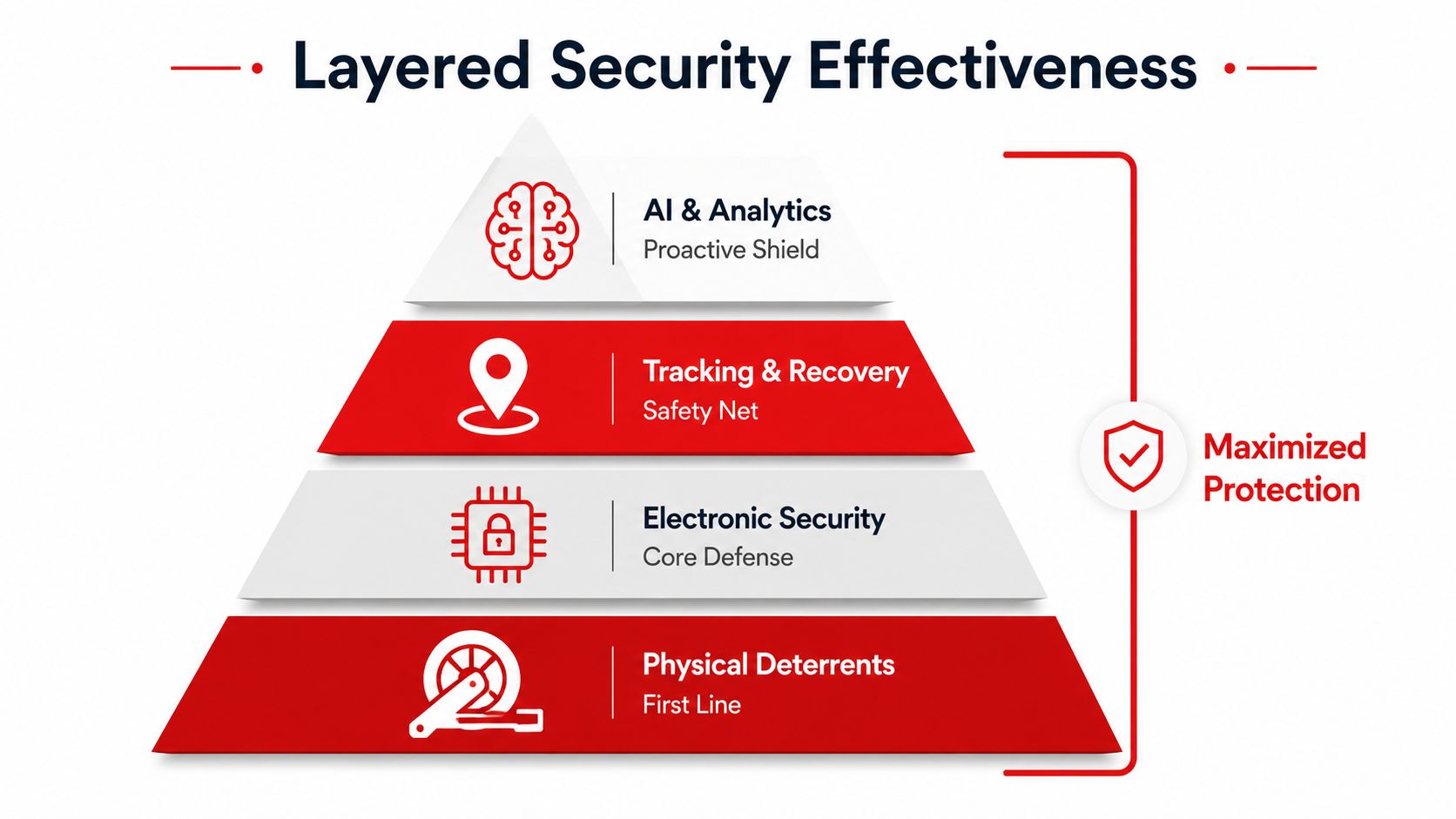
A thief doesn't face one abstract security score. They face a sequence of obstacles. The strongest truck anti theft devices force a choice at each stage: abandon the target because it looks difficult, fail to start it, or risk detection while bypassing multiple systems.
The first layer should be visible. A steering lock, wheel clamp, or related physical barrier signals that the truck won't be a quick opportunity. The second layer should interrupt operation through an electronic immobilizer or professionally installed kill switch. The third layer should provide recovery and monitoring through GPS tracking, cellular alerts, and, where appropriate, a separate power source.
Build the system around failure points
Installation quality determines whether the layers work together. Ask a qualified installer to route immobilizer wiring through non-obvious paths, protect exposed connections, and confirm that the interruption doesn't create unsafe behavior or prevent authorized emergency procedures. Place the tracker where it isn't immediately visible, and consider secondary power so a disconnected vehicle battery doesn't automatically end reporting.
Audible alarms should trigger on relevant tampering events rather than creating constant false alerts. The team also needs an escalation procedure. An alert without a named responder, verification method, and contact path is only a notification.
Layered security is valuable because each device changes a different decision in the theft sequence.
The budget should follow the operating model. Fleet managers with high-value vehicles and high-risk routes can justify monitored electronic systems with recurring connectivity because staff need shared visibility and rapid escalation. Owner-operators may prioritize passive mechanical protection, then add a tracker with a service plan that matches their actual parking and travel patterns.
The evidence supports this combined approach. A systematic review of 16 international studies found electronic immobilizers reduced vehicle theft in 15 of them, and independent fleet-security literature reports about a 40% reduction between 1995 and 2008, as summarized by Topflytech's vehicle anti-theft material. The specific result for any truck depends on installation, coverage, target selection, and attacker capability, but the direction is consistent: a single alarm or tracker shouldn't carry the entire security burden.
Practical Next Steps for Truck Owners and Fleet Managers
A mid-size fleet manager can improve security without replacing every device at once. The first week should document what each truck already has, where each unit parks, which routes create long unattended periods, and whether anyone receives movement or tamper alerts today.
During the next stage, map each vulnerability to a device. A truck exposed to unauthorized starts needs an immobilizer before another recovery subscription. A truck parked in an isolated area needs a visible physical barrier and a verified alert path. A fleet moving high-value cargo through varied locations may need integrated telematics, geofencing, and monitored immobilization.
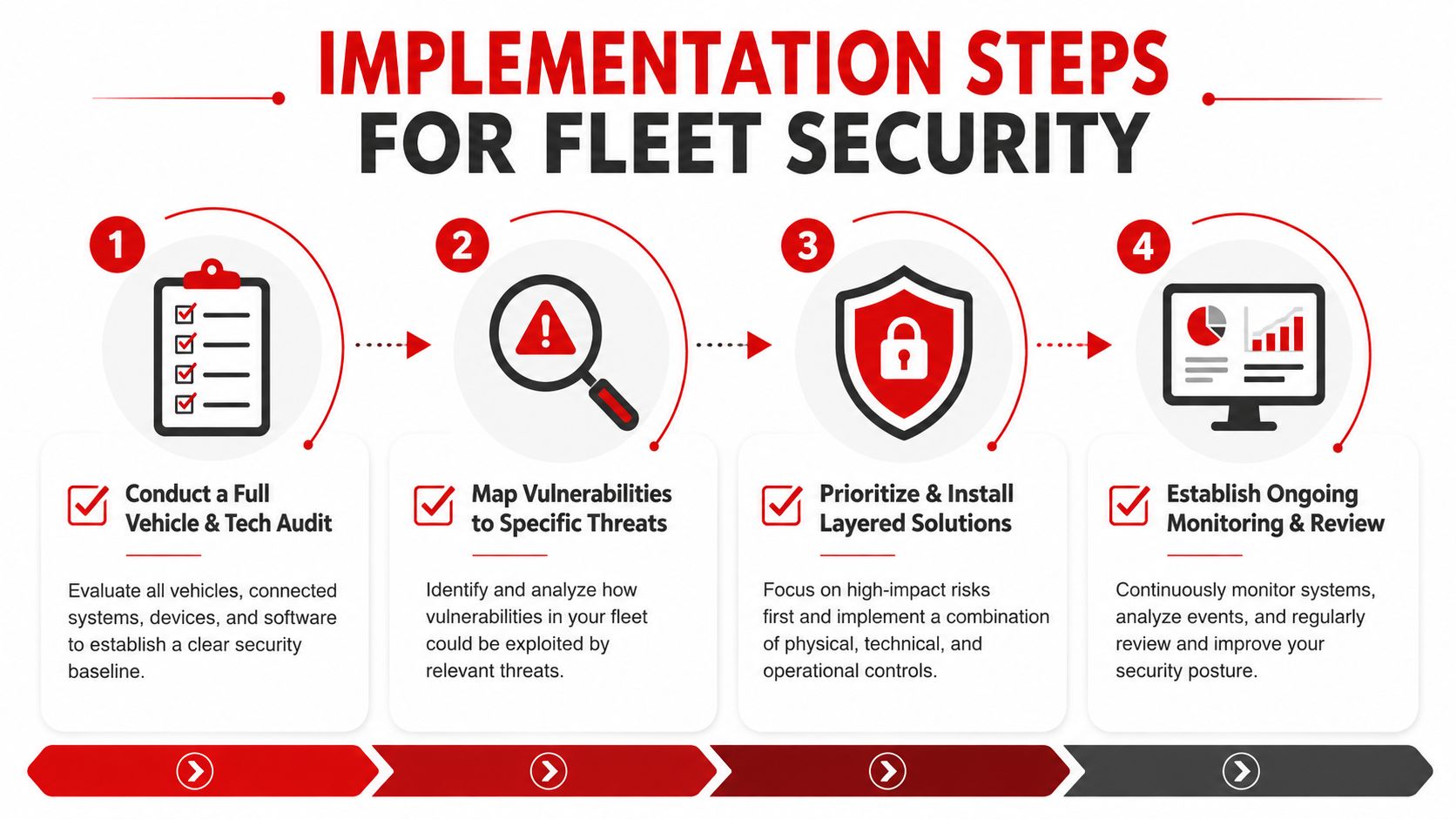
A practical rollout sequence
- Audit existing protection: Record immobilizers, alarms, locks, trackers, power arrangements, installation quality, and who receives alerts.
- Map exposure zones: Mark public parking, remote yards, overnight stops, and any location where the truck can move without immediate human observation.
- Prioritize prevention: Install or validate the electronic immobilization layer, then add a visible steering or wheel barrier where drivers can use it consistently.
- Activate monitoring: Configure geofences, movement alerts, engine-start notifications, and tamper escalation before relying on the system.
- Review performance: Examine alerts, false positives, driver compliance, and changing theft tactics during a recurring security review.
Recurring-cost services should be reserved for high-value assets, high-risk routes, or fleets that need shared operational visibility. One-time mechanical devices may suit lower-exposure vehicles, but only if drivers apply them every time and managers inspect compliance.
Conduct a theft-risk assessment this week, contact two vetted installers for quotes, and establish a quarterly security review cadence. Put immobilization and visible deterrence ahead of recovery-only spending, then add connected monitoring where the response team can act on the information.
CARLOCK offers real-time GPS tracking and vehicle security alerts for movement, engine starts, unusual vibration, towing activity, device disconnection, and battery concerns through its smartphone app. Visit CARLOCK to evaluate a connected monitoring layer that can complement the immobilizer and physical barriers in your truck-security plan.