

Driver’s Desk
Why Would Someone Put a Tracker on My Car? Complete Guide
You park outside work, glance at the rear wheel, and notice a small black box stuck behind the liner. Or your phone shows an unexpected notification about an unknown Bluetooth device moving with you. The immediate question is understandable: why would someone put a tracker on my car?
The answer can be completely legitimate, legally questionable, or dangerous. A dealership, lender, employer, parent, insurer, vehicle owner, stalker, abusive partner, or thief could be involved. The device itself doesn't tell you which explanation is true. Its power source, connection type, installation point, and the person with access to your car do.
Treat the discovery as a security triage problem. Confirm what the device is, identify who could have installed it, preserve evidence, and only then decide whether to remove it. This guide covers legitimate tracking, criminal surveillance, legal boundaries, detection methods, and the practical protection steps that turn an unsettling discovery into a controlled response.
A Tracker on Your Car Is a Clue, Not a Conclusion
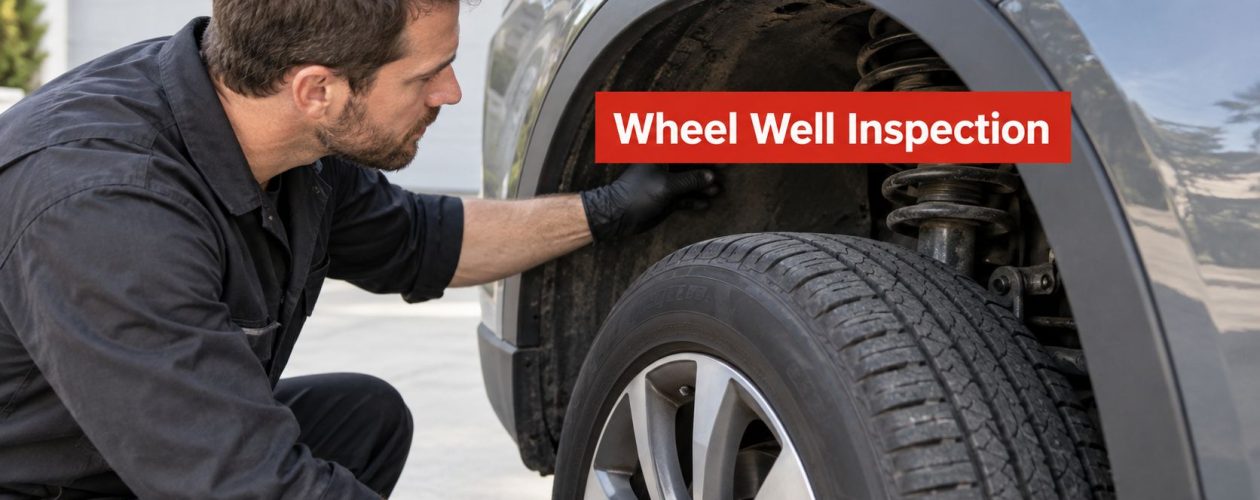
A magnetic box under the wheel well after a service appointment demands a controlled response. Photograph it in place before touching it. Record the surrounding area, wiring, antenna, battery compartment, markings, and any visible identifier. Removing it immediately may destroy evidence or alert someone who is monitoring the vehicle.
A car tracker in 2025 may be factory telematics, a hardwired cellular GPS unit, an OBD-II dongle, a Bluetooth tag such as an AirTag, or an inexpensive item-finder clone. Similar-looking devices can have very different reporting methods, power sources, and owners. Appearance alone cannot establish intent.
Start with a three-step triage
Confirm the device. Check for a SIM slot, GPS or cellular markings, a Bluetooth identifier, wiring, a magnetic case, or a manufacturer label. A battery pack, antenna, or OBD connector offers stronger evidence than the casing.
Identify possible installers. Ask who owns or finances the vehicle, who drives it regularly, and who recently had unsupervised access. A lender, fleet operator, rental company, parent, or previous owner may have a lawful reason. An estranged partner, unknown visitor, or person linked to a theft attempt presents a different risk.
Choose the response. If stalking, domestic abuse, or criminal preparation is plausible, leave the device intact and contact police. Ask how investigators want it preserved. If the explanation is legitimate, document who installed it and why. If you can remove it safely and no personal-safety concern exists, have a mechanic disconnect it.
Practical rule: Ask who benefits from knowing where this car goes before asking how to destroy the device.
Vehicle theft is one legitimate reason to use tracking. In the United States, 1,020,729 stolen vehicles were recorded in 2023, 850,708 in 2024, and 880,595 in 2020, according to the Insurance Information Institute's auto theft data. The 2024 total was below one million for the first time since 2021, and the decline was the largest in 40 years. Owners still need fast recovery options because a stolen vehicle can move before anyone notices.
The same tracker can protect an owner or expose a driver. A legitimate owner may use it for recovery or asset management. A hostile person may use it to map routines, workplaces, and relationships. Treat the discovery as a triage exercise: establish what the device is, preserve evidence, identify who had access, and then decide whether removal is safe.
What a Car Tracker Actually Does
A tracker reports location through one of three broad systems. Cellular GPS units calculate their position using satellites, then send it through a cellular network to an app or monitoring platform. Bluetooth beacons broadcast a short-range identifier that nearby phones can detect and relay. Radio-frequency transmitters send a signal that a specialist receiver or recovery team can locate.
The difference is like a satellite phone call compared with a Bluetooth key finder. A cellular GPS tracker can communicate with its server without relying on a stranger's phone nearby. A Bluetooth tag mostly waits for a compatible device to pass close enough to notice it. RF equipment can be highly useful in enclosed locations, but it doesn't normally provide the owner with a live map.
Power determines placement and endurance. A hardwired device can draw from the vehicle's electrical system. A plug-in unit can use the OBD-II port. A removable tracker can run from a replaceable battery, while a Bluetooth tag generally uses a coin cell. The more permanent the power connection, the more carefully you should inspect wiring, the dashboard, and the battery area.
| Tracker Type | How It Reports Location | Typical Range | Power Source | Best Use Case |
|---|---|---|---|---|
| Cellular GPS | Sends coordinates over GPS and cellular links | Broad cellular coverage | Hardwired, OBD-II, or rechargeable battery | Theft recovery, fleet oversight, live vehicle monitoring |
| Bluetooth | Relays proximity through nearby phones | Short nearby-device range | Replaceable coin cell | Finding personal items or detecting a nearby tag |
| RF | Emits a signal located by a receiver | Short to moderate receiver range | Battery or vehicle power | Specialist recovery in enclosed or difficult locations |
Bluetooth trackers are poorly suited to stolen-car recovery because they depend on nearby phones. In remote areas or underground parking, they can become effectively offline, and they don't provide instant alerts or a real-time locate function without another device nearby, as explained in this comparison of GPS tracking without monthly fees.
For a plain-language look at vehicle tracker hardware and capabilities, review the CarLock device features. The operational takeaway is straightforward: GPS trackers can support continuous vehicle monitoring, Bluetooth tags mainly identify nearby proximity, and RF systems depend on a receiver and recovery workflow.
Legitimate Reasons People Put Trackers on Cars
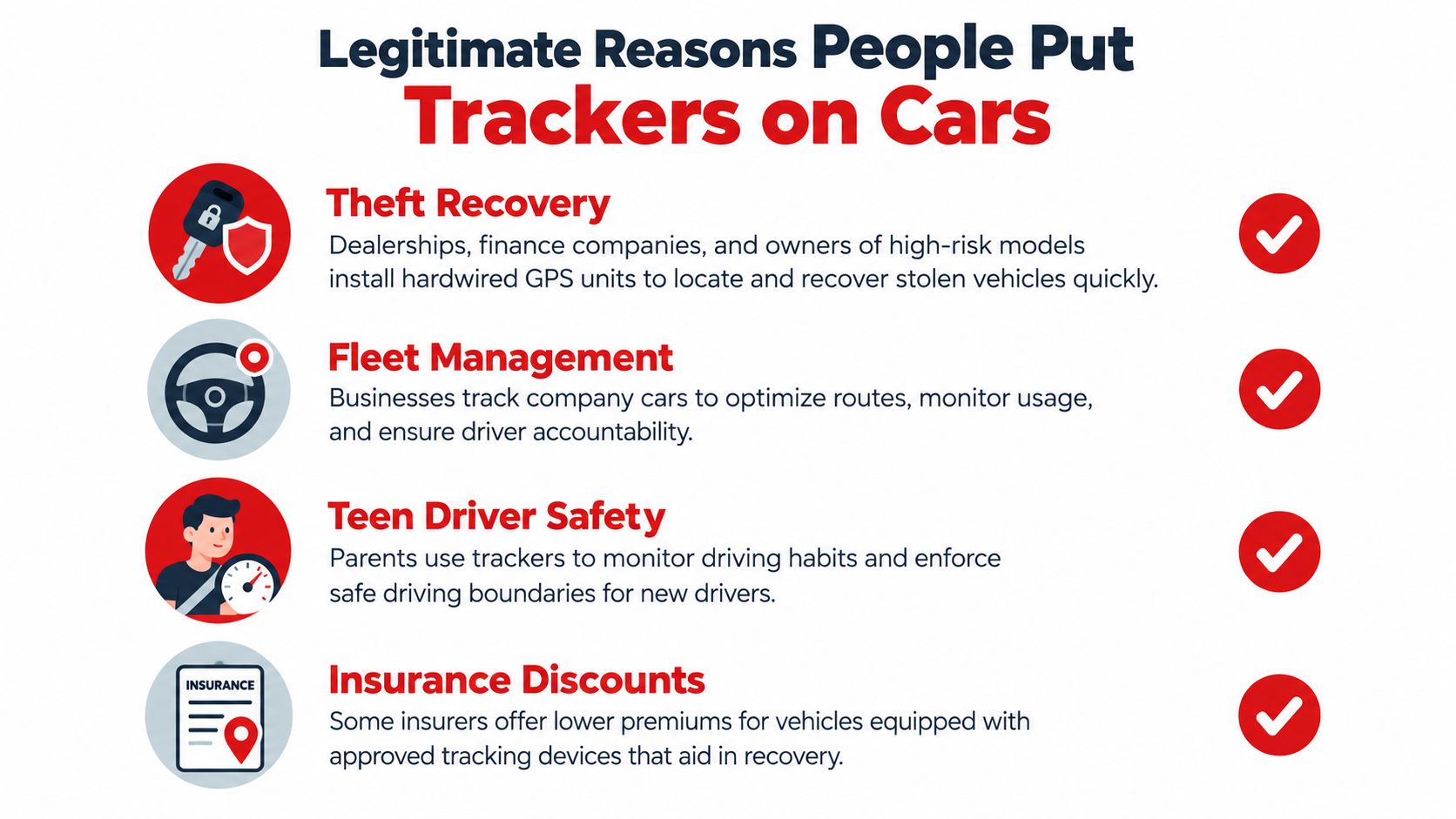
A tracker often has a lawful explanation, especially when the car is financed, leased, rented, company-owned, or shared with a family member. Theft recovery is the clearest example. Owners, dealerships, and finance companies may use hardwired or plug-in GPS equipment so the vehicle can be located after unauthorized movement.
A tracker does not stop every theft. Its value begins after the vehicle moves: an alert can give the owner current location information to pass to police. Owners of expensive, frequently targeted, or difficult-to-replace vehicles may consider that recovery capability more useful than a loud alarm by itself. Use a dedicated car locator view to review location history when the system supports that function.
Ownership and finance create common explanations
Lenders and finance companies may require tracking equipment under a vehicle agreement. The device can help locate collateral if the borrower defaults, subject to the contract and applicable law. Drivers sometimes miss this permission because it appears among financing, insurance, and security terms instead of in the sales discussion.
Dealerships may install equipment before a sale while a vehicle remains in inventory or forms part of a financed transaction. A used car can also retain a device linked to a previous owner, lender, rental fleet, or dealership. Check the device's serial number and account association before treating its presence as evidence of criminal surveillance.
Employers and families use tracking for management
A company-owned delivery van or service vehicle may use telematics for route planning, vehicle status, usage records, and driver safety. Fleet systems can collect GPS, speed, and ECU or OBD data, then flag harsh braking, rapid acceleration, sharp cornering, speeding, or idling. Geotab describes harsh-braking thresholds in the approximate 0.3g to 0.5g deceleration band, or roughly a 6.5 to 7 mph speed drop in one second, in its explanation of vehicle g-force data.
Parents may install a tracker in a teenager's car, particularly when the parent owns the vehicle. Emergency location, movement alerts, and driving-behavior review are ordinary reasons. Consent, age, ownership, and family circumstances determine whether that monitoring is appropriate.
Insurance telematics and rental-fleet tracking serve similar property or risk-management purposes. The arrangement should benefit the policyholder, fleet owner, or rental company, with the contract explaining how location and vehicle data are used. If you find a device in a financed, leased, rented, or company vehicle, inspect the paperwork and ask the named owner before assuming criminal intent.
When the Tracker Is the Threat
A tracker deserves immediate scrutiny when its controller uses location data to control, intimidate, monitor, or prepare an offense. An abusive ex-partner may install a device while sharing access to the car. A jealous partner may hide one after learning the vehicle's routine. A hostile employer may use a company device outside the agreed work purpose.
The threat may not be a small box under the bumper. Discussion of data privacy in smart mobility explains that connected cars collect extensive travel data, while consent and control over geolocation information remain contested in the United States. Check four access points: a physical tracker, the factory account, a vehicle app, and any person who can view stored vehicle data. A device is only one possible route to surveillance.
Criminals can use trackers before the theft
A thief can attach a tag to a high-value car, monitor where it travels, identify when it remains unattended, and return later. The tracker does not need to start the theft. It can reveal parking habits, work schedules, storage locations, and predictable routes.
That purpose differs from recovery tracking. An owner installs a device to locate a car after unauthorized movement. A criminal uses one to identify the conditions that make unauthorized movement easier. Police reporting in August 2026 warned about an auto-theft trend involving GPS trackers, while UK recovery specialists reported shutting down 78 illegal chop shops in 2025, a 30% year-over-year increase, in their security network report.
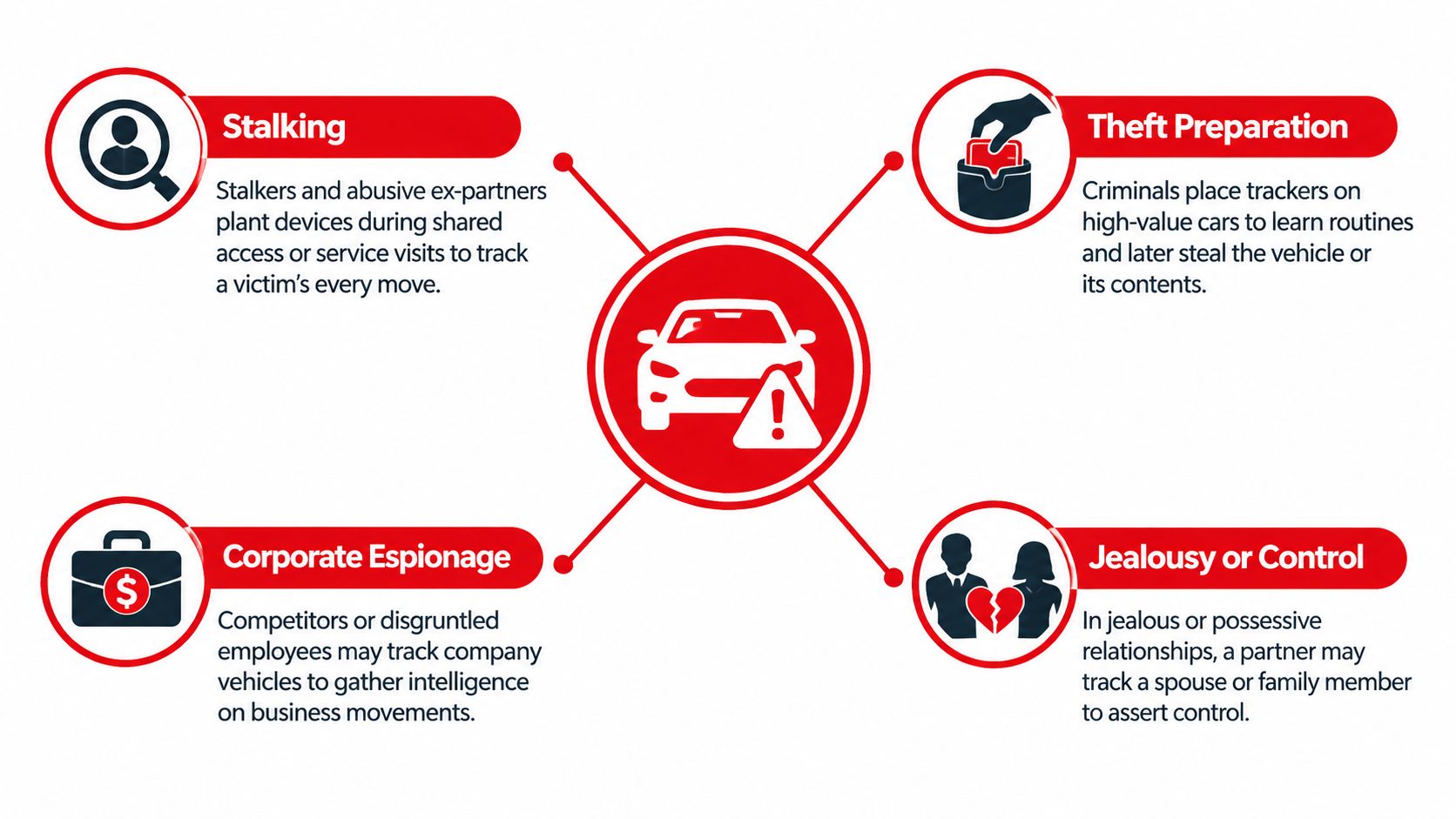
Retail-theft groups may monitor high-value delivery vehicles. Repossession agents may also use devices within contractual and legal limits, even when the driver finds the device suspicious. Treat the surrounding facts as the triage point. An unexplained device plus harassment, repeated sightings, threats, or unusual knowledge of your movements demands a safety-focused response. An unexplained device alone does not prove a crime.
If the concern is a partner's secretive behavior rather than a confirmed tracker, a general catch a cheater online guide can help you consider lawful evidence gathering. Do not use it to justify covert tracking or confront someone in a way that increases danger.
Preserve the device and document where you found it. Avoid handling it more than necessary, especially if stalking or harassment is possible. Review the data practices described in CarLock's privacy information, then consider personal safety, police reporting, and professional inspection before disabling anything.
Who Is Legally Allowed to Track Your Car
The legal answer starts with ownership, consent, and purpose. A sole owner generally has broad authority to install a tracker on their own vehicle. That authority doesn't automatically allow the owner to monitor another adult's private movements for harassment, intimidation, or control.
Co-owners and spouses can create more complicated questions, particularly where marital or community property rules apply. A shared title may matter, but it isn't a universal permission slip. Separation orders, exclusive possession, leasing arrangements, and the installer's intent can change the analysis.
Use the relationship test
| Relationship | Can They Track? | Conditions |
|---|---|---|
| Sole vehicle owner | Usually | The vehicle is theirs, and the purpose is legitimate property or safety monitoring |
| Co-owner or spouse | Sometimes | Ownership, consent, court orders, and intended use must be considered |
| Employer | Often for company vehicles | Notice, work purpose, vehicle ownership, and employment rules matter |
| Parent or guardian | Usually for a minor's vehicle use | The parent should own or control the vehicle and use tracking for safety |
| Lender or insurer | Only under an agreement | The contract should disclose or authorize the device and its use |
| Private partner or stranger | Generally not without consent | Secret tracking of a non-consenting adult can trigger privacy, stalking, or harassment laws |
Employers may track company vehicles and work activity, but monitoring an employee's personal car without consent can cross legal boundaries. Parents generally have wider authority over minor children, while expectations of privacy change as the child approaches adulthood. Lenders and insurers should rely on explicit contractual consent rather than surprise installation.
The rules vary by state, province, and country. A plain-language guide to vehicle tracking law can help identify questions, but it isn't a substitute for local legal advice. If the device appears connected to domestic abuse, separation, a custody dispute, or a workplace conflict, speak with a lawyer and avoid confronting the suspected installer alone.
No private individual gets a free pass to track a non-consenting adult's car for romantic jealousy, punishment, or theft preparation. Even when ownership is disputed, the safest response is to preserve evidence and obtain jurisdiction-specific advice.
How to Find a Hidden Tracker on Your Vehicle
Use both digital and physical checks. A phone can identify some Bluetooth tags, but it can't reliably find every cellular GPS unit, passive data logger, or hardwired device. Start with the least invasive steps, record what you find, and don't crawl beneath an unsupported vehicle.
Run a digital sweep first
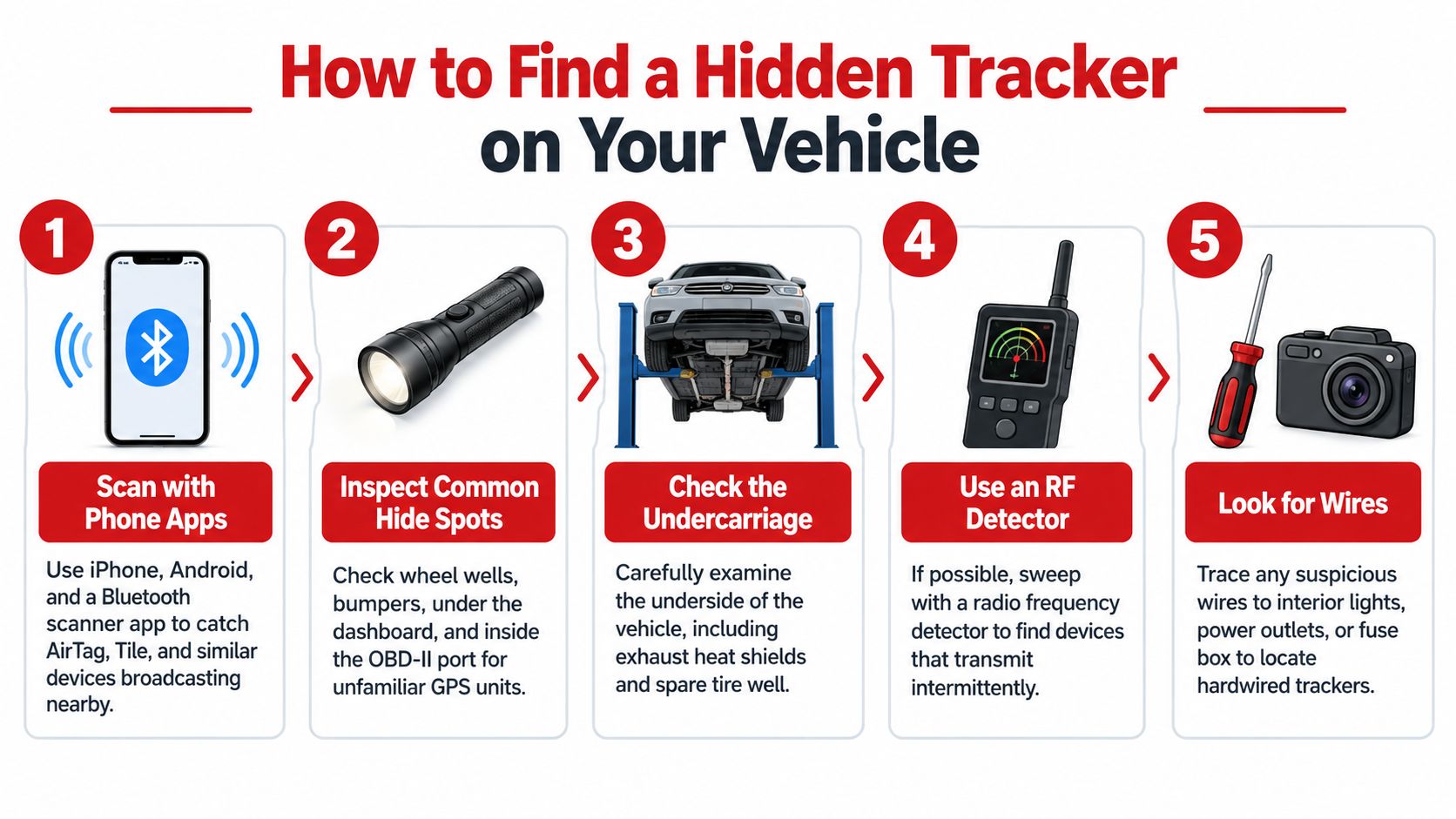
Use the built-in unwanted-tracker detection features on an iPhone or Android phone. A Bluetooth scanner app can help identify nearby AirTag, Tile, and similar broadcasts, but expect false positives from headphones, watches, other cars, and household devices.
Then inspect the vehicle's connected accounts. Review the manufacturer's app, shared-driver permissions, family accounts, fleet portals, and any email addresses linked to the car. A person may have access through an OEM service rather than a separate physical box. BBC reporting in July 2026 noted Kia's warning that some tracking features provide convenience rather than live stolen-vehicle tracking, while a congressional vehicle-data bill text reflects increasing debate over owner consent and data access.
Search the car methodically
Exterior first. Check the wheel wells, behind both bumpers, the chassis rails, and exposed underbody surfaces. Look for magnetic boxes, tape, zip ties, unusual wires, or a component that doesn't match the factory layout.
Interior next. Inspect beneath the seats, inside the trunk lining, around the spare-tire well, and under the dashboard. Pay close attention to the OBD-II port, where an unfamiliar dongle can receive continuous vehicle power.
Use basic tools. A bright flashlight and mechanic's mirror reveal recesses that are invisible from standing height. Wear gloves before feeling along the undercarriage, and never place yourself under a car supported only by a jack.
Trace suspicious wiring. Follow unfamiliar wires near the battery, fuse box, OBD port, interior panels, or accessory sockets. A hardwired device may be silent over Bluetooth and still transmit through cellular networks.
Escalate the sweep. A professional RF sweep or GPS detector can help identify transmitting devices that phone apps miss. Passive loggers may not transmit during the inspection, so a negative RF result doesn't prove the vehicle is clean.
Take wide and close photographs before touching anything. Record the date, location, device condition, serial number, wiring, and any app notification. If you suspect stalking or theft preparation, leave the device in place until police or a qualified investigator advises you.
This video demonstrates a visual inspection approach that can supplement, but not replace, a professional sweep:
Why Real GPS Telematics Outperforms Cheap Trackers
A Bluetooth tag is an item finder, not a vehicle-security system. It depends on nearby phones, can go quiet in remote or enclosed places, and doesn't provide the same live location path as a cellular GPS unit. It may help recover a misplaced bag, but it gives a car owner limited control after a professional theft.
A registered telematics device changes the operating model. It can monitor movement, ignition activity, vibration, tampering, battery condition, trip history, and route changes, depending on the system and installation. A hardwired or permanently installed unit also avoids the main weakness of a loose magnetic tag, which can be removed, fall away, or run out of power.
Compare the protection functions
- Power: Vehicle-powered equipment can continue monitoring while the car is in use, while a coin-cell tag depends on its small battery.
- Range: Cellular GPS reporting doesn't require another person's phone to pass nearby. Bluetooth reporting does.
- Alerts: Telematics can notify the registered owner when movement, ignition, towing, or disconnection occurs. A passive tag mainly reports proximity when a compatible device detects it.
- Evidence: Detailed trip and event records can help explain what happened after a theft, unauthorized use, or insurance incident.
- Recovery: Dedicated recovery systems can combine live location with specialist procedures. RF recovery technology can remain useful in underground car parks, lock-up garages, and enclosed spaces where GPS or cellular signals are weak, as described in the recovery technology overview.
Subscription-free magnetic units can be attractive when someone wants basic location data without a service plan. Their limitations are clear: battery management, inconsistent reporting, weak tamper visibility, and no guaranteed response workflow. Measure any alternative against power continuity, alert quality, installation security, and the evidence it creates.
For vehicle health and event monitoring, review the CarLock vehicle-health features. The right choice depends on whether you need an occasional location aid or continuous, owner-controlled security.
Building a Layered Defense and Final Answers
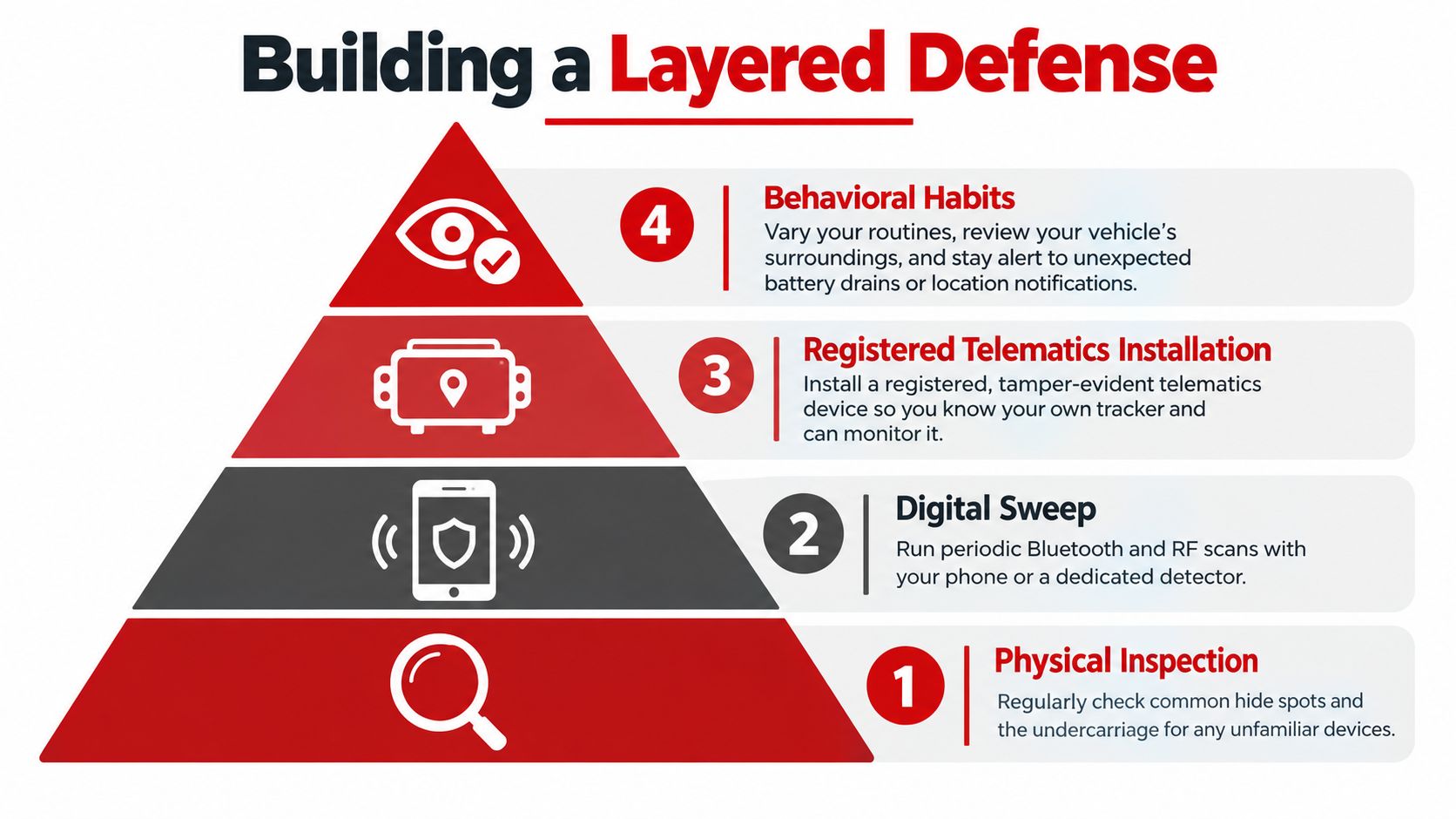
A single scanner or tracker won't solve every risk. Use four layers:
- Physical inspection. Check the wheel wells, bumpers, underbody, OBD-II port, dashboard, seats, and trunk after service visits or suspicious access.
- Digital sweep. Review Bluetooth alerts, vehicle apps, shared accounts, and connected-driver permissions. Use an RF detector when a cellular or hardwired device is possible.
- Registered telematics installation. Install a device you can identify, register, monitor, and document. Keep its account details and installation photographs.
- Behavioral habits. Vary predictable parking where practical, inspect the vehicle before long trips, and investigate unexpected location notifications or battery drain.
How do I confirm a tracker is present? Find a physical device, receive a specific unwanted-tracker alert, identify an unfamiliar connected account, or obtain a professional sweep result. One vague Bluetooth scan isn't confirmation.
What evidence should I gather before removal? Photograph the device in place, its wiring and mounting point, serial numbers, app notifications, account names, and the vehicle condition. Write down who had access and when you discovered it.
When should I involve police? Call law enforcement when stalking, domestic abuse, threats, repeated unwanted monitoring, theft preparation, or an unknown installer is possible. Don't confront the suspected person alone, and don't destroy a device that may support a criminal complaint or insurance claim.
The goal isn't to live in fear of every unfamiliar box. It's to know which devices belong on your vehicle, control your own telematics access, and preserve evidence when something doesn't belong.
CARLOCK offers registered real-time GPS vehicle monitoring with movement, engine-start, vibration, towing, disconnection, battery, trip-history, and driving-event alerts. Visit CARLOCK to review a controlled vehicle-security option and replace uncertainty about who is tracking your car with a system you can identify and manage.