

Driver’s Desk
Your Guide to GPS Systems for Fleet Tracking in 2026
When you're managing a fleet of vehicles, flying blind is not an option. It's like trying to navigate a ship through a storm without a compass—you know where you're supposed to go, but you have no real-time information to get you there safely and efficiently. GPS systems for fleet tracking are the modern-day compass and weather radar for your business, giving you a live, 360-degree view of every vehicle you own.
These systems are so much more than just dots moving on a screen. Think of them as a complete ecosystem built for operational control, efficiency, and security. They bring order to the chaos of logistics, turning your fleet into a well-oiled, finely-tuned machine.
The Market is Exploding for a Reason
Businesses are catching on, and the demand for this technology is surging. The global vehicle tracking system market is on a massive growth trajectory, projected to hit US$33.0 billion in 2026 and then more than double to an incredible US$80.0 billion by 2033. This isn't just a trend; it's a fundamental shift away from outdated manual logs and guesswork toward smart, data-driven fleet management.
The Three Pillars of a Fleet Tracking System
At its core, every fleet tracking system is built on three key components working together seamlessly. Understanding how they interact is the first step to unlocking their full potential.
The Onboard Hardware: This is your scout in the field. It’s a small device, usually plugged directly into the vehicle's OBD-II port or hardwired for a more permanent fit. This unit is responsible for gathering all the critical data right from the source—the vehicle itself.
Wireless Connectivity: How does that data get from the vehicle to you? Through a cellular network, just like your smartphone sends a text. The hardware transmits its data packets over the air to a central server, ensuring a constant, reliable stream of information.
The Software Platform: This is where the magic happens. Raw data is transformed into actionable intelligence. A cloud-based dashboard or mobile app takes all that information and presents it in a way that makes sense, with live maps, trip histories, performance reports, and critical alerts.
A GPS system for fleet tracking acts as the central nervous system for a mobile operation. It connects every vehicle back to a central point, allowing managers to monitor, analyze, and optimize performance in real time.
By bringing these three pieces together, you gain total oversight of your operations. This isn't just about efficiency; it's a cornerstone of asset protection. The same core principles that help a business manage a fleet can also help an individual owner, and you can learn more about how advanced car tracking works to protect personal vehicles. Ultimately, this technology lays the groundwork for smarter dispatching, better driver safety, and rock-solid security for your most valuable mobile assets.
How the Core Technology Actually Works
To really get a handle on what GPS systems for fleet tracking bring to the table, it helps to pop the hood and see how they’re built. The whole thing operates like a beautifully coordinated system, a journey in three parts: grabbing the data, sending it wirelessly, and then making sense of it all on your screen. It’s this seamless process that transforms raw satellite pings into smart business decisions.
It all starts with the hardware. A small GPS device is installed in each vehicle, acting as its eyes and ears on the ground. These usually come in two flavors: a simple plug-and-play unit that connects to the vehicle's OBD-II port (great for a quick setup) or a hardwired device that’s installed for a more permanent and tamper-resistant fit. This little device is responsible for constantly gathering a stream of information right from the vehicle itself.
The Journey of a Single Data Point
Think of that GPS device as more than just a dot on a map; it's a data-gathering powerhouse. It uses a clever technique called trilateration, where it communicates with several satellites orbiting the Earth to calculate its precise location. To lock in a basic 2D position—latitude and longitude—the device needs to hear from at least three satellites. A fourth satellite adds altitude to the mix and, just as importantly, helps correct any tiny timing mistakes, making the location data far more accurate.
But modern trackers don't stop at coordinates. Especially when connected to the OBD-II port, they can pull a ton of vital diagnostic info, including:
- Vehicle Speed and Acceleration: Flagging aggressive or unsafe driving habits.
- Engine Status: Knowing if a vehicle is running, stopped, or just idling.
- Fuel Levels and Consumption: Keeping an eye on efficiency and spotting potential fuel theft.
- Diagnostic Trouble Codes (DTCs): Getting a heads-up about engine issues before they become big problems.
This data collection is the bedrock of every insight you'll get from your fleet management system. It's worth noting that this is the same fundamental tech that underpins so many other applications, highlighting the pivotal role of GPS in modern security. The technology that keeps your assets secure is the very same one that drives operational intelligence.
From the Vehicle to Your Screen
Once the device has gathered this data, it needs to get it from the vehicle to a central server. This is the transmission stage, and it works a lot like sending a text from your phone. The GPS tracker uses a built-in cellular SIM card to send small packets of data over a mobile network up to the cloud. For those fleets that wander into remote areas without cell service, some systems even offer satellite connectivity as a backup, ensuring a vehicle never truly drops off the map.
This diagram breaks down that simple, three-step journey your fleet's data takes.
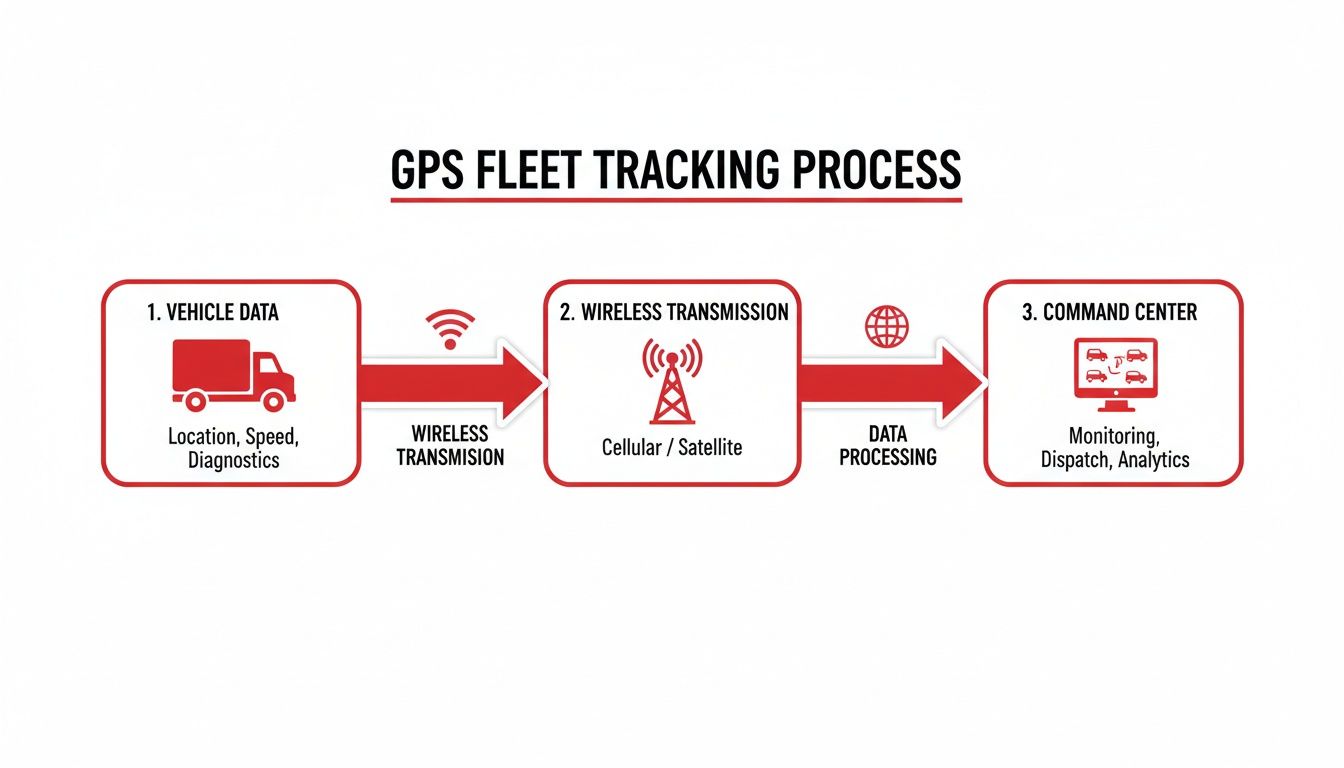
The image clearly shows how information flows from the vehicle, through a wireless network, and over to your command center where it becomes something you can actually use.
The final piece of the puzzle—and arguably the most important—is the software platform. This is your mission control, typically a cloud-based application you can access from a web browser or a mobile app.
This is where a jumble of raw data points—coordinates, timestamps, engine stats—gets turned into a clear story. The software translates all that information into live maps, historical trip replays, performance dashboards, and automated alerts.
For a fleet manager, this is where the magic happens. It’s the difference between seeing a vehicle's coordinates and knowing that it’s been idling for 30 minutes at an unscheduled stop, burning through fuel. That level of detail is only possible when the hardware and software are perfectly in sync. You can get a better sense of this by exploring how CarLock’s device features work hand-in-hand with its app to deliver a complete security and monitoring solution.
What Modern GPS Tracking Systems Can Really Do For You
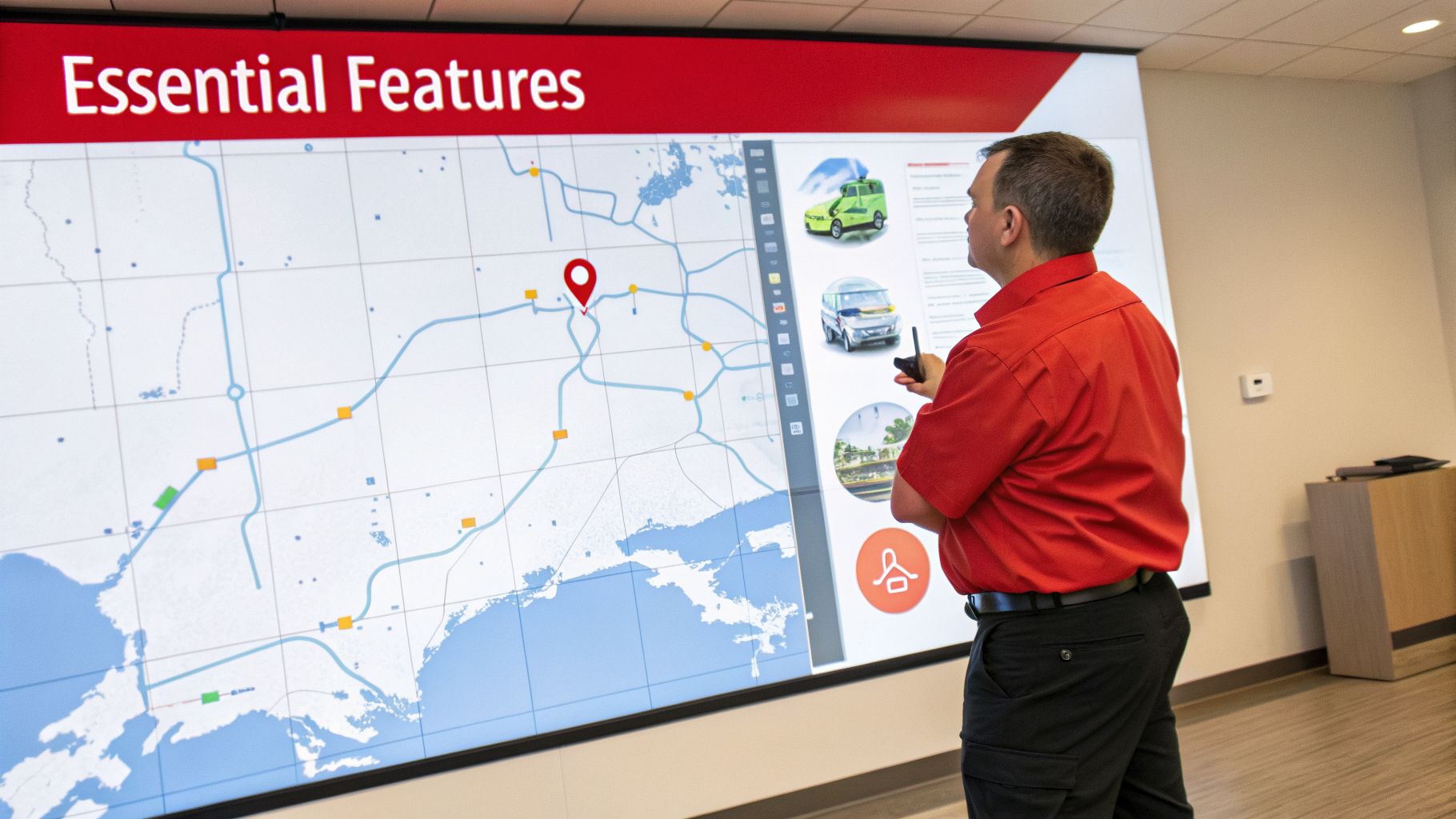
The power behind today’s GPS systems for fleet tracking goes way beyond just showing a vehicle's dot on a map. These platforms have evolved into complete command centers, packed with features designed to boost efficiency, tighten security, and build a culture of safety. They take raw location data and turn it into a clear, actionable picture of your entire operation.
Think of it this way: a basic map shows you where a truck is. A true fleet management system tells you what it’s doing, how it's being driven, and what it needs to stay on the road. This depth of insight is what separates a simple tracking gadget from a strategic business tool.
Let’s break down the core features you should expect and how they translate into real-world benefits.
Real-Time Tracking: The Heart of Your Operation
The foundation of any good system is real-time tracking. And we’re not talking about a once-an-hour ping. This is a live, continuous stream of location data that lets you see exactly where everyone is, right now. This instant visibility is the key to dynamic dispatching, allowing you to send the closest vehicle to a new job, saving both fuel and time.
Imagine a customer calls with an urgent request. Instead of making a dozen phone calls, you glance at your live map and see a technician is just two blocks away. You’ve just turned a potential scheduling nightmare into a moment of outstanding customer service. Plus, you can finally give customers accurate ETAs they can count on.
Geofencing: Your Automated Watchdog
Geofencing is like drawing virtual fences on a real-world map. You can set up these digital perimeters around job sites, customer locations, your main yard, or even no-go zones. The system then works for you, automatically sending an alert whenever a vehicle enters or leaves one of these areas.
The practical uses are endless:
- Automated Time on Site: Automatically log when a vehicle arrives at and leaves a customer’s property, which makes billing a breeze and ends disputes over hours.
- After-Hours Security: Get an immediate notification if a truck leaves your yard at 2 a.m., giving you a crucial head start on potential theft.
- Territory Management: Make sure your drivers are staying within their designated service areas, preventing unauthorized detours that burn fuel and add unbilled hours.
Geofencing is like having an automated supervisor on duty 24/7. It watches key locations for you, so you don't have to.
This single feature adds a powerful layer of control and accountability. The detailed reporting it provides is just one example of how a solid platform, like the one offered through the CarLock app, gives you a much deeper understanding of your fleet's daily rhythm.
Driver Behavior Monitoring: A Direct Line to Savings
How your team drives has a massive impact on your bottom line. Aggressive driving—things like harsh braking, flooring the accelerator, and speeding—wastes fuel, causes premature wear and tear, and dramatically increases the risk of accidents. In fact, studies show that correcting these habits can improve fuel economy by as much as 25%.
Driver behavior monitoring pinpoints these exact events. The system flags risky maneuvers and scores drivers on their performance, giving you the hard data you need for constructive coaching and training. It’s about creating a culture where safety is a shared goal, not just a line in a handbook.
Vehicle Diagnostics and Maintenance: From Reactive to Proactive
Beyond tracking people and places, advanced GPS systems for fleet tracking can plug directly into a vehicle's brain—the onboard diagnostics (OBD-II) port. By doing this, the tracker becomes an early warning system for your vehicle’s health.
It can monitor critical data and send you proactive alerts for:
- Check Engine Light: Get an instant alert with the actual trouble code, so you know if it’s a loose gas cap or something that needs immediate attention.
- Low Battery Voltage: Avoid the morning scramble when a truck won't start. An alert gives you a heads-up before the battery dies completely.
- Scheduled Maintenance: Set reminders based on mileage or engine hours for oil changes, tire rotations, and other routine upkeep.
This feature shifts your maintenance from a reactive, expensive firefighting mode to a proactive, predictable schedule. Preventing a single major breakdown can save you thousands in towing, repairs, and lost business—easily covering the cost of the entire system.
Modern GPS platforms offer a suite of tools that work together to provide a holistic view of your fleet. Understanding these key features is the first step toward choosing a system that delivers tangible results.
Key Features and Their Business Impact
The table below breaks down these essential features and the real-world value each one brings to your business operations.
| Feature | What It Does | Primary Business Benefit |
|---|---|---|
| Real-Time Tracking | Provides continuous, live location updates for every vehicle on a map. | Improved dispatch efficiency and accurate customer ETAs. |
| Geofencing | Creates virtual boundaries and sends alerts when vehicles cross them. | Automated time tracking, enhanced security, and territory management. |
| Driver Behavior Monitoring | Flags and reports on unsafe driving events like speeding, harsh braking, and rapid acceleration. | Reduced fuel costs, lower accident risk, and decreased maintenance. |
| Vehicle Diagnostics | Reads data from the vehicle’s OBD-II port to monitor engine health and send maintenance alerts. | Proactive maintenance, fewer breakdowns, and extended vehicle life. |
Ultimately, each feature is designed to give you more control, more data, and more opportunities to run a smarter, safer, and more profitable fleet.
Calculating the Real ROI of Fleet Tracking

It’s easy to view GPS systems for fleet tracking as just another monthly bill. But that’s the wrong way to look at it. This isn't an expense; it's a direct investment in your company's profitability, with a return you can actually measure. While there's an initial cost for hardware and a monthly subscription, the savings you'll rack up in other areas often eclipse those costs surprisingly quickly.
The financial upside comes from four main areas: cutting fuel consumption, boosting productivity, securing your vehicles, and lowering maintenance bills. By focusing on these pillars, you can transform your fleet from a necessary cost into a high-performing strategic asset. It's no wonder the market is booming.
Industry experts see fleet tracking applications dominating over 38% of the global GPS tracker market revenue by 2026. The total market, valued at USD 4.04 billion that year, is projected to rocket to USD 9.83 billion by 2030. That growth is fueled by real-world wins, like slashing fuel costs and preventing vehicle downtime.
Pillar 1: Fuel Cost Reduction
Fuel is one of the biggest—and most unpredictable—costs for any business with vehicles on the road. GPS tracking helps you attack this expense from several angles. For starters, it flags excessive engine idling, which can guzzle up to a gallon of fuel per hour in a heavy-duty truck. Simply setting an alert for long idle times lets you coach drivers to shut off their engines when they're not moving.
Beyond that, optimized routing makes sure your drivers are always on the most efficient path, cutting out wasted miles. Detailed trip logs also put an end to unauthorized vehicle use, like side errands or unapproved weekend trips that add fuel costs straight to your bottom line. Just by fixing these common issues, many fleets see fuel savings of 10% to 15%.
Pillar 2: Improved Productivity and Labor Costs
After fuel, labor is your next major expense. A fleet tracking system helps you get the most out of every paid hour. When a new service call comes in, your dispatcher can see exactly which vehicle is closest, instead of making a dozen phone calls or just guessing. This kind of smart dispatching means less time driving and more time working, allowing your team to fit more jobs into the day.
This jump in productivity means more revenue without having to hire more people. Plus, features that automatically log arrival and departure times at job sites make timesheets accurate, putting an end to billing questions and payroll headaches. Even squeezing in one extra job per vehicle each day adds up to a massive revenue boost over a year.
The core value of fleet tracking is transforming data into dollars. By making smarter, data-backed decisions about routes, dispatching, and maintenance, businesses see a direct and positive impact on their bottom line.
Pillar 3: Enhanced Security and Insurance Savings
Your vehicles are expensive assets, and theft can be a crippling blow to your business. Real-time GPS tracking is one of the best anti-theft tools you can have. If a vehicle is stolen, you can give its exact location to law enforcement, which dramatically increases the chances of getting it back quickly—often within hours. Some systems, like CarLock, even send you an immediate alert if the vehicle moves without authorization or the engine starts unexpectedly.
This powerful security doesn't just protect your assets; it can also lower your bills. Many insurance companies offer significant discounts on premiums—sometimes as much as 25%—for commercial vehicles equipped with an active tracking system. Those savings alone can often cover a big chunk of the system's monthly fee.
Pillar 4: Reduced Maintenance and Repair Bills
The final piece of the ROI puzzle is proactive maintenance. By keeping an eye on engine diagnostics, a GPS tracker acts as an early warning system. It can alert you to small issues before they snowball into major, budget-busting repairs. For example, getting an alert for a diagnostic trouble code lets you get the vehicle checked out on your own terms.
This shift from reactive repairs to preventive maintenance keeps your vehicles on the road and out of the shop, reducing downtime and avoiding costly emergency service. Features like route history also let you see if certain routes involve rough roads or other conditions that cause extra wear and tear. You can learn more about how to use route history to analyze vehicle usage and make smarter decisions that save you money in the long run.
How to Choose the Right System for Your Business
Picking the right GPS system for your fleet can feel overwhelming. You're faced with a dizzying array of features, hardware gadgets, and pricing plans. But if you take a step-by-step approach, you can cut through the noise and find a solution that truly works for your business.
The real goal here isn’t just to buy a tracker. It's to invest in a system that solves your biggest headaches, whether that’s vehicle security, out-of-control fuel costs, or driver accountability. Pinpointing your main objective is the first and most important step toward a smart investment.
First, Define Your Primary Business Goals
Before you even start looking at products, ask yourself one simple question: “What problem am I trying to solve?” Your answer will be your compass, guiding every decision you make from here on out.
Most businesses have one of these core objectives:
- Theft Prevention and Asset Security: Your number one priority is protecting your vehicles and equipment. You need a system that sends immediate alerts for unauthorized movement and gives you a reliable, real-time location so you can recover stolen assets fast.
- Operational Efficiency: You’re focused on the bottom line. You want to slash fuel consumption, stop excessive idling, and find the smartest routes for your drivers. It’s all about getting more done with less.
- Driver Safety and Accountability: Your goal is to create a safer driving culture, reduce accidents, and hopefully lower your insurance premiums. This means you need to monitor risky behaviors like speeding, harsh braking, and sharp cornering.
Choosing a system starts with looking inward. A construction company with expensive machinery might be obsessed with asset security. A local delivery service, on the other hand, will probably care more about route optimization and giving customers accurate ETAs. Be crystal clear on your "why" before you start comparing the "what."
Next, Assess Your Hardware Needs
Once your goals are set, you can figure out what kind of hardware makes the most sense. GPS trackers generally come in two flavors, and each has its own pros and cons.
- Plug-and-Play (OBD-II) Devices: These are the easiest to install. They plug right into the vehicle's On-Board Diagnostics (OBD-II) port, which is usually under the steering wheel. You can get one up and running in under a minute with zero tools. This makes them perfect for fleets that are constantly changing or for businesses that want a quick and simple setup.
- Hardwired Devices: These units are wired directly into the vehicle's electrical system by a professional. This makes them permanent and virtually tamper-proof. If your main concern is security and you want to make sure a device can’t just be unplugged, hardwiring is the way to go. It’s hidden from view and much more secure.
So, what’s the right call? If you’re managing leased vehicles or just need flexibility, an OBD-II device is a fantastic starting point. But for high-value assets where you can't risk someone disabling the tracker, a hardwired installation is the smarter, more secure choice.
Then, Evaluate Software and Usability
The hardware is only half the story. The software is where you’ll actually interact with the system every day. A platform with a clunky, confusing interface will quickly become a source of frustration, no matter how great its features are.
Look for a clean, intuitive dashboard and, just as importantly, a solid mobile app. Fleet managers are always on the move, so being able to check on your vehicles, get alerts, and manage your team from your phone isn't a luxury—it's a necessity. When looking at GPS systems for fleet tracking, it's also smart to think about how well it plays with other software you use. For example, many businesses will want to connect their tracker data with communication software for logistics companies to keep everything in sync.
Finally, Demystify the Pricing Models
Don’t get caught off guard by the costs. Pricing for fleet tracking systems is usually split into two parts: an upfront hardware cost and an ongoing subscription fee. Make sure you get a complete picture of everything you'll be paying for.
- Hardware Cost: This can be anything from free (if you sign a long-term contract) to $100+ for each device.
- Subscription Fee: This is a monthly charge, typically between $15-$50 per vehicle. It covers your access to the software, the cellular data the tracker uses, and customer support.
Always ask about potential hidden costs like activation fees, installation charges, or extra fees for "premium" support. A low monthly price might seem tempting, but it could mean you get fewer features or are left stranded with bad customer service. The key is to compare the total value, not just the sticker price. Reading through unbiased user feedback can be a game-changer here. You might find it helpful to check out some customer reviews of various tracking solutions and see what real people are saying about their experiences.
Your Fleet Tracking Questions, Answered
As you explore bringing GPS tracking into your business, you're bound to have some questions. It's a big decision, and you need to get it right. To help you feel confident in your choice, we’ve put together straightforward answers to the questions we hear most often from fleet managers.
What’s the Real Cost of a Fleet Tracking System?
When you’re budgeting for a fleet tracking system, you're generally looking at two main costs: the hardware itself and the monthly service fee.
The hardware cost can be all over the map. Some providers will give you the devices for free if you sign a longer contract, while more advanced units can run over $100 per vehicle. It really depends on the device's capabilities.
The monthly subscription is where you'll see the most variation, typically falling between $15 and $50 per vehicle. This fee covers your access to the tracking software, the cellular data plan for the device to send back its location, and customer support. The features you need will be the biggest factor in determining that monthly cost.
- Basic Tracking: If you just need simple dots on a map, you’ll be at the lower end of that range.
- Advanced Features: For things like video telematics, in-depth driver behavior monitoring, or direct engine diagnostics, expect to be on the higher end.
A quick word of advice: Always ask for a detailed quote that breaks down all the costs. Some providers tack on hidden fees for activation, installation, or premium support. Getting a complete picture upfront prevents any nasty surprises on your first bill.
Is It Legal to Track Company Vehicles?
Yes, for the most part. Tracking company-owned vehicles during business hours is a standard and legal practice in most places. The vehicles are company assets, and you have a legitimate business interest in knowing where they are and how they're being used for reasons like safety, efficiency, and security.
The absolute key to staying on the right side of the law and keeping your team on board is transparency. Create a clear, written policy that explains what you're tracking (location, speed, etc.), when you're tracking (work hours), and why (safety, dispatch, security). Make sure every single employee reads and acknowledges it.
Things get a bit trickier if you're tracking employees in their personal cars (even on company time) or tracking company vans after hours. Privacy laws can differ quite a bit from state to state or country to country. In those situations, it's always a good idea to consult with legal counsel to make sure your policy is fully compliant with local labor laws.
How Hard Is It to Install These Systems?
You’ll be happy to hear that modern fleet trackers are surprisingly easy to get up and running. The installation really just depends on the type of device you choose.
Plug-and-Play OBD-II Trackers
These are as simple as it gets. You can do it yourself in about 60 seconds.
- Find the vehicle's OBD-II port, which is almost always under the dashboard near the steering wheel.
- Plug the tracker in.
- That’s it. The device powers up and starts reporting its location immediately.
This approach requires no tools and no special skills, which is perfect if you need to get started fast or if you're using leased vehicles where a permanent installation isn't an option.
Hardwired Trackers
For a more permanent and discreet installation, a hardwired tracker is the way to go. It connects directly to the vehicle's power, so it's hidden from view and can't be easily unplugged. While it's a more involved setup, most providers either offer professional installation or give your mechanic clear instructions to follow.
No matter which hardware you choose, the software is built to be user-friendly. A good provider will walk you through the entire setup and training process to ensure everyone, from dispatchers to managers, knows how to use the platform right out of the gate. You won't be left on your own to figure it out.
Are you ready to enhance your vehicle's security and gain peace of mind? CarLock offers an advanced, real-time GPS tracking system that alerts you instantly to any suspicious activity. Protect your assets, monitor driver behavior, and ensure your vehicles are always where they should be. Discover the complete CarLock solution today.